Unknown's avatar

My Morning Walk around Geneva | A Mixed Bag of Luxury and Comfort

‘Luxury’ and ‘comfort’ are two words often associated together when discussing travel. Luxury is defined as ‘something that provides pleasure or comfort’. Comfort is defined as being in a ‘state of physical ease with freedom from pain or constraint’. However for me, it came to be that during a morning in Geneva, Switzerland, the two did not fit agreeably in the same bag, and instead made quite an uncomfortable experience.

Having rushed to catch a train to Geneva on a Saturday, I arrived in the city on an empty stomach having not had time to eat breakfast. I studied the station map closely to look for lockers where I could store my backpack, and went wrong twice. When I finally found the area shown on the map, I still couldn’t see them. Commuters were rushing around so it was hard to find anybody to ask, and I couldn’t seem to find any staff. Fed up and not wanting to waste time exploring, I decided to just take the backpack with me. Big mistake.

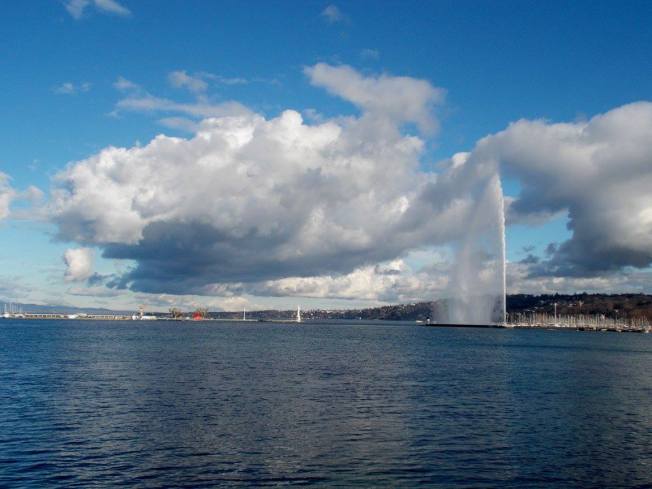
If you walk down the Rue des Alpes onto the Quai du Mont-Blanc, you can admire the famous Jet d’Eau which shoots seven tonnes of water into the air, towering over the flock of yachts that look up at it in silent awe. Flicked by the sun’s rays,  the water was sometimes painted with rainbow colours. Swans glided over the shimmering water (the blue colour of which was a pleasant change from views of the Thames) which flows in from the River Rhône.

10887634_10155252362470495_5643437257667430098_o

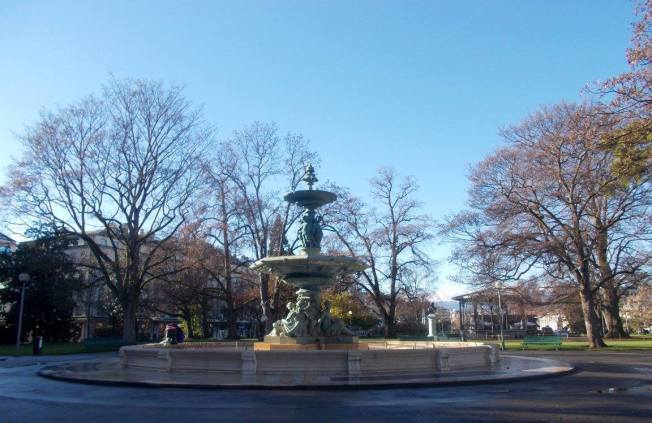
Crossing the Pont du Mont-Blanc, you reach the (supposedly) English Garden. It’s a pleasant enough place, but unfortunately being located next to a busy road, it’s difficult to escape the noise of traffic. It’s a bit like Russell Square Gardens in London, with joggers and dog-walkers meandering around its paths (albeit without the squirrels). The Doobie Brothers ‘Listen to the Music’ played outside a café as I walked through the garden towards the main town, passing an Asian couple taking a zillion photos posing with their fore-finger ‘on top of’ the Jet d’Eau.

10900222_10155252362780495_84661736624735382_o Geneva’s atmosphere evoked the characteristics almost typical of what one associates with Switzerland as a nation – impersonal and rich. Walking past the likes of Rolex and Louis Vuitton with my grubby backpack, I felt slightly out of place. Nevertheless, I was stopped twice to be asked for directions, so I must have looked like I knew what I was doing! I scanned the sides of Rue du Marché for a supermarket but was unsuccessful, seeing only cafes and bistros instead. All I wanted was something small, quick and cheap! But it seemed my stomach would have to wait.

The sights grew less ostentatious and the atmosphere less snobby as I approached the Old Town. By now I was getting tired from hunger, and my shoulders felt sore as I trudged upwards along narrow streets. A man on a bike rode past with his son sat behind him, the little boy’s open mouth rattling “ahhhh” as they bounced over the bumpy cobble roads. I noticed a Co-Op bag in the dad’s hand, but could only watch helplessly as he cycled away.

My feelings of hunger were temporarily forgotten when I was greeted by the striking sight of the Cathédrale Saint-Pierre, built in the 12th century. Visitors can climb 157 steps to reach the top of the North Tower for views of the city. With my backpack however, that seemed to be too much of an ask, although looking back I should have checked if there was somewhere to put it.   10841895_10155252360695495_182192141877632288_o

Walking west from the cathedral, the smooth stone on the buildings reminded me of that seen in Bath or Edinburgh. Ahead there was a balcony overlooking the Parc des Bastions, famed for having a giant chessboard and monuments of famous figures from the Reformation. In summer I can imagine it to be a lovely area, with a tree-lined promenade and space for picnics and games. But seeing the muddy grass and dull, leafless trees, I decided not to make the journey down to it today, especially in my state of soreness and hunger. Instead with a sigh of relief, I released my backpack and sank onto a bench. A young mum sat opposite me with a pram, looking depressed. In fact, there weren’t many cheery-looking people around at all! I could probably discount myself as one of them too. By now, my stomach was rumbling loudly with hunger and I could feel two tight knots forming on my shoulders.

A flashy Range Rover drove down the Rampe de la Treille as I set off back towards the city centre. Private cafes and boutiques lined the quiet Grand Rue. They seemed to say ‘Only enter if you have lots of money’. Reaching the bottom of the hill, the traffic noise vamped up and a tram clanged its horn. I quickly explained to an approaching charity rep that I wasn’t a Swiss citizen and, dodging bikes, crossed the road determined to find a supermarket. I had no idea where to look, choosing to walk up a random street, only to stumble across a Manor shopping mall. Hurrah! I rushed inside like a kid desperate for the toilet. The food court was manic. Two Brazilian men asked for my recommendation of which brand of chocolate to give someone as a gift. I said Lindt. After nearly clearing some shelves and taking a child’s head off with my backpack, I was outside with food in a bag.

My energy rejuvenated from the knowledge that I would soon be able to eat, I strode back over the Pont du Mont-Blanc, back to the Jardin Anglais. Just as I was about to bite into a sandwich, I noticed a scruffy man sat on a bench 20 metres away drinking from a Heineken can staring at me, and stopped myself on the basis that I might have to move away. After deciding that he posed no threat with his drunkenness, I carried on gorging, watching with amusement as more Asian groups posed on the fountains. An old man with ragged clothes and a backpack greeted me with a “bonjour”, dragging a trolley next to him. Glancing at him and the drinking man, I realised that on the first impressions of others in this city, I probably had more in common with these two than the majority.

I still had an hour and a half to kill before I needed to be at the airport, but with my backpack, I felt no desire to wander around anymore. There are many interesting places in Geneva north of the river that I’d love to visit, such as the Palais des Nations (UN), CERN and the International Red Cross museum, but today wouldn’t be the day. Not only was my back cursing, but my bladder was now almost bursting. Instead, I forced myself to heave my backpack on again and walked back alongside the lake, amongst lycra-loving cyclists and tourists ogling at the water fountain.

In summary, I didn’t get a great impression of this small city. Through its display of luxury, it seemed quite uninviting and too money-orientated for my liking. But this impression wasn’t helped by my lack of travel comfort. Without this, I was restricted in my options and my views were tarnished by my self-pitying frustrations.

Lessons learned: 1. Eat breakfast; 2.  Even if it takes a while to do so, find a luggage locker.

In different circumstances I’ll happily give Geneva a second chance and see if I feel the same way!

Unknown's avatar

The Rise of Techno-Travellers | Hiking in Glacier National Park

During my American road trip over summer, I encountered a lot of amazing sights that had a lasting impact and stayed in my mind. But one thing I didn’t expect to have encountered so regularly on this predominantly rural-based trip was the overbearing presence of social technology amongst what I now call ‘techno-travellers’.

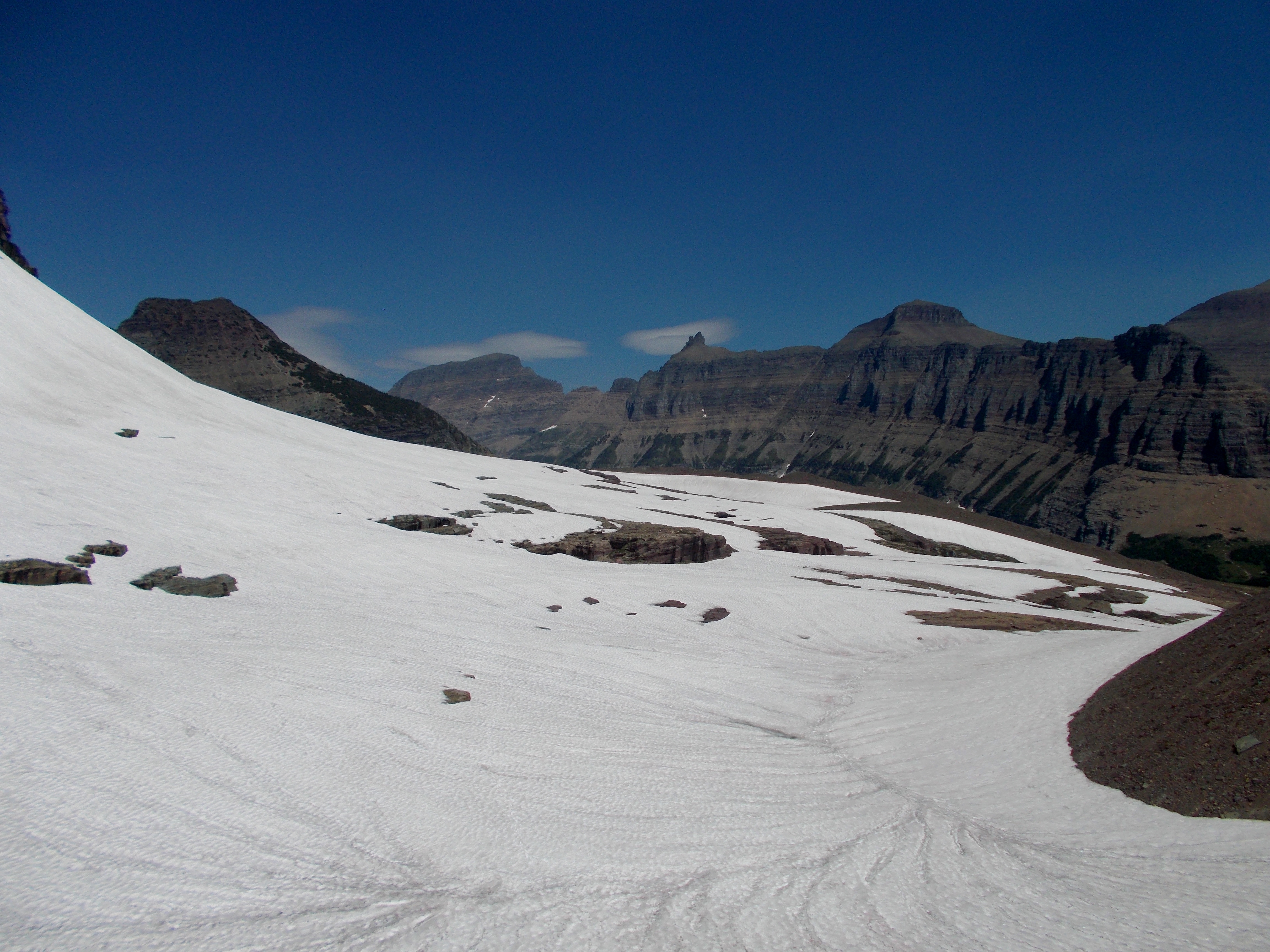
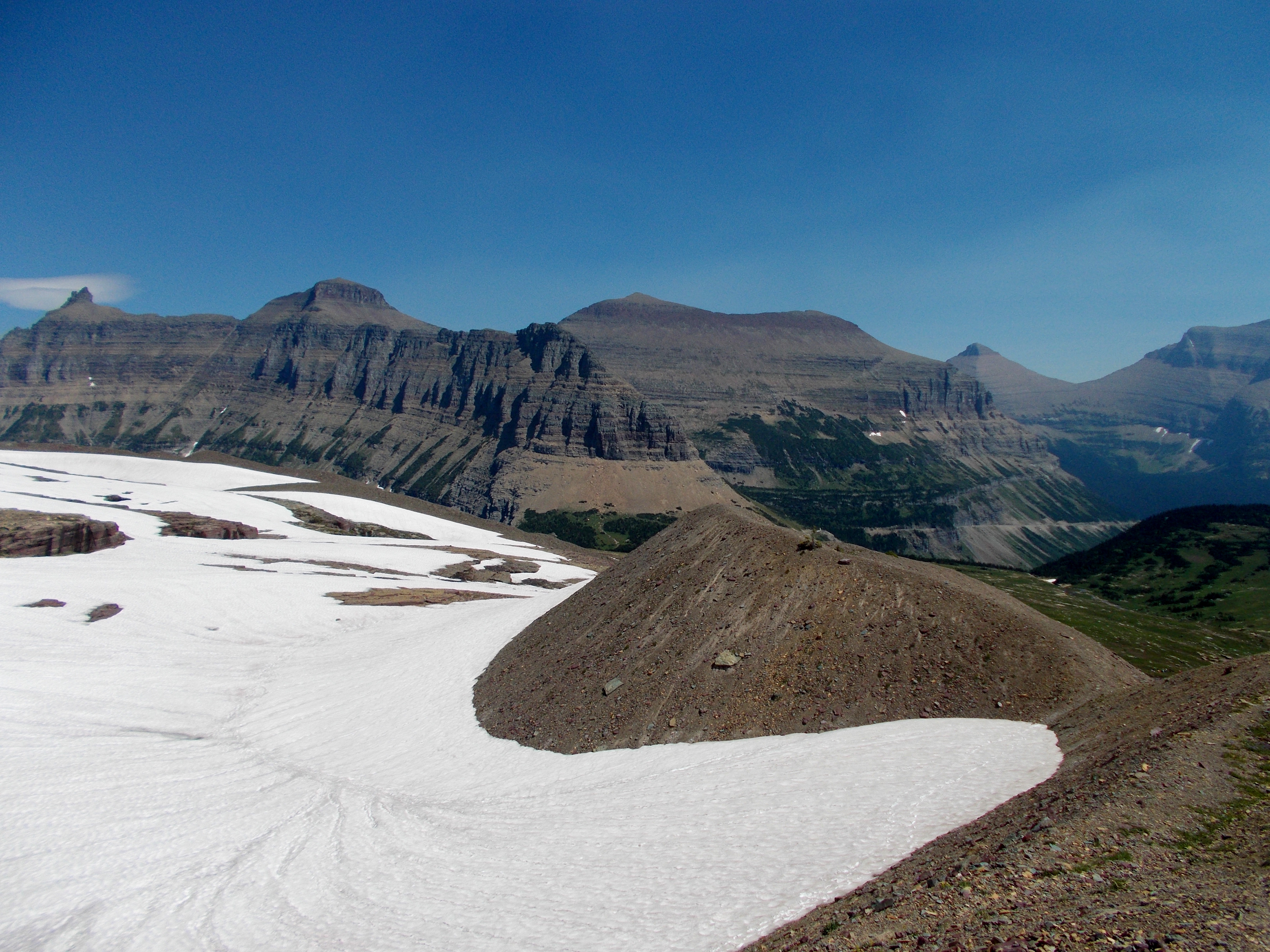
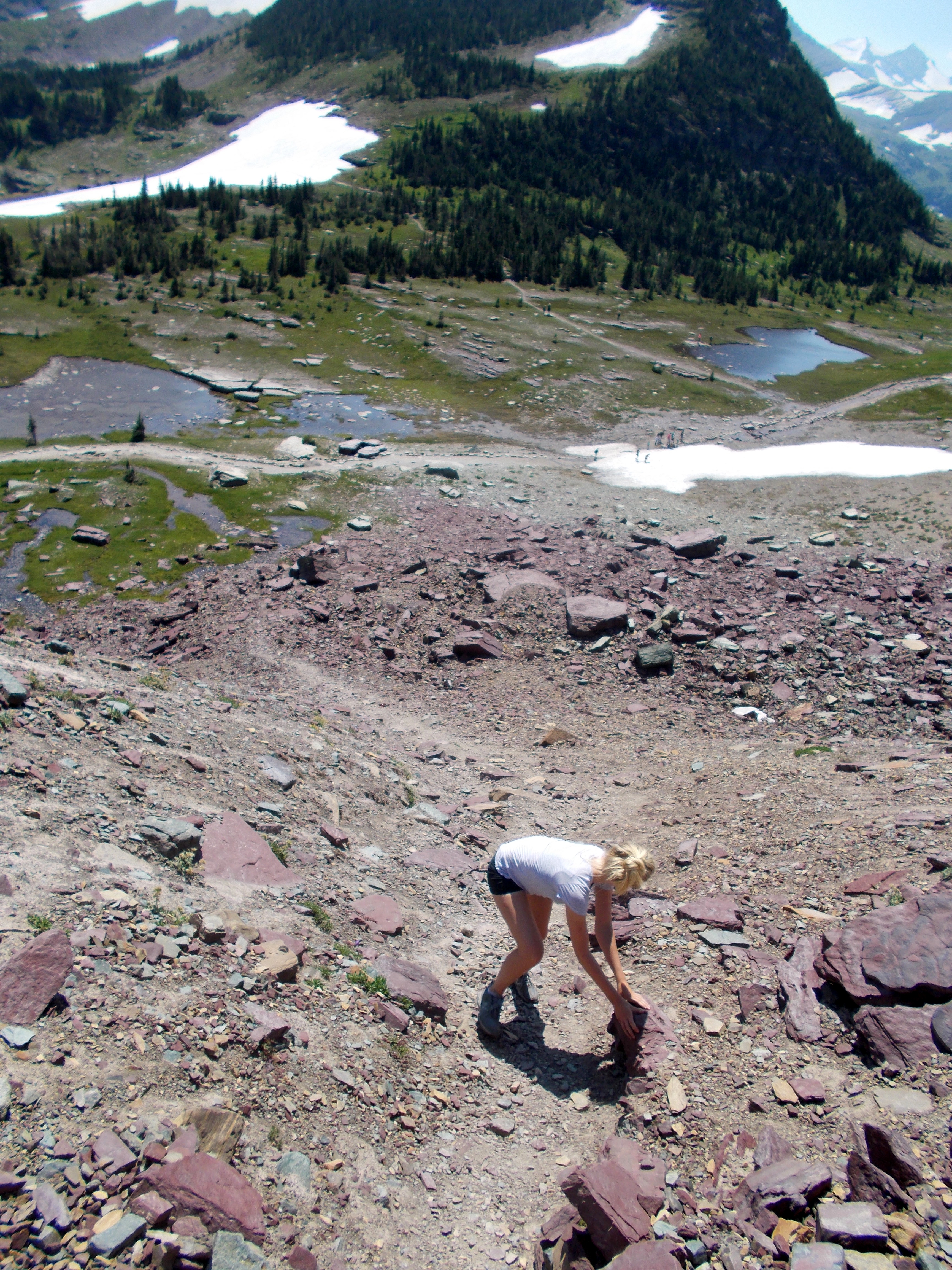
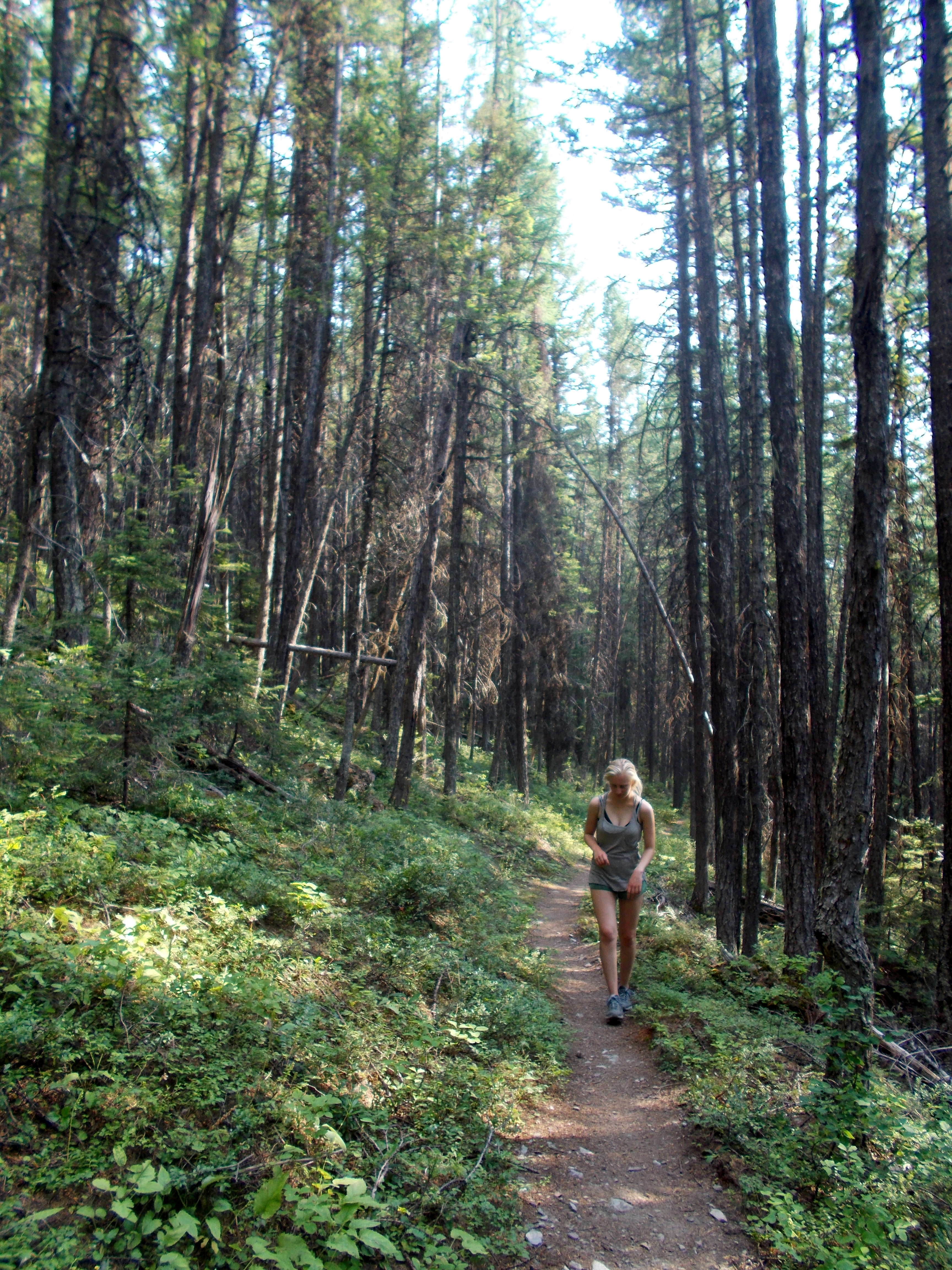
One day, my friend and I were walking the popular Hidden Lake Overlook Trail in Glacier National Park.  I couldn’t believe the number of iPads I saw being wapped out. As we turned back from the end point, no longer able to tolerate the constant sounds of clicking and sights of crowding, a man said to his friend: “You know you’re too close to civilisation when you see an iPad.” I couldn’t agree with him more. The travel paparazzi had arrived and were relentless in their pursuit of taking a thousand photos of the same image. Thankfully, we were able to escape the tourists after noticing a steep rocky path to the left. From its clear formation, the path must have been trodden a few times before, but few tourists were ascending it then. A few people would look over at us as curiously as we made our way over to it, but they did not follow. Perhaps their sense of adventure was restricted to only those areas photographed and written about online and in magazines. We scrambled to the top on all fours, only to be greeted to our complete surprise by the sight of a snow kingdom on the other side of the hill. Finally we were alone, in peace, and the techno-travellers had no idea what they were missing.

395

394

404

Of course there is nothing wrong with wanting to take a photo of something beautiful and unique. But when one is surrounded by electronic devices so capable of connecting with a million others around the world near a natural wonder that is so far away from these millions, it feels a little intrusive. People are so snap-happy that one wonders whether they have really taken the time to appreciate what they are seeing. There is a difference between looking/seeing and observing/appreciating. Are these people simply just wanting to take pretty pictures that will earn them an extra follower on Pinterest or ‘like’ on Facebook? The rush to upload their photos straight onto social media makes you think so.

It’s because of my irritation by the growing social media-habits of travellers that I will probably never make a living as a travel blogger. For starters, I like food too much to withhold eating it until I’ve taken a zillion photos of it beforehand.  I also don’t believe I fit in with the blogging ‘game’. I find that the ‘competition’ for publicity between travel bloggers makes it quite an unfriendly world. I can’t stand it when I follow a travel blogger on Twitter (after they’ve followed me) and they then unfollow me, simply because they were just looking to boost their stats with extra followers. And then there’s the messages requesting that I now follow someone’s Facebook/Pinterest/Instagram accounts. If I want to look at your photos or read your blog, I will find it myself when I wish. In fairness, most of these messages are automated, but if anything that just makes it worse. The whole ‘Thanks for following, you’re awesome! Let’s share more stories together’ is completely fake. There are some really kind and helpful travel bloggers out there who are also successful, but many are so pre-occupied with their own success that they let this stop them acting like genuine human beings with a soul.

This was particularly evident in Yellowstone. At the Lower Canyon Falls, a group of what I would describe as either ‘serious tourists’ or ‘travel bloggers’ clustered against a fence with their huge cameras, leaning out a far as they could to get a shot of a nesting bird. They looked like addicted bank-robbers desperately reaching out to grab at notes of money flying away from them. Occasionally the photographers would step back to add an extra part to their camera, clinking on various pieces so that it looked like they were loading a machine-gun. They would scowl at those who tried to take their place or briefly blocked their view to have one quick look, and hogged the area with a snobby air that made one feel almost intimidated to go over and have a look themselves. I wonder how they would have reacted if someone in a wheelchair had approached the viewpoint…Travel should be accessible to everyone and not a competition, but some people add a hierarchy of entitlement through their behaviour, and it’s often related to the use of technology – ‘I write a blog and have a big fancy camera, therefore I must have priority viewing.’

‘We played with marbles and climbed tall trees; now kids can’t play without batteries’. This message was written on signs approaching a town called Panguitch in Utah. It perfectly addressed the problem of society’s obsession with digital technology and social media. People are losing their adventurous spirit in favour of an online social life and evening of inactive escapism with the gang of ‘Game of Thrones’. Meanwhile, travellers might say “Oh I didn’t go inside that building or climb that mountain…but I got a photo of it so it’s okay!” They’ll say that they’ve ‘done’ a country when they’ve only seen an eighth of it. By sticking to the guidebook and always photographing what they think will be most popular, travellers and bloggers threaten the unique charm and untouched beauty of an area, and miss out on other surprises or less conventional sights that are just as stunning.

Travel bloggers are in danger of becoming too concerned with the stats that they start to alienate the real reason they started a blog in the first place: to talk about travel. Occasionally my spam folder will have comments from scammers with dodgy web addresses, talking about SEO services and saying that I don’t have enough key words highlighted in my post and that because I don’t use so-and-so here and this-and-that there, my ranking on Google will be lower. Frankly, I couldn’t care less about these picky details. I started a blog because I love to travel and I love to write and wanted to share my experiences with friends. The fact that strangers from all over the world find and read and follow my blog is humbling. However, I don’t intend to spend my life in front of my computer, downloading various plug-ins and spending money on various schemes to make my followers grow even more. I read an article where a guy said he’d got in $36,000 of debt just so he could make his blog a huge hit and never have to work in an office again…Where was his  logic? I’ve also read that some bloggers actually pay for followers, not caring whether they read their blog or not, but just wanting to boost their chances of being sponsored by a travel company so that they can travel the world for less. Where is their integrity?

Too much mixing with technology threatens the traditional elements we associate with travel: the temporary isolation from others we know; the subsequent engagement with others we meet; the requirement for map-reading skills; the use of our brains to make decisions when something goes wrong; the anticipation of seeing all of someone’s photos a few weeks later when they return (rather than a few everyday that leave you wondering why they made a huge thing of saying good-bye before going away to a foreign land, when they’ve practically never left). We don’t even see a photo of a place in its genuine form anymore; instead it’s photo-shopped to the max in order to make it as perfect as possible and what it is assumed people want to see. But ‘perfection’ doesn’t mean the same to everyone. What’s wrong with simply seeing something in its true form and avoiding the creation of high expectations that may very well end up being disappointed?

WiFi was used once during the whole three weeks of our trip, simply to look up a ferry schedule (and create a birthday event to take place three days after the trip ended). The escapism was wonderful and not once was it wondered what gossip was being missed out on from Facebook.  If people spend their whole life staring at their phone or through their camera lens, they’ll miss what’s on the other side of their screen and that ‘most-recommended’ area that it looks at. And as the photos show, the other side can be pretty cool.

*

Some other travellers agree with me!

‘Why I’ll never be a Professional Travel Blogger’ by Theodora

‘Confessions: Sunday Social Reflection Talk’ by we12travel

Unknown's avatar

Life as an Au Pair in Switzerland | Settling In

I’ve been an au pair in the French-speaking part of Switzerland for a week so far and I’ll admit, I definitely under-estimated how tough this job would be. It brings a lot of challenges, some of which are general and some of which are house-specific. I decided to become an au pair because I wanted to fill my time with a new experience in a new country whilst waiting on other jobs. A chance to travel to a country I’d never been to and earn money on the side seemed perfect. I signed up to an au pair website and within a week, had arrived in Geneva. It was the most spontaneous travel decision I’ve ever made. However upon starting, I realised that in my desperation to get out of the UK, my rationale had not been quite right, and my priorities did not fit with the reality of being an au pair.

The particular family I was hired by offered more pay than most families and I’ll confess that in my graduate state, this was a key factor in me deciding to take this offer. I did not consider that there might be a deeper reason why it paid more than most. I had assumed that I would have plenty of time to myself, to read and write and run, alongside the free weekends for travelling. I believed it would be similar to help-exchange homestays I’ve done, only that in this particular house, I would be looking after younger children than I am used to. But I figured how hard can it be to entertain a five and six year old for a few hours a day? Surely they would be in school for most of the day anyway? Then after agreeing to the role, I was emailed two days before I left with further instructions about my duties and details of the kids’ daily routines. It was then that I realised things weren’t going to be as simple as I had imagined. Perhaps this was why I seemed to feel the most reluctant I’ve ever felt boarding a plane to a new country.  This wasn’t going to be a working holiday; it was going to be a job abroad. And just because a job is in a foreign country doesn’t mean it will be a walk in the park.

Below are the key issues that au pairing has raised.

1. Free Time

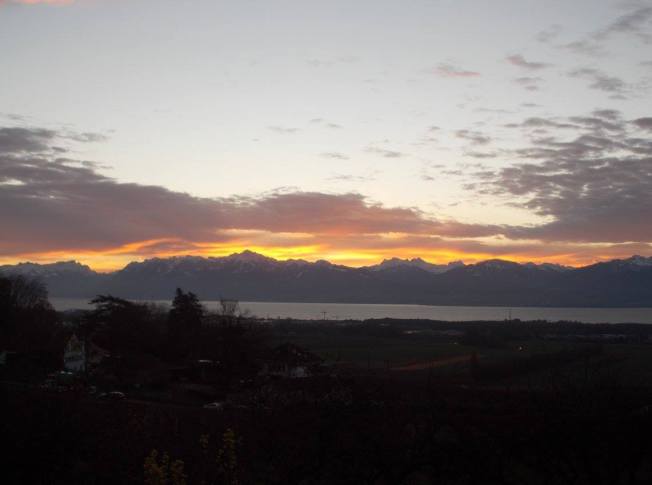
Upon starting, I quickly realised that I wouldn’t have quite as much time to myself as I originally hoped, and have consequently realised just how much I value my free time, and being alone with it. Partly because of the weather and partly because of the family’s requirements, I have mainly been confined indoors doing little jobs and therefore not got outside to explore and exercise as much as I intended to. The view outside my home is like that on a postcard – Lake Geneva with the Alps behind. Many times I have gazed outside the window at the glistening water and snow-capped mountains longingly, yearning to be outside exploring.  ‘Why didn’t I just go WWOOFing or house-sitting somewhere over here instead?’ I have asked myself, knowing that these forms of homestay travel would offer more opportunities for being outdoors.
10682290_10155107065595495_4206730312267052545_o

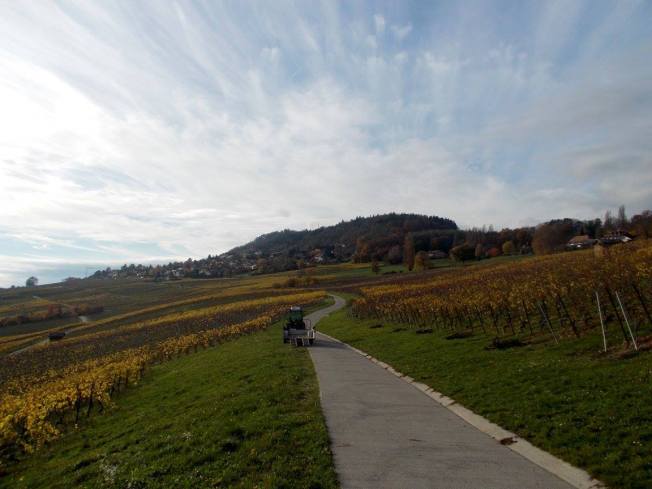
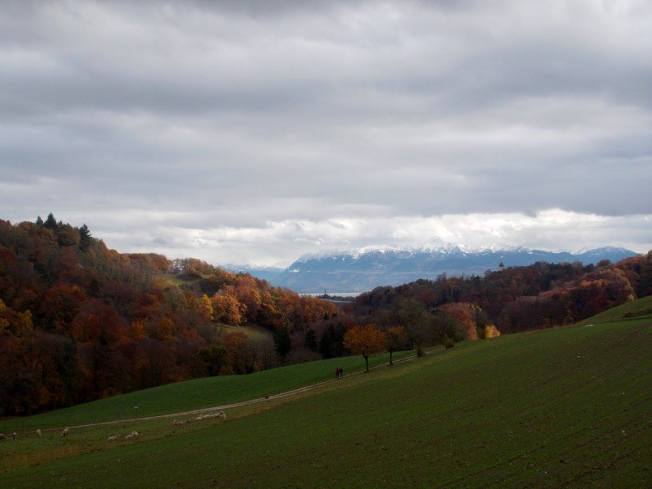
The house is also surrounded by vineyards, the bronzed colours looking lovely when the leaves catch the autumn sun.
10854981_10155070801925495_2827173206732568373_o

I soon clarified that money really isn’t important to me; I value my free time much more, especially while I’m young. Since agreeing to work for this family, I have received emails from other au pair families in Switzerland, as well as from families in Germany, Norway, Italy, Spain and China. All are keen for me to stay with them for the same amount of time, and all pay less than this family. But most of these places would probably be more suited to my interests and aims, because of the older ages of the children and greater free time.

I can’t complain too much about this though, because I am being paid a generous wage amidst receiving wonderful hospitality. My host family parents are very friendly and accommodating people. The mother, who is around very little during the weekdays because of her job, regularly checks up with me to make sure I’m comfortable and has been marking pieces of French that I write. I have my own floor downstairs with a separate bathroom, and they insist I help myself to any food. They respect that I am a young adult and hence treat me like one. We have been watching TV together on an evening. Watching ‘Strictly Come Dancing’ with the dad, I explained that Judy Murray was Andy the tennis player’s mother (he doesn’t like him too much, but in the land of Roger Federer that’s understandable). I have also survived the first film-sex-scene moment without too much embarrassment (“Ooo, salut!” was the father’s comment.) They have explained train passes to me, and are just as encouraging for me to leave the house to explore somewhere new for a whole weekend as they are me to stay and go somewhere with them. On my first weekend, I decided to stay with the family because I wanted to get to know them better. They took me to an Arboretum which is basically a conservation park hosting various species of trees. This was lovely, and in the lead up to Christmas I will undoubtedly be invited to a few family outings.
10668816_10155070791330495_6123979377190059486_o

2. Young Kids

Being the youngest in my family and therefore not too experienced at looking after young children, I definitely over-looked how dependent five and six year olds are. They require constant supervision for health and safety reasons, and constant motivation to do things. How do you get them out of bed in the morning when they stubbornly refuse to get up? How do you get them to eat their breakfast when they moan that they just want chocolate? How do you drill it in their heads that they must wash their hands immediately after the toilet before touching anything else? (I expect I will catch a bug some time soon.) It drains your emotional, mental and physical energy. Sitting bored out of my brains smiling and making encouraging comments as the boy plays with his toy cars and the girl cares for her baby doll, I’ve realised that there is a large difference between liking children, and liking to devote all your time and attention to them. I’m used to home-stays involving teenagers or others closer to my age, who are less restricted in their capabilities to do certain activities and with whom I can have more mature conversations with, and I definitely prefer this.

Young kids are extremely unpredictable, testing your patience to the max when they love you one minute, only to throw a tantrum the next. The five year old has started shouting “You leave the house!” whenever he doesn’t get his way with me. Ouch. 10 minutes later after one of these outbursts, he was asking if he could come to my house and wanted me to get in the bath with him. He’s definitely going to be a heartbreaker when he’s older. Then today, the girl asked me about a knot in a tree. I told her that a mouse lived in there who only comes out when humans are asleep, and began telling her what he was saying. It was adorable seeing her (believing that it really was a mouse making the squeaking noises) press her face against the tree and plead him to come out, promising she’d give him some cheese. I felt super proud of myself for winning her engagement and getting her to describe in English the clothes she would give him (because he said he’d be too cold if he came out of the tree). Then when I explained that he’d gone to sleep and therefore couldn’t come out and say hello, she began balling her eyes out. Bugger.

Kids of this age are sneaky and devious, lying to you so that they can get what they want from you/to their parents when they don’t get what they want from you. This is quite daunting should they make a very serious allegation. Another difficulty is when the mum and dad give conflicting instructions, especially because I don’t want it to seem like I’m listening to one parent more than the other. Little kids also invade your privacy, literally. Many times I’ve played ‘Where’s [boy’s name]?’ knowing full well that he is hiding behind me, trying to pull my trousers down. And once when home alone with him on an afternoon, I told him to continue playing lego in his room whilst I went to use the bathroom. He proceeded to follow me, opening the door (which doesn’t have a lock) with a grin on his face so he could watch me ‘pee pee’. I told him to count to 20 outside the door. Unfortunately, I under-estimated how quickly he could count in English…

Many times during my first couple of days, I would ask myself ‘What was I thinking?’, believing abandoning my favoured age-range for a younger one to have been a big mistake. I thought about the remaining weeks ahead and wanted to shoot myself for advocating the amount of time that I had to the family, pondering excuses I could make to leave. However, as I get to know the kids better, I’m learning more how to crack them and deal with their stroppy, sulky ways. I’ve impressed myself with my ability to be strict when necessary whilst remaining composed and without shouting at them (although let’s face it, they probably wouldn’t hear even if I did).

3. Foreign Languages

For an au pair, there is a lot of information to take in. Au pairs tend to be almost-fluent language students who want to practise speaking in the relevant country. I have therefore thrown myself in at the deep end since my French is very rusty following years of little practice, and I am only a mid-level German speaker. The dad is Swiss-German and works from home, so I’ve been receiving daily instructions from him in German (with some French thrown in), because he is not so comfortable speaking English (and at the end of the day, why should he speak a foreign language in his own country?) But it is easy for me to sometimes misunderstand things and subsequently feel awkward and useless when I have to be reminded about something, or am told I’ve done something wrong. I normally discover this after being asked about something I have done, for example how much of a certain ingredient I’ve used. Concerned to have done it correctly, I have to quickly translate what’s been asked, quickly clarify to myself what the answer is (heck, I probably don’t even know) and then quickly express it coherently in another language. A few times, my mind has gone blank and I’ve gabbled out a muddled mixture of French, German and English.

Meanwhile, on a few occasions when adult or family guests have come round, I have sat smiling blankly whilst everyone sits around chattering away in French, with me only understanding tiny snippets of conversation and subsequently feeling a little left out. This and the constant company of young children contributes to an occasional sense of loneliness, which is what I had most feared feeling before arriving. My room is my point of escape where I can finally be alone to return to my own world, and yet it’s easy to feel distant from the friends in that world, busy with their own agendas in different countries. I have missed being mentally stimulated by people my own age. I’m emailing my mum every day, because her advice is reassuring and her news is a distraction from any stress. I never get home-sick, but there are sometimes moments when I come very close.

However, language practice has by far been the biggest advantage of being an au pair. In working in the French part of Switzerland, I hoped to improve my French, and that is definitely happening. Nothing beats listening to a conversation and having that ‘aha!’ light-bulb-moment when you recognise a sentence. On top of that. I have spent way more time than I expected to speaking in German, and this has been really useful for my confidence. As the days have passed in my short time here so far, conversation has been picking up and becoming more detailed. Immersion definitely is the best way to sharpen up at a language, especially if your listening skills are your weakest area. Improving at foreign languages really makes this job, with all its downsides, seem worthwhile. At the same time, the main reason the family offered me a job was so that I could help the children with their English. Taking lessons gives me something to focus on, and whilst I think I would find teaching older children more rewarding, the effect my help has makes me feel like I have more value to offer in my role, therefore compensating  for any little mistakes I’ve made.

4. Comfort Zone

Living in someone else’s home means that you must adapt to their household customs. This can lead to you doing things that you would rather not, especially if, like me, you are pretty wimpish when it comes to advocating your preferences if they are in the minority. Here are a few examples so far:

  • I haven’t had a huge appetite in my first week. But whenever the father asks me if I would like more food and I say “Non merci, je suis plein”, he makes a face which I think is jokey, but in case he is actually offended, I feel obliged to take up the offer, subsequently forcing food down into my bemused belly.
  • Whilst I can tolerate it, I’m not the biggest fan of roast beef, lamb or pork. But I don’t want to come across as fussy, knowing that red meat is a major feature of many peoples’ diet, and therefore I have only said “Je déteste les champignons” and “Je ne bois pas le thé ou le café” when it comes to dietary requirements. Then, eating lunch one day, I saw roast beef on the table. My stomach went queasy at the smell of it. The father cut it to reveal a rather red-looking meat, and put some on my plate, saying that I could have it cooked for longer if I preferred. But everyone else was tucking in keenly and I didn’t want to seem too picky. So I chewed on this meat and hoped I didn’t look like I wanted to vomit.
  •  I mentioned above that I don’t drink tea or coffee. But when I found a cup of tea placed in front of me after a meal during one of the children’s crazy birthday dinners, it soon passed the point where I could politely refuse, because everyone was busy talking and the dad had already turned around. So I sipped my tea and hoped I didn’t look like I wanted to spit it back out.
  • On Sunday morning, the dad got out a bottle of something and asked me if I’d like a glass. I politely refused as it looked like sherry.  Reading the ingredients in English, I saw that it contained brandy and definitely knew I didn’t want some. But he held the bottle in front of me with an encouraging smile, saying the particular brand was a Swiss speciality and hence making me feel rude not to try. So I had a glass and hoped I didn’t look as light-headed as I felt.

However, situations like this can also be beneficial. There have been times when I’ve suddenly been asked to help with something that I’m normally not great at, for example: wrapping presents and tying balloons. Yes, you read me correctly. I can of course wrap a present, but it’s normally a pretty shoddy job, and I’ve always for some reason struggled with tying knots in balloons. And then there is perhaps a slightly more significant one: cooking. I’m having to do more of this than I expected (mainly because I had assumed the children would eat lunch at school, and upon finding out that they in fact come home for lunch, learned that this would not be a simple sandwich-and-apple job…) I’m happy cooking for myself, but for others you don’t know too well, there’s always that little bit more pressure (especially when you are reading a recipe or hearing instructions in a foreign language!) and giving the kids food-poisoning probably wouldn’t go down too well. So it’s crazy what difference it makes when you are in an environment where you feel you must impress. Your performance peaks and as a result you actually feel like a capable grown-up. (I have also now explained that I don’t tend to eat much red meat…)

*

Am I regretting my decision to be an au pair? If you asked me this in the first few days, I would say yes without hesitation. I will always wish I had more freedom, but what’s been a great help is being told by an ex-au pair friend of mine that my struggles are common for an au pair. My mum has also made me review my perspective by reminding me that au pairs used to be paid peanuts and rarely got weekends off. I am now starting to get more used to this family’s routine, and have realised that I will probably come away from this experience having got more out of it than is perhaps obvious. It’s useful life experience to overcome a struggle without giving up, which I am determined not to do. I have adapted to the needs of the household, and tell myself that persevering through all the tantrum-handling and relentless-requirements will only be useful in the long run when I have kids myself…many many many years down the line. In coming to be in this position through a slight error in judgement, I have been the most out of my comfort zone within a confined period of time. But I believe that as challenging as it will be, and as much as I will want to pull my hair out at times and have my own tantrum, this will be a mistake worth having made.

*

This post and others about au pairing are now featured on AuPairConnect.de
Unknown's avatar

Harming Nature Through Human Nature

In the past couple of weeks as I write this post in November 2014, a rogue artist from New York has been in the news for vandalising some of America’s national parks with artistic graffiti. As expected, this activity has been condemned by both national park rangers and the public. Type ‘lady defacing national parks’ into Google and the top searches begin with the terms ‘awful person’ and ‘terrible human’. The perpetrator has been slammed for drawing these images and uploading them to Instagram, i.e. for seeking fame and attention at the expense of nature.

I of course was also appalled when I heard about these acts , especially as I have many special memories of the magnificent topography in some of the victimised parks – including Canyonlands and Zion – that were formed only weeks before these images were drawn. But then I thought about this issue some more and asked myself: regardless of spray-paint, are tourists not already defacing the nature of the parks? Through our own desires to find fame from capturing the best photo of a wild animal, are we camera-crazy (albeit well-meaning) humans not causing harm too? Harm that is subtle and unintended in nature, but still damaging to nature’s routine.

The other day I read the George Orwell classic ‘Animal Farm’. Published in 1945 and banned in the USSR for its anti-Stalin sentiment, the beginning of the story involves the animals of a farm rising up in rebellion against their greedy human owner and establishing control of the farm themselves. As I read the (highly-recommended) novel, I thought back to the encounters I had with wildlife during my American road trip this past summer.

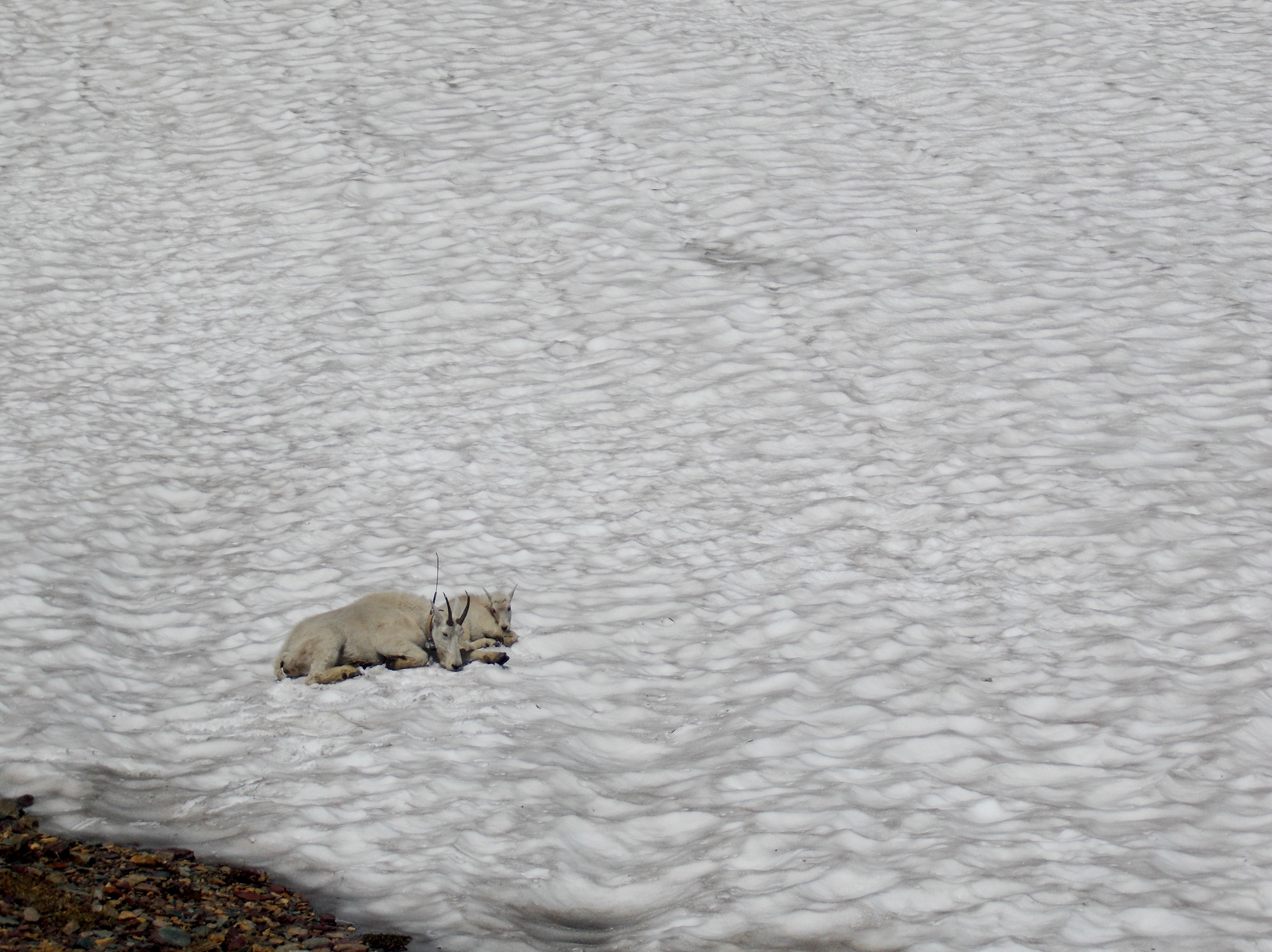
I thought about the Rocky Mountain goats in Glacier National Park being woken from their afternoon naps by invading tourists trying to take a photo of their babies. Often the mother goat would nudge her kid to its feet and they would trot off to find a new secret place – something hard to find on the particularly popular Hidden Lake Overlook trail. People would watch them go almost offended, as if it was an insult for an animal to reject human advances.

355

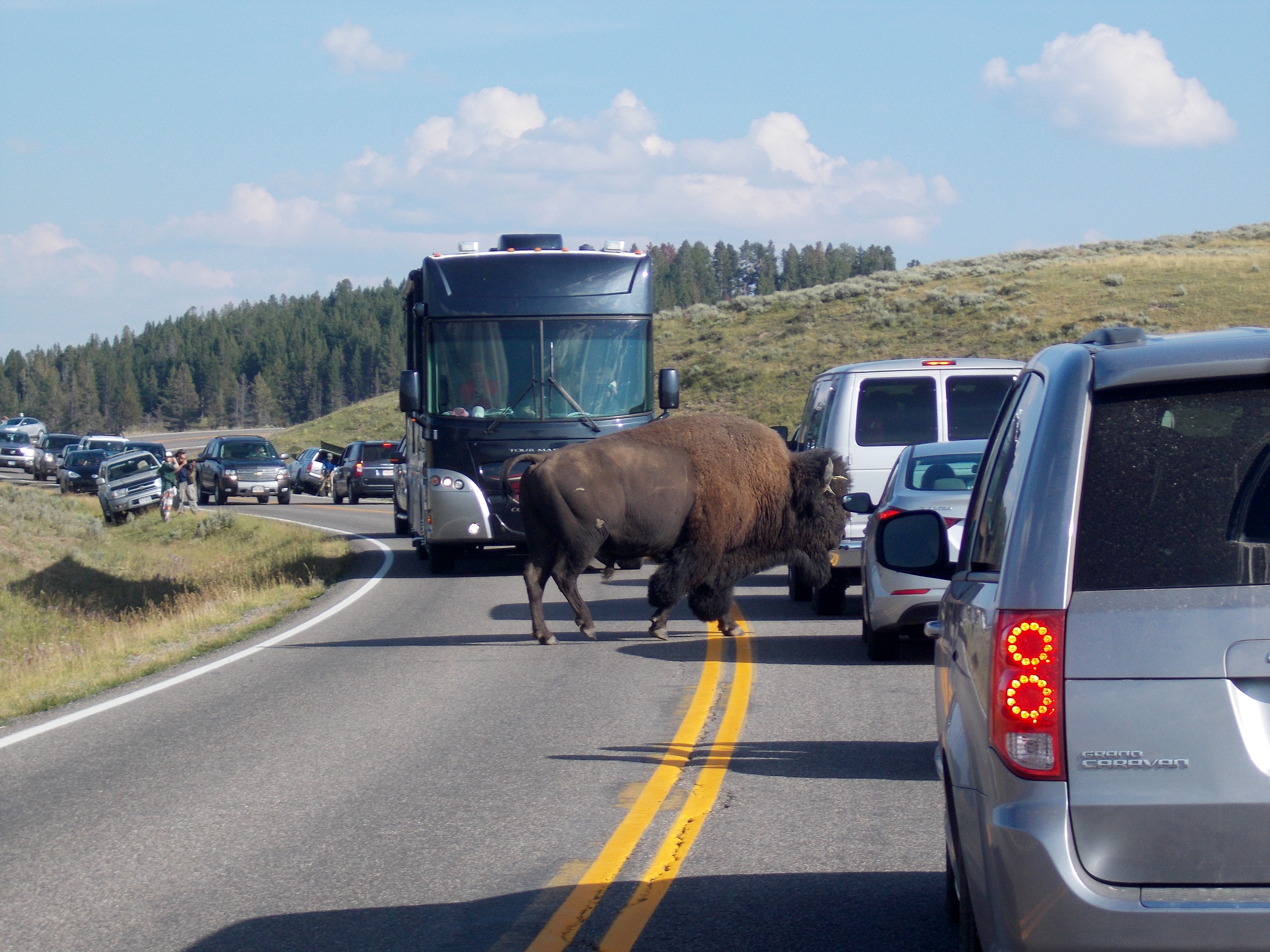
I thought about the bison in Yellowstone demanding that traffic come to a standstill while they marched across the road to new pastures. For all I know, their deep grunts were a sign of resentment towards the cars that clogged the man-made partition of their resources. I was surprised at how gentle they were; they were more than capable of causing damage to the monstrous RV that obstructed their path, by bashing their huge heads against its artificial walls in a determined declaration of  “We were here first.”

079

I thought about the regular signs on the roads of Yosemite that reminded tourists to drive carefully, citing recent bear fatalities (reports state that so far this year, the figure is at 25). How ironic that in our quest to see a bear, we actually end up killing them? We contradict the whole purpose of a national park to conserve a species. It is in Yosemite’s campgrounds that keeping food in cars is prohibited, since recently a few bears learned how to open doors. These bears were then destroyed to prevent the trait being learned by others and to avoid human casualties. But is it not humans that are invading the bears’ space, rather than vice versa?

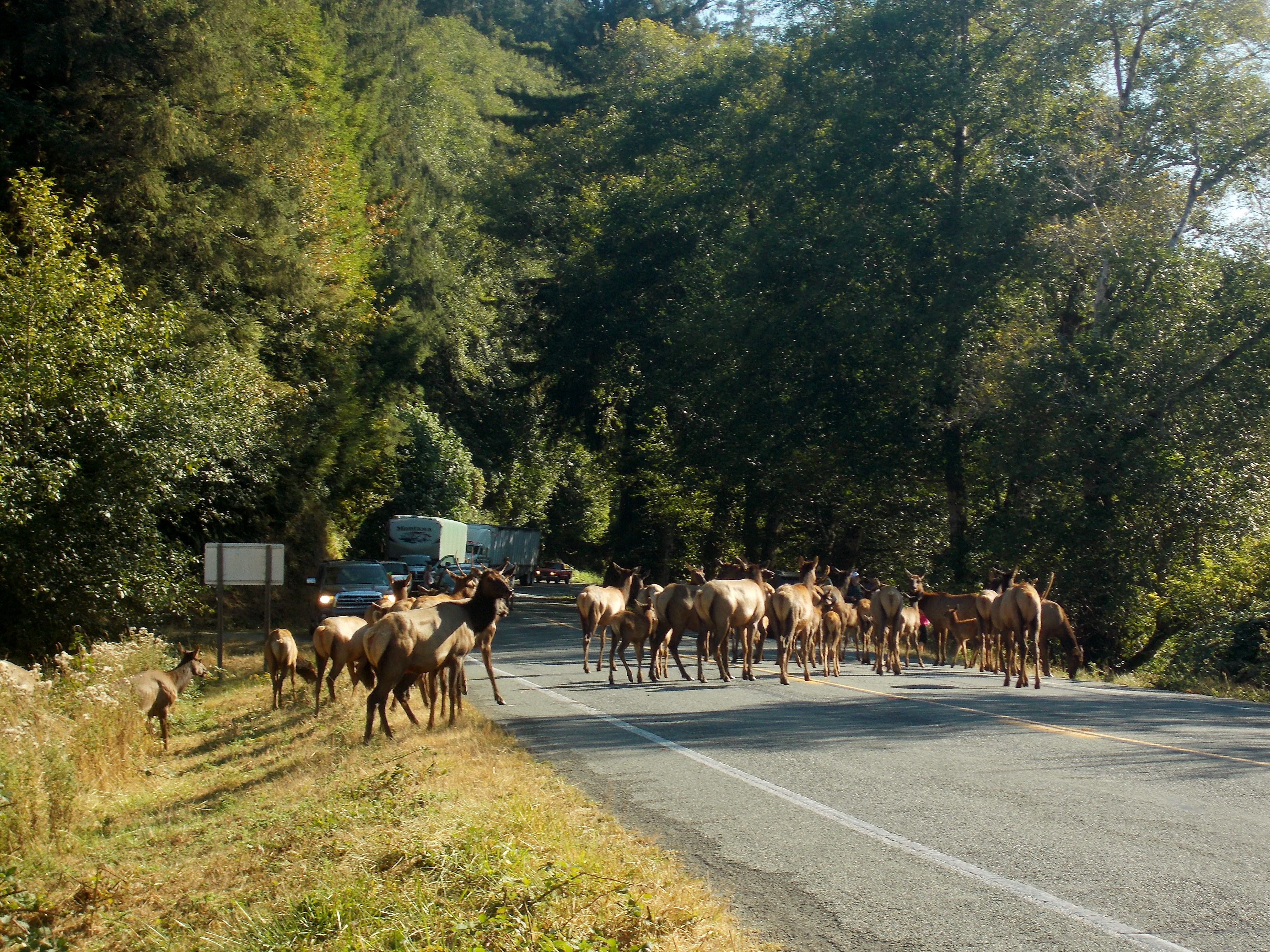
Finally, I thought about the large group of elk on Highway 101 just outside Redwood National Park, who caused a traffic jam when they decided to block part of the road. I remembered a man with long hair who drove a VW campervan videoing the scene and asking out-loud, “What does this mean, animals blocking a man-made road?” At first I had smiled to myself at this apparent hippy-expressionism, then I realised that he actually raised an interesting question. Was this group behaviour a form of defiance against man’s interference in nature?

1466

Does our greed as humans for viewings of rare wildlife touch on the verge of exploitation? Are we not slightly reminiscent of the white man colonising sparse lands in order to generate revenue, killing native inhabitants in the process? It should be mentioned that it is because bison were brought under conservation in Yellowstone that the species was protected from poaching and was subsequently able to grow in numbers within the last century. But back when the park was established in 1872, who was to know that these animals would eventually become the target of the tourist paparazzi? For it has become human nature to stalk the world’s rarest wildlife through a lens.

Obviously tourists, including myself, want to get a close look at wildlife; it’s only human nature. Personally however, I try to respect animals’ privacy in doing so and not disturb them from their natural state. It’s the same way that I would attempt to be discreet if taking a photo of a human stranger doing something interesting, if it was a situation where asking for permission would ruin the moment. Animals have no voice to give consent and therefore cannot be ‘asked’ in the way we humans are familiar with, but that doesn’t mean they condone the behaviour.

After reading ‘Animal Farm’ and thinking about these issues, it almost seems plausible to imagine these animals calling for a revolution against us human tourists.

But then there is the issue of squirrels. At first, it’s cute and endearing when the tame, chubby ones in Zion scamper over to your feet and look up expectantly for food with their tiny paws out like Oliver Twist. Even my friend and I were at first caught in the trap of taking photos and ‘awwww’ing at them. However, you then see them picking on the skinnier squirrels, consequently depriving them of food. Like in ‘Animal Farm’, those animals that interact with humans benefit, and it becomes the case that ‘all animals are equal, but some animals are more equal than others’. If humans weren’t feeding these squirrels, the inequality within the species would be smaller. Like the British Raj in India, it seems that human tourists have cemented power through a policy of ‘divide and rule’. Perhaps if the intrusive human presence left, the animal kingdoms would disintegrate into a state of instability and corruption.

Of course, I expect many people reading to view the idea of an animal rebellion as an eccentric, far-fetched vision. But it is easy to imagine innocent things, just like it is easy to harm innocent beings. As history has shown, both are only human nature.


Unknown's avatar

Bear in Mind | Preparing for a Scare in Glacier National Park

‘Failure to prepare means preparation to fail’: that’s something we’re told growing up, whether in school or before competitions. You would think the same motto applied to travel, and in most cases it does. However, the most memorable experiences from travelling do not necessarily arise from preparation, but pure unpredictable chance.

When I started my road trip through the USA, I didn’t consider the possibility of seeing a grizzly bear to be very high. Having not seen one in the Canadian Rockies three years earlier (a black bear from inside a bus doesn’t count), I assumed history would repeat itself, regardless of the breed’s higher population in Montana. Only when my travel buddy and I were walking along the interestingly-named Thunder Knob trail in Washington’s North Cascades one morning did the prospect of coming across a bear seem greater. A clanging noise grew louder through the trees and we passed a couple in expert hiking gear walking their dog with a bell attached to its collar. My friend looked down at his outfit and said, “Okay, now I feel unprepared.”

In Glacier National Park in Montana, tourists are briefed to prepare themselves for seeing a bear. On arrival at the park’s entry stations, drivers are handed leaflets explaining what to do in the event that they encounter one. (Interestingly, this leaflet recommended making occasional bursts of noise, rather than a constant sound.) Bears were described as more likely to avoid human contact than pursue it, but that didn’t make a backcountry hike seem any less risky.

We drove on to Bowman Lake, the secluded “primitive” campground (“primitive” meaning there were pit toilets and no showers, hence a subsequent cheaper price of $15 per night). From the park’s west entrance to the campground in the north-west, it’s a 32 mile drive which mostly involves dusty gravel roads, switchbacks and plenty of potholes. Some cars turned back, fed up with the slow-driving conditions.

At six miles, Polebridge is the closest village to the campground for stocking up on supplies. A small female ranger at the entry station greeted us and we asked her for clarification of what to do upon coming face to face with a grizzly. “Oh well…you know… you just want to show the bear that is has plenty of space to pass,” the lady began slowly in a cute high-pitched voice, tucking some hair behind her ear. “Just stand still and be nice and calm, you know – ‘hey bear’.” The lady’s tone piped higher as she mimed a shy tiny wave that stemmed from her wrist. “Let him know you’re not a threat, you know, just relax…and back off slowly.” We nodded at her and I bit my lip to stop myself laughing at the thought of this little lady waving up a grizzly saying “hey bear”.

Many more potholes and tight pull-overs later, we were rewarded for our patience by views of Bowman Lake with its scenic mountainous backdrop, before we found a spot in the rustic campground. Accompanying the descriptions of each long-distance hike was a warning about bears. All these warnings, understandable as they were, made me a little nervous.

As we set off on a hike along the Lower Quartz Lake trail, I found myself constantly looking over my shoulder, occasionally calling out “hey bear!” in a voice that sounded way too wimpy. Blood flowed to the tips of my toes and fingers. I was in flight-mode and instructions saying to stay still and not run away upon meeting a bear did not seem realistically achievable. I certainly wasn’t going to stand there saying hello with a wave…

An anxious walk along the Lower Quartz Trail

An anxious walk along the Lower Quartz Trail

Why was I so worried? This wasn’t like me. Was it because I was with male company that I felt a greater excuse to be scared? Or was it because all these warnings increased the expectation of being confronted by a huge animal? It probably didn’t help that my friend, walking behind me, began telling me a story he’d read about a mountain lion leaping from a tree onto a man’s neck in Washington. I laughed sarcastically to suggest I didn’t believe him, all the while glad he was behind so he couldn’t see me scan the trees suspiciously. As we carried on up the path, he proceeded to sing a made-up song to a bear in a baritone voice.

“Can we turn around now?” I asked a few minutes later. “Are you really that worried?” he asked in surprise. I don’t think I was; I too was starting to believe we wouldn’t see a bear. But the anticipation of doing so was making me skittish, frustrated with the boring trail. “Okay, okay, 10 more ‘hey bears’ and then we’ll head back,” my friend promised. When we got to 10, I turned around and took off running for home, side-stepping tree trunks and skipping roots in the ground. The potential danger had charged me with adrenaline and I felt a mixture of anxiety and excitement as I dashed back along the trail, blood pumping, not looking back. It was a feeling reminiscent of that I’d experienced in BC in 2011.

We reached Bowman Lake breathless with fatigue, relief and laughter, and jumped into the glacial lake, fears forgotten in the freezing cold water.

After all the cautions and expectations, we had not seen a grizzly bear. Both of us agreed that we probably wouldn’t see one the whole time we were in the park.

A day later, we made our way along the incredible Going-to-the-Sun road and stopped to make sandwiches at the quiet picnic area in St. Mary. As I opened the trunk to find the bread, a French lady nearby started gabbling excitedly to her husband and grabbed a camera. Intrigued, we followed her to the edge of the picnic area where a few other people had gathered, whispering giddily.

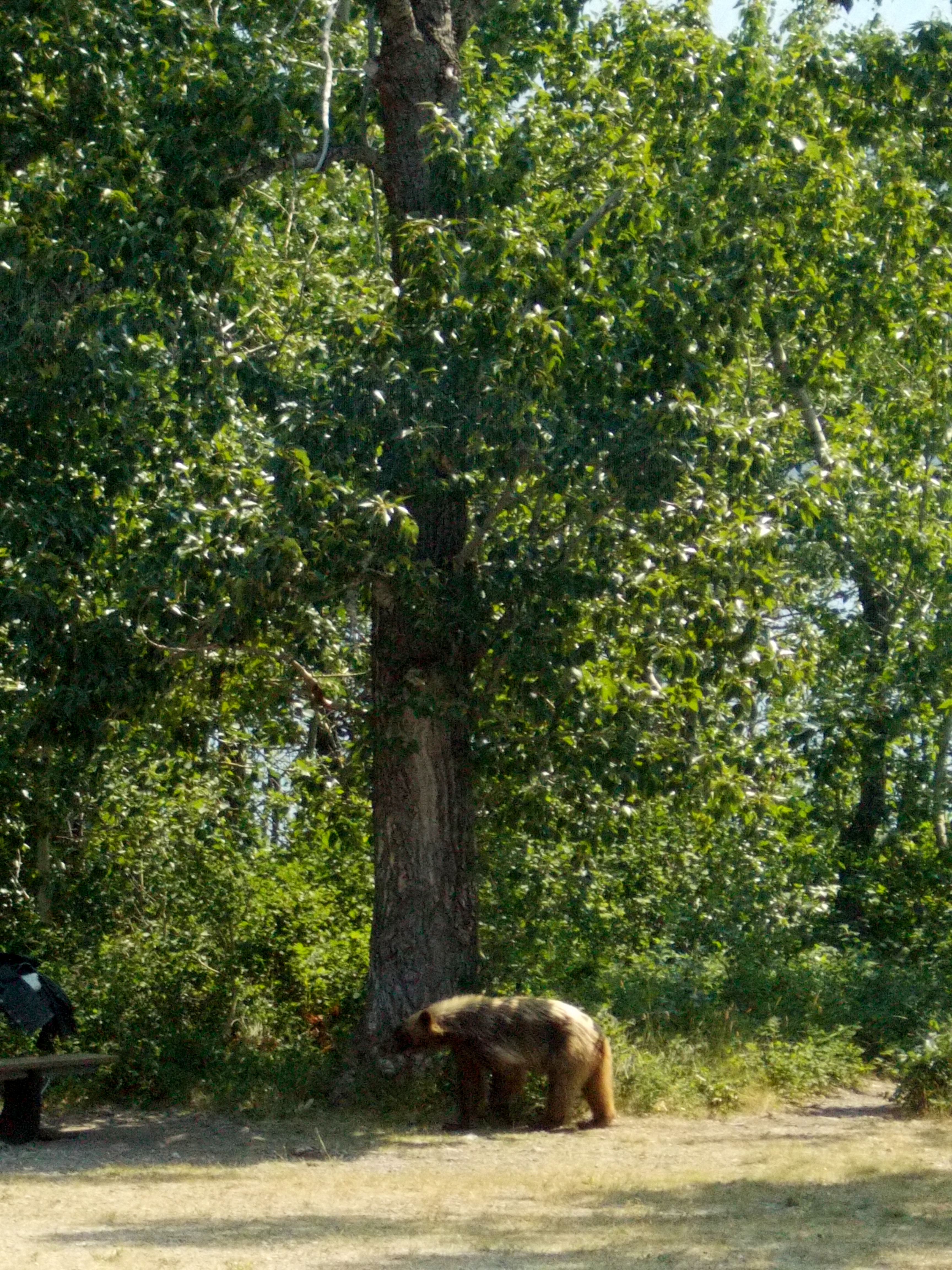
20 metres away, a small grizzly strolled casually out of a narrow path and ambled past the picnic benches, oblivious to the humans staring at him in fascination. “He looks pretty young…” my friend remarked pointedly, but still people crept out from the bush to take a closer shot as the bear wandered on absent-mindedly into another pathway. Two couples peeped out from the path the bear came from and called over “Has it gone?” French-couple waved them over. “I’m pretty sure it was a cub,” my friend said louder, but again, his hint wasn’t registered. However, it soon became clear the bear was alone, and people went back to eating their sandwiches, as if nothing had happened.

Indeed, it was almost as if it was the thousandth one I’d seen; there was no overwhelming rush of fear or excitement as I had expected, perhaps because I had been bracing myself for this moment for a while, and because the sighting had occurred in a more populous area and with less drama than I had anticipated.

"hey bear"

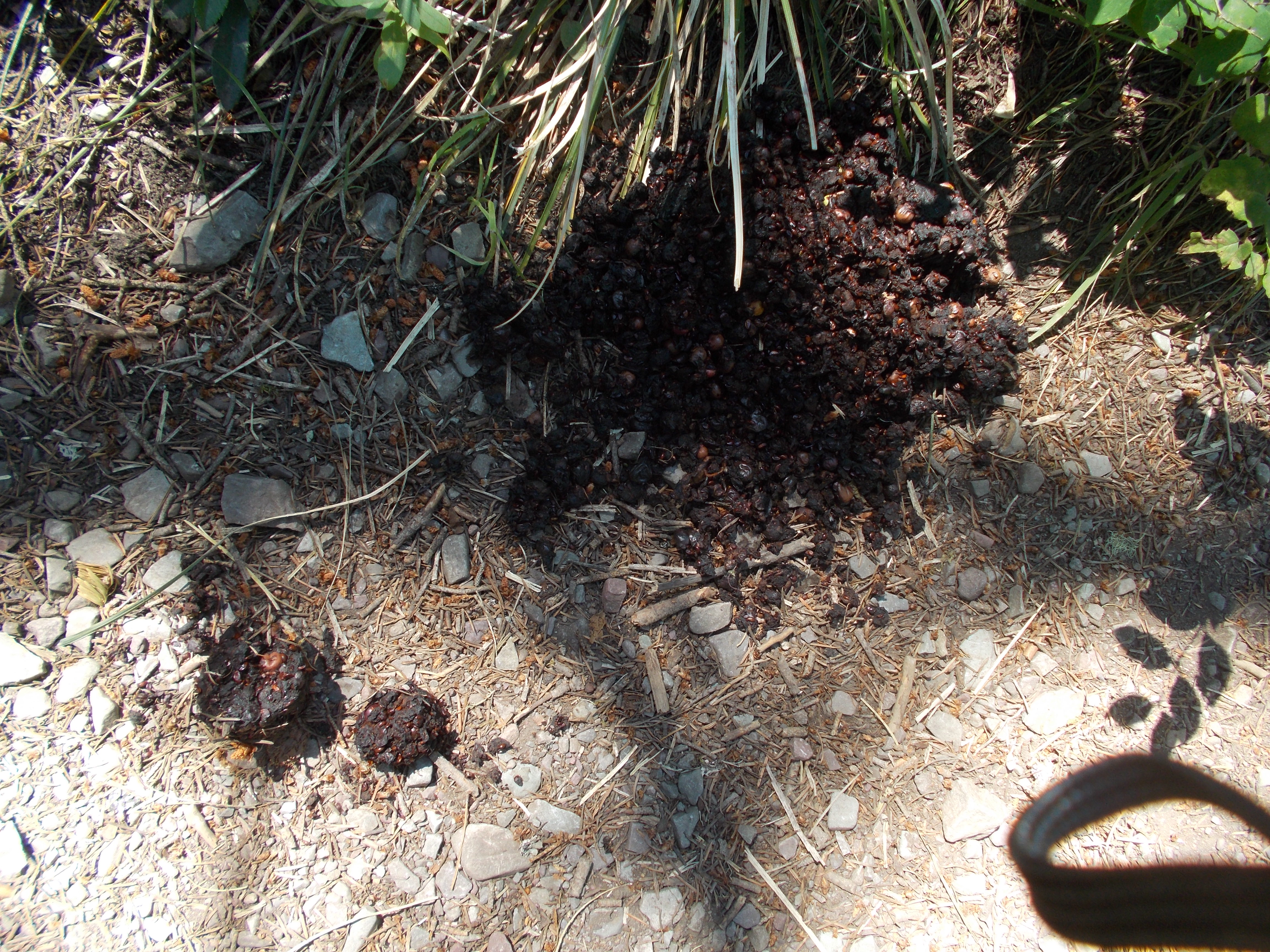
A few minutes later, we ourselves walked along the very path the bear had emerged from to sit at the edge of St. Mary Lake. Even though there was a fresh pile of bear dung feet away, decorated oh so prettily with huckleberries, I didn’t feel nervous at all, completely unfazed by the possibility that this bear might return the way it had come.

Likewise, the first mile of a hike to Otokomi Lake later that afternoon featured bear droppings every 100 metres or so, but still I felt no fear. Finishing the 10 mile-return trail in one piece, I joked light-heartedly, “Calling out ‘hey bear’ probably wasn’t the most sensible phrase to use.” My anxious anticipation had reduced now that I had actually seen the talk-of-the-town for myself.

Definitely makes the 5-a-day of huckleberries...

Our sighting was an experience that many tourists diligently prepare for, researching promising time periods of activity and driving themselves to the most recommended locations before spending hours waiting there, all just to catch a glimpse of a grizzly bear. And yet, kind of like trying really hard to find a new partner, it seems that trying too hard at sightseeing might even threaten progress. Events happen when you least expect them and are least prepared. It’s easy to get drawn into the hype of potentially seeing a special wild animal in risky circumstances; it’s the expectation created by this hype that can make us more nervous than is perhaps necessary, and subsequently less successful.

I feel really lucky to have seen that bear, knowing that many tourists will leave Glacier National Park feeling disappointed about missing out. It almost seems unfair that it happened so easily. Sometimes people simply find themselves in the right place at the right time, and there are no bear necessities when preparing for this type of experience.

Unknown's avatar

The Test of Time

How does one assess how they’ve ‘improved’ as a traveller?

Three years ago as I was getting ready for my first solo trip to Canada, I was both excitedly and anxiously curious about the places I would see and people I would meet, with no idea what to expect. I packed and repacked my backpack, stressing about being able to fit everything in. Upon landing in Toronto I had a swarm of butterflies in my stomach as I fluttered around the airport in a daze of confusion. Relief came when a man from a bus company approached asking if I was looking for a way to get downtown. I sat upright staring out of the window the whole way with a beating in my chest, too nervous to make conversation with anyone else. When I got off the bus in the city I had little idea of where I was or where to start, asking a girl who looked my age for directions with a squeaky voice. I had to spend five minutes psyching myself up to approach a group of people who were cooking dinner in my hostel.

312239_10150812167515495_1532680086_n

On the ferry to Vancouver Island, August 2011

Then, three years later in July I went back to Canada and the feelings were very different from the first time. Excitement was there, but of a different kind. There was no real sense of wonder about what it would be like; I was simply returning to what felt like a second home. I was like a child returning to my usual sweet shop on the corner to buy my usual treat, knowing that it would be there and I would enjoy it. Packing took little time and I glanced over my backpack like a protective parent less frequently. Gone were the butterflies as I strode through Vancouver airport’s arrival lounge. I still wasn’t sure exactly where I was going to get to my final destination, but it didn’t worry me like it would have previously. I calmly followed signs to the trains and confidently asked people questions when necessary. I then boarded a bus and sat back in my seat relaxed, exchanging smiles with an old man when I heard him make a joke to someone. I bought a ticket for the ferry to Vancouver Island and initiated a conversation with an older man and woman. It was only when I arrived at my final destination that the excitement really vamped up. On that first evening back in Canada, I felt immensely proud of how far I had come since my first travel experience alone.

936681_10154684643875495_8157810608376501458_n

A boat trip around the island,  July 2014

So much assessment of a person is carried out using academic testing – systems based on objective, quantitative scoring. The education system in England and many other countries means that one only adopts a belief that they are improving at a subject if they receive an improved numerical score for an examination.  Even if someone feels they are understanding a topic easier, receiving a low or average score dents their self-belief. Students are pushed into a system where learning is about passing exams rather than developing a wider intelligence that can be applied to everyday life. However, some of those students who consistently receive the highest marks will have little confidence outside of the classroom in a new social environment. Their grades say little about their personal human development as a whole.

The numerical system of assessment doesn’t have to be used with travelling. There is no test to pass in order to impress anyone nor checklist to complete for someone else to approve,  but simply an experience for one to evaluate for themselves qualitatively. Real-life events allow one to see how far they have developed not as an academic in one specific intellectual sphere, but as a person in general. If a mistake is made, such as getting lost on a map or being conned by someone, there need to be less stress about the repercussions it will have on one’s future career – it is simply a useful life lesson. There is no rush to become better at travelling within a short time period, unlike the pressure a student can face to understand algebra or the Second World War in two weeks’ time. Travel really is one of the most independent, most effective, most fulfilling and most enjoyable forms of learning.

When I returned to Canada, my confidence and ability to travel alone had increased over the past three years not from three years of studying for a degree in London, but from the summers throughout this time when I went travelling. These were the times when the biggest tests were asked of me: the ability to organise myself; communicate with others effectively; cope with difficult situations; be decisive and use initiative; be constantly physically active and mentally alert. No longer were these tests being asked of me in the classroom, but in the real world. And one of the best ways to assess how I had grown as a traveller was to return to the place where it all began and compare the emotions felt. Of all the exams that I have taken on the way to completing my entire education and therefore preparing to enter the real world permanently, travelling has been my favourite and most valuable test.


Unknown's avatar

Nudity and the Solo Traveller

Summer: the season to lose one’s clothing. Out come the bikinis and boardies, Pimms in the park and strawhats on the sand. The combination of summer heat and fewer clothes changes people. They become more cheeky and flirtatious. Van drivers whistle from their windows, runners cast sneaky glances at the others they pass, and Facebook becomes filled with bikini-selfies. Flesh makes people frisky.

When it comes to actual nudity however, something happens to Brits and their flirty chat remains to be just that. In Britain, our ‘stiff upper lip’ appears to display itself at the sight of a naked body, particularly towards one whose owner isn’t exactly in their prime. Naturists tend to be mocked as tree-hugging hippies who are an embarrassment to society.

By contrast, my experience of other areas of Europe so far suggests that attitudes towards nudity in these countries are a lot more relaxed. I’ll never forget kayaking past a beach in southern France during a school trip ages 13, an old man’s legs spread wide open bearing all. Rarely in Britain would you see such sights.

If you’re ever in Baden-Württemberg, Germany, make sure you spend a day bathing at Bodensee, near the Swiss border. It seems like the region’s entire 18-25 year old population descend on the town of Konstanz on a hot summer’s day. Boys jump off the bridge into the bright blue Rhine in attempts to impress the line of ladies lounging on the side of the river. Further along on the Strandbad Horn, the noise gets quieter and the people fewer. Sun-lovers sunbathe behind bushes on the edge of the lake, sometimes in the nude, or at least topless.

Lake Constance

I like to think that I’ve put myself out of my comfort zone a few times whilst travelling, and that I would continue to try new things. In previous posts, I’ve been writing about how travelling alone makes you more likely to do things that you otherwise might not consider in your home country. Looking back to that day in Germany, I felt completely comfortable being surrounded by sights of nudity. Everybody was just doing their own thing and it didn’t feel like anyone was being perved on (well, apart from one hunky guy by me). Those who wanted to bathe topless could do so and not feel like all eyes were on them, and those who didn’t feel like undressing could carry on as they wished. It was difficult for me to think of places in Britain where one could sense so much tolerance towards nude bathing. Whilst I didn’t feel any inclination to be pursuing this activity myself, I thought that I was totally cool with public nudity.

Go forward a year to my trip to Iceland. Nauthólsvík Geothermal Beach was opened in Reykjavík in 2001. It’s a small and cosy haven of golden sand and warm water. You won’t get the temperatures of Bodensee, but will get the same sight of people bathing. Another key difference from Bodensee is that no chemical cleaners are used in the heated water, so visitors are expected to wash beforehand, naked. Ignore this expectation and you will (understandably) not be too popular with the Icelanders. It’s a bit like the offence caused in Britain when a Yorkshireman moves to London – you’ll never be viewed with the same amount of respect again.

999447_10153297324070495_465050262_n

I arrived at the beach and saw a large group of people sat in the hot tub, chatting with each other. They all seemed to know one another, or at least, seemed very comfortable around each other. Suddenly, shyness enveloped me and I couldn’t walk any further.

I spent five minutes waiting near the entrance as men and women – mostly 50+ looking – passed me to enter the changing rooms. I was pretending to look out into the bay, but really I was psyching myself up to shower naked in public. I imagined myself stood among old ladies in a communal shower, and I was petrified. “Just walk in and scout the area – the showers might not be communal, and you can always walk out,” said a voice in my head. “No!” retorted the other, “If you walk away, they will know you were afraid of getting naked”

I paced from one foot to the other, weighing up the options. It wasn’t like it would have to be awkward. There needn’t be any judging. All I had to do was be naked in front of other women for about 20 seconds. I would never have to see them again. We were all in the same boat. I was 21 years old, I needed to stop being a pansy. The place was free, it wasn’t like I was paying for potential cringy-ness. Surely it would just be like the many other things I’d done after originally being nervous about them. Afterwards I would look back and laugh at my anxiety, right? Was I really going to miss out on this new opportunity just because of feeling bashful about potentially seeing an old lady’s private parts? Oh jeez. Just the thought made me shudder.

There were a few large rocks around the edge of the beach. They signaled safety, and I tactically decided to take a long walk around the perimeter towards them. My sense of relief increased the further away from the changing rooms I went. I sat and looked back at the building. It looked so innocent and inviting, yet so sneaky and devious at the same time. The close proximity of the changing rooms to the hot tub meant that nobody would be safe from stranger’s eyes. It wasn’t like at Konstanz, where nudity could be a lot more inconspicuous.

Nearby, a few ladies swam in the bay, grimacing as the cold water first touched their skin; the price they were paying for not showering naked in front of others at the public bath. I decided that I would rather be in the warm water, and therefore take the plunge and have that shower…But really, would I? “Yes! Don’t be a loser. Go get naked,” the voice said. I hesitated again.

Suddenly, music began to play from the changing rooms. To my surprise, it was the Baywatch theme tune. The distinctive sound of that thumping piano brought a smile to my face as I was reminded of Wednesday sports nights in my uni’s student’s union bar – drunk rugby players pulling off their tops and waving them around wildly without a care in the world. That was the attitude I should have. I quickly made up my mind – I was going to do it, I was going to shower naked in what was potentially a public place.

I rose from my hiding place and began bounding across the sand towards the changing rooms purposefully. Determination surged through my veins, arms swinging resolutely, my heart beating faster with the adrenaline. I felt good. I was ready. Bring on the nudity!

As I approached the facility, I saw a few people leaving. Perfect! Even fewer people to shower with. Then I noticed a sign with the word ‘Closed’ on it. Oh. So that song was the cue for the lunchtime break. I’d missed my chance, just as I had finally prepared myself to get nek’ed. I looked at the changing room entrance and shrugged my shoulders in defeat. Then I breathed a sigh of relief and strode out of the exit contentedly.

Of course, looking back now I think of how silly I was to get all shy about the prospect of being naked in front of a load of random women. I had both surprised and slightly disappointed myself with my bashfulness. But nudity happens to be a particular subject that can make even the most confident-sounding people blush.

Was my behaviour inspired by the British outlook towards nudity that I’ve grown up witnessing? Or are there just some things that it’s not so easy to do when you’re alone? Deep down, I know I shouldn’t have restricted my travel experience like this. I’m taking it as a lesson in how letting timidity determine your decisions will only lead to regret. 

So, I put my hands up and vow that one day, I will visit a public geothermal bath like this one and shower naked in front of strangers.

Unknown's avatar

Familiar Faces in Foreign Places

You’re in your home country at a bus stop or in a lift or some other enclosed space, joined only by an older stranger. The stranger begins speaking to you and so you engage in polite small talk to fill the time, almost because it feels necessary in order to avoid an awkward silence. Then you part ways and forget about the other person. A few days later, you see them again in a more public context, but they are not looking to be busy themselves. They don’t notice you and you have no reason to speak to them. What would you do – walk right past them whilst looking in the opposite direction, or go up to speak to them, regardless of hardly knowing them?

It is hard to believe that one would feel any desire to approach them. The social-networking generation seems almost too afraid of the potential gawkiness of human interaction to strike up conversation with a random person they share no established connection with. Familiarity is a comfort. When someone is certain of their position in their nearby surroundings, they are less likely to feel the need to communicate with a vaguely familiar human being. If you go on a solo trip to a foreign-speaking country, you might find yourself amazed at how easily the rules of the equation can change.

Day One in the Black Forest, Germany. I had spent the night in a youth hostel in Freudenstadt, a market town in the north of the area. Before a day of hiking commenced, I dropped into the tourist office to quickly find inspiration for a route. Walking out of the door whilst running the directions through my mind, I almost bumped into a man chaining up his bike. “Hey there!” he said cheerily in an accent I instantly recognised as Canadian. “You’re staying up at the youth hostel, aren’t you?” I was taken aback by his genial approach and replied with a hint of uncertainty, wondering how he knew. “I cycled past you on the way here – I’m at a guesthouse in town,” he added, as if noticing a look on my face. He looked to be in his early forties, but despite his older age I still found his confident chattiness quite surprising.

It seemed only polite to ask a short question or two.  After sharing his plan for the day, the man remarked, “You’ve picked a great day for a hike,” nodding up at the blue sky. This seemed like an appropriate time to move on, so I wished him a good trip and we parted ways. I promptly returned to recalling the name of the path I was looking for, and my brief encounter with the man was forgotten in favour of sign posts and sweet little streams.

312911_10152041169225495_1858244718_n

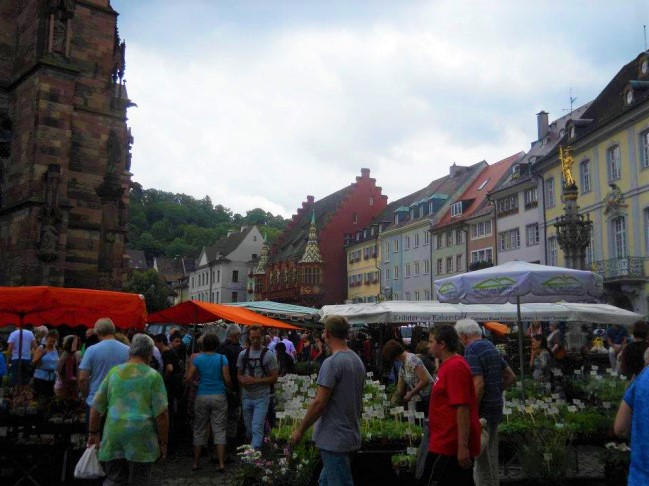
A few days of moving southwards later, I ended up in Freiburg im Breisgau, where I would spend a few hours of the morning before heading back to Heidelberg. The town is famed for its Minster and for being Germany’s sunniest city. Sunlight wasn’t out on show today though. Thick clouds created a sense of lethargy as I dawdled through the large hoard of tourists and students in the university town. It was market day and I squeezed and side-stepped past people looking at various cheeses and vegetables and wines, feeling like a mouse amongst the mania. Elbows knocked me and I looked around dazed as the air was filled with rapid German chatter. The past few days had been filled with walking and my legs felt sluggish. The weather and the people were draining, and I suddenly felt a little overwhelmed by my surroundings. I needed to stop and recover for a minute.

Freiburg

An ice cream sign called me over. One scoop of mint choc chip – heck, why not two? I walked on past a row of picnic benches filled with tourists gorging on bratwurst and burgers. Suddenly, one of the munching men caught my eye. I realised it was the Canadian man I’d seen a few days earlier.

Without thinking twice, I bounded over to say hello, feeling a wave of respite from the mass of unfamiliar people. Caught unaware, the man looked up mid-ketchup-spurting-bite with wide eyes of surprised embarrassment. He’d see me standing in front of him holding an ice cream in my hand with a big grin on my face, like a little kid. We both laughed at how silly we looked. After a proper greeting, the man asked if I’d like to join him for a drink at a nearby beer garden that served only Swabian speciality beers. I said yes without hesitation.

My initial dubious impression of the man had completely vanished. In the last three days I had only uttered about 50 words. I was craving some human contact through which I would be able to have a fluid conversation in my own language for a few minutes. Having felt lost in and exhausted by the busy state of the town, the man’s familiar face provided an element of reassurance. So I went ahead and did something that would have probably been classed as ‘breaking a rule’ back home – going to have a drink with a male I hardly knew, and a much older male at that. But the man’s age wasn’t on my mind at all as we found a table on an upstairs terrace and chatted about Canada. He said I seemed to know the western side of the country better than him. His name was Kevin and he worked in the civil service, but loved cycling in his free time.

As he ordered and paid for our drinks, attempting some basic German with our waitress, I realised that Kevin was a genuinely good-natured person. I told him about my degree and my hobbies, and that I would be volunteering at the Olympics when I returned. With a big smile he said, “Well it seems like you have a lot going for you, Shannon.” Those words have stuck with me since.

Once we had finished our beers (I tactically ordered a half-pint so he wouldn’t have to wait for me), we headed back downstairs into the street. I felt rejuvenated, my batteries recharged. Kevin planned to spend a few more hours in Freiburg, while I needed to head back to the station. After a quick hug goodbye, we parted ways for the second and final time. There would be no sharing of contact details to keep in touch, as is so often the trend amongst young travellers who have spent a few drunken hours together. It was just simply an hour of shared company that made the day a little more interesting for both.

I’ll likely never see that man again, and so he will never know how valuable I found his company for that short time (unless, of course, he finds this blog!) I had never felt so glad to see such a familiar face whose owner I was so unfamiliar with.

My dad told me two things before I travelled solo for the first time: 1) that travelling alone makes one more open to new people and new experiences, and 2) that it makes one realise that people are nice. After that morning in Freiburg, I realised that I had underestimated the applicability of his statement. It’s something that is not just relevant to people you meet in bars or on a tour, someone sat next to you on the bus or sleeping in your dorm; it can also be relevant to random situations where there is no expectation of speech and interaction. If someone is alone abroad, they are likely to feel more receptive to the company of an unfamiliar person, if that person seems more familiar than the alternatives. And yet, if they were in their home country, they might not even consider approaching a stranger.

I now have a better understanding of why people in a foreign country sometimes crave contact with someone that speaks their language. It can be a form of comfort – a reassurance when one is feeling insecure in or disillusioned by their unfamiliar surroundings. There is no shame in craving some ‘home-away-from-home’ moments – everyone is bound to experience that need at some point whilst travelling alone.

The rare coincidence of seeing someone again in a foreign land made it seem silly for me to avoid approaching the Canadian man. It seemed like one of those moments that happened for a reason, to not only boost my morale but teach me a life lesson.

So if you’re overseas and an older stranger starts talking to you enthusiastically, go with your gut of course, but try not to make assumptions about their intentions and subsequently dismiss them off the bat. A few days later, you might appreciate their bold and unconditional friendliness.

Unknown's avatar

Sharing Cars with Strangers

What was one of the first things your parents told you when you went outside to play? I can imagine it was either “Don’t talk to strangers” or “Don’t get into a car with a stranger”. Well, now you’re older, you can be a little more flexible with that advice. If you’re on a trip at home or abroad alone and make a spontaneous decision to travel somewhere else located a few hours away, chances are that you will pay a pricey fee for a last-minute train. Buses may not run regularly and will take a long time, whilst planes can be an expensive hassle. So why not share a lift with someone? A stranger, that is.

I first became introduced to carpooling when I was in Germany. Help-exchanging at the home of a teacher in Hamburg for a week, I then had to make my way to a village in the Rhineland-Palatinate. As I searched for trains on my host’s laptop one evening, she suggested I try ‘Mitfahrgelegenheit’. I looked at her blankly. Advertising lifts was something that I hadn’t even heard of in my own country – hitch-hiking yes, but not organised car share. My host proceeded to show me a website where drivers offered space in their car to travellers heading in the same direction, in return for a contribution towards fuel costs.  Drivers were asked to state details including whether or not they smoked, the make of their car, their mobile number and a copy of ID. I was open-minded about travelling with a man, however my host, perhaps feeling responsible for my welfare, was insistent that I travel with a female. We soon found a lady heading in the same direction as me.

At this time, my German vocab was pretty minimal. Only a couple of sentences in my email to the lady were written in German. Her reply was written in good English, but it still ended with the line: “I’m sorry, I know that my English is not good. I hope you can understand me.” The lady asked for 27 Euros for this journey – about 50 Euros less than what a train would have cost. She gave me her vehicle registration number and asked to meet outside Hamburg’s Hauptbahnhof.

On a rainy Wednesday morning, I made my way to the parking lot outside the main station. I was quite excited for this new experience, but a little nervous too. What if the lady didn’t show up? What if she was a terrible driver? What if her car broke down and we were left stranded somewhere on the autobahn? What I didn’t worry about however was whether she would turn out to be different from her profile. The media will often feature horror stories of women being kidnapped by strangers posing as someone else, but I’ve had enough positive experiences to have faith in the kindness of strangers.

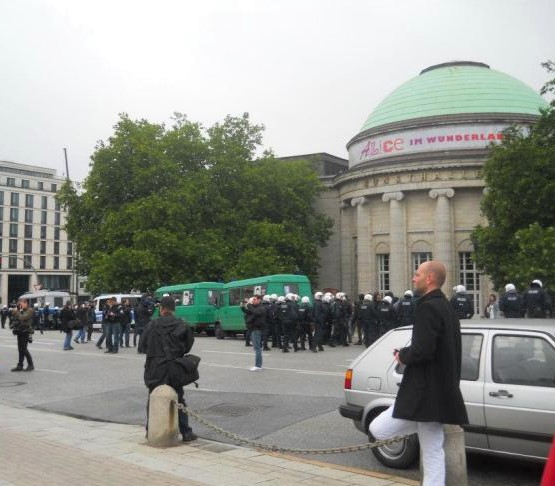
The street was bustling with chanting crowds. Police officers in smart blue uniforms formed barricades as they came closer to the station. I approached one officer to ask him what was going on and was told that it was a political protest.

531200_10151990417805495_244029214_n

I wandered along the pavement, feeling very conspicuous with my big rucksack as I scanned the cars parked along the side of the road. Suddenly I spotted a navy blue Renault Clio with the registration number I was looking for. Beside it watching the protest stood a rather large woman with a pixie haircut and scruffy trainers. I introduced myself and she shook my hand with a shy smile. There was little room in the boot and so I sheepishly squeezed my backpack onto the backseat amongst her own things before sitting down in the back.

A few minutes later, I heard a backpack being thrown in the boot behind me and then the passenger door in front of me opened. The smell of thick smoke, body odour (as well as a slight whiff of urine) swept through the vehicle as in jumped a male skinhead dressed in black, looking like he’d just run away from the police monitoring the protest. He turned to shake my hand and say hello with his stale breath. “Ich komme aus England,” I stated, trying not to wrinkle my nose. He nodded with an “Oh” and said no more.

As we set off, I had to bite my lip to stop myself laughing at the thought of what we must have looked like to other drivers – a bizarre combination of a rather masculine-looking woman, an emo-type guy with no hair, and a young woman with long bright blonde hair. An awkward silence suffocated the car. Eventually, the two Germans started to chat briefly whilst I stared out of the window, trying and failing to understand them. However, their conversation soon ran out of steam and as we joined the autobahn, the driver turned on the radio, flicking between radio stations sporadically as if realising that there was unlikely to be one which we would all enjoy. Smelly-skinhead-guy reclined his seat backwards so that his smell lingered closer and I became even more cramped. Desperate to avoid any awkward speech, I remained with my legs jammed tightly together to one side, wishing I could jam my nostrils shut too.

Two hours later, the driver turned off and I looked up disorientated. “We will stop here for 10 minutes,” she said to me slowly. While the guy lit a cigarette with jittery hands outside the car, I followed her into the service station to use the bathroom. I had to pay 90 cents to use the facilities. “You can use the ticket for food,” she explained again, pointing out a sign which showed a 50 cent discount on confectionary.

Smelly-skinhead-guy would leave us at Frankfurt Airport, from where he was flying to South America. I pitied the passengers who would be sitting near him. I jumped into the front seat and wound the window down with relief to remove his musty smell. I hoped that the driver and I would be able to speak more now. However, as is common with languages, the lady was less confident at speaking English than writing it. Carefully-phrased questions by myself in English would receive stammered and uncertain responses from her, upon which I would attempt the question in German, with no further success as I struggled to make myself clear. It became a rather frustrating process, until eventually the conversation fizzled out helplessly. In defeat, I turned to look out of the window at the wind turbines on the side of the autobahn, before we entered rural land and the views were replaced with fields lined with vines and Church steeples poking up out of small villages.

I felt bad, wishing my German was better so that I could make the experience more interesting for both of us. At the same time, my driver said apologetically, “Normally there would be more speaking.” She dropped me off on the street of my next location and I handed her the money, thanking her for the ride. Then she wished me a pleasant stay and I in turn wished her a safe onward journey, before we said goodbye with an awkward wave.

The experience was a reminder of the social restrictions that a language barrier can bring, particularly in such an intimate environment as a car. Now my German is so much better that, had I the opportunity to do it again, I would have got so much more from the journey. Nevertheless, whilst conversation between the three of us was limited, it was rare that I would find myself in that context with such different characters very often. It’s a story that I can look back on and chuckle over.

Carpooling in general is something I would highly recommend. It might not be the most glamorous form of travel, but it depends on your priorities; some people want luxury, others just want to get from A to B for as cheap as possible. By choosing the latter option, one has more money to spend on the more important things!

While I didn’t have much luck with this myself on this occasion, ride-sharing provides an opportunity to make interesting contacts, and the act of doing a favour for a stranger is a nice, refreshing prospect. As much as I joke about the guy in the car, carpooling is an experience which reinforces that strangers are not to be fundamentally suspected or feared.

Bensheim – my final destination

I would definitely consider using carpooling on future travels around Europe, and I’d hope other travellers would too. Something that can be regarded in this technological age as the modern version of hitch-hiking, carpooling is cheap, convenient and certified. Maybe just bring an air freshener with you as an advance gesture of gratitude…

Would you ever consider car-pooling? Have you any weird and wonderful carpooling experiences to share?

Unknown's avatar

Romance on the River | Summer Evenings in Germany

July 2012. My first year of university was complete and I was spending three weeks away on my own. Whilst back home in England, thousands of tourists from all over the world were being welcomed into London for the Olympic Games, I was following various rivers up, down and across west Germany. On the way I would encounter scenes of romance that would both captivate and torment me.

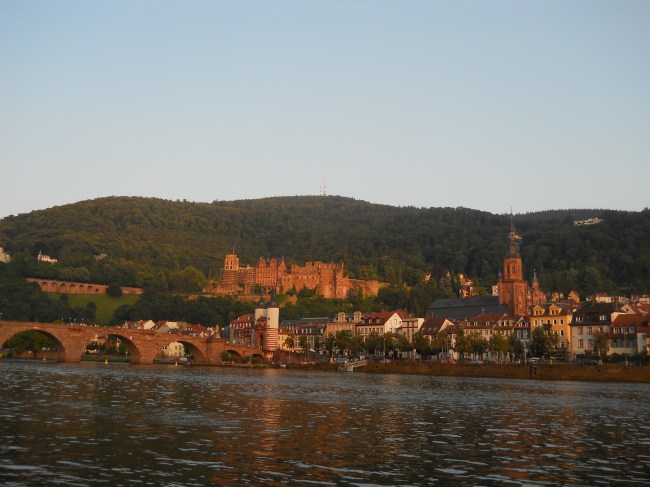
Heidelberg is the epitome of ‘charming’. It’s a town bustling with activity but it still manages to retain an intimate, personal feel. During one afternoon there, the sweet sound of Spanish guitar distracted tourists from admiring the cuckoo clocks in shop windows, causing them to stop with ice cream in hand, in order to watch a juggling act. The guitarist watched the juggler carefully, corresponding his chords with his partner’s fluid movements. Wedding bells rang through the town as I began the ascent up the 300 steps to the famous Schloss. Newly married couples had their photo taken here, with its charismatic backdrop of the town and River Neckar. Even cloudy skies couldn’t dim the glow of this place.

Heidelberg (2)

In the evening the sun came out. After casting a proud glance over the coverage of the Olympic swimming from London in my hostel’s bar, I ventured outside for a walk. Everything smelled fresh after the late afternoon rain shower. Squelching sounds of trainers on the puddled path recurred as chatting couples jogged past. Upon reaching the central hub of town, the activity picked up: boys and girls flirted over a game of volleyball; children charged around the water fountain, shrieking wildly in their swimsuits; elderly men and women chatted on benches, walking sticks by their sides, as middle-aged couples walked past hand-in-hand. The sun dazzled off the surface of the River Neckar and enclosed the Schloss in a perfect bubble of radiance. Groups of swans gathered together under the bridge near the river bank, before gliding off together towards the glittering path laid by the sun on the water, its cheeky twinkle promising excitement. They joined a sole rower slowly oozing his way down the river, his oars making faint ripples in the peaceful water. Topless boys on mopeds rode over the bridge, beeping at girls in short shorts in a way that made one laugh rather than feel repulsed. There was an infectious energy in the town, playful and cute.

Warmth from the evening sun on my skin made me feel relaxed and animated at the same time. I felt glad to be alone just so I could watch all the different people doing their different things, wanting to absorb all the activity around me. The moped boys came round on another loop of the bridge, whistling and calling out to the giggling girls. Normally I would have ignored them or made a face; tonight if they had offered I would have jumped on the back and rode off with them around town. It was that kind of evening – the ones that make you wish it could be summer all year round, when the sun is out and it feels like anything could happen.

Image

A day later I was in Mainz. On paper it’s pretty similar to Heidelberg – another river town that attracts plenty of tourists, runners and cyclists. But here I felt a completely different set of emotions altogether. An evening run took me through the Volkspark with its pretty flowerbeds and along the bank of the Rhine. Couples sat on the steps kissing, or snuggled up looking over the railings into the river. I crossed the Theodor-Heuss Bridge onto the other side, where the cosy couples continued. As my legs began to grow more weary, so did my patience. Suddenly it was no longer sweet and touching to see these scenes of affection. My shoulders were sagging as I reached the former Kaiserbrücke. Padlocks dotted the partition between the railway bridge, souvenirs left by travellers and etched with love notes – S.A ❤ T.H – and so on. I stopped to read over them pensively, wondering what the love story was behind each one. Cyclists would occasionally ride past, but there would be no interaction this evening. I turned to lean my elbows on the railing, chin in hands as I watched the sun go down wistfully. As it fell lower in the sky so did my mood, until I’d dropped into a lonely state of melancholy, the most alone I’d felt in a long time. My thoughts drifted off with the river current, and I felt sad.

We’ve maybe all been there once, experiencing that moment when you suddenly realise something about that person: that person whose perfectly-sculpted face with the dimpled smile had mesmerised you for so long, giving you butterflies every time you saw them, to the extent that there were times you couldn’t look them in the eye for fear of blushing; whose hot and cold behaviour was always excused by you out of desire to believe they felt the same way, telling yourself that you could help motivate them to become a better person; that person who you had waited on for so many months, only to be repeatedly disappointed; someone whose company could be so magical, and yet leave behind a curse of confused questions. Finally there comes a time when you realise that you were completely deluded out of desperation, and they never really had felt the same way ever. Your feelings had been governed by a vision rather than by reality. You realise how humiliatingly and obviously un-reciprocal the whole affair was. Then you think of the people in the past who actually did care, whose friendship you had possibly sacrificed because of your obsession with this other person who was so emotionally unavailable. And now, that loyal friend was perhaps no longer available either, just when you would have truly cherished their company.

I stood gazing down into the water lost in my thoughts. Suddenly a lone swan glided out from underneath the bridge, as if it had been left by its friends back in Heidelberg and come wandering upland on its own. It was a pitiful scene – a bit like those drippy ones in American films where the guy/girl has just been left by their loved one and everyone seems to ‘have someone’ apart from them. I wanted to laugh and cry at the fact that my state of being was essentially being portrayed by a swan. Any minute now someone would probably come up and implore me not to jump. I decided to leave before things got too ridiculous…

The next morning I felt completely fine again, as if I’d been spring-cleaned of some dusty, lingering substance by an emotion that had arisen purely from the environment around me. A long-awaited cleansing. Funny how two similar places can arouse completely different emotions in someone, with no apparent warning. Rivers are continuously flowing and changing direction, just like romance. It’s the extreme emotions on either side of the water that people look for, or run away from. People cross the bridges over rivers in search of a new direction to follow, or to return back to something out of need. The river below contains the memories that people try to ignore or forget about, because of the uncertainty that they create. When you’re alone and stop halfway over the bridge and look down, you might find that they come back to you unexpectedly. There and then can you finally confront the feelings that you’ve been repressing. And after you do, the current of life will carry on as normal. It will possibly be one of the most valuable experiences of loneliness and sombreness that you’ve ever felt.