Unknown's avatar

Travel & Trepidation | How My Solo Adventures Began

People often remark how interesting/brave/crazy it is that I go travelling by myself. In a world where we often hear stories about kidnap and homicide abroad, it can seem risky, especially if you’re a young female. I sense that people don’t really understand why I’m happy to do it, or how I go about doing it. As I mark five years since I first travelled solo, I’ve been remembering how this seasonal hobby of mine came about.

The funny thing is that I too used to feel the same way as those aforementioned people. If a psychic had told me in the summer of 2010 that a year later I would be travelling through Canada by myself, I would have laughed in their face. I’d been lucky to travel to some great places on opposite ends of the world as a child with my family, and I had loved those experiences, but I couldn’t imagine going off somewhere myself. The world seemed so big and I didn’t think I’d be able to cope on my own.

1073874_10153171824345495_1862413284_o

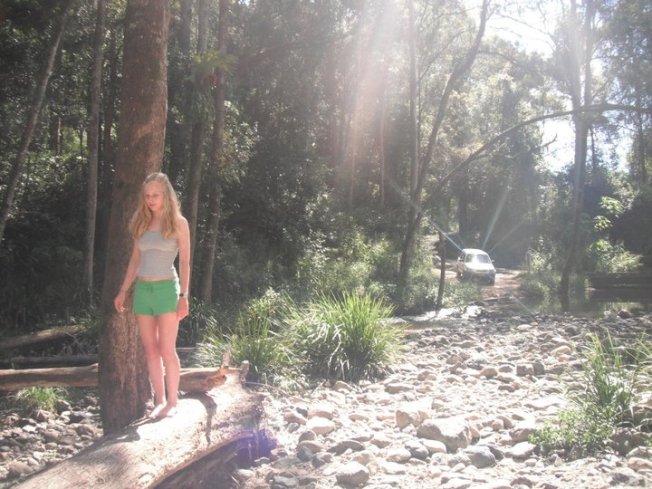
After finishing my A levels I opted to take a gap year, with my main aims being to apply to university and earn some money. The first half of that year was spent filling out UCAS forms and getting up at 5.15 a.m. to start a morning shift at the sports centre where I worked. Then in March 2011, after craving a break from the bleak spring weather, I flew to Australia to spend a month with some family friends. The only thing I had to do on my own was the flying, and then I would be in the care of people I knew. I would be meeting up with my sister at one point to visit our cousin for a few days, but hadn’t made any specific plans to go and see somewhere by myself. It wasn’t going to be a true travelling experience as such; I simply wanted to chill out in the sun for a while.

I turned up at the house only to find out that the family were hosting a Scottish man, who was working for them in return for food and accommodation. He’d set off nearly a year ago by himself to do a round-the-world trip, and hearing his stories got me thinking. Even if he was a few years older than me (and male), he made travelling alone sound fun and, most importantly, doable.
208009_186880238024855_100001086392980_453641_1564736_n

I returned to England with the travel bug, revitalised by my month away. I’d received an offer to study at university in London before I left, and I now accepted it. I would be moving from life in the isolated countryside to the bustling capital – a complete paradox. London had previously seemed too daunting a place to live for a girl who was used to travelling 10 miles to the nearest village. But following my time in Australia, my curiosity about the world had increased and London seemed like the right choice.

In early May I started researching Canada, a couple of weeks after I returned from Oz. Hiking in the Rockies attracted me, and yet the prospect of travelling alone still made me feel nervous. Ideally I still wanted to travel with someone, but was unable to find anyone with the time, money or interest. In response, I looked up help-exchange schemes similar to the one my friend in Australia had been part of, thinking that I would just live with different families the whole time. That way I wouldn’t have to worry about turning up at a hostel with nobody to talk to. I found a few families in British Columbia who were happy to host me for a week each. However all the families I wrote to in the Rockies were fully booked, or demanded a minimum length of stay that I couldn’t commit to.

The plan seemed to be crumbling and I began regretting telling my friends so definitively that I was going to Canada.  Questions of rationality filled my head – had I really thought about this, or was I just trying to impress someone? And yet I couldn’t just give up so easily. To me that would be a failure. Slowly it sunk in that for the first week of my five-week trip, I would have to stay in hostels and risk having nobody to hang out with.

But gradually I got more into the idea of travelling alone. It was exciting – I could plan my own adventures without having to think about what anyone else wanted. I was totally free. I realised that I did want to do this for myself. It was my own challenge – I wanted to prove to myself that I could do it. Travelling alone formed a category in this new and improved ‘me’ that I wanted to create. I saw it as a way of reinventing myself before starting this new chapter in my life of university and life in the  big city. I wanted to be able to tell stories like my friend had – unique and interesting stories that were my own.

From that point onwards I became determined that this trip would happen. I was bored of my daily routine and craved an adventure. In early June I gave in my notice at work. My spare time when I wasn’t lifeguarding or serving customers was spent poring over my ‘Lonely Planet’ guidebook and typing websites into Google, papers covered in scruffy notes soon beginning to pile up on my desk. I’d decided to start in Toronto and then spend a few days exploring the Rockies, and on June 25th I booked my flights. It was really happening – I was going to a new country by myself…and I had no idea what to expect. Of course I was excited to see a new country, but I still felt unsure of my capability to cope alone. 19 still seemed very young to have so much responsibility.

At the beginning of July I sorted out my travel insurance (with my dad’s help) and booked my hostel for two nights in Toronto and a flight to Calgary. It was really beginning to feel like an adventure now. July 1st may mark Canada Day and the increasing unification of territories into one nation, but for me too it marked a growing sense of autonomy and completeness. My friends and work colleagues remarked how brave I was going on my own, and it made me feel good. They assured me that I’d have no trouble making friends. I’d learned in this year that kindness can get you far, and it would now be time to use it. About ten days before my trip I went to attend my sister’s graduation ceremony in Sheffield, and afterwards joined her and her friends for drinks to celebrate. One of them told her that I was “confident without being arrogant.” It surprised me. I hadn’t realised I portrayed such traits. ‘Maybe I am braver than I thought?’ I wondered to myself. While I was still more nervous than I appeared, these comments helped boost my incentive. I liked the idea of being regarded by my peers as an inspiration.

I was volunteering at an international competition in Kent a few days before I left for Canada, so had to organise and pack everything before and bring it down in the car with me. I started feeling stressed, remembering how easy Australia had been in comparison. My backpack was stuffed with horse-riding gear, trainers and outdoor clothes and I couldn’t decide whether it was too much. “How am I going to carry all this?” I asked my mum incredulously, only half-joking. I checked and re-checked I had my passport and then said goodbye to my dad, who seemed very relaxed. He’d travelled alone when he was 17 and obviously thought there was little to it. With one last look back from the car at my home with the rose bushes taking over the front of the house, it was weird to think that I wouldn’t be back for another six weeks.

In Kent I was asked whether I was scared about going travelling on my own. My brave face re-appeared as I replied with a “Nahhh”. But I seemed to lose my voice over those few days, surrounded by adults who made me feel really young. I felt embarrassed as I struggled to make myself heard in conversation. Was this what it would be like in Canada?  My friend asked my mum if she was worried about me going away on my own. She said “Not at all” confidently, and I believed she meant it. But I wasn’t so sure of myself.

On the evening before my flight I took some clothes out of my backpack, still unable to decide exactly how much to bring. It was difficult to estimate – I had to consider how often I’d be able to find a washing machine and so on. At midnight I had finally finished, and collapsed on my bed exhausted. Mum asked how I was feeling. “Fine, just wary of getting lost,” I said with a nervous laugh. She reminded me to check everything twice, whether it be my luggage, or a map, or a bus schedule. It seemed simple, yet the butterflies were beginning to kick in. It suddenly hit me that I was going to be on my own, without her help. I lay on my bed in the hotel room and felt like crying. But I couldn’t pull out now.

We left the hotel early on the morning of August 2nd to avoid the busy traffic. I saw the signs for Gatwick airport and almost longed for a traffic jam so that I would miss my flight. But we soon pulled up at the drop off gate and it was time to say goodbye. Mum hugged me tight, saying “Love you, squeeze you, miss you already” as she always does, only her voice was starting to break. I pulled away and saw tears forming in her eyes. I hadn’t expected that from her because she’d seemed so calm about me going off by myself.  I felt my own eyes start to water and had to make myself turn around and not look back. Her fifth and final baby was going off into the big world and I guess I should have expected her to get quite emotional about it.

I had a window seat on the plane and looked down absent-mindedly at the men below scurrying around on the luggage buggies. To distract from thinking about my mum, I started talking to the mother and daughter next to me, asking if they were from Canada or visiting. The daughter said, “You’ll enjoy Toronto, it’s a great city.” I told myself she would be right, but when it came into view six hours later the butterflies returned. This was it. I waited for my backpack to emerge on the conveyer belt and sighed with relief when it did. As I checked it over and re-arranged the straps, I suddenly felt really glad of its company, as if it was some kind of friend. A girl with blonde hair similar to mine was doing the same about 10 metres away. ‘Maybe she’s staying at my hostel,’ I thought hopefully. But she soon walked off with a purposeful gait that suggested she had been here before, and my spontaneous hopes of immediately finding a travel companion were dashed.

As I walked through the arrival lounge I felt like a lost puppy. Then a young guy approached me, asking if I was heading downtown. “Er, yeah,” I said hazily. He told me where to get the bus from and where to get off in the city. I thanked him, my confidence soaring. My trip had started off well without me having to do anything. But naturally as soon as I got off at my stop the hustle and bustle of the city hit me and I felt confused again. I fumbled in my pocket for the map of the city that I’d picked up from the guy at the airport, only to find that it had fallen out and was now being trampled by people’s feet. I had no option but to ask someone, but people looked like they were in a rush to get somewhere and my voice came out faint and pathetic. Then I spotted a girl in a summery dress walking in my direction who looked a similar age, so I cleared my throat and asked her if she knew where my hostel was. “Sure, it’s…oh actually, I’ll just walk you there.” I followed her gratefully for a couple of blocks and she wished me a nice stay.

An Irish woman checked me in, giving me quizzical looks as if questioning whether I was about to vomit. I walked into my dorm only to see two girls sat on the floor studying a map. I greeted them with a prolonged “Heeeey” that sounded more confident than I expected. They nodded a greeting in return then got back to their map, mumbling in French. I turned away awkwardly and began making my bed in silence. They obviously had their own agenda and weren’t interested in making conversation. It was around 5 p.m. now. ‘I can’t just stay in here like this’ I thought to myself, so I padlocked my backpack and went for a walk around. The road system was confusing. I went to cross the road at a pedestrian crossing only to jump backwards in shock as a car shot round the corner. I cautiously watched other people to find out what the road rules were, feeling completely out of my comfort zone. Soon I stumbled upon a food store and bought some ham and bagels – breakfast and dinner for the next two days. The store was busy and I sensed the fellow customer’s impatience as I took my time to make sure I used the right coins. I hadn’t realised that tax wasn’t included in the item’s displayed price, and fumbled around clumsily in my purse for more change, wishing I’d remembered to remove my British currency.

I had no sense of where I was and soon realised I was lost again. Feeling like an idiot, I asked a couple for help. The girl got her iPhone out to find the hostel. She then gave me her number when I told her about the reserved girls in my dorm, in case I wanted to hang out. I felt surprised but relieved at the same time. But when I did get back to the hostel and turned on my phone, I realised I’d forgotten the pin to activate my new Sim card. I rummaged through my bag for the piece of paper, cursing myself silently when it became obvious I didn’t have it. Pessimistic thoughts flooded my mind. I went to email home from the computers in the hostel, to let mum and dad know I’d arrived safe. Trying to sound upbeat was difficult. I was completely useless at finding my way around, had nearly been run-over, had nobody to talk to, and didn’t have a working phone to contact my hosts later on with. All the worries I had carried beforehand about my ability to cope alone seemed to make sense. ‘What am I doing?’ I thought to myself, head in hands.

I went down to the kitchen to make my boring bagel, feeling disheartened. Then I suddenly heard an Australian accent and my shoulders lifted as the familiarity of it gave me a sense of comfort. A guy was making some pasta with a German girl. I realised I had to speak up. It was now or never. So I made a joke about something he said. We got chatting and they asked if I wanted to join them outside.  I was offered a beer and crisps were shared out as everyone spoke about their individual travel plans. Most of them planned to stay in Toronto for a while and work here. I began to relax and enjoy myself, relieved that I’d made the effort to join in. The afternoon had started badly but now I was beginning to feel more positive.

The next morning I’d booked to go on a tour to Niagara Falls, but nobody from that group was going. I hoped I wouldn’t be on my own all day. A few minutes later two smiley girls got on my bus, chatting in Italian. They seemed friendly enough, but how did I know they’d want me to join them? I spotted another guy sat on the other side of the bus, and sensed he was English. Sure enough, I heard the accent when the tour guide asked him something. One voice in my head said ‘Perfect! You can hang out with him’, but another was reluctant. I knew English people. If I wanted to hang out with them I could have just stayed at home. This was my opportunity to meet people of different nationalities.

Grey clouds filled the sky as we walked down to the falls and got handed our blue waterproofs ready for our ‘Maid of the Mist’ boat trip. I purposefully stood myself fairly close to the girls. One of them caught my eye and we laughed at how funny we looked, with introductions following. They were the first Italians I’d ever spoken to. We hung out on the boat together, getting drenched by the spray from the magnificent falls. I went on to spend the rest of the day with them. I almost felt bad, as if I was intruding, but they didn’t mind at all.
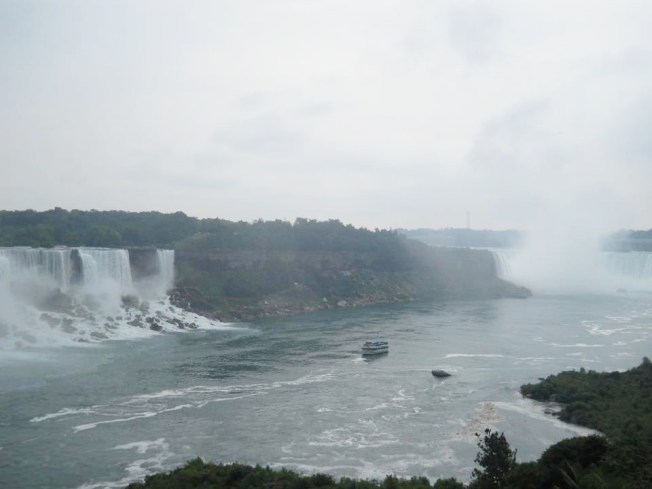
Niagara Falls

We were driven on to a quaint little town called Niagara-on-the-Lake with amazing chocolate shops and a store dedicated to Christmas. On the way there we passed a building with the name ‘School of Horticulture’ crafted in flowers on the front lawn. Its name rang a bell. I looked at my watch and smiled when I read ‘Niagara Parks Commission School of Horticulture’. I’d found it in a hostel in Australia with my sister and had (naughtily) taken it. It wasn’t flashy at all, but there was something about it that I’d liked. Now I was randomly and completely unassumingly passing its original home. It was as if I’d been destined to come here.

The tour ended with a trip to a winery where we got to sample some sickly sweet Ice Wine. The girls were staying at a different hostel to me. I wrote my name and email on a piece of paper, ready to offer it should they wish to keep in touch but anxious that they wouldn’t. But sure enough, they turned around as we approached their stop and the question “Do you have Facebook?” went on to become a key motto of my trip.

Before I got back to my hostel I went to the shop from the day before again to stock up on water, and felt slightly smug as I returned without getting lost. I was beginning to feel more like I could cope and I was walking around feeling less self-conscious. This time when I approached my hostel reception  to collect my key, the Irish lady flashed me a smile, as if my increased confidence showed. As I sat in the living area reading my guidebook, a German girl walked in and asked “Where do I go?” with a laugh. I told her where the dorms were and she later joined me. We sat with an Austrian boy and two Irish people. One of them was 30 and said she wasn’t sure she’d have been able to travel alone at 19. But then she added how great it is to do so because it makes you more open. I totally understood what she meant. Suddenly I felt really glad that I was on my own. Thinking back to the French girls in my dorm, I felt sorry for them. Their trip was going to be limited by the fact that they weren’t allowing themselves to hang out with other people who might enrich their experience.

I asked the German girl and Austrian guy if they wanted to go up the CN Tower with me in the morning. They said yes and we set off the next day with the sun now shining over the city, as if reflecting how much brighter my trip was becoming with every new day. From the tower one could see for miles. It couldn’t quite match the views in New York, but was still impressive. I stood on the thick pane of glass staring down 1500 feet at the ground below. Some people even dared jump up and down on it. We then spent the rest of the morning wondering around the city. On the way to Kensington Market in Chinatown with its abundance of fruit stalls, the Austrian guy pointed out a road sign with ‘King’s College’ on it. “Isn’t that where you’re going to study?” he asked. I laughed at the irony of it. But London was nowhere near here, and university still felt like ages away. I was starting to really enjoy myself and didn’t want to think about studying.

My bus to the airport was at 1 p.m. I gave the other two my contact details and checked out of the hostel, excited for the Rockies. I had a map of the city, but soon got confused and when I asked someone for help they sent me in the wrong direction. My back soon began to ache from lugging my huge backpack around in the midday heat. When I did find the stop, the driver told me its schedule meant I wouldn’t get to the airport in time. My confidence that had been improving so much began to falter as I envisaged missing my plane to Calgary. I had no idea what to do and stood helplessly on the pavement as passers-by looked at me inquisitively. Then another man showed up with a travel bag, only to hear the same information. He looked at me running my hands through my hair anxiously and asked if I wanted to split the fare for a cab to the next station where our bus would be. Without thinking twice I said yes. He was going to visit his mother in Ottawa for the weekend. I ran to make sure the bus didn’t leave without us as he gave the money, and sank into a seat, relieved that this man had been in the same boat. Some people might be funny about sharing taxis with strangers, but I had no regrets. It had been the most sensible option and was nice to know that we’d done each other a favour. I suddenly felt like a real traveller – spontaneous and practical.

We arrived at the airport and the guy called “Have a good trip” with a wave. I was sat next to a good-looking man on the plane, probably around 30 years old, and I didn’t expect him to want to talk. Then he asked casually, “You heading home or away?” I smiled to myself, remembering how I had asked the family on my flight over the same thing. We flew with the Great Lakes below us, and I asked him more about the geography of the country, surprising myself with how chatty I was. ‘Why sit in silence when you can learn something?’ I thought.

We landed in Calgary four hours later. I found my bus to Banff with no problems and as the glacier mountains came into view my excitement kicked in. This was the part of the trip I’d been most looking forward to. I got off on Banff Avenue and went to find a bank, remembering Dad’s advice about getting lots of money out at a time because of commission prices. The streets were filled with tourists on the way to dinner. A group of older ladies in peep-toe sandals gave me funny looks as I roamed around in my scruffy flannel shirt and trainers, hoisting my huge backpack higher up. This time I had no trouble finding my hostel. It was situated in a quiet area over the bridge. I was sharing a dorm with two girls from Montreal, who invited me to join them at a bonfire. The offer contrasted so much to the reception I received in the Toronto hostel, but I politely said I was going to do my own thing. It was different now. I’m a country girl. When I got to the city I felt miniscule and needed someone. But now I was in a rural area I felt more at home and less apprehensive about being on my own.

I set off walking along the Bow River, appreciating the peace and quiet. The air smelt of pine cones and midges hummed near the water. When I checked my emails later Mum had replied, saying she hoped I was okay – I’d sounded quite downbeat in the first email. That seemed like a long time ago now. I updated her of my whereabouts, telling her my plans for the next day. The girls were still asleep as I got up to get dressed and go explore in the early morning. I felt completely in my element. I didn’t even have a real map but just followed my feet and unlike in the city, they always led me to the right place. Reaching a main road which headed up towards Sulphur Mountain, I knew there was a bus I could get and went to read the signs, hearing mum’s advice of “check twice” in my head. Unlike in that store on my first day, I didn’t have to rush. With the rural environment comes so much more freedom.

I didn’t have time to hike the 5.6km route up to the mountain’s summit, so I got the gondola instead. A boy who looked about my age was sat in the ticket office looking bored. He gave me a look when I asked for my ticket that seemed to say ‘Why are you on your own?’ It made me blush and I got into my carriage feeling a little silly. As I rode up to the top I noticed that the carriages above and below me contained couples or groups. I was reminded of my Scottish friend recalling how some people had thought he was weird for travelling on his own. “I guess I’m weird too then,” I said aloud to myself, gazing at my watch pensively.

But if I was weird, it was worth it. After admiring the mountain squirrels for a few minutes, I walked along to a viewing point that overlooked the town below. It was breathtaking. I could just make out the glistening of a lake in the distance, surrounded by snow-capped mountains on either side. The turquoise river wound its way through the town with its patchwork of tiny houses, situated amongst layers of lush fir trees. I’d seen this very view in a photo on a website, and read about it in my guidebook. Now I was here myself, all through my own doing. A great sense of fulfillment hit me and I felt really proud of myself. This was my own personal achievement. All the stress and worries and embarrassing moments from before seemed like nothing now. It didn’t matter anymore if I got funny looks from people for wondering around on my own with this huge backpack. How many of them could say they had done something similar at the same age? I felt like I was on top of the world and nobody could take this feeling away from me.

Views from Sulphur Mountain

So in conclusion, I suppose that’s why I like to travel alone, because of that unbeatable feeling of individual accomplishment that it brings. I’ve always liked exploring the outdoors and in a sense it was something I soon fell into easily after the first few days. But it was by no means something I’d planned to do from a young age. There were butterflies, there were cynical questions, and there were tears. But with that comes so much more confidence afterwards. Since that trip, I’ve never looked back. Going off somewhere by myself just seems natural now and if anything, travelling with someone else feels ore stressful to me. Travelling alone gave me an extra spark, and I really don’t think I’d be who I am today without having done it.
Unknown's avatar

Angels & Canyons | Discovering the Legendary Zion National Park

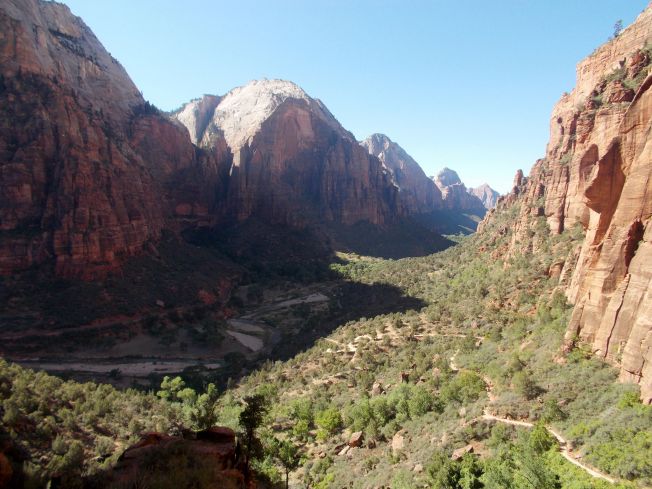
The noble faces of ancient towering cliffs gaze down with dignity over a desert kingdom of cottonwood trees, sandstone boulders and winding rivers where 12,000 years ago, mammoths and sloths would roam and pioneers would admire a land deemed “too stunning for mere mortals.” This was a destination to behold, a place of refuge for angels and saints who deserved to live on forever in this prestigious realm.

Your own eyes will tell you that Zion National Park is an example of the extraordinary, especially when it comes to hiking opportunities. Of the many routes available, there are two which stand out as unique in allowing visitors to immerse themselves in the natural environment and experience its mystical vibes. One takes you deep into a canyon in which you are enclosed by huge sheets of rock; another takes you high up a cliff where you are exposed to the wider world. The first national park to be established in the geological heaven of Utah, Zion is a blessed part of the world for hiking lovers who aren’t afraid of water and heights!

10648282_10154759303845495_900203673974293383_o

The Narrows

Zion comes across as one of the more “untouched” national parks and one of the great things about it is its free shuttle bus system which prohibits cars from travelling on the Scenic Drive from spring to autumn, hence preventing congestion and promoting a cleaner environment. Grazing deer blend in against the creamy cliffs as the bus winds its way gently through the canyon, passing sacred natural landmarks such as the Three Patriarchs. Hop off at the final stop of Temple of Sinawava and let the adventure into the Narrows begin!

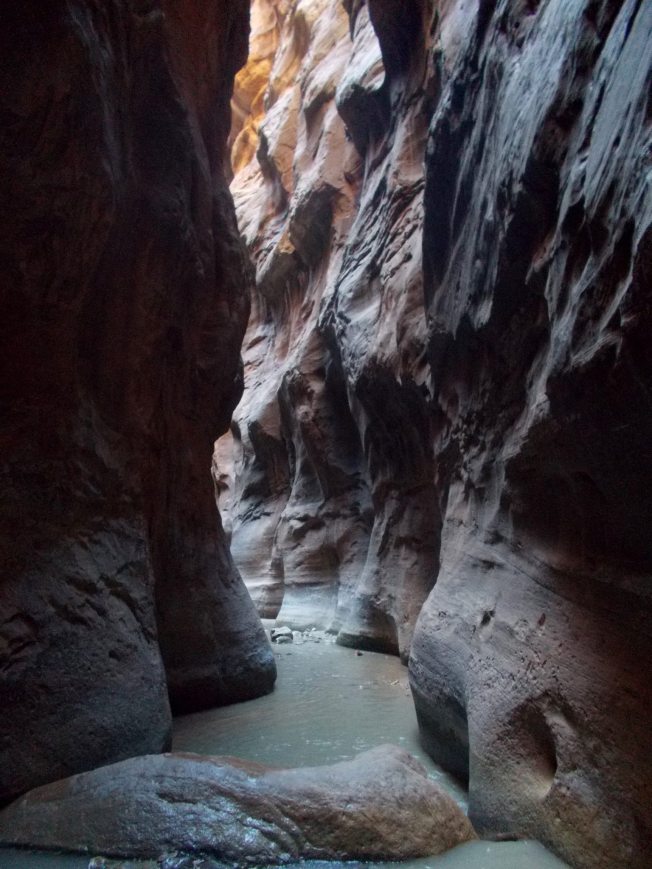
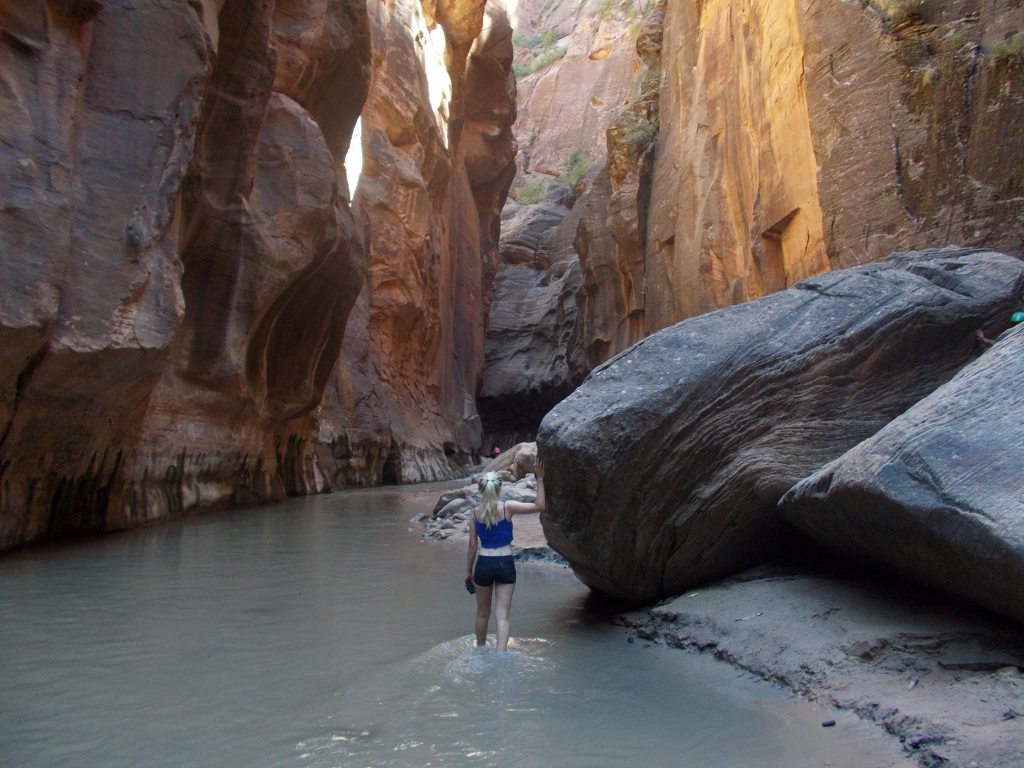
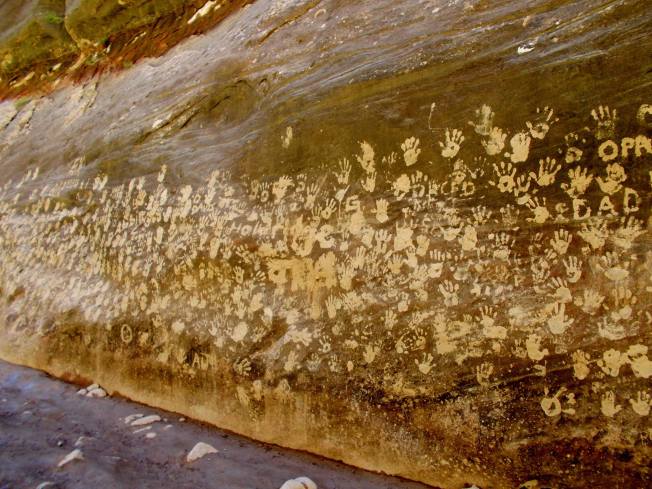
The easy 1-mile Riverside Walk will lead you to the river’s edge where the wading commences. At first it feels bizarre to be walking through water with shoes on, but you’ll soon get used to the temperature and texture as you make your way further down the gorge. It’s essential to wear sturdy shoes on this walk. Many walkers use sticks to help them navigate over the rocky river floor, but I preferred to test my natural balance, precarious as this was at first. I gradually gained more faith in my feet and was able to traverse the uneven ground without looking down so often. The miracle of walking on water came to mind…although I didn’t quite get that far! Parents would tow their little ones along in blow-up dinghies. I left my muddy hand print on the glistening wet walls decorated by visitors thousands of years after the first settlers made their mark.

10680090_10154759288480495_3377996869462916471_o

Stains of iron oxide on the canyon walls form varied patterns throughout the route, almost looking like they have been painted by former inhabitants of the land. When you reach the Narrows half a mile into the walk, this is where you really don’t want a flash flood to start! As the canyon walls begin to close in, the air turns colder and echoes grow louder. The atmosphere becomes slightly eerie, as if you are in the presence of ghosts whispering your name as you enter their domain. Perhaps it is their chiselled faces that jut out into your path.

10608697_10154759290750495_4494803590655043721_o

This image has an empty alt attribute; its file name is canyon-walk-1.jpgThere are points when you might be waist deep in the water, so it’s advisable not to bring valuables with you on this walk. Do bear in mind however that you may be chilly after leaving the water. Nevertheless make the most of the water on your skin as the park only receives 15 cm of rainfall a year!
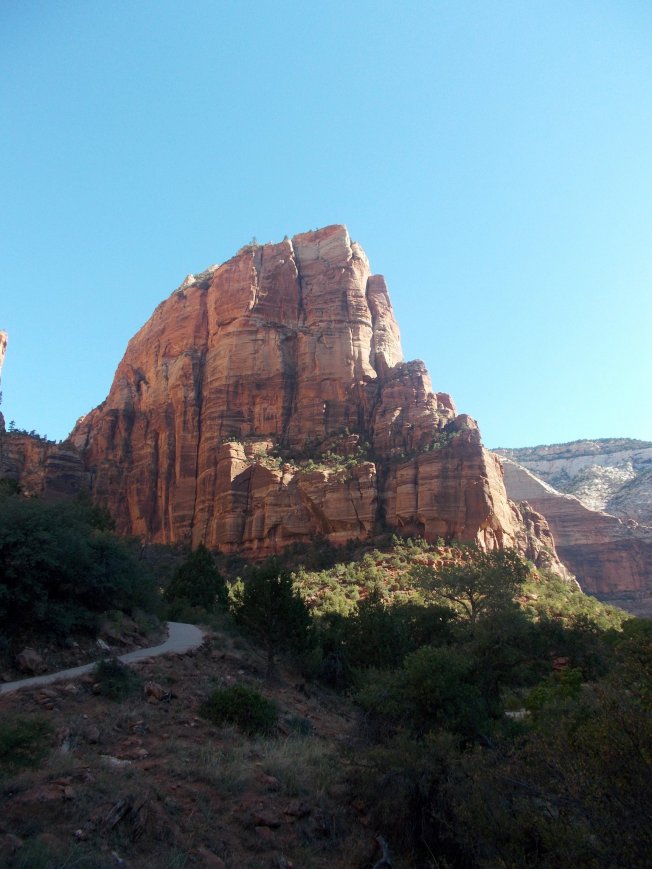
Angel’s Landing

This striking monolith gained its title in 1916 after the explorer Frederick Fisher claimed that”only an angel could land on it”.

1276915_10154759301230495_8715380845477574145_o

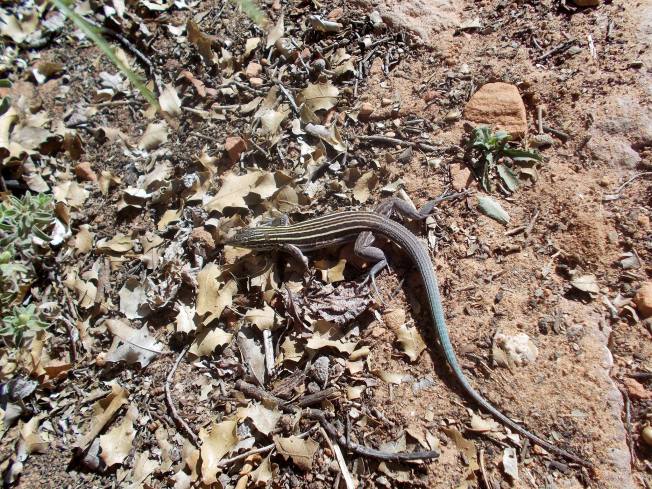
Starting from the Grotto shuttle stop on the Scenic Drive, the West Rim Trail up to the monolith is a 2 mile thigh-burning, zig-zagging route that hugs mountains of bronzed sandstone. Lizards dart between cracks in the rock only to become camouflaged against the dried leaves. A plentiful supply of sunscreen and water is essential! After a mile you’ll find shade in Refridgerator Canyon before you have to “squiggle the wiggles” and tackle a series of steep switchbacks. My partner and I foolishly decided it would be a good idea to start running up the first one, without realising how many were left…

10708508_10154759302140495_8321705842315675871_o

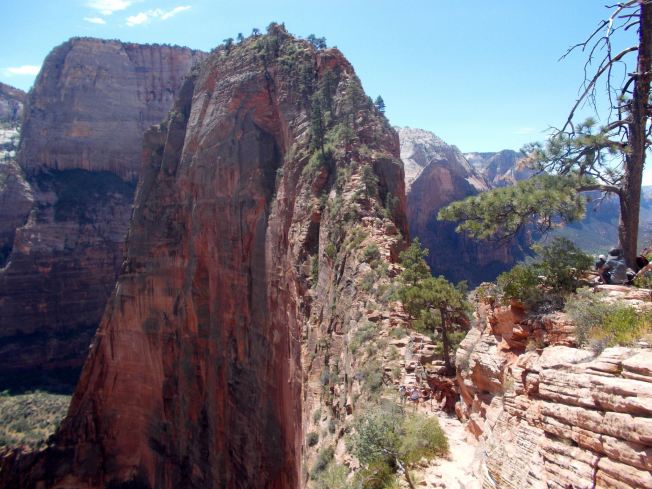
Many gasps for air and gulps of water later, you’ll reach the flat sandy area of Scout Lookout where you’ll see the ridged runway for Angel’s Landing begin ahead of you. Some people won’t even make it onto the trail because they are so fatigued after their sweaty uphill trek. From the start of the trail to the end point is only half a mile, but the path is steep, complex and takes time to maneuver. But for those who get a thrill from challenging routes, it’s great fun!

10694439_10154759357175495_3546547946842140435_o

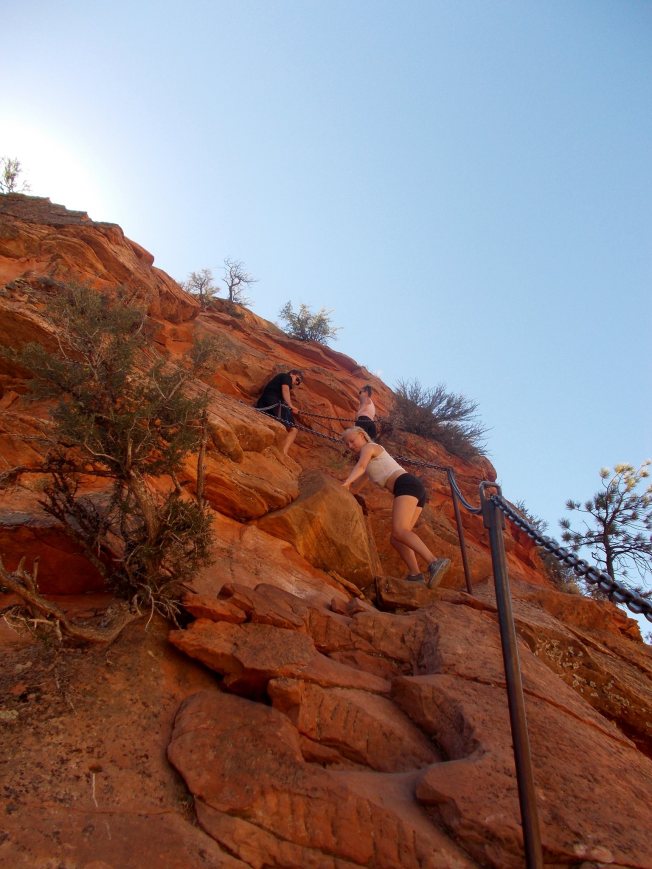
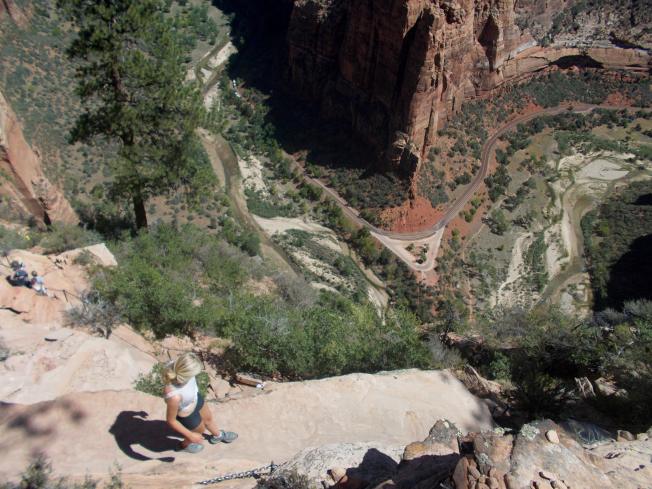
At the time we did the hike (in August 2014), six people had died within the last 10 years on this trail. In a way this doesn’t seem like much when you consider the height and width of this monolith combined with the threat of heatstroke causing hikers to keel over. This hike is not for the faint-hearted. At times you will be walking along a very narrow path with a stomach-churning drop of over 1000 feet off the side, the Virgin River looking only a millimetre wide far below. Chains regularly have to be used to ascend steep slabs of rock and there are narrow crevices which you must hoist yourself up through. One of my strongest memories is the sight and smell of sweat-stained shorts as a (rather large) man’s buttocks loomed alarmingly close to my face while he struggled to squeeze through one of the thin gaps in front of me. I would not be offering to give him a push…

10380838_10154759319025495_5572660501029750572_o

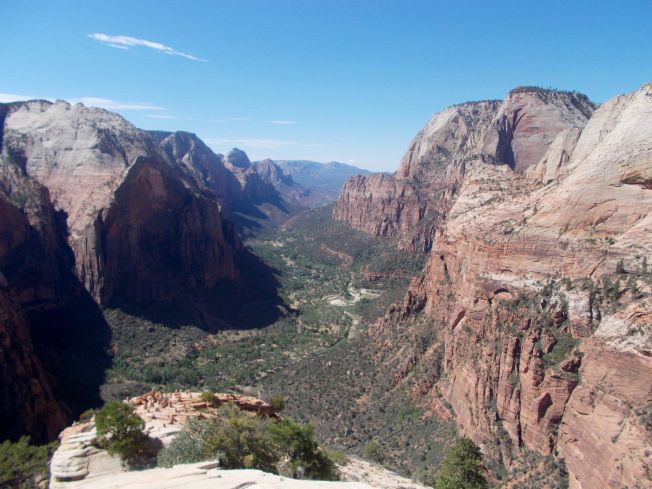
Courtesy is definitely a requirement on this hike, as many times there will be not space for more than one person to pass through a certain part of the route. Those heading back from the end would offer support to approaching hikers with calls of “Not far to go!” We finally reached the summit with stunning views of the valley of Zion sprawled out before our eyes. We, the angels, had landed and it was easily one of my most fulfilling travel moments. Man-made rock piles stand proud near the cliff edge, showcasing the hiker’s achievement to the world in front. It may not have involved the elevation of Everest, but this hike had brought its own unique challenges. Gazing out at the view ahead, you can’t help but feel superhuman after this remarkable feat.

10604561_10154759326150495_1861884877953901420_o

I saw the large man produce his camera to take a photo as proof of his achievement. Whilst reaching the summit of a hike alone is very rewarding, I was grateful to be able to experience the physical and at times mental challenges of this hike with someone else, and share the subsequent sense of success. I now wish I had offered to take the man’s photo so that he is able to look back in later years at himself against this incredible backdrop and feel a great sense of pride. I did however compensate by asking a German couple if they’d like their photo taken. I particularly loved how much they appreciated me speaking their language.

It would be easy to get slightly complacent about safety on your way back along the ridge, but in your rush to finish the hike after having seen the best bit, it’s important to remain cautious and take your time. On the way back down the West Rim Trail we passed many tourists panting as they hiked up towards the monolith under the sweltering heat of the midday sun. It was definitely a good idea to set off on this hike early, to avoid both the peak sunshine and the greater numbers on the trail. When you’re back on ground level, dive into the Virgin River to cool off. You won’t even care that you’re not wearing swimsuits as your body will be so grateful for the refreshing water! It was here that we chatted with a family on vacation from Minnesota, and I began to understand better why some Americans might be so ignorant about other areas of the world, because they have so many amazing places to discover within their own huge country.
10428382_10154759349815495_1751464797134551421_o

With the amount of calories that you’ll burn off completing this tough 5-mile hike, you’re bound to feel hungry later. We drove into the village of Springdale to fill up on gas and my partner asked inside for a recommendation for lunch. We were advised to visit a Mexican restaurant around the corner called Oscar’s Cafe…and it was an excellent recommendation. This was an occasion where American food portions no longer seemed outrageous. Served by a friendly waitress, we shared a scrumptious meal of fish tacos, beef burgers and sweet potato fries. Then came dessert. We dived into the mountain of ice cream-smothered chocolate brownie devilishly, only to be distracted by the sound of a young girl on another table exclaiming to her red-faced mother: “They’re gonna get fat!” My partner conceded defeat after a few mouthfuls, but the pudding-lover in me ploughed on until the end before I sank into a food coma all afternoon.

If you love the idea of pushing your boundaries to out-of-this-world levels, definitely visit Zion National Park and chase the Angel. If you’ve been to Zion before or have any questions, please comment below!
*

More information on the Angel’s Landing trail can be found here.

If walking to the Narrows, be sure to check forecasts for flash flooding beforehand.

Unknown's avatar

Books & Bridges | Budapest for the Quiet Solo Traveller

There seem to be two types of solo traveller. There are the ones who, as extroverts or simply because they don’t enjoy being alone, enjoy putting themselves in social situations and meeting new people. They will join free walking tours and bar crawls and essentially go to any place or do any activity that allows them to interact with others. Then there are the solo travellers who, perhaps being slightly more introverted, are happy to explore alone and avoid the big social scene, looking for picturesque serenity more than pubs and parties.

I definitely fall into the latter group. If I’m travelling solo, particularly if it’s just for a short break, I don’t tend to look for social contact and companionship. Brief encounters with a random character are enough to satisfy my social sanity whilst ensuring my personal itinerary isn’t interrupted. The truth is, I like having time alone and having the chance to fulfil my own plans at my own pace. However, if I do happen to meet someone who becomes a great travel companion, I will cherish this new friendship and do my best to preserve it.

Budapest is a top choice for a boozy holiday with a friend or romantic getaway with a partner, but it’s also a great place to wander around solo. Below is an account of my time in Hungary’s capital city.

*

A few bad experiences of sharing hostel dorms with snorers has made me more inclined to choose Airbnb for accommodation. This is definitely a wise option for Budapest because of the exchange rate. I spent £19 a night staying in a spacious room with a double bed, hosted by a lovely lady called Maria. Her cool apartment is decorated with various travel souvenirs and is conveniently located next to Nyugati station. She’s also very helpful when it comes to recommending things for you to do and see that cater to your particular tastes. If you sign up to Airbnb using my code, you’ll get a discount!

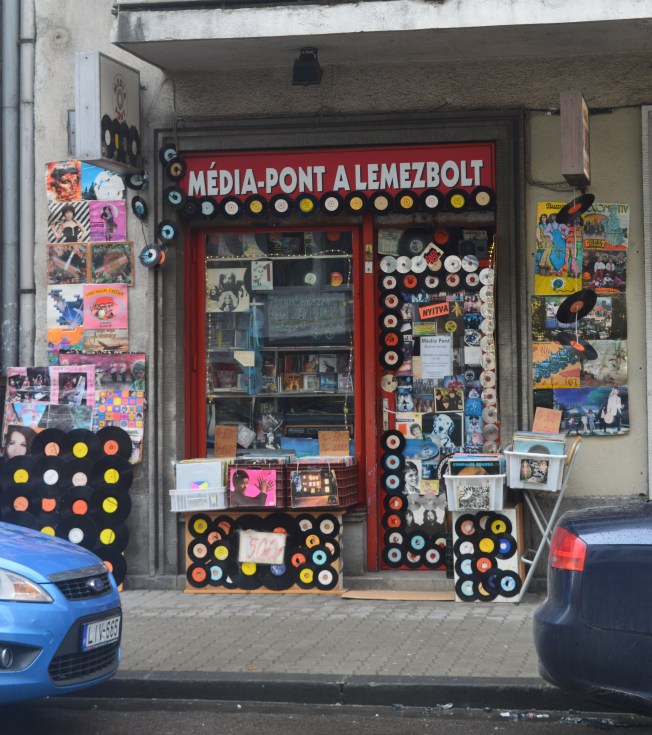
It was in Budapest where my love for vintage shops was reignited. Falk Miksa utca is home to many antique stores varying in value and appearance – some are elegant stores featuring opulent collectables, others have more of a flea-market feel.

DSC_0050

I love nosing through vinyl collections for Motown records, and the one above has many to browse (although Motown music isn’t so popular in countries of the former Soviet bloc). Inside, the store was packed with CDs from Britney to Deep Purple, Jennifer Rush to Santana. Opposite this was an antique shop called Kacabajka, where an old lady sat contentedly on a wooden chair chatting with the male owner. Some people would call the items in the shop junk, but I loved looking at the typewriters, delicate crockery and other interesting knickknacks. It was here where the question “Beszél angolul?” caught my attention (it means “do you speak English?”) and I looked up to see a Middle Eastern couple asking me what metal I thought an ornament was. After helping them, I hoped the shop owner wouldn’t proceed to start chatting away to me in Hungarian…

To others it was obvious I wasn’t Hungarian. As I browsed some fancier antiques in a store down the road, a man on a stool said: “This man [the owner] would like to know where you are from.” The questioner wore a top hat and waistcoat and rested the point of a long black umbrella on the floor. When I said I lived in London, he told me he had visited Portobello Market a few months ago and had some good finds. He spoke with a well-to-do accent and I suddenly felt like I was in the scene of a 1920s F. Scott Fitzgerald novel.

I was keen to browse some second-hand book shops, but discovered that sadly those recommended in my (slightly dated) guide book had shut down. However my Airbnb host recommended I try Massolit on  Nagy Diófa utca. This is a quiet little street (I walked past it about three times) which makes the cosy cafe and book store even more appealing. University students and academics appear to be the main customers, with a range of genres being offered from romantic fiction to political economy. I spent a good 30 minutes deciding on which book I would buy, only to end up buying two – ‘Roughing It’ by Mark Twain and Pascal Mercier’s ‘Night Train to Lisbon’ –  for between 1000 and 1500 Forints each (£2 – 4). In some cafes you feel very aware of being alone, but here you can sit with a hot drink, some cake and a book and feel completely comfortable. Once again I was transported to a New York setting, this time when I was aged 15 on a trip to visit my sister, sitting in a cafe in Greenwich Village and seeing a girl in a black hat, blue vintage dress and boots eating soup alone whilst reading a book, thinking to myself that she was really brave and cool.

DSC_0089

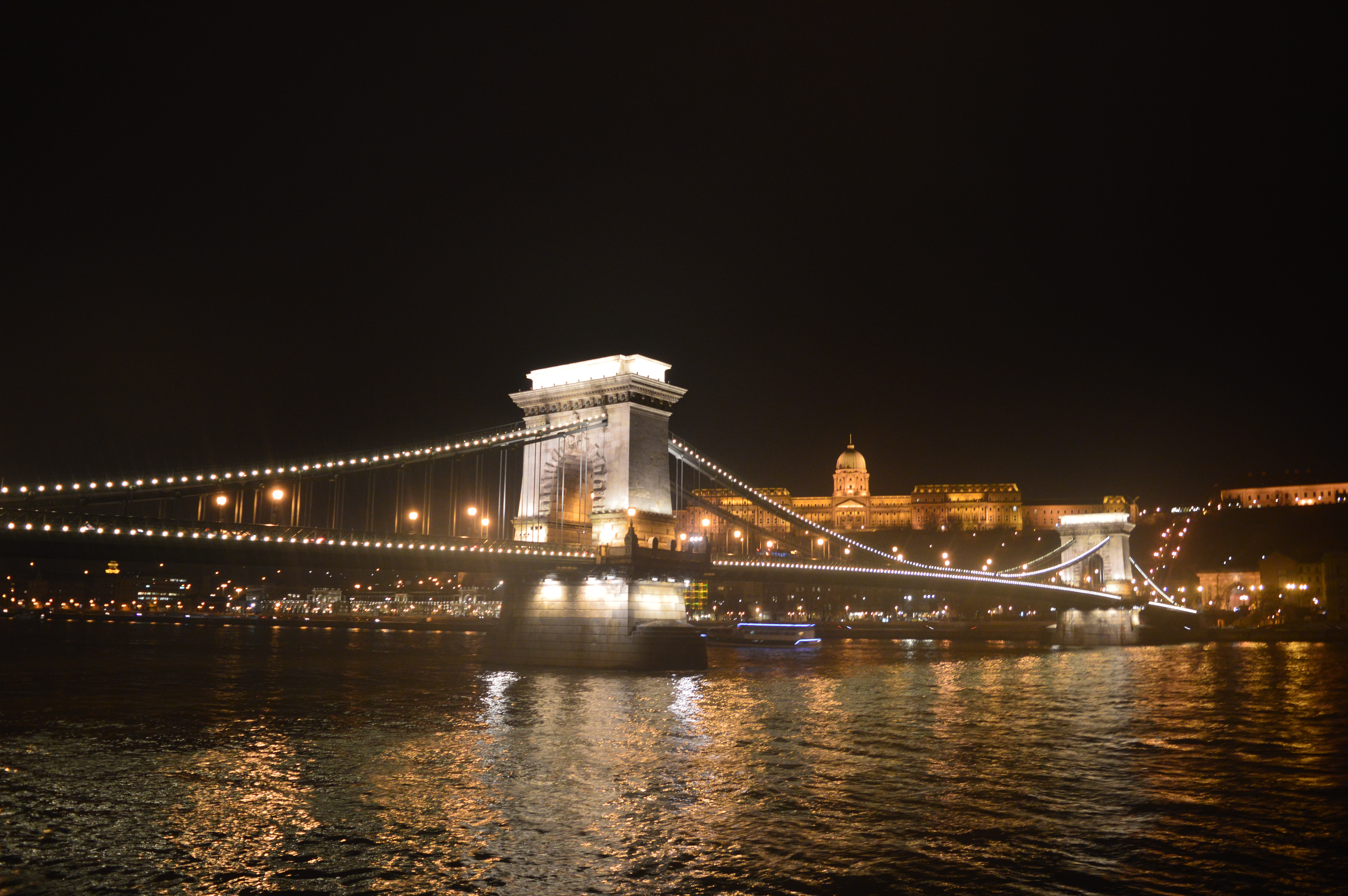
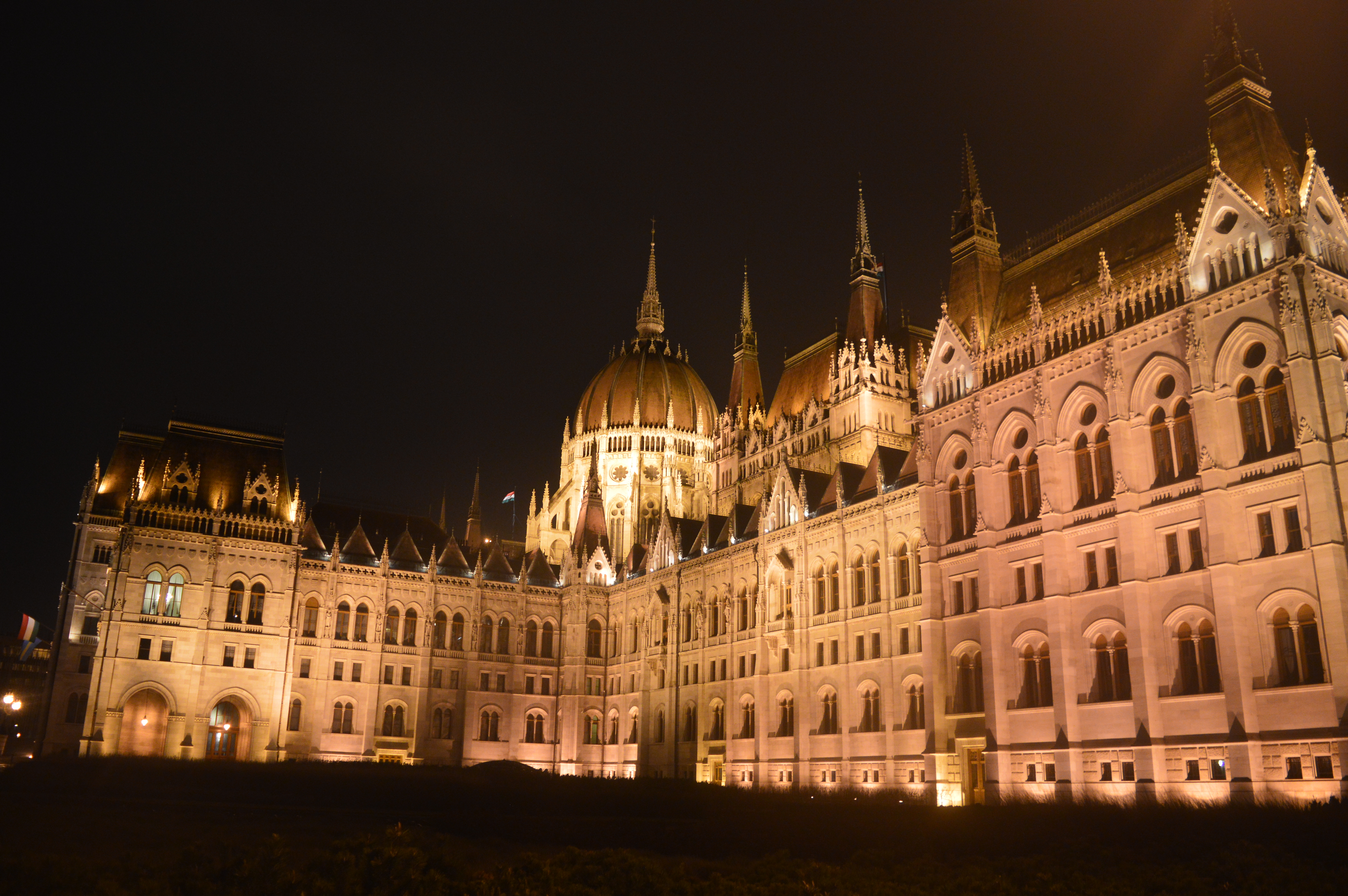
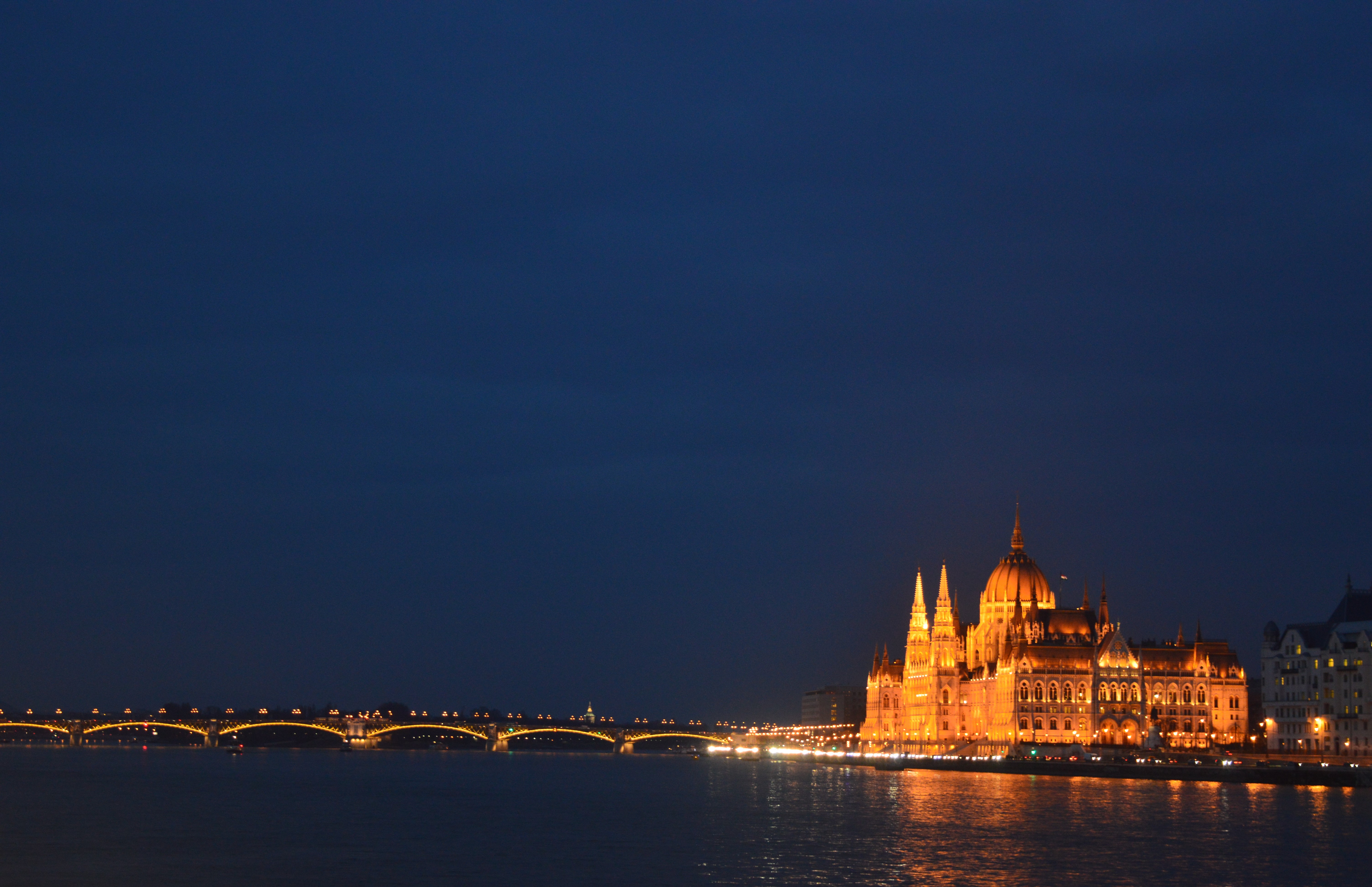
Budapest is a beautiful and safe place to walk around at night. Visit in early spring and the river banks are not bustling with people, as they seem to be all year round in London. If you’re into photography, you’ll love capturing the glittering bridges and various Churches, palaces and parliamentary buildings that beam brightly at the Danube below. I happily spent a couple of hours each evening taking photos from both sides.

DSC_0106 DSC_0127 DSC_0129 DSC_0199 DSC_0208 DSC_0215 DSC_0216 DSC_0225 DSC_0235

Another thing I love when travelling alone is to have picnics. You can choose where you eat and there’s no waiting involved. Thankfully there was an Aldi near where I stayed so I could stock up the night before, paying around 775Fts for some baps, cereal bars, fruit and chocolate. Naturally I also had to include Hungarian cakes in my itinerary. A good takeaway bakery is Lipóti on Kiraly utca, which makes a delicious chocolate and blackberry brownie cake as well as classics such as poppy seed cake.

For picnic locations, head to the Buda side of the city where you’ll discover more historical architecture and see its greener side. I made my way there over Margaret Bridge, taking a detour to visit Margaret Island. In summer this large park holds performances in its Open Air theatre and there’s also an outdoor swimming pool. You won’t see the park at it’s prettiest in the spring, but I did love how there was a separate 5 km track set up for runners!

DSC_0132

Castle Hill in Buda is a UNESCO World Heritage Site home to regal museums and the Royal Palace. You enter a quaint quarter where you’ll find many tourists but all within a tranquil haven of cobbled streets, splendid statues and quiet restaurants. The picturesque views of Pest continue for over a kilometre. It’s the perfect location for a wedding parade!

DSC_0147 DSC_0144 DSC_0152 DSC_0154

If you want to get even bigger and better views of the city with fewer tourists on your tail, head further south and stride up Gellert Hill. There are various paths that zigzag to the top, with little signage to direct. The logic seems to be that the quicker paths will hurt the most! It was just below the famous Liberty Monument that I noticed a man stood with a briefcase with a fidgety manner looking around at fellow tourists. As I passed him he asked me to take a photo of him so I naturally obliged. He was Dutch and explained with shifty eye contact and an odd smile that he was on a stag do and had been told to have a crazy picture taken, otherwise he’d be paying for all the drinks that evening. I shrugged and nodded along. “The crazy picture involves me wearing no trousers,” he said with nervous excitement. I politely declined and walked away while he looked on helplessly. Seeing random men expose themselves in woodland areas was definitely not on my itinerary today!

Panoramic views of the Danube and Buda’s rolling suburbs await you at the top of Gellert Hill. It seemed like the appropriate place for my picnic. Unfortunately I also seemed like an appropriate person for people to ask for photos from. One of the requests came from a Scottish man around my age. A brief conversation revealed that he was having a week off from teaching English in Prague. He asked what my plans were for the rest of the day, and I sensed he was interested in hanging out some more. However when I mentioned my plan to browse more markets and second-hand shops his mouth straightened with indifference. He was planning to go to an open table-tennis meet in a bar.  The two types of solo traveller had clashed. Maybe it would have been a fun event but I had no intention of changing my plans; I was enjoying my independence too much! Shortly after we said our goodbyes and followed our preferred routes down the hill and into the remainder of our individual trips.

DSC_0166

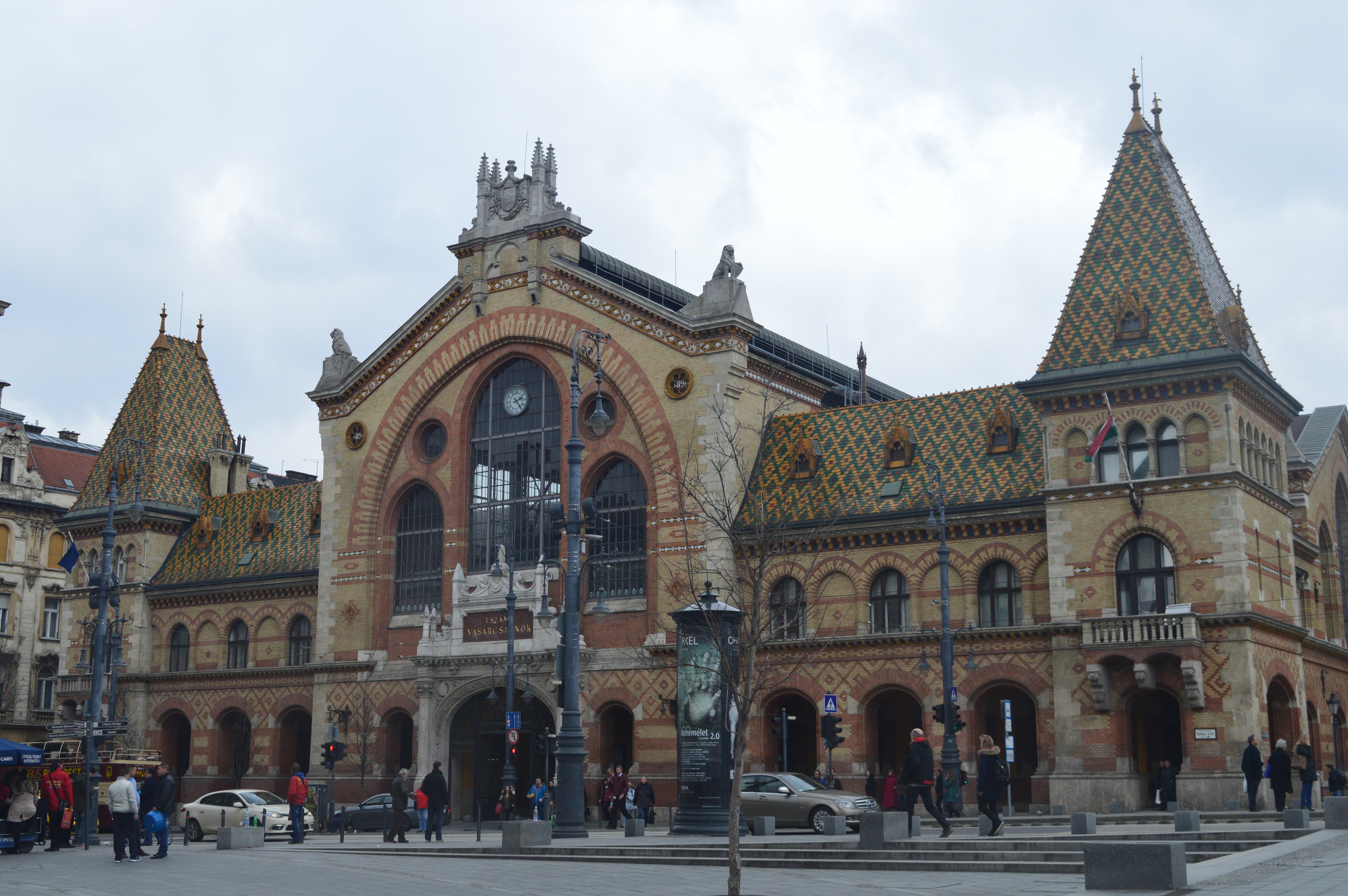
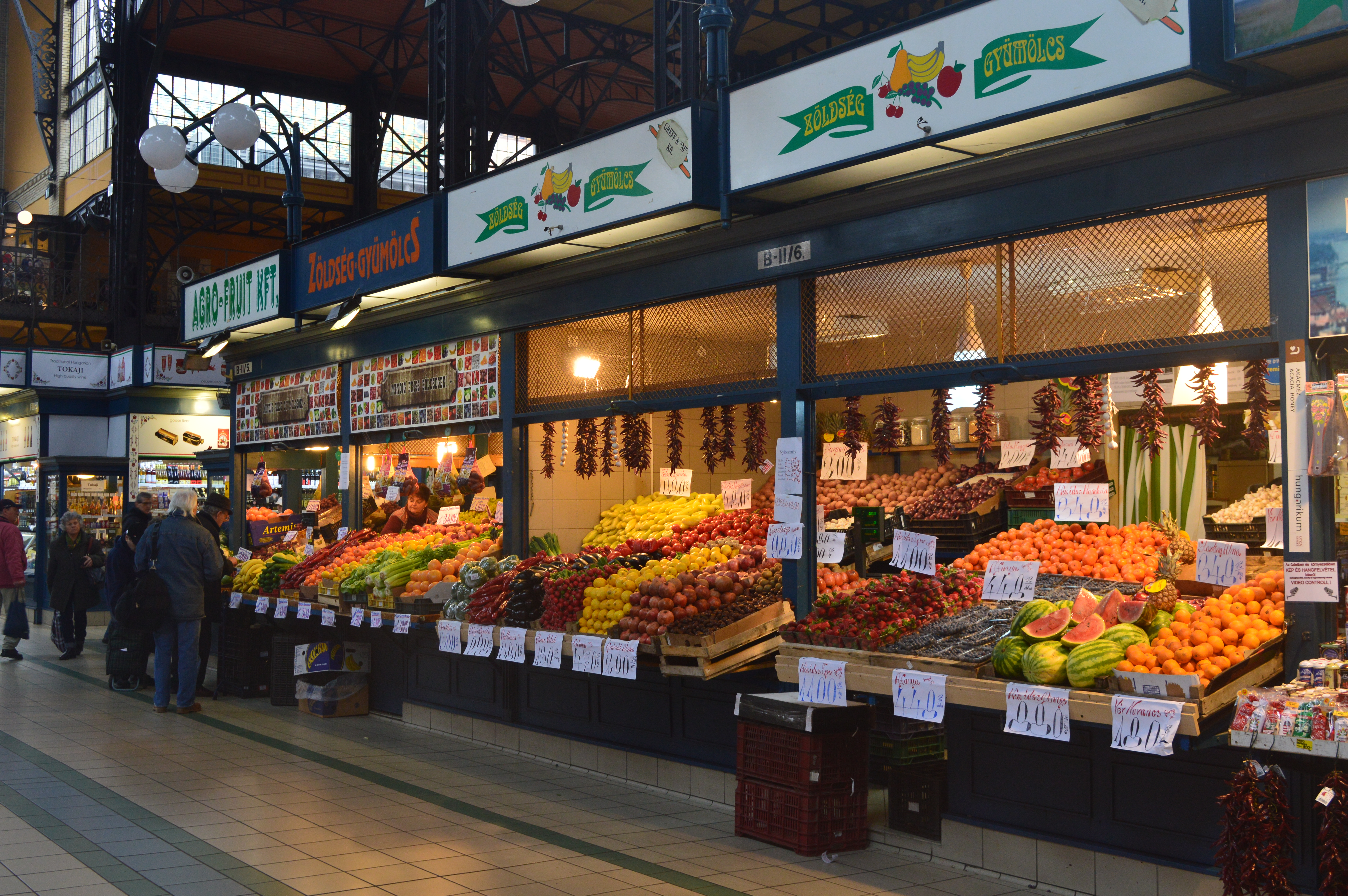
Take a right after crossing the Elisabeth Bridge and join Vaci utca – one of the longest shopping streets in Pest. Near the end you’ll find more craft shops. If you carry on south you’ll reach the Central Market Hall near Liberty Bridge. Inside this huge building is where locals will buy their meat and fruit, as well as spices, spirits and pastries. Upstairs tourists can find various gifts and souvenirs including paintings and shot glasses. There are also plenty of food stalls around if you fancy saving your Pick salami for later…

DSC_0180 DSC_0183 DSC_0182

For your third day in Budapest, City Park is a pleasant place to come and read a book in the spring sunshine. It was here that I enjoyed seeing a mother leave her toddler to crawl on the ground and examine a stone plaque. I wish more parents would be less pedantic about safety and allow their children to explore their inquisitive nature!

DSC_0277

Heroes’ Square

DSC_0295DSC_0307

If the weather isn’t so nice, and even if it is, definitely devote a couple of hours to the House of Terror which is on Andrássy utca in the direction of the park. Interested as I am in history, I’ve never been a huge fan of visiting museums. I find them quite draining and if the weather is decent, I’d rather stay outdoors being active. However this former headquarters of the Nazi and successive Soviet regime is definitely one of the most interesting and enlightening museums I’ve been to. In each room visitors could pick up a sheet which summarised the country’s history relevant to the context or theme of that particular room. Excellent footage was shown, whether it was interviews with former camp labourers during the Nazi occupation or propaganda films created by the Soviets. Harrowing as some of the films and photos were, the museum didn’t try excessively to influence visitor’s emotional reactions; it simply gave the facts and left them to decide how they felt. Even better, I only had to pay 1000 Fts for entry because I had ID to prove I was under 26. This discount scheme is a brilliant way to encourage youths to learn about the history of their or another nation. For just £2.50 I became so much more knowledgeable about a period in Hungary’s fascinating history.

Because I ended up being gripped for almost three hours in the Terror House, I could only grab a milkshake from Kino Cafe before heading for the airport. This 80s-style art house cafe situated off Kiraly utca makes fruit shakes for 570Fts that actually taste like real fruit, with no added sugar. I wish I’d had more time to spend inside (…and try their cheesecakes).

Whilst the city didn’t have so many events nor so much pretty greenery at this time of year, March was still a great month to visit the very walkable Budapest. I’d highly recommend it to someone embarking on their first solo trip, especially if they are a quieter traveller. Even if wandering alone, there are still plenty of opportunities for momentary but memorable social encounters that won’t require you to sacrifice individual plans. Flowers were beginning to bloom but their arrival hadn’t yet attracted swarms of tourists – ideal for someone who likes to avoid the crowds and adventure alone!

DSC_0317

If you have additional suggestions for quiet solo travellers visiting Budapest, please comment below.

Unknown's avatar

Views of the Afternoon in Szeged, Hungary

Most people who visit Hungary are bound for the bars and bridges of Budapest. I however began my trip from Liszt Ferenc airport not towards the capital city, but south towards Szeged where I would be reunited with a girl I met on a bus from Porto to Lisbon in July 2015. I left behind the Brits on their stag-dos and girly weekends for the quieter side of Hungary, encountering views of a modest country life that exists away from busy beaming tourism, and views that exist behind closed doors and closed borders.

I decided to purchase First Class tickets for my journey from Ferihegy to Szeged, simply because they translated into £14 and I’ve never experienced a train journey in this class before. I boarded a quiet carriage occupied by only a few people, businessmen and smartly dressed ladies. The two men sitting near my seat reservation looked up at me in surprise, as in unused to seeing people of my age and casual dress in this carriage. I quickly realised that First Class in Hungary offers the equivalent to standard class in England i.e. no complimentary drinks and meals. Dang. Nevertheless, I enjoyed the peace and quiet of my two hour journey to Szeged as country life began to unfold outside the window after we pulled out of the rusty train station where a white cat wandered warily along a wall covered in graffiti.

It looked like winter had been harsh on the land. In the distance a tractor stood abandoned in a bland field, waiting for summer to awake it from its slumber. An old man ambled among his dreary crops as around him crows pecked around like looters looking for the last valuables from a battleground. A pile of logs and mouldy hay bales lay forgotten near a muddy marsh. Dilapidated shacks were dotted randomly in areas of wasteland covered in blankets of felled trees. In their small pastures, families shovelled manure from a wheel barrow onto the hungry ground. Thick-fleeced sheep huddled together whilst a shaggy coated horse sniffed for signs of grass and chickens scratched at the sandy earth. A scarecrow stood lonely in a deserted orchard that was too bare for even the most desperate of crows. But as the train approached Szeged, the views seemed to get brighter. Three deer cantered elegantly through a field where the grass was greener. The Hungarian flag blew gently in the breeze as it hung off a canary-yellow house with a pool in the back garden. A local white bus cruised along a road in the distance until the traffic increased on a large road heading into the city. Szeged is known as the “city of sunshine” and sure enough, the sun came out from behind its cover as my train pulled in.

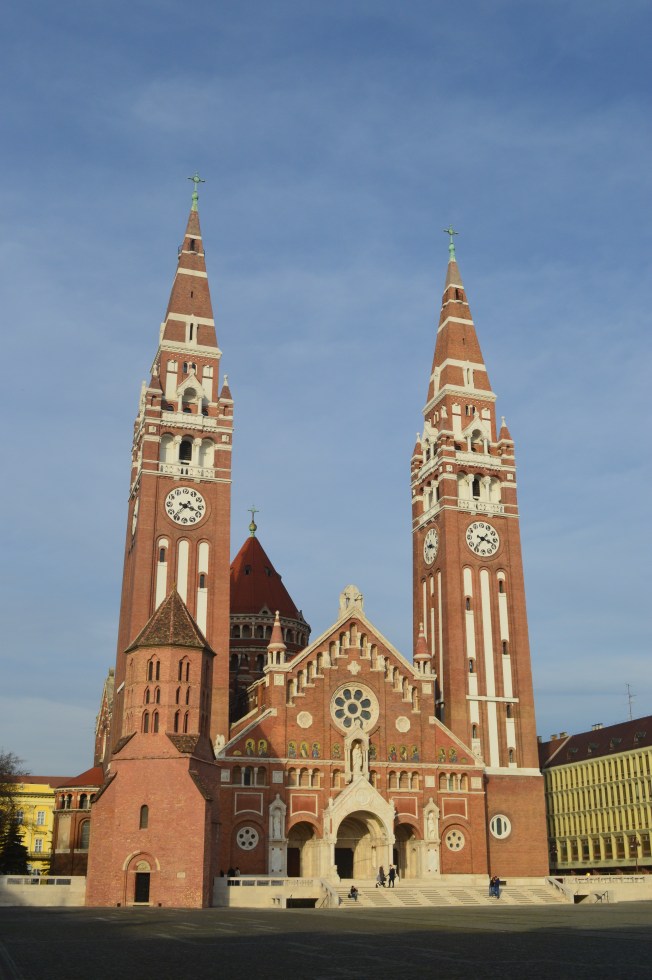
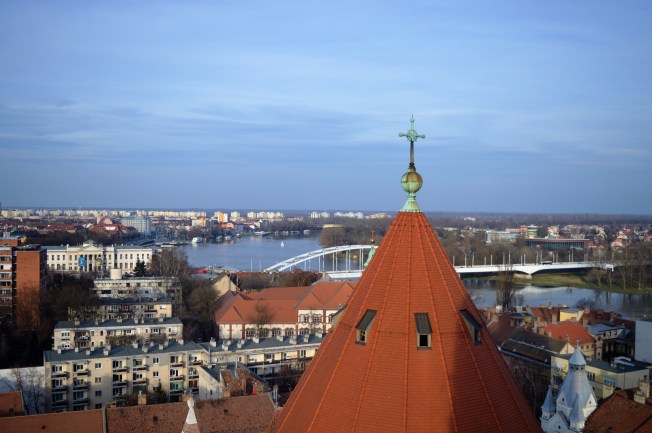
My friend and her boyfriend met me at the station and we walked on towards Dóm Square. For a small entrance fee, visitors can walk up to the top of the twin-spired Votive Church for 360-degree views of the city. It was pleasing to see a lack of skyscrapers for a change.  Home to a very distinguished university, Szeged is a nice area for students. The trees on the other side of the river Tisza lacked colour at this time of year, but it is easy to imagine pretty postcard views in the summer. In warmer seasons, crowds will lap up the sun by sitting on the banks of the river, and there is an Open Air festival held every summer.

Dömötör Tower, Szeged, Hungary

DSC_0009

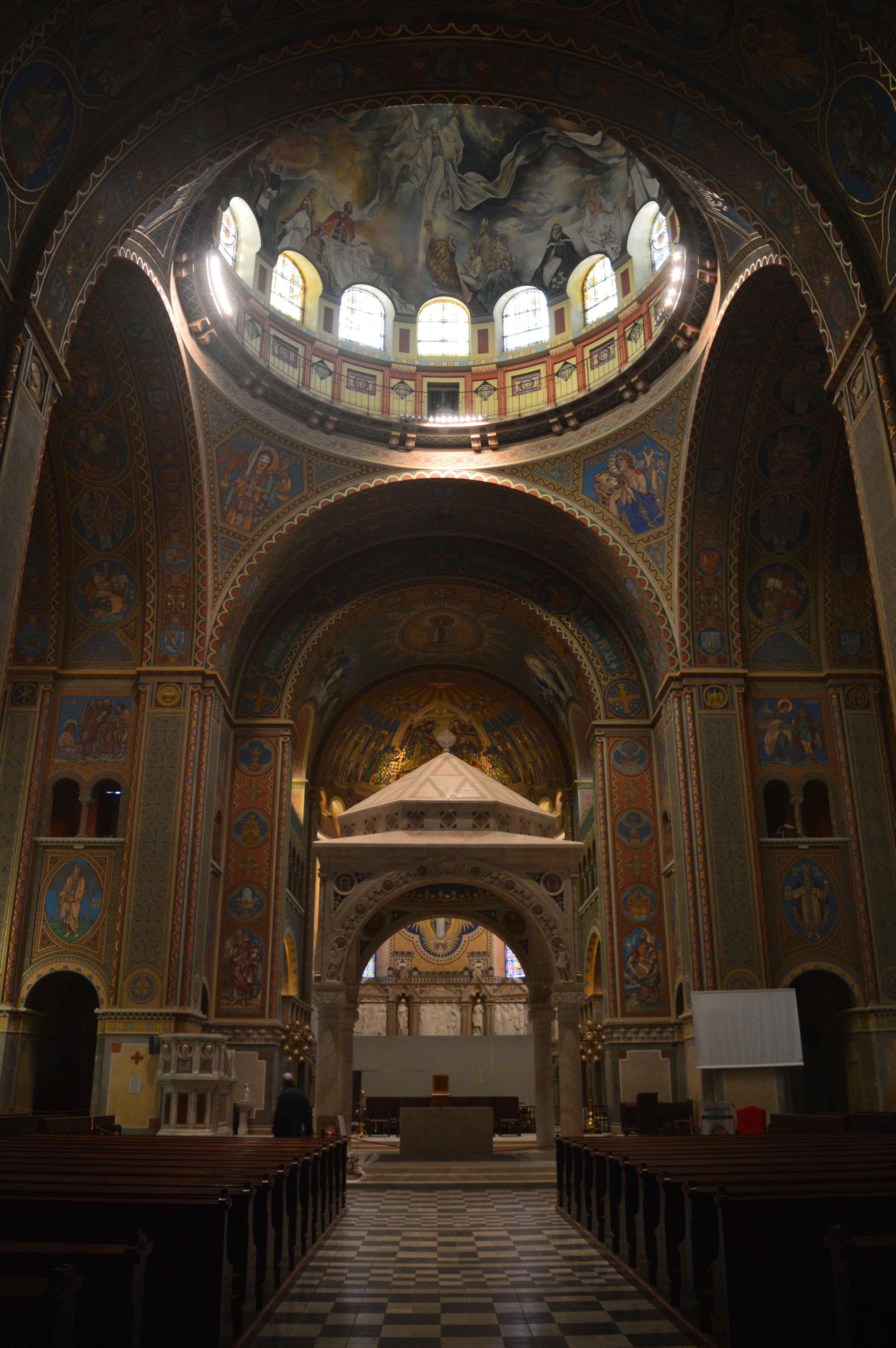
Following the great flood of 1879, the Emperor promised to make Szeged “more beautiful than it used to be.” Within this there was a pledge to build a Church as a thank you to God if he would help the city recover from its immense damage. Inside, it was possibly the most beautiful Church I’ve ever seen. Even someone who is not religious, like myself, couldn’t help but be silenced in awe and respect by its grandeur. The intricate detail of the interior decor was incredible, with regal furnishings catching my eyes and rich colours catching the afternoon light that shone through the glass painted windows.

DSC_0004
We moved on to drink mulled wine and eat cake in a cafe called A Cappella. Ordered desserts were delivered upstairs via an elevator. I sampled Hungary’s “cake of 2015” which contained peach pálinka (brandy) syrup, and dobos cake which is layered with buttercream and topped with hard caramel. We talked about our lives in England and Hungary. My friend’s boyfriend is training to become a doctor and remarked how he’d hoped to study in England because of its reputation for having good medical schools. His high view of the British medical scene seemed ironic when taking into account the strained resources of the NHS and the current strikes by junior doctors.

I then asked my companions about Hungarian views of the refugee crisis in the Middle East. They were aware of their country’s reputation for taking a hard-line stance on immigration, although they were not aware of the infamous video which surfaced in 2015 showing a Hungarian journalist pushing and kicking arriving migrants. I asked why they thought their government had decided to close the border. I was told that the government had chosen this approach itself, but it followed consultation with some members of the public through a survey. Questions they were asked included what they thought the cause of the refugee crisis was, and what they thought the results of taking in migrants would be. It quickly emerged that a fear of terrorism was the key cause of public reluctance to accept them, along with an assumption that those from Arab nations would not assimilate into Hungarian and European culture.

To me this was an interesting view. Hungary was briefly involved in the coalition force that invaded Iraq in 2003. Around 360 Hungarian troops were also sent to fight in Operation Enduring Freedom in Afghanistan. However, Hungary is not a country one would associate with attracting terrorists. Its involvement in foreign military conflicts is minimal compared to the likes of Britain, France and the United States, i.e. countries who are key targets of terrorist activity.

“I have heard that there are areas of London controlled by Muslim communities,” the boyfriend said. It wasn’t his fault for having this exaggerated view; clearly the right-wing journalists in Hungarian media have been fabricating reports and creating scapegoats. I tried to explain that there is a large presence of Muslims in London, and indeed extremism is probably being secretly bred in some of these areas, but a distinction must be made between moderate followers of the Koran who are proud British citizens, and jihadists who aim to destroy western society from within it.

Later we went to a cool bar and restaurant called Maláta for burgers and home-brewed beer. A silent black-and-white film played on a big screen next to a book shelf and umbrellas hung off the ceiling. At one point I was distracted by the arrival of four boys asking the waiter in English for a table. They had British accents and I assumed they were exchange students doing a semester abroad at the University of Szeged. They were of either Bangladeshi or Pakistani heritage, possibly Muslims themselves. I thought back to the Muslim boys of their age fleeing Iraq and Syria, perhaps jumping onto jam-packed boats at that very moment to begin a treacherous journey across the ocean. Is the evident fear of migrant-led terrorism present in Hungary based on the migrant’s religion or their citizenship? Would these young male migrants be viewed differently if they hadn’t come from the Middle East and instead had British accents and birth certificates? Or were the British boys enjoying a meal in the bar also being viewed with concern because of their potential association with Islam? The vast majority of Muslim men are fleeing areas controlled by Islamic State due to fear that they will be forced to fight for a group they do not support, and not because they want to spread its violent ideology westwards.

Lying in bed that night and going over the events of my first afternoon in Hungary, I recalled the splendour of the Votive Church. The power of religion is both fascinating and frightening. Some people believe so strongly in the existence and goodness of an unseen higher power that they will invest all their time, effort and money in building a magnificent Church with their two hands to demonstrate their respect and create a place of community for their fellow worshippers. But some of these people cannot respect the peaceful presence of another faith and recognise the clearly visible desperation of its civilian followers fleeing war, oppression and persecution. They refuse to open their arms to at least sympathise with these vulnerable people if they are unable to help them practically. They are so open to the existence of a God, yet so closed to the reality of  human events.

This afternoon in Szeged had revealed many views, some pretty, some unpleasant. I should clarify that, as the Archbishop of Canterbury recently argued, being reluctant to take in thousands of refugees doesn’t make a nation and its citizens racist. By increasing the population, mass immigration poses a problem for a country’s resources in terms of finance, infrastructure, jobs and welfare. But some of the expressed rationale behind such decisions can reveal the presence of unjust, bigoted views within society. They are views that seem to contradict the instruction in the Bible given to Christians to “love thy neighbour as thyself”.

Around the time I was in Hungary, Croatia, Macedonia, Serbia and Slovenia closed their borders to migrants, and deals have now been agreed for Turkey to accommodate arrivals form Greece in return for economic support. I hope that those innocent refugees turned away from Europe can understand that there are many people on this continent who pity their situation, and do not view them with fear and suspicion.

*

If you would like to use this article as a reference while visiting Szeged, you can download it on the GPsMyCity app here.


Unknown's avatar

Liebster Award

Liebster Award

I was kindly nominated for the Liebster Award by bilingual blogger Sabrina of In My Suitcase, whose site includes short stories about love and travel.

This award, which translates as ‘favourite’ in German, aims to promote the work of fellow bloggers by listing the blogs nominees have especially enjoyed reading or been most impressed and inspired by.

My answers to Sabrina’s questions are as follows.

What do you find more difficult in travel blogging? What’s the dark side of it?
Getting visitors to your blog requires much use of social media. I find this quite draining, especially if I’ve spent much of my day at work (I have a full time job unrelated to my blog) looking at a computer screen. I find that platforms like Twitter show the superficial side of some travel bloggers, reflecting the cyber world of self-promotion we live in. Even if regular use of social media may boost my stats, I don’t care about blogging enough to spend all my free time online!

What would you suggest to people who are afraid to travel alone?
Firstly you need to identify what you’re afraid of – getting lost, being a victim of crime, or simply just your own company? From this you can make a plan. Start small – try a city break, perhaps even in your own country. Find accommodation suited to your preferences and if you’re worried about finding your way around alone, look for guided tours. That said, my first solo trip was to Canada, second largest country in the world, and I felt perfectly safe. I think it’s healthy to put yourself out of your comfort zone sometimes, otherwise you’re likely to later look back with regret. Remember, despite stories in the media, there are a lot of nice people in the world!

What kind of travel makes you happier? (budget and free, planned and cozy, food trip, photo itineraries…)
I’m definitely not a fan of luxury travel, although holidaying with friends at a resort in Hawaii was a lovely experience (and let’s face it, you only live once!) I prefer to plan my own adventures rather than having someone do this for me – I see this freedom as half the fun of travelling. I’ve always been quite frugal with money, so tend to go for the cheapest transport and accommodation options, choosing to treat myself in other ways when away. I love being active and much prefer hiking a mountain instead of lying on a beach. A road trip through the States has definitely been my favourite travel experience so far.

What App can’t you do without while travelling?
I’m a little backwards when it comes to 21st century technology… so you won’t catch me travelling with an App!

Have you ever travelled without smartphone or internet?
I don’t own a smartphone and rarely travel with a laptop unless I’ll be based in one place for a while. If I need the internet during my time away, I’ll visit an internet café or use the computer at my homestay if doing one. Overall however I try to avoid being online when travelling, because I see this time as a chance to escape from social intrusion. I like “switching off” and being in my own bubble sometimes.

Have you ever visited south Italy?
No, I’m yet to visit Italy at all, but I’d definitely like to.

Tell me 3 words that come up to your mind as you think about Italy.
Gelato, vineyards, (handsome) waiters

Which wine do you love more?
I’m no wine expert, but I do like Pinot Grigio.

What likes and attracts you most in other blogs?
I prefer reading a travel essay with high-quality and engaging writing over viewing a page full of photos promoting the standard touristy areas with little commentary. I like it when bloggers relate travel experiences to current affairs and make the effort to consider the local perspective when talking about a country’s culture. I think blogging can be a great way to reduce others’ cultural ignorance.

Suggest me a place to go, knowing I like travelling solo, like good beer and wine, and I’m a veg.
Germany is a great place to travel solo, and of course they love their beer there.Can’t speak so much about their vegetarian options!

Have you ever experienced a very good veg food? What and where?
There’s a place in London just off Oxford Street called Ethos Foods which offers many tasty and healthy vegetarian and vegan dishes – think stuffed peppers, chickpea and lentil curries and lots of aubergine and courgette. It’s self-serve so you pile on your plate as much as you want and are charged per weight.

*

I would now like to nominate the following travellers with their diverse but equally inspiring blogs for the Liebster Award:

Angela of Chasing the Unexpected for her in depth commentary on solo female travel in Iran.

Roaming Renegades. I really enjoyed their detailed article about how to travel (and survive and thrive!) as a couple.

Eloise of My Favourite Escapes, because I loved and could relate to her thoughtful post about livig far away from family.

Gloria of Nomadic Chica, who has been relating her travel blog to pertinent world affairs.

Katie of Wandertooth for her honest and valuable insight into life as a freestyle blogger.

Noel of Travel Photo Discovery, who takes lovely photos and always has great tips for European destinations.

Two Scots Abroad, who are uncovering cool places in the Pacific North West – an area I love.

Himanshu of Everything Candid for his beautifully rich writing about India.

Kim of Walkaboot for her dedication to sharing exciting adventure travel destinations.

Kami of My Wanderlust, who inspires me to see more of central and eastern Europe.

*

If my nominees would like to carry on the award when time allows, please answer the following questions, which are influenced by topics I have discussed in my blog. After giving your answers in a new post, please nominate 10 bloggers you think are worth looking out for.

1. Where did you have your first travelling experience?

2. How have you changed as a traveller since when you began?

3. What has been your jammiest travel moment? (When you were lucky without perhaps deserving to be.)

4. Can you recall a moment abroad when you experienced the “kindness of strangers”?

5. Have you ever been disappointed by a travel destination? What was the problem?

6. What has been your most difficult/embarrassing/memorable travel experience caused by a language barrier?

7. Which country have you visited that you’d like to see more of? And why?

8. Describe the closest friend you have made while travelling, and how you met.

9. What’s your favourite travel souvenir and what makes it so special to you?

10. I have a big sweet tooth! Can you suggest a bakery for me that you’ve discovered on your travels?

*

I hope they got you recalling some (mostly) fond memories! Thank you 🙂

Unknown's avatar

Likes vs Lives: Hiking in Hawaii

I recently read Into the Wild, the journalistic book by Jon Krakauer that discusses the life of Chris McCandless and his motivation to venture alone into the Alaskan interior with minimal supplies. After McCandless’s decomposed body was discovered in September 1992, some people labelled the 24-year-old American as an arrogant fool who should have been better prepared for the harsh conditions he would face; Krakauer attempts to explain the reasons McCandless chose to live off the land with little help. He defends the young man’s intentions but acknowledges his mistakes, stating that ultimately it was ignorance, not arrogance, that led to his death.

Reading this book made me think of people I’ve encountered while travelling who have also been inadequately prepared for their undertakings. I can put my hands up and say that, at the age of 19 on my first solo trip, I was one of them as I wore shorts whilst hiking up Whistler Mountain in the Canadian Rockies with its elevation of 2181 metres. Standing level with the clouds, a mid-40s hiker in appropriate gear asked if I was cold, and I knew even as I indignantly shook my head with shivering knees that I should have been more sensible. I wouldn’t make the same mistake again.

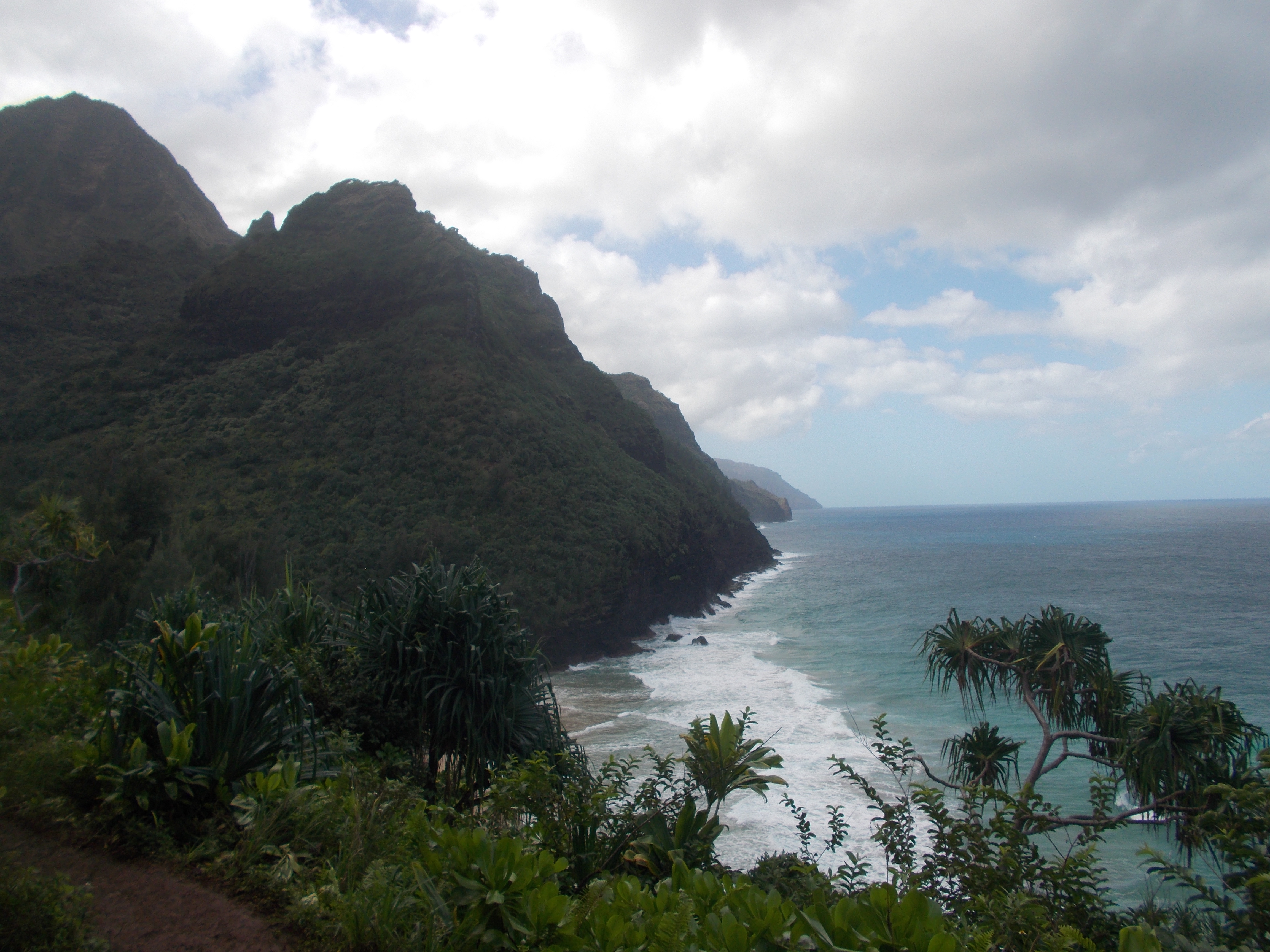
However it still shocks me when I see people older than me dressed inappropriately for certain activities and weathers, or attempting feats that are clearly far beyond their fitness level. The single biggest eye-opener was on the island of Kauai in Hawaii, when I and some friends hiked to Hanakapiai Falls in the Nā Pali Coast State Park. You may be thinking how this is a location far different to that of Alaska, but a large difference in temperature doesn’t mean this popular holiday destination is any less dangerous. In fact, the 11-mile trail that encompasses the particular hike I did is regarded as being in the top 10 of America’s most dangerous hikes.

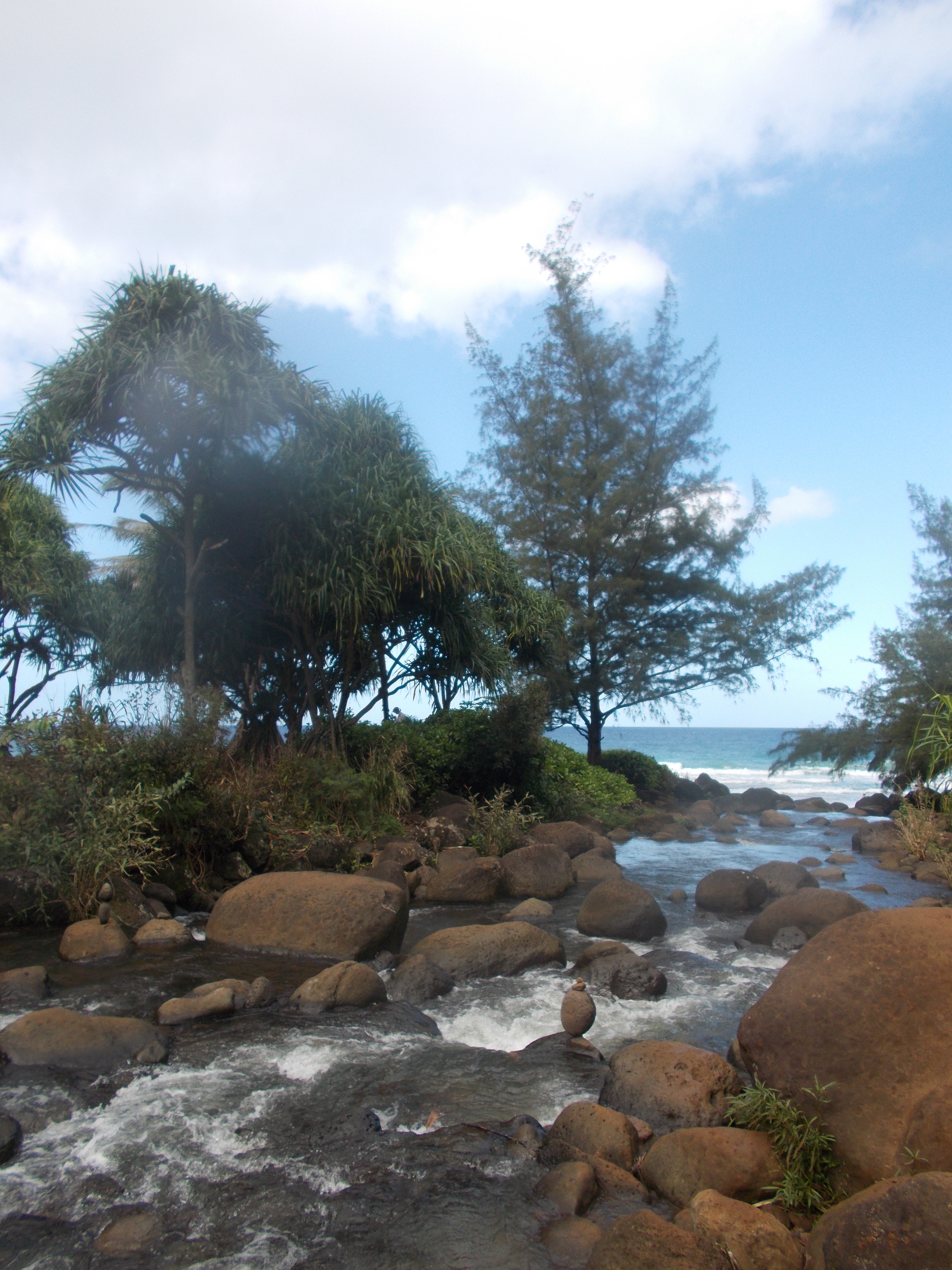
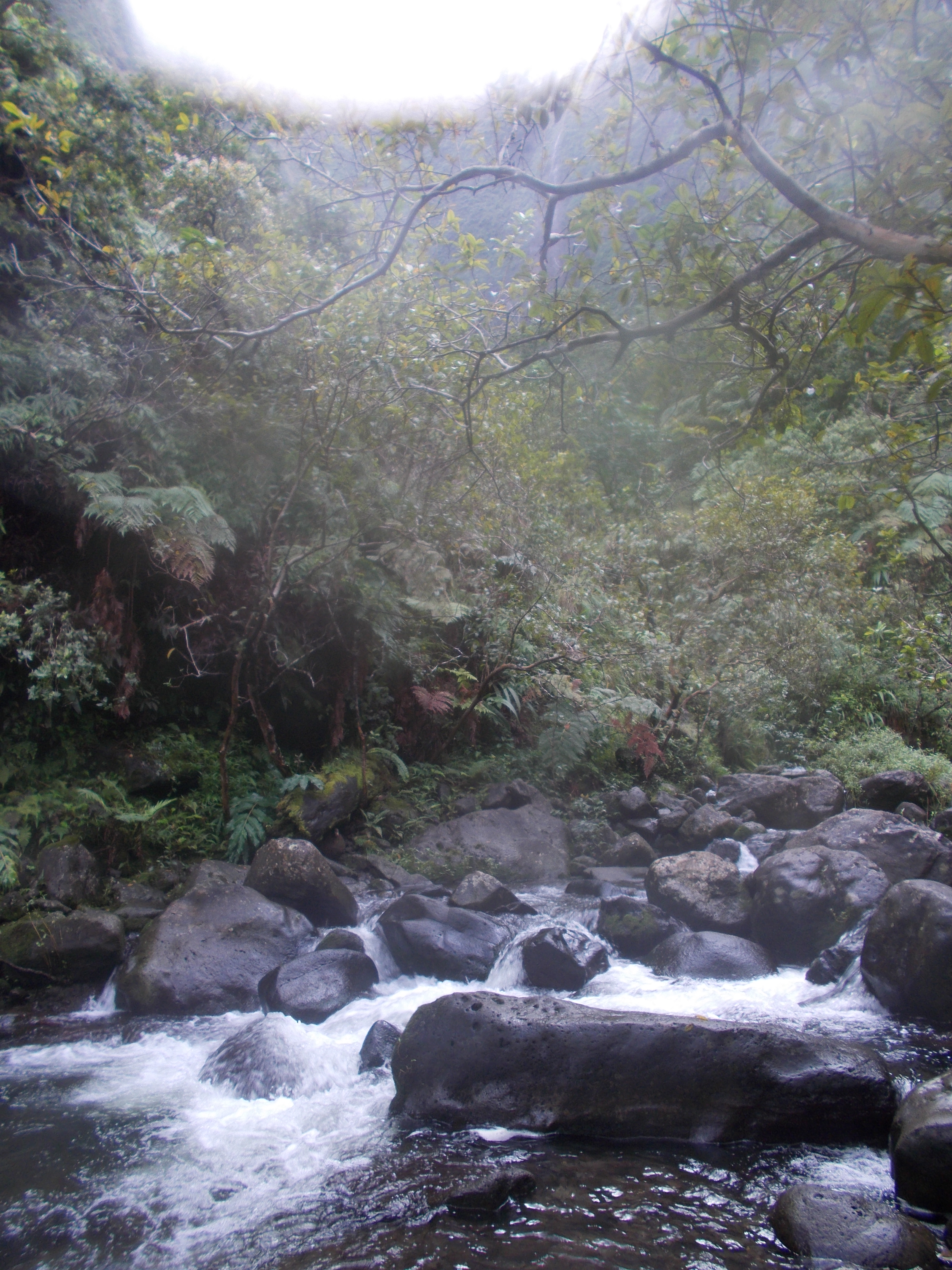
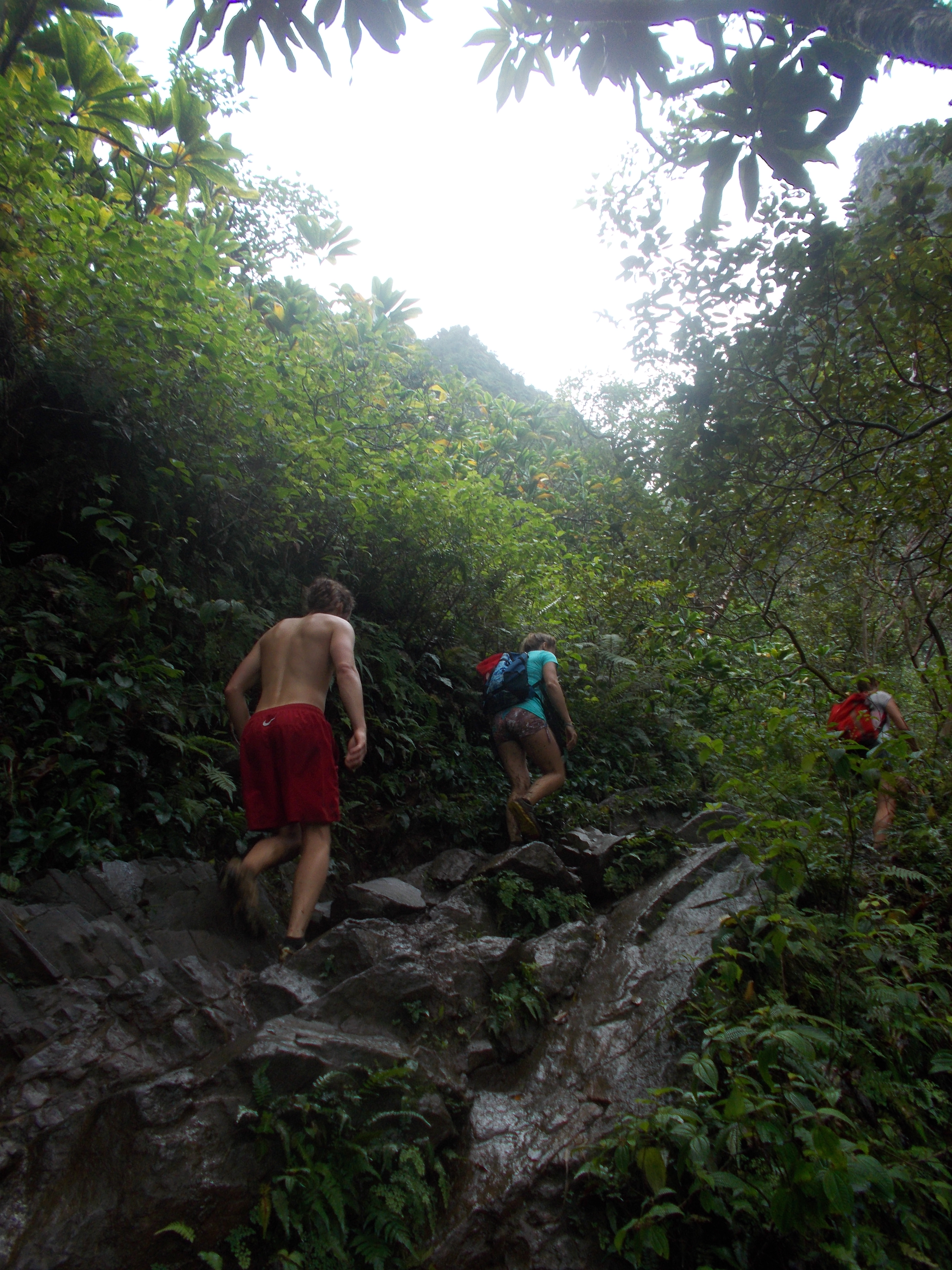
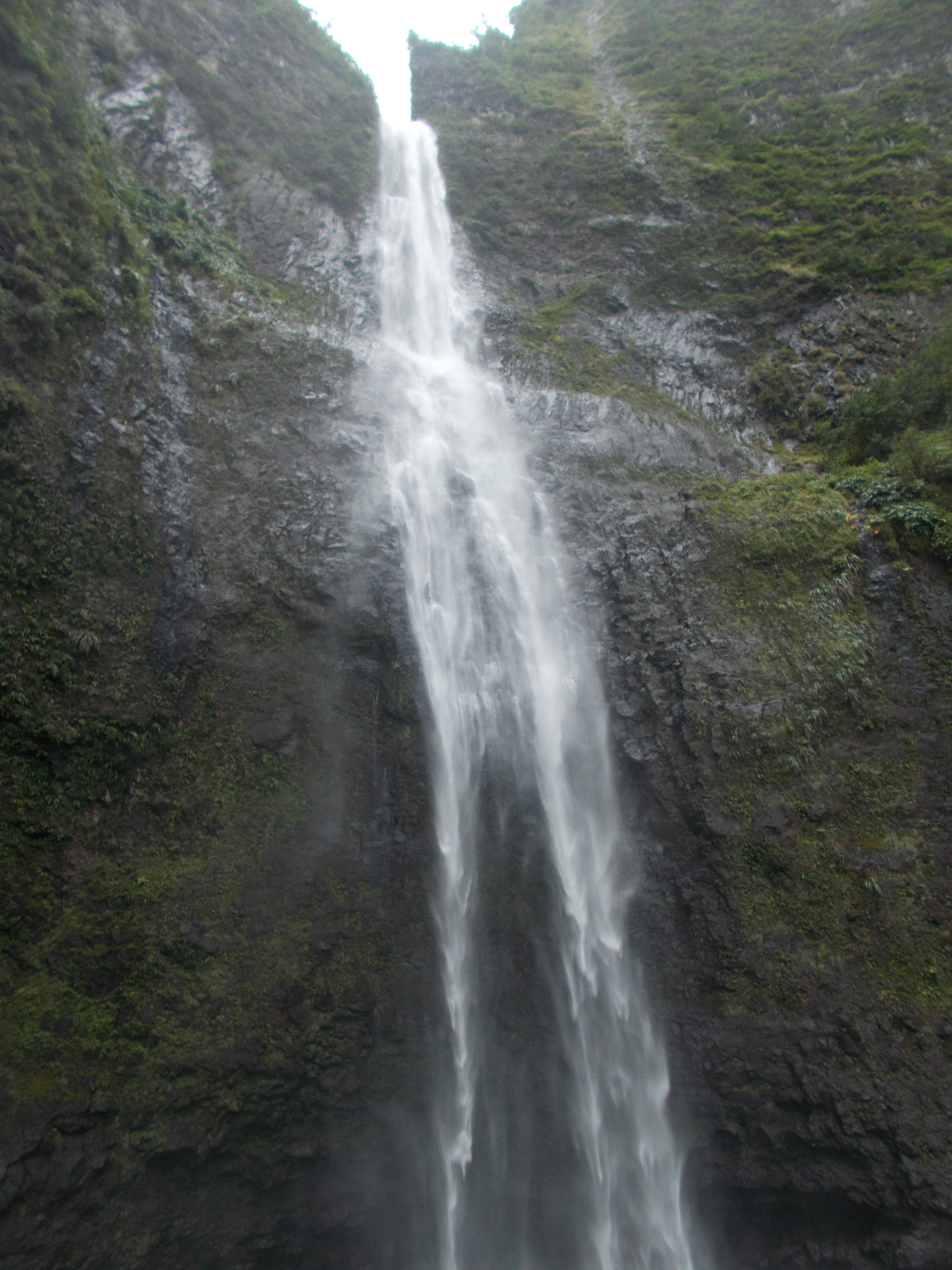
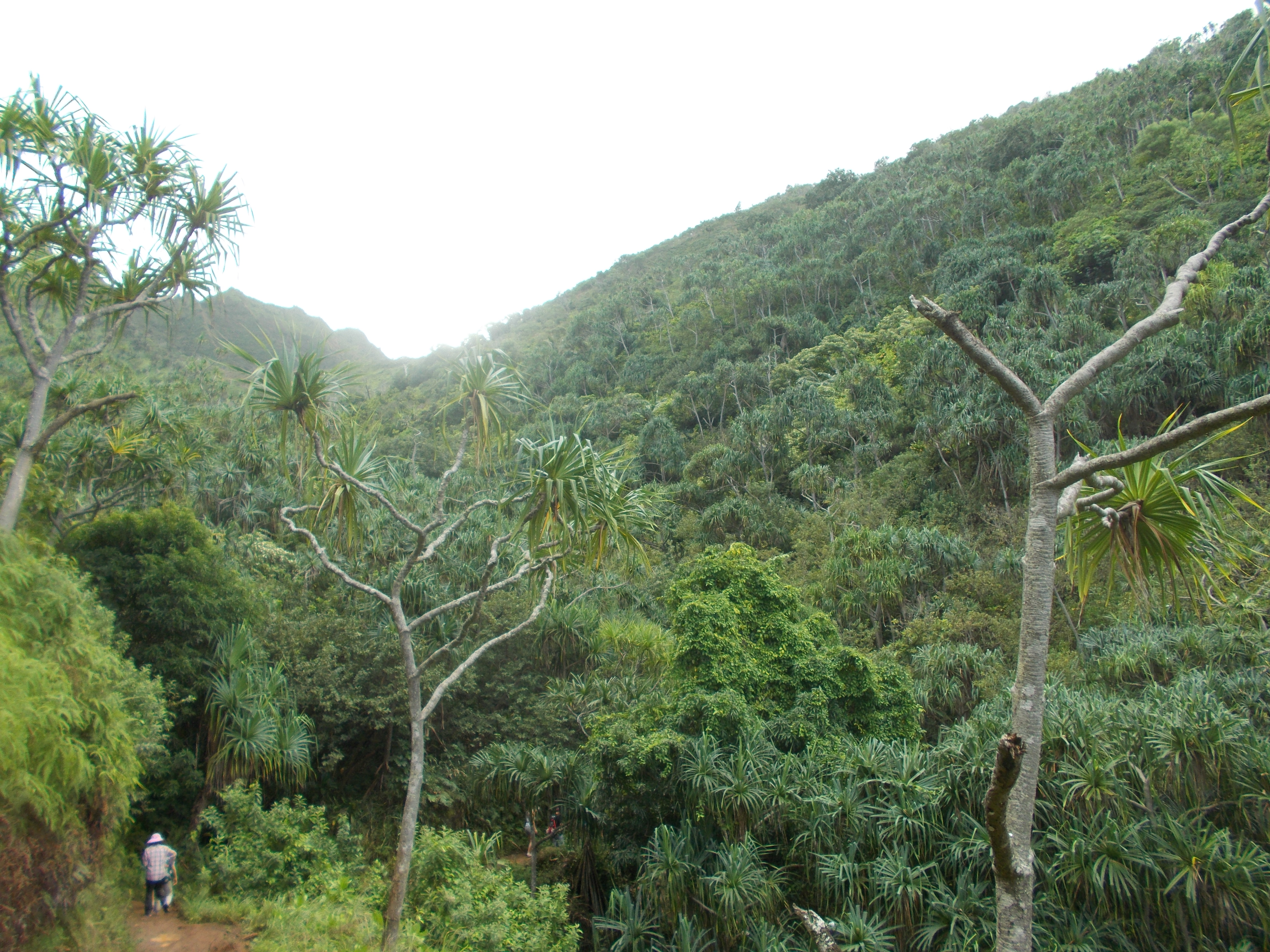
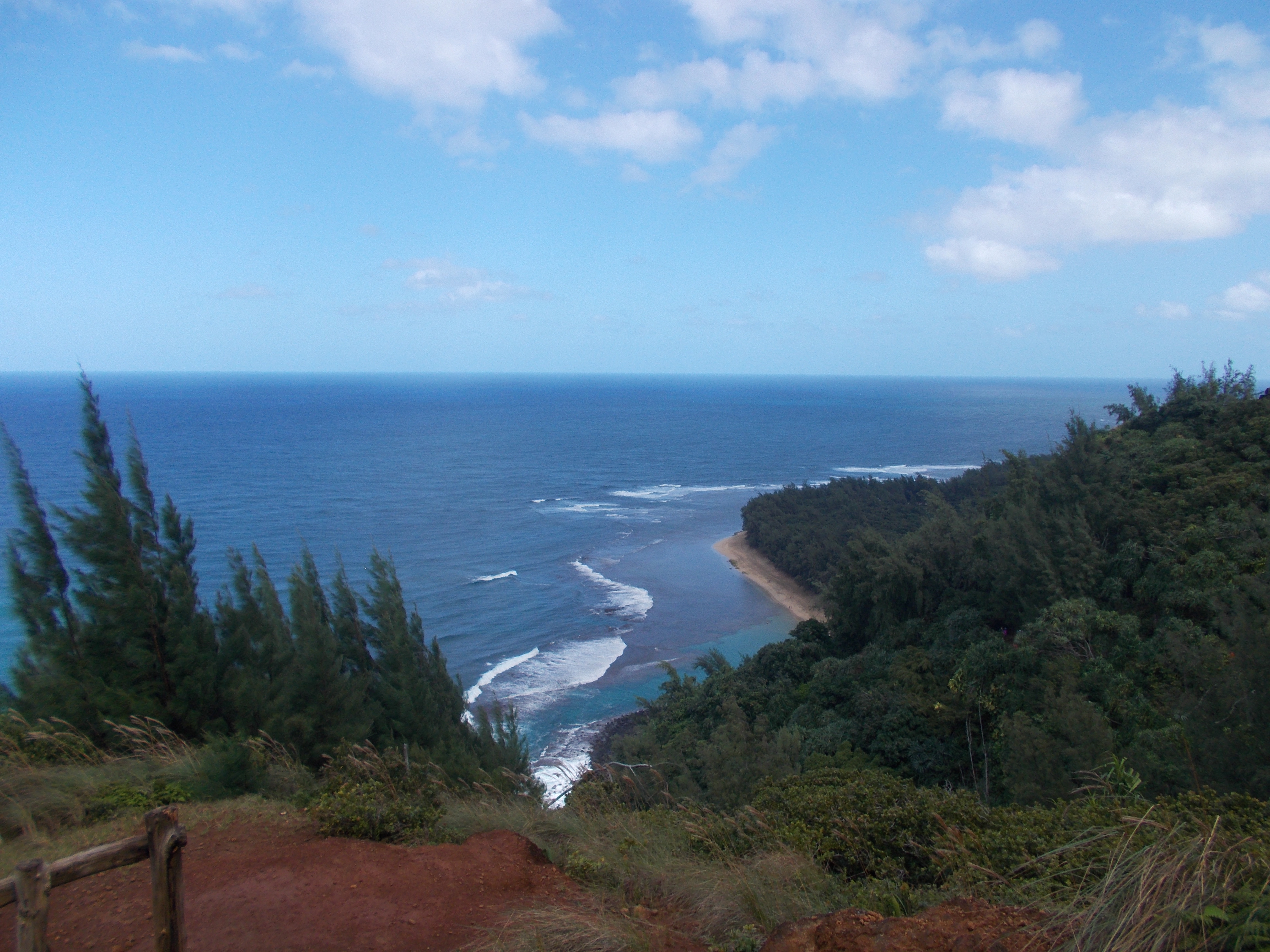
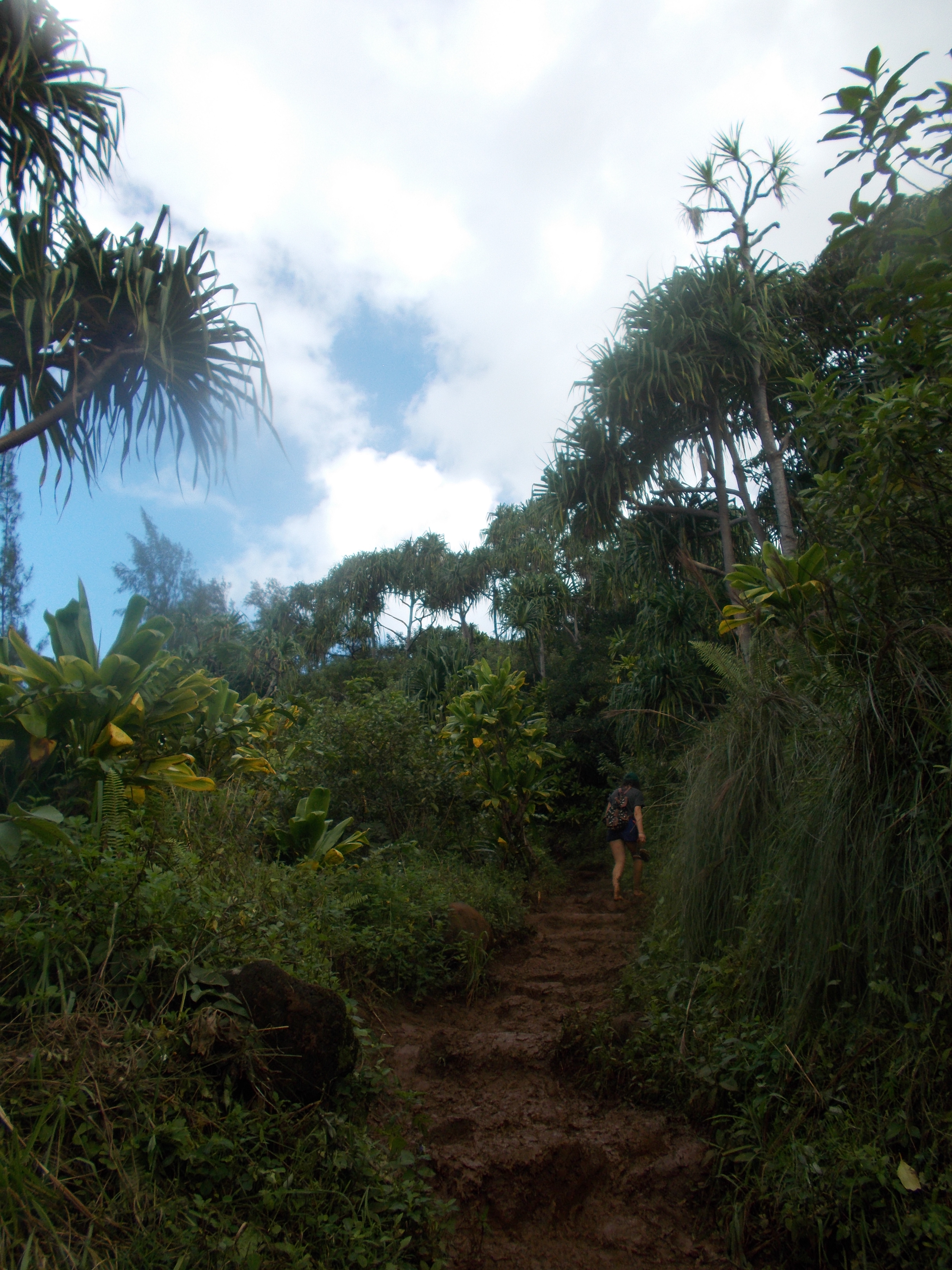
The first two miles of the Kalalau trail along the Nā Pali Coast end at a river that flows into the ocean. As roaring waves thrashed against rocks, I was told by friends native to Kauai that this beach is renowned for the number of drownings that occur as visitors innocently go to the water’s edge, only to be smothered by a wave and swept away by the force of an overwhelming current. Across the river, a trail continues on for two further miles into the Hanakapiai Valley of mud, bamboo trees and rocky river crossings until it comes to the  91 metre-high waterfall where signs warn of falling rocks from the high cliff. If one gets in danger here, there is no mobile signal to call for help.

We set off on the trail at 7 a.m to avoid the tourist trap. Even at this time, the path was muddy and slippery. The rocks over the river glistened with slime. I like to think of myself as quite an experienced hiker – distance and elevation aren’t too big a deal for me – but this trail was definitely one of the most challenging ones I’ve done due to the natural elements it contained. (If you’re not convinced of this by the photos, that’s because my camera was tucked securely in my backpack during these tricky moments!)

DSCN0045 DSCN0042 DSCN0020 DSCN0026

Around midday on the way back we reached Hanakapiai river marking two miles left to go. By now the numbers on the trail had vamped up immensely and people were queuing to cross the river. The sights I saw here and on the last two miles were quite unsettling. I watched with my heart in my mouth as people carrying backpacks far too heavy to support their balance gingerly attempted to cross the river on the slippery rocks. I saw elderly people who could barely walk unaided attempting to climb steps smothered in greasy mud that concealed uneven tree roots. I encountered guys and girls warily descending steep paths drizzled with mud and scarred with skid-marks whilst wearing flimsy flip flops and brand new Nike Airs probably unwrapped from under the Christmas tree a few days earlier. Even at the most challenging times, hiking should be enjoyable. Very few of the inappropriately dressed people I saw looked like they were enjoying themselves.

DSCN0046 DSCN0054 DSCN0058 DSCN0064


Travel has become much more accessible thanks to the likes of of travel blogs and social media. Blogs tell us that “anyone can travel”, encouraging people to quit their day jobs for a life on the road. I think it’s excellent that more people are travelling, and it’s something I hope I myself can inspire in people who read my blog. Social media platforms such as Instagram enable travellers to give others instant access to their experiences. There are benefits to this; in particular, it lets friends and family at home know the traveller is safe. Ironically however, this promotion of travel-for-all and availability of instant access could also be creating a cult of irresponsible travel. In a world where ‘likes’ and retweets are perceived to be indicative of popularity and hence success, some people forget to prepare properly and take precaution when it comes to aspects of travel such as hiking.

I will happily be the first to acknowledge that I tend to upload a lot of travel photos onto Facebook and my blog. However this is done days, sometimes weeks after the photo has been taken and not as I am having the experience. This not only allows the traveller to make the most of the moment without staring at a screen, but can prevent them taking risks in the hopes of receiving a quick ‘like’ for their pretty selfie in front of a backdrop illustrating a daring adventure. Getting excited or feeling proud about one’s undertaking can cause an impulse to share the moment with the world, leading to spontaneous irrational choices. Posing with a selfie-stick on a narrow cliff edge in windy weather before a beautiful ocean view? Walking down a slippery and uneven rocky path towards a tranquil lake whilst staring at your phone choosing a flattering filter? Not a smart idea.

Any travel blogger who says they don’t want to impress people with their photos and stories is lying. What I and many travel bloggers can confidently say is that I am not wanting to impress with how I look in a photo, but with the scenery I am looking at. Social media tends to take the attention off the environment and onto how people look in the environment. This is turn puts a pressure on some people (mostly young girls) to look their best. Perceptions of what “looking your best” means on Instagram might not necessarily equate to suitable hiking attire.

Ultimately it’s up to people what they wear when hiking, but they must accept that they are responsible for their own welfare, and their choices will govern how easily and successfully they can do something. In some cases, one’s actions and choices can be selfish if, by putting themselves at risk through lack of preparation, they also put others near them at risk should they be needed to help them. Nobody should feel like they can’t travel, but everybody should know their limits.

In their attempts to promote a destination and perhaps receive a cheque or free perk in return, travel bloggers must be careful not to create unrealistic expectations of what one can do in an area. In glorifying locations as exotic paradises, they must remind readers of the fundamental practicalities of hiking, swimming and other general activities. Before starting a trail, people should have the right footwear; they should check weather forecasts; they should pack sensibly but lightly; they should know details about the trail; and they should be alert and aware of others whilst on the trail. Hawaii may be a heavenly escape of stunning beaches, palm trees, chilled music and luscious cocktails, but it also has the potential to bring hell on one’s trip if they do not prepare properly.

*

Tips for this hike can be found on this website

If you enjoyed this post, you might also enjoy reading The Rise of Techno-Travellers

Unknown's avatar

The Chiefly Outdoor Appeal of Squamish, BC

Situated between the bustling city of Vancouver and the ski-haven of Whistler on the Sea to Sky Highway is the district of Squamish. Its name is approximate to the language of the First Nation people who were the original inhabitants of the valley since around 5000 years ago. Navy explorer George Vancouver encountered Howe Sound in 1792 during his expedition along the Pacific Coast, but the first European settlers arrived in 1888.

The district of Squamish spreads over various villages – Downtown, Dentville, Valleycliffe, North Yards, Garibaldi Estates. Whilst cafes and pubs will have their locals, I didn’t detect a huge sense of community around town. Perhaps the autumn season had dragged everyone into a slumber state, but it all felt a bit flat. This sense of detachment wasn’t helped by the unease of access to other villages without a car. Cabs cost around $15 or you can take local transit for $1.75 a ride. Without a car, options for getting out to Whistler and Vancouver are limited to coach services from Greyhound or Pacific Coach Lines. A journey to Whistler takes 40 minutes.

Many people live in Squamish and commute to work in Vancouver which is 68km (1 hour) away to avoid the higher rent prices, but housing availability is falling here. Residents are also concerned by the lack of available jobs which is an additional contributor towards forcing people to leave. Squamish previously had a large logging industry which eroded after closure of the pulp mill. My Air BnB host appeared to be one of the luckier residents in financial terms, having a job as an estate agent in town.  There is definitely hope for more investment in public infrastructure to help create more jobs and reduce the gap between high and low wage-earners. The Liberal Party’s promise of $125 in funding towards infrastructure development certainly appealed to voters here, the majority of whom chose Pam Goldsmith-Jones as their MP in the October 2015 federal election.

As a consequence perhaps of the lack  of material industries, tourism is now the main source of income for the local economy. Squamish is considered to be the outdoor recreation capital of Canada. The opportunities for climbing, hiking, mountain biking, triathlon and windsports are aplenty and are celebrated during the summer months through various festivals such as the ‘Test of Metal’ bike race. A music festival is also held in August which featured the likes of Drake in 2015.

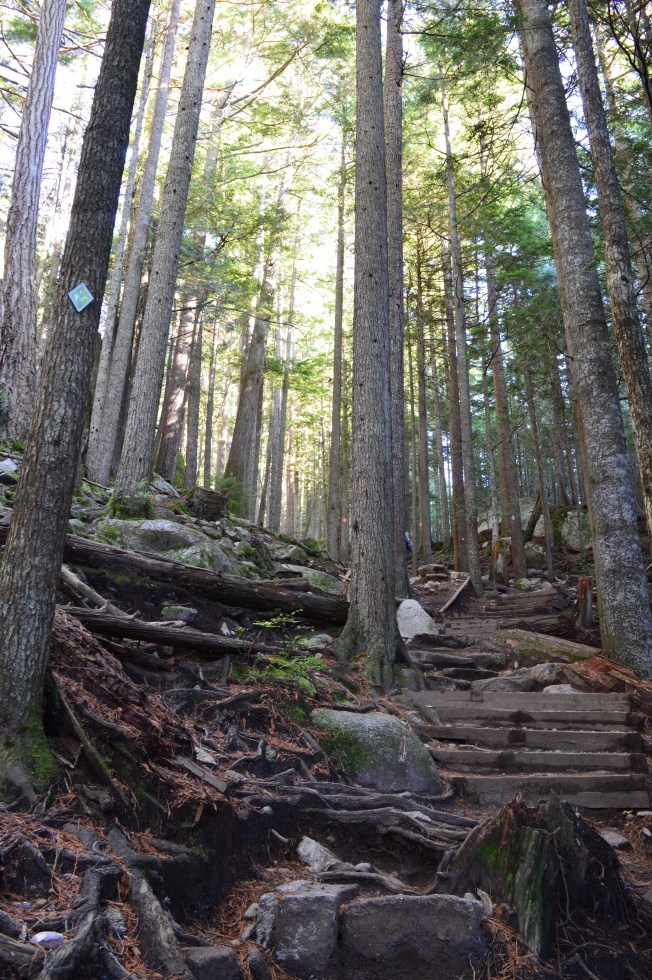
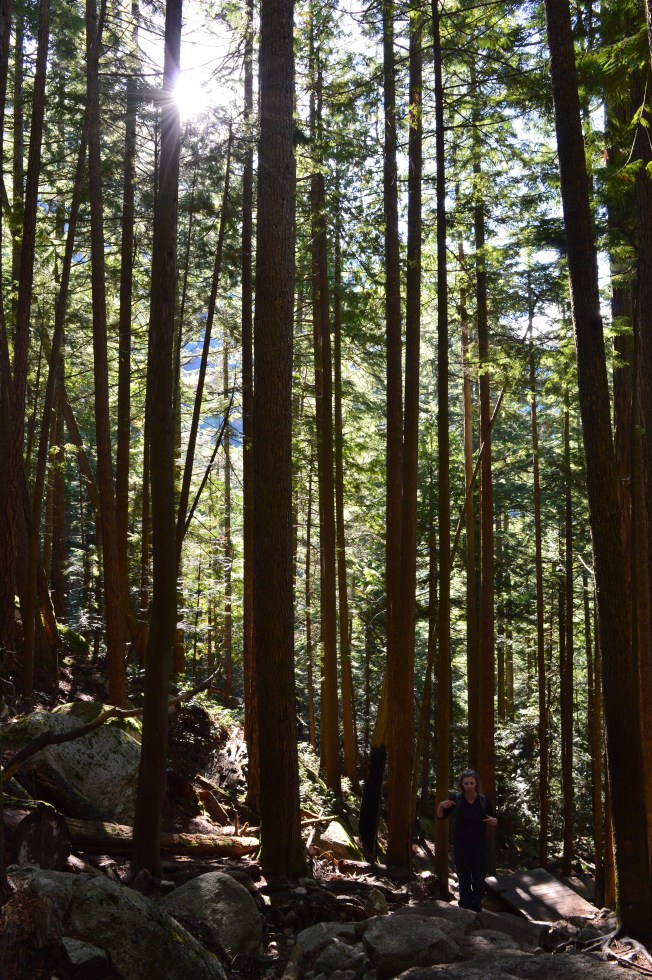
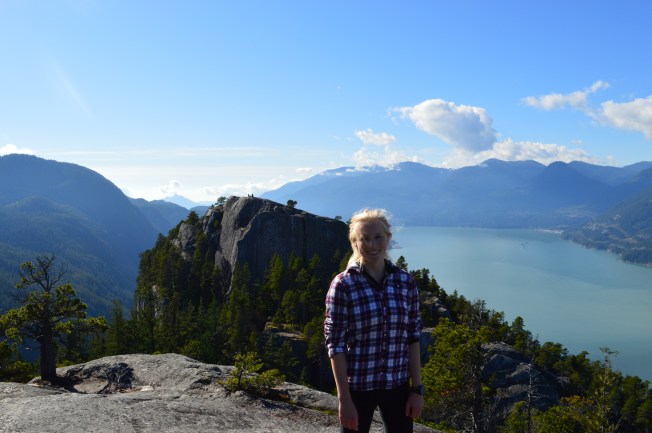
There are eight provincial parks in Squamish, one of which is the Stawamus Chief park popular with climbers for its challenging granite rock cliff-faces. One of the largest granite monoliths in the world, hikers can tackle the ~5km return hike up to the three peaks of the Chief, which takes roughly 4 – 5 hours to complete depending on your fitness level and how many peaks you target. The trail leads you on a steep ascent of around 600m elevation gain that involves stairs, ladders and rope/chain-assist sections. It will be worth the aching thighs when you reach the top of the fir tree-dotted dome and are greeted by wonderful views of glistening Howe Sound and surrounding snow-capped peaks.

DSC_0274

DSC_0275

DSC_0282

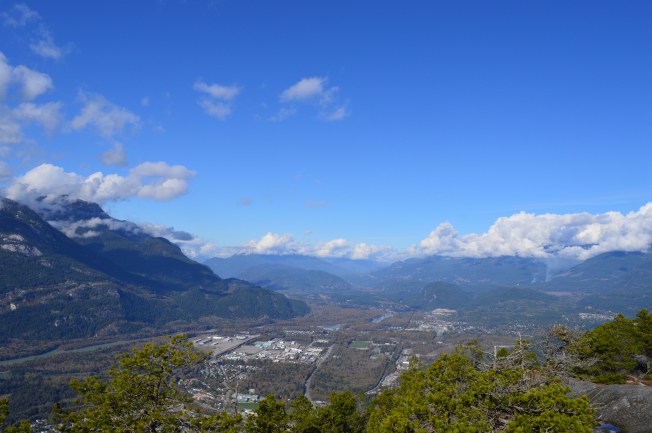
Less aesthetically pleasing is the view of the tired-looking town below. It’s almost as if a jumble of characterless box buildings have been squashed hurriedly amidst great scenery, and they look quite out of place surrounded by such mighty natural superiors. (The photo below was one of the more flattering shots!)

DSC_0288


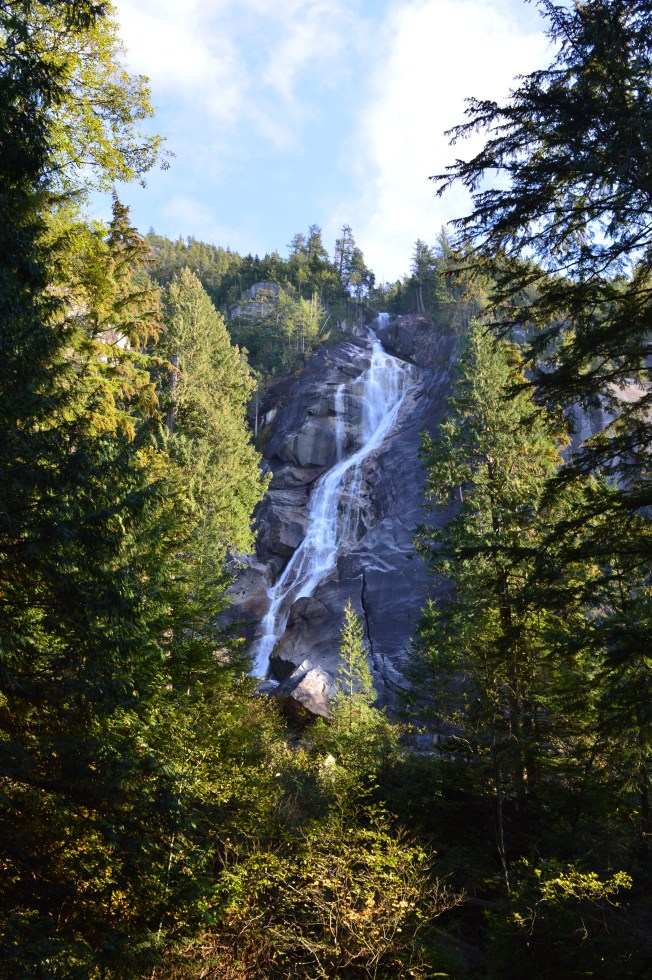
Expect wobbly knees on the way back down the trail and near the bottom, take a detour off to the left towards Shannon Falls Provincial Park for views of the pretty waterfall there.

DSC_0293

Experiences like the Chief hike certainly help point a traveller’s compass in the direction of Squamish. Whilst often overlooked by young tourists in favour of the commercial zeal and party-town feel of Vancouver and Whistler, there is something appealing about the modest urban development of Squamish, as this simply helps emphasise the range of outdoor activities available from the surrounding geographic features. The Squamish landscape has been featured in films such as Free Willy and Happy Gilmore. It’s easy to understand why people choose to live here – for the distance from its loud neighbours and the comparative quietness, and for the access to fresh, scenic outdoor areas and a subsequent healthy lifestyle. It’s therefore easy to understand why rising house prices and decreasing job opportunities are such a concern for residents.

A huge congregation of bald eagles roam Squamish between November and January. If wining and dining is your thing (and you have a designated driver for the evening!) there are also a few varied restaurants to choose from as well as pubs brewing local craft beers. Otherwise, autumn is perhaps not the best time to visit should you want to get a lot of outdoor activity out of Squamish. I look forward to returning one day in the summer when there is more of an energetic buzz around the place and warmer weather for getting out and about.


Unknown's avatar

An Autumn Weekend in Whistler for the Non-Skier

Host city of the 2010 Winter Olympics, Whistler is a commercialised town that thrives off the stream of tourist activity which mounts in the run-up to winter. It’s similar in its appearance and character to the Rocky Mountain emerald of Banff in Alberta (think Swiss-style chalets and designer shops). Skiing is the main attraction here, but if powder isn’t your thing, don’t panic! There are still plenty of things to do on a long autumn weekend in Whistler without getting on the slopes.

Activities all Around

As an Olympic host city, you can expect premium quality from Whistler when it comes to available activities.

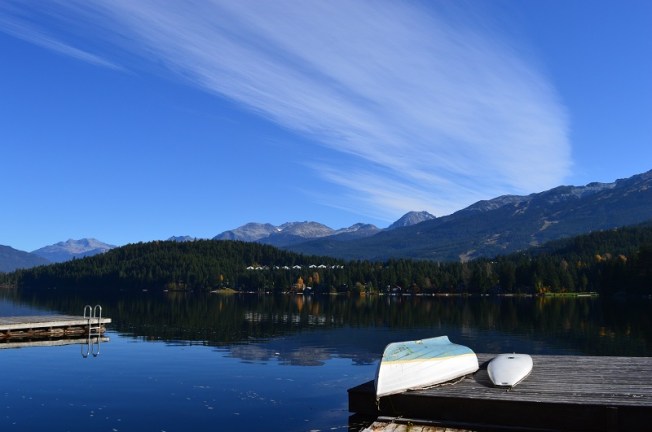
Hiking options are aplenty for all levels. You can join part of the 180km Sea-to-Sky trail which runs between Squamish and D’Arcy. A segment of the 33km section running through Whistler passes three lakes: Alpha, Nita and Alta, all of which have their own parks for eating and leisure. Trails are mainly flat and paved, attracting either those who fancy a slow stroll accompanied by coffee flasks and gossip with a friend, or those wanting an early morning solo powerwalk. Experienced hikers can attempt the more challenging 16km-return Rainbow Trail which starts from Rainbow Park on Alta Lake.

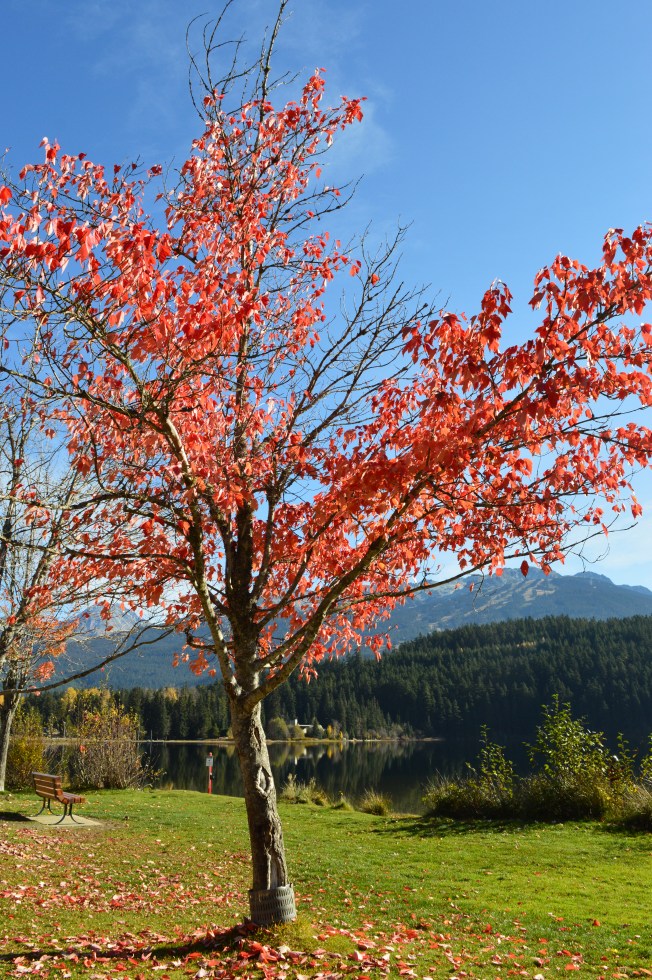
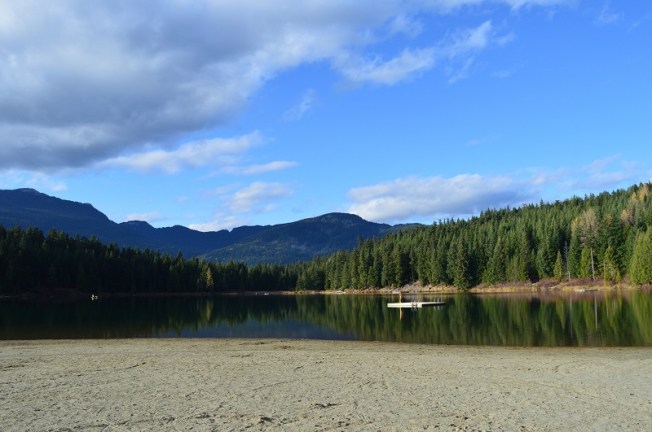
The west side of Alta Lake provides a great view of the mountains, even if they’re not sprinkled with snow. Kayakers and paddle-boarders can often be seen cruising along the water. Lost Lake is a secluded place where tourists escape to from the hustle and bustle of Whistler Village, and youths hang out and play guitar on the beach. It provides a great running loop for burning off the sweet treats that will inevitably find their way into your stomach if you visit Whistler.

DSC_0002

DSC_0009

DSC_0011

For those wanting to move at a faster pace, Whistler is also great for cycling. There are fun gravel routes for off-road biking near Lost Lake. If you stay at UBC Lodge in Whistler Creekside, bikes can be rented for $20 a day.

If you prefer more laid-back sports, Whistler is not shy of golf courses. There is also the swanky Scandinave Spa for those in need of a massage after a long day of hiking. Those tight on pennies don’t have to splash out though ($162 Deep Tissue Package – ouch!); UBC Lodge residents have free access to the hostel’s spa and sauna.

Fill me with Food

There are plenty of eating options available in Whistler Village that cater for various budgets and world tastes.

For a cheap and cheerful breakfast that will fill you up until the late afternoon, I recommend heading to Gone Village Eatery in Village Square where you can have hearty meals for around the $10 mark. Orders are taken and paid for at the counter and there is a washing area for to diners clean up their dishes themselves. This café is also located behind a cool bookstore.

DSC_0018

For lunch, El Furniture’s Warehouse offers a meal for only $4.95. Mainly filled with youths keen to watch ice hockey and NFL on TV, this place serves food that is nothing special (think burgers and mac ’n’ cheese) but it’ll fill you up for a few hours of wandering around. Dups Burritos makes tasty Mexican food priced around the $10 mark. For take-out, the renowned Peaked Pies has savoury and sweet options. Got cash to splash for dinner? Head to restaurants like Caramba! and The Keg Steakhouse for higher-end cuisine.

If visiting Whistler in the fall, it’s likely that at some point you’ll need a hot drink to warm your hands. Good cafes include Pure Bread and Moguls. Both are quite popular and hence pretty small when it comes to seating space, but the $5 cake slices look incredible! Moguls also offers many healthy savoury options.

Craving a sweet treat after an active afternoon? The Rocky Mountain Chocolate Factory will satisfy your needs. A dazzling display of decorated toffee apples, flavoured fudge, chunky cookies and hand-crafted chocolates awaits you. Naturally the prices in this chocolatier don’t match ‘Save on Foods’ and deciding on one item is difficult, but the chocolate chip cookie topped with dark chocolate, caramel, nuts and raisins is so worth that $7. Just be sure to brush your teeth extra well at bedtime… Another place to check out is Hot Buns Bakery for its famous cinnamon buns and crepes, while Cow’s Whistler sells ice cream and milkshakes made fresh in front of your eyes from a Prince Edward Island recipe.

For home-cooked meals, there are two large grocery stores in Whistler Village: IGA in the marketplace and Whistler Village Grocery Store in Village Square.

With so many more dining options available, it wouldn’t be surprising if you spent most of your money on food during your weekend in Whistler…

Ease of Entertainment

Most shops in Whistler cater for hikers, skiers and snowboarders but there are also fashion and jewellery outlets available including GAP, Pandora and Footlocker. Even if, like myself, you’re not into these things, you can still get some fun out of window-shopping the many stores along the Village Stroll.

Picnics can be eaten on the Medals Pavilion next to the Olympic monument. Here kids run around playing games, glamorous moms in ski-based attire drink smoothies… and the odd couple perform yoga exercises. You can observe the activity from the comfort of one of the big chairs.

DSC_0013

DSC_0017

Worth a visit is the Squamish Cultural Centre just outside Upper Village. This exhibits First Nation crafts including Totem poles and canoe boats, with plenty of photos illustrating the connection of these people to the land. You’ll find out interesting information, such as the tradition that newborns are given one name at birth before receiving their permanent ancestral one at adolescence. One memorable photo depicted two mountain peaks which represent two princesses who begged their husbands not to engage in a war.  Entry to the museum costs $18.

Whistler is quite the party town, featuring many bistros that turn into cocktail and wine bars; public houses offering locally sourced craft beers; and three nightclubs. Promoters will often be on the street with big smiles inviting people to join their weekly bar crawl. The last BC Transit bus departs at 12.59am. Any later than this and you’ll be needing a cab.

Getting There and Around

Buses through town come regularly. A single journey in Whistler costs $2.50 (as opposed to $1.75 in the smaller nearby Squamish). Save yourself from rummaging in your purse for cash by paying $22.50 for 10 tickets at the visitor centre near the main bus stop. The staff here are bilingual and very helpful with recommending activities tailored to your interests. Free shuttles run to the Marketplace from November to April and from the Village to Lost Lake in the summer season.

If you’re not driving, Greyhound and Pacific Coaches are the main transportation services, taking two and a half hours to/from Vancouver. The latter is more expensive, however it does offer pick-up and drop-off at Vancouver airport and selected hotels.

Whistler to some is, like Banff, too touristy, plastic and expensive. Hosting the Olympics inevitably boosted redevelopment of its commercial face. It’s definitely not like the more simplistic rural Canada I fell in love with, and yes, you are bound to encounter the odd rich  foreign skiing-nut. However it’s definitely worth seeing just for the experience and for the natural beauty that surrounds the village. Don’t feel unwelcome because you haven’t brought your skis with you; come along to Whistler for a weekend and treat yourself to a bit of commercial charm.


*

Would you like to take this article on the road with you? You can download a GPS version to your iPad or iPhone by following this link. Thank you for reading and happy travels!

Unknown's avatar

Appreciating the Simple Life | Tofino and Ucluelet

I’ll be honest: when I arrived in Tofino for the first time in October 2015, my initial reaction was “Is this it?”. Located on Vancouver Island about a four hour drive upland from Victoria (depending on the number of tourist stops taken on the way), you arrive in a small town and to me it was not immediately obvious what the appeal is to the mass of tourists that come here. There is no symbolic institution or landmark as such and the view of the ocean offered can be found at many other areas around the island. So what is it that people love so much about Tofino?

The obvious answer is the sandy beaches. There are lots of opportunities to give surfing a go, with Surf Sister being a particularly popular company for girls to learn with. Experienced surfers are tempted by the waves on Long Beach. Those less keen to take a dip can sunbathe amongst the driftwood on quiet Florencia beach, or admire the lovely sunsets on Tonquin beach.

DSC_0140DSC_0144

DSC_0094DSC_0108DSC_0113

There’s also plenty of hiking on offer, with various boardwalk  and trail routes available including the Lighthouse Trail, Rainforest Walk and others within the Pacific Rim National Park. These will take you on a journey that features Western Cedar and Hemlock trees, colourful fungi and possibly the odd bear or two.

DSC_0121DSC_0122DSC_0125

But the beaches and these hikes aren’t the main features that set Tofino apart from other coastal towns.

My sister and I stayed in the Tofino Traveller’s Guesthouse on Main Street. It’s a lovely place with a cosy, relaxing ambiance. There was no reception desk which made the atmosphere more welcoming, with the main rule being to take shoes off upon entry. The soft sounds of Bon Iver and Matt Corby played in the kitchen and in the morning, the host would make waffles for everyone. Guests were very chatty with each other. Particularly memorable was seeing a couple in their sixties talking about life aims and societal pressures to a young punky girl who was wearing only a flannel shirt and her underwear. I couldn’t imagine them talking in other, more urban contexts.

The hostel featured lots of mottos conveying deep meanings. Reading ‘There is no greater agony than bearing an untold story’ made me feel restless and I had a sudden urge to stop thinking too much and just get on with personal projects. A poignant one referred to how people waste time devoting so much of it to something they don’t enjoy under the assumption that this will eventually allow them to do what they do enjoy…but this doesn’t happen. Reading this made me think of city life – how people in high-paying jobs tell themselves they’ll live the mundane office life with the 50 hour weeks just for a few years until they’ve saved enough money to escape to the country and live a restful life of part-time work. But as this lifestyle becomes routine and the income becomes comfortable, many abandon their vision for fear of losing security.

With its sleepy town-feel, Tofino definitely evokes a sense of the simple life. This is the kind of town where you can imagine the owner of the pub is best friends with the guy who runs the hardware store two blocks away, who happens to be related to the doctor at the hospital who is married to the lady who works at the cafe, who herself is sister to the owner of the pub. Friday night bonfires will always be favoured and new faces are welcome. The corporate world is completely alien and nobody is in a hurry. Routine is not regarded as boring but rather a guaranteed source of happiness, even if it doesn’t allow for ‘climbing the career ladder’ as such. Life just flows along at a nice gentle pace and people are content with it being this way.

This is why the fatal capsize of a whale-watching boat in October 2015 was such a momentous event. The sleepy town had to wake up to run an intense rescue operation that strained its resources and relied significantly on the personal initiative of boat-owning residents. It was a huge shock for the town psychologically and practically.

Located about 30km away, Ucluelet is even sleepier, with the main attraction on offer being the beginning of the Wild Pacific Trail. Once this had been completed, there was much twiddling of thumbs as my sister and I looked around for something else to fill our time with. We didn’t fancy paying $14 to go inside the small aquarium so went to Zoe’s Bakery and had some tasty carrot cake and frothy hot chocolate. The only other options after this seemed to involve eating more food, which wasn’t necessary.

DSC_0178

Instead we decided to turn up early to our rustic hostel. A wooden path led down to the water where boats dozed on the still surface. Here was a place of tranquility and creativity, and under this influence I found myself pouring out words onto paper.

DSC_0191

In the evening, the hostel manager invited the guests and some locals round for a bonfire. My sister and I got ourselves into a slightly awkward moment when we asked one of the local girls what she did for a living and gave a little too enthusiastic of a response after mistaking “Server” for “Surfer”.  She was from Toronto and I asked what she liked best about living in Ucluelet. She looked at me like I was an idiot and said, “Because it’s one of the most beautiful places in the world”, as it this was an obvious answer. I agree that it’s lovely, but I wasn’t convinced of the credit of this statement. I believe there are many more stunning and unique places in the world that have more character to them.

The guy running the hostel first came here on a vacation from Vancouver and ended up staying for five years. Then he followed a girl to Europe for a year or so, only to return here to remedy his symptoms of withdrawal.

As they sat smoking weed and talking about the funny guy eating fries in the cafe today, I found it hard to relate to these people and understand the appeal of their lifestyle. Sure these small quiet towns were nice detoxes from the busier, more populated world, but did they not get boring after a few months of seeing the same faces and places every day? And if these people did interact with the tourists that come and went, did they not feel a burning sense of curiosity to follow in their footsteps and see more of the world?

However, what is interesting is that these two people in question came from the city to the countryside. They came from urban density to rural seclusion, from an area of domineering social norms to one allowing greater freedom and acceptance of individuality. Some might say they had regressed from life in a fast-moving, technologically advanced setting to a slower, less developed pace. But they were happier with this way of life.

Perhaps that is the appeal of Tofino and Ucluelet; it’s not so much to do with their looks but their humble, quiet characters that welcome anyone and let them be themselves, instead of imposing an identity on them. To entertain oneself in these areas, more emphasis is placed on the environment than on consumer goods, on personal communication over technological sources. Residents might not have as many responsibilities nor make a tonne of money but they’ll likely be happier, healthier and have more time for themselves and others. As snobby as city-based people may want to be about such lifestyles, deep down they are probably a little jealous.

Tofino made me envision a quieter, simpler life – one in which I would have fewer professional accolades but a more care-free routine that gave me time to appreciate the small things in life. I day-dreamed of running a guesthouse for income, writing stories for pleasure and going for daily runs on the beach for leisure. In today’s age, people tend to spend too much time looking for the next big thing to do and not enough time enjoying the present. And so I take back my initial thought about you, Tofino.


Unknown's avatar

Searching for Nature’s Treasures in Goldstream Provincial Park

Located off Highway 1 just under 20km from Victoria on Vancouver Island, Goldstream Provincial Park is a great stop en route to Tofino and a favoured destination among locals looking for a weekend walk with their dog. Parking is free, toilets are on site, and the staff in the tiny visitor centre will point out the park’s key areas on a map.

Autumn is a lovely time to visit this park as the maple leaves have a wonderful golden glow to them when they catch the sunlight, emitting that wispy wet sound as you wander through them. I spent much time staring at the ground looking for the perfect one to take away with me. Within these lush surroundings, the only fault is the faint sound of traffic from the highway nearby.

As you walk through the tunnel that remains fom the gold rush experienced here in the mid 19th century, you’ll come to Niagara Falls (a much smaller version of its eastern twin!) with a trail beginning on the right. There aren’t many signs so further on you have to follow the sight of flattened soil which highlights a path up to the right. Scramble steeply up and after leaping a few fallen logs, you’ll eventually reach the old railway trestle which, based on the number of Facebook cover photos I’ve seen that feature them, is quite a popular place with island kids.

DSC_0051DSC_0052DSC_0054DSC_0055

The park is most famous for its salmon run which takes place in mid October until December, featuring mainly Chum salmon as well as Coho and Chinook. I saw about 12 salmon struggle upstream to lay their eggs having journeyed from the Pacific Ocean after living there for the past three years. Conquering the current is quite a battle, with splashes erupting sporadically as the fish thrash to move upwards. Nests in the gravel are known as ‘redds’ and are chosen by the female, while the male guards the area. Her eggs, known as ‘roe’ are fertilised by the male after they have been laid. After a new life has been created through all this effort, the salmon will slowly die in the place where they were born. It’s quite the sacrifice! To add salt to the wound (or perhaps highlight the significant existence of the food chain in nature), bald eagles will eagerly feed on their corpses in the spring.


DSC_0059

Some visitors will come to the park for a 60 minute refreshing walk; others will spend a day exploring. I did the former but elsewhere in the 366 hectare park you can find a range of rich vegetation including red cedar and arbutus trees, while if you crave a workout there’s the hike up 419m high Mt. Finlayson.

When surrounded by such an abundance of natural goodness, it’s a shame that some visitors couldn’t put their Starbucks cups in the many bins provided in the park. But this is the risk when nature is easily accessible to urban society and the social habits that form within. The park is in close proximity to life in the fast lane, but as photos like this one below show, it’s a great little spot for when you need a breath of fresh air.