Unknown's avatar

12 Common Resume Mistakes by Expats

Happy 2022! It’s been a while since I’ve written anything. In thinking about how I want to use this blog going forwards, I’ve decided to incorporate more of my day job into my posts. That is: human resources with a specialization in recruitment.

Over the past seven years, I’ve reviewed thousands of resumes for various positions. Many of these resumes have been from immigrants and expats. There are common mistakes made by all applicants, and there are common mistakes made specifically by newcomers.

I’ve decided to use my recruiting knowledge to try to help anyone who is planning to move to Canada. You’ve got your work permit, landed in Canada, found accommodation, and now you need to find a job. Below is my list of 12 common resume mistakes that can reduce someone’s chances of getting a job, and why.

This content has been copied and modified from an article I created and shared on my LinkedIn page. I am not an employment lawyer or registered immigration consultant. All advice provided is based off my personal knowledge and experiences, and does not represent the views of any specific organization. This post is intended as a guide and I am not responsible for the outcome of any job applications.

1. Sharing Personal Information

There’s a tendency for some applicants to share personal details on their resume, including their date of birth and marital status. Even if this is the custom in your home country, I recommend not doing this because it can open up the possibility of unconscious bias and discriminatory hiring. Although age and marital status are protected grounds under Canadian human rights legislation, many employers are unfortunately still guilty of age bias against people from older generations. The only personal information you need to include on your resume is your name, phone number or email, and town of residence.

If you’ve arrived in Canada with permanent resident or citizenship status, it’s a good idea to mention this on your resume. If you’re on a temporary open work permit, mention in your cover letter that you are authorized to work full-time in Canada. Don’t mention your visa expiry date because it may turn some employers off. Instead, wait until this question comes up in a pre-screen call, by which time you will have hopefully made a good impression on the recruiter and they’ll be happy to move to the next stage regardless.

2. Wrong Location

Some people that are applying for jobs outside of their town/province will list their location as being in the area where the employer is based. While I can understand the motivation behind this, it can be frustrating for a recruiter to think they have a promising candidate, only to discover later in the screening process that there will be delays because the candidate would need time to find a new place to live. This is especially the case if the company isn’t able to provide a relocation package or needs someone ASAP.

Better practice is to list your actual address but make note on your cover letter that you are able and willing to relocate should an offer be received. If you already have accommodation organized, for example with a friend or relative, make this clear too.

3. Spelling Mistakes & Formatting Issues

Everyone makes typos from time to time. Some employers will excuse a spelling mistake, especially if the applicant is an ESL speaker and the position applied for does not require much writing. However, if you’re applying for a communications or secretarial position, the employer will be less forgiving. This is especially true now when there is so much competition for jobs. If you have a few typos before the hiring manager has even got halfway down your resume, it’s possible they will immediately put you in the reject pile, even if you have good experience.

Additionally, some resumes are very untidy and confusing to look at. They might have inconsistent font styles and sizes, only list employment dates for some positions and not others, or list their past jobs in random orders. To a hiring manager, a sloppily presented resume shows a lack of respect to the application process by suggesting it isn’t being taken seriously. Again, you might be rejected before the hiring manager has got to the bottom of the first page.

Make sure you list the job title, employer name, and employment dates for each position to create consistency and prevent confusion about your employment history. Generally, jobs should be listed in reverse chronological order with the most recent at the top.

4. Language & Terminology Differences

When I arrived in Canada, I was surprised by how certain terminology used in England wasn’t recognized in this English-speaking country. This includes job titles. For example, people in England say “waiter” or “waitress”, while Canadians tend to say “server”. In England, they often say “air steward” but here they say “flight attendant.” Some terms are quite obvious to translate, however, if a hiring manager is not familiar with the terminology you’re using on your resume and they have hundreds of applicants for one position, it’s very possible you’ll miss out.

When writing a resume, it makes sense to adapt your spelling to the country you’ll be working in. Canada uses a combination of British and American spellings, but generally it uses more Z’s than S’s (recognize vs recognise, analyze vs analyse, etc.).

5. Too Much Emphasis on Education

A mistake British applicants often make is listing all their education credentials on their resume. To be honest, this is often a waste of time and space because many Canadian hiring managers don’t know what an A-level, A*, or 2:1 is. Unless the job ad requests it, hiring managers don’t need to know each module you studied at university and what your grades were. In most cases, they are more interested in knowing about your practical experience.

If the job ad requests a resume and not a CV, keep it simple by just listing the highest level of education you have, your subject, and the year you graduated. If it’s required for you to list your degree grade, it’s best to convert it to the equivalent Canadian GPA.

Another issue with listing your entire education history in detail is that it can make you seem over-qualified for a position. PhD students in particular can have a difficult time finding jobs for this reason. If your resume shows you have a very specialized education but you are applying for a junior-level job that only requires a secondary school diploma, hiring managers might have concerns about your commitment.
Structure your resume based on the job specifications in the job description. If more emphasis is placed on practical experience over education, focus on highlighting the former.

6. Too Long/Wordy

Most employers in Canada will ask for a resume vs a CV. CVs are longer, with more details on education and experience. Some people think a resume should only be one page long. I disagree with this personally, but think three pages is a good maximum. Every time I’ve read a five-page resume, I’ve felt that it could have easily been condensed, with repeated or less relevant information removed. Brevity is key. Some job applicants say a lot on their resume without actually saying anything. Some repeat information through the disguise of different wording. A waffling resume might raise concerns about your ability to identify and select important information.

If you’ve had the same role for many years but performed it for a few different employers, consider using a functional resume style. In this format, you first summarize the main skills and experience you’ve demonstrated across all positions, and then list the employment organizations, titles, and dates after.

7. Unnecessary Employment Information

Following on from the above, some newcomers (commonly younger ones) feel a need to include on their resume every single job they’ve had. They perhaps think that showing they’ve been working since they were in secondary school will impress employers. Truth is, employers more often care about quality and not quantity. If you have a long resume that shows a variety of different jobs, it might be unclear to the hiring manager what your interests and best skills are.

If the job description notes they require someone with three years of experience in a specific role, the hiring manager is likely to lean towards the resume that has highlighted experience in that specific role, even if it’s the only work experience that’s listed. That’s because this resume will suggest a greater interest in and commitment to the job.

If you’re in your late twenties and have been working professionally since you were 21, there’s no need to include weekend jobs you had in your late teens. Focus on tailoring your resume to the position you’re applying for and include the jobs that show relevant skills.

8. Tailored to the Wrong Field

In addition to the above mistake of including too much generic information, there’s also a mistake of including too much specific information that’s irrelevant to the job being applied for.

If you have a retail background but are applying to be an admin assistant in the provincial government, having a skills summary that highlights your experience boosting revenue and exceeding sales targets is likely going to make the hiring manager wonder why you’re applying for the job. They might question your career goals and have concerns about commitment. Although the accomplishments you’ve listed might be impressive generally, if they’re not useful or applicable to the role, they won’t seem that valuable to the employer.

Depending on your career interests, it’s good practice to keep a template of resumes that can be modified for different positions, e.g. administration, customer service, marketing, etc. People with an engineering background might have one template for this, one for quality assurance, and another for project management.

9. Stretching

Stretching a resume involves exaggerating or embellishing certain details to sound more impressive. This could include adding a course that you haven’t yet finished in order to seem more knowledgeable, extending employment dates by a couple of months in order to suggest more commitment, adjusting a job title to suggest more seniority, or adding job responsibilities you didn’t have in order to appear more skilled and in line with the job specifications. These might seem like minor adjustments, but if reference checks reveals the discrepancies, it could raise concerns about how honest and trustworthy you are.

When preparing your resume and cover letter, remember that if offered an interview, you will need to be able to back up any statements you make with an example. There’s no point noting that you improved office processes if you can’t give an example of an occasion you did this and how.

10. Copy-and-Pasting Job Descriptions

Some applicants, including native English speakers and ESL speakers, will copy and paste a previous job description onto their resume when summarizing their employment history. Someone very experienced in reviewing resumes will be able to tell when this has happened. A potential issue with copy and pasting is that some employees don’t end up performing all duties listed in the job description. Perhaps they resigned or were let go before having a chance to take on some of the responsibilities. Inclusion of such content would therefore mean your resume is untruthful. A thorough reference check with a direct supervisor will verify job duties that were performed. Again, concerns about honesty might result.

There’s nothing wrong with referencing a previous job description to help you remember the duties you had, but the content should be rewritten in your own words.

11.  Tone

The tone of your resume is something that can inspire a hiring manager’s first impression of you as a person – in positive or negative ways. Sometimes, in an attempt to highlight their skills and experience, a candidate comes across boastful and this makes me wonder how good they would be at working in a team. On other occasions, a candidate has come across as quite casual and informal, which has raised questions about how professional they would be in the workplace and as a representative of an organization. Such impressions might be made consciously, or they might be completely unintended and the result of a language barrier. Before submitting a resume, ask a friend to read over it to assess how “likeable” you sound.

12.  Too Much Emphasis on Hobbies

Listing hobbies helps give the hiring manager an idea of the type of person you are, but should be approached carefully. Some people mention hobbies because they think doing so will make them seem like a good cultural fit. For example, they’re applying for a customer service position at a cricket ground, and they happen to love playing cricket. While this may seem like a good match, the hiring manager wants to be sure applicants will work hard and are not just applying for the job for any perks (like watching cricket for free!). If this candidate devotes their cover letter to talking about cricket and not about their relevant skills and job experience, the hiring manager will likely be suspicious about their motives and hesitant to move forward.

It’s fine to mention your interest in what the organization does, but keep this brief. I also recommend avoiding listing hobbies like “Going out with friends” or “Watching TV” because these don’t add anything of value.

*

I hope you find these tips helpful. Good luck with your application! 
Unknown's avatar

New Book Available for Purchase | Trail of Worth

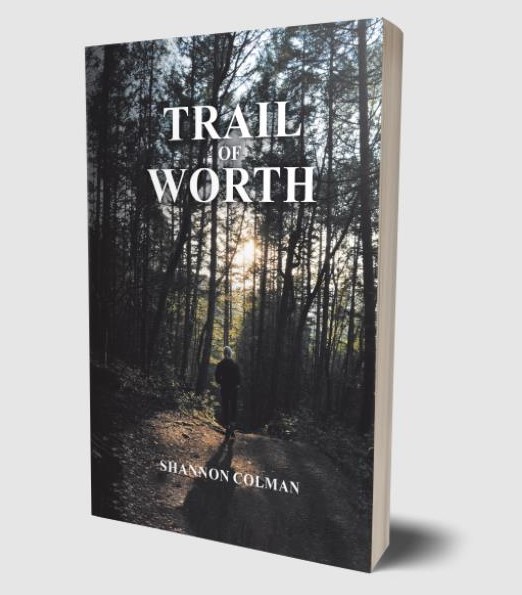
It’s been a busy couple of months balancing my full-time job with finishing up my book, Trail of Worth. After 18+ months of effort, I’m very excited to announce that this book has now been published!

In writing Trail of Worth, I’ve tried to:

  • Give an honest portrayal of moving overseas and the various challenges it entails
  • Take a candid look at relationships and their fascinating complexities
  • Capture the way people (especially women) can perceive themselves during their twenties
  • Provide a commentary of travel experiences
  • Demonstrate the importance and influence of family and friendships

In writing this piece of creative non-fiction, the most important thing for me was to be authentic – to show the main protagonist’s flaws and strengths, the mistakes and moments of vulnerability as well as the little wins. There is genuine dialogue and I have not catered to a “mainstream” narrative. I’ve tried to create something that is both realistic and relatable.

Trail of Worth covers many themes and topics – travel, immigration, careers, running, friendship, relationships, mental health, and self-worth. Some of the content will make you smile, some will make you think, some may trigger sad or painful memories, and some I hope will inspire. If you’re a member of a book club, this story would be a great choice for initiating meaningful conversations.

Trail of Worth is written from the perspective of a female, millenial expat. It’s based on actual events recorded from the time, but identities have been changed. Interpretations of events and behaviours in the story will be influenced by the readers’ own attitudes and life experiences. I would simply encourage anyone reading the book to try to read it with an open and reflective mind.

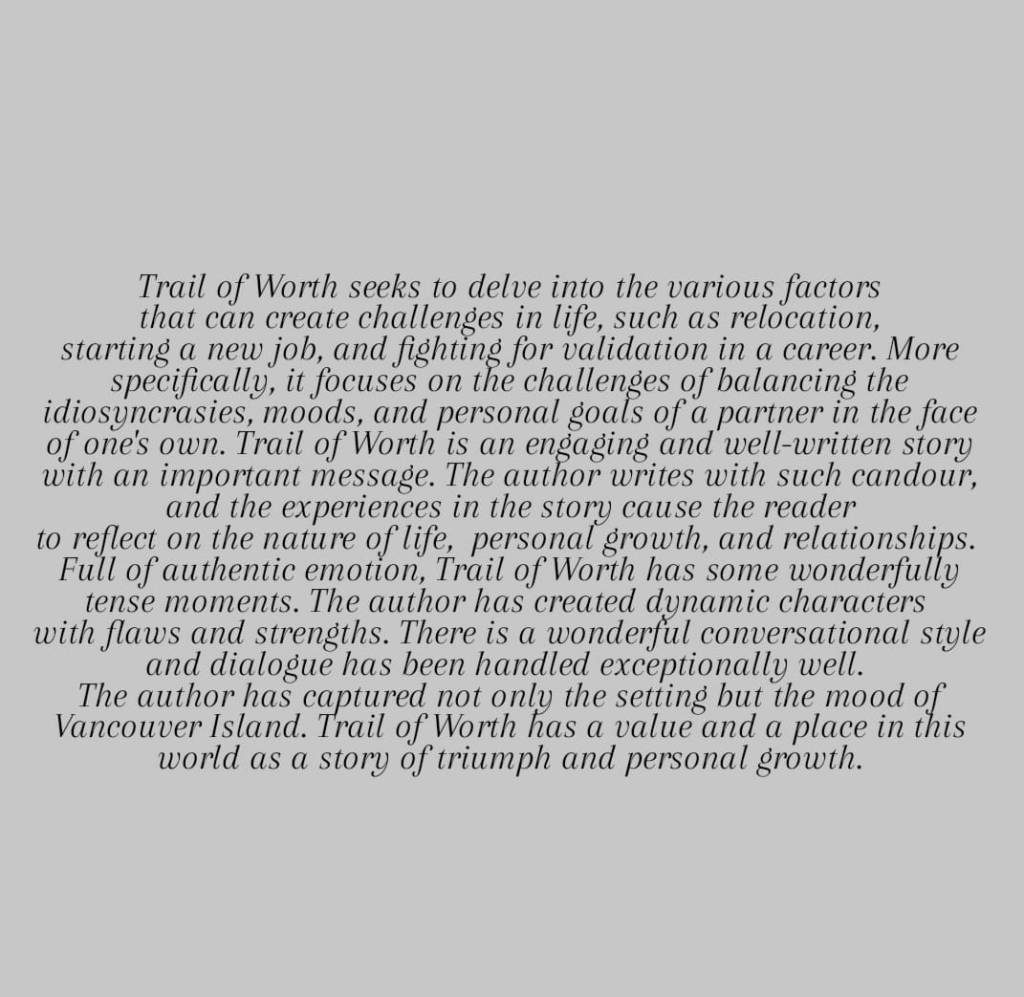
Here’s a summary of what my editor had to say when she read the manuscript.

This image has an empty alt attribute; its file name is 193696592_10165610141950495_957009261464529924_n-1.jpg

Something my editor mentioned when reviewing Trail of Worth was how relatable the story would be for women in their 20s-30s. However, she also said that as an older woman, she really enjoyed the story – it made her reflect on her younger years and the experiences she had.

I think you would enjoy this book if you:

  • Have experienced or would like to experience moving overseas
  • Like to travel or have travelled solo as a female
  • Have experienced what has felt like a quarter-life crisis or a loss of self-worth
  • Have been in a long-distance relationship
  • Have struggled with emotionally difficult relationships, including those impacted by mental health issues
  • Are a competitive runner or simply find fulfillment in this activity
  • Have worked in recruitment and HR
  • Have struggled with age bias and Imposter Syndrome in your career
  • Can’t relate to any of the above but are curious 🙂

Links for Purchase:

Trail of Worth is available to buy online in Kindle or paperback format from Amazon, Barnes & Noble, and some other small online retailers.

If your country doesn’t have an Amazon site, you can get worldwide shipping from amazon.com

Amazon UK

Amazon Canada

Amazon US/EU/Worldwide

Amazon Australia

Barnes & Noble (US customers)

Book Depository

If you’d like to receive more commentary on the book and further insights into the topics discussed, you can follow my main Instagram page @shannelizabethco

And if you’re interested in completing and publishing a book review, please don’t hesitate to contact me!

Thank you in advance for reading Trail of Worth. I hope you enjoy this story that is very special to me 🙂

Unknown's avatar

Publishing a Book | Cover Design

Thanks for following along on my book publishing journey. In my last post I talked about the editing process. That’s probably the most important part in the whole complex process of releasing a book, but perhaps the most exciting part of the process is the cover design. That’s when it starts to feel real!

To get started, the publishing company asked me to fill out a questionnaire that outlined my vision for the cover. In my mind I very clearly pictured a path winding through tall trees with a small figure walking under their gaze. I really liked the idea of a blue-grey colour that captured the moodiness of a British Columbia forest.

I tried to give as much detail as possible for the designer. Doing this virtually through a questionnaire rather than in person was quite challenging. What seems clear to you might not seem clear and comprehensible to another person.

It took a week for the first draft to come back. I had been told that the first draft was unlikely to match what I was looking for, and sure enough that was the case. While the designer had included the elements I’d mentioned, they weren’t presented in a way that matched my vision. I knew I wouldn’t feel comfortable seeing this book cover on the shelves.

I immediately started to leave notes on the cover to help the designer make changes. A little less blue, a smaller figure, taller trees. In doing so, I had doubts about how effective how my feedback would be, and whether the proposed changes would be enough.

Then I recognized the main flaw. The cover image was more suited to a fantasy or horror genre, not to a memoir. While I still liked the idea of the setting, the colours were very mysterious and quite haunting. Even the font seemed more like the style you’d see on a sci-fi book. The cover didn’t match the theme of the book at all, and it was because my vision hadn’t matched the theme.

I reluctantly accepted that my initial vision for the colours would need to change slightly, in order to avoid confusing readers about the kind of book they would be reading. I began to consider the different colours I could use, but none left me inspired.

In my moment of contemplation, I suddenly remembered that a photo had been taken on my camera a few years ago that matched the vision I had. A small figure on a trail under tall trees. The crazy thing is that this photo was taken in the period featured in the story. Maybe it was all meant to be..!

Feeling inspired again, I decided to send this photo to the designer so they could use it for the cover. I also requested changes to the text font, size and positioning. At first I felt bad for potentially seeming picky and demanding. Then I reminded myself that I am paying for this service, and that the book cover is extremely important.

This isn’t the book’s cover image, but it’s definitely got some similarities!

The revised cover came back just under a week later, and it looked so much better! The designer had done a fantastic job of adapting the photo to the front and back cover. And because it was a photo owned by me, the book suddenly felt even more authentic and special. I began to feel really excited at the thought of people holding the book in their hands.

At this stage I edited the blurb slightly and requested a few minor revisions to the text styling. There were just a few small things that I felt could be tweaked before I felt 100% comfortable. The updated version was returned to me in less than a week, and it looked spot on.

Now I’m just waiting for my editor to finish the copy edit. It’s been three weeks since I sent my updated manuscript for the edit, and I’m feeling restless! The end is in sight and I just want to be reviewing those edits. However, I’m also very aware that high-quality editing takes time, and my book is around 120,000 words. I’d of course prefer the editor to put a lot of care into the process, than to rush through and compromise quality. But it will definitely be an exciting day when that email comes in…

I look forward to sharing Trail of Worth with you, once complete!

Unknown's avatar

Publishing a Book | The Editing Process

In my last blog post I shared that I am in the process of publishing a book. Since December, I’ve been working on editing my manuscript. Today I’m going to talk a little more about that part of the process.

The most challenging things I’ve found about the editing process are 1) being selective and 2) not being too much of a perfectionist.

I used journals to frame a lot of my manuscript’s content. Having these references was super helpful for dialogue and structure. The downside was that I sometimes struggled to decide whether something should or shouldn’t be included. I almost seemed to feel a need to do justice to something that had happened in real life. I might feel compelled to write about an interesting side-event, even though I knew it didn’t necessarily fit in with the course of the narrative.

It was this challenge that particularly influenced me to request an editorial evaluation from the book publishing company. This is where a professional editor reads your manuscript without making any changes on the document, and then writes a summary of its strengths and weaknesses.

It took two weeks for my editorial evaluation to come back, and I really appreciated the editor’s input. I’m fairly confident in my writing ability and had been pretty satisfied with my content, but hearing an external person’s perspective was really valuable. I really came to realize that some of the content I had didn’t add much to the story and its purpose. It might have been an interesting detail, but oftentimes it was actually disrupting the flow and pace of the story. Having the impartial eyes of someone I didn’t know really helped me cut out the needless content I felt committed to!

A highlight of my editorial evaluation was seeing that the editor felt the central theme of the book was clear and believed in the importance of its message. I’m sure a lot of writers go through moments of doubt during the process where they wonder if their story is “even any good” and worth sharing. After getting the editor’s feedback, I felt encouraged. I also felt like her feedback wasn’t given for the sake of being critical, but was given with my best interests and those of my book in mind.

One of the great things about an editorial evaluation when self-publishing is that you have the power to do what you want with the feedback. You might elect to request a substantive edit where the editor studies your content in-depth to suggest changes to the flow, voice and characterization etc., or you might just make a few minor changes and then request a copy edit, or you might not make any changes and just go straight to publish.

In my case, the editor recommended a copy edit (which is standard). She also recommended some changes to the content, and said that if I didn’t feel confident making these changes on my own, she’d be happy to help with a substantive edit.

I chose to work on the changes myself. I loved the challenge of it. I almost felt like I was back in school, improving a draft of a story an English teacher had read. It was a really fun project for me because it allowed me to test my skills as a writer while maintaining creative control.

I spent two weeks working on the edits while continuing to work full-time. Some of the edits were pretty quick and simple changes, while others took more thinking and a few tries of different approaches. Overall, it was a really rewarding process. I had a goal of finishing the edits in two weeks, but I also felt it important to be flexible. As mentioned in my last blog post, the editing process shouldn’t be rushed.

On the day I went to re-submit the manuscript to the publisher, I found myself having last-minute thoughts of “Maybe I’d better read that section one more time”. I would then find little things to change – adjective or adverb replacements, rephrasing of a sentence, removal of a word. That’s where the perfectionist in me comes out. Even after re-submitting, I’ve made notes of little things I want to change once I get the copy edit back. I don’t think this is a bad thing; I just hope I won’t be doing it once the final copy has been sent for interior layout design ;). There’s definitely a fine balance between putting effort into ensuring something’s quality and obsessing unnecessarily over tiny things!

Tips for Other First-Time Writers (from a Non-Expert!)

·  Be selective. Journals can be a great source of inspiration for creating content and dialogue, but it’s important to keep the content relevant to the narrative and purpose of the story.

·  Take your time. Having a deadline to work towards can be motivating, but be mindful that life happens and things can get delayed. Once you are finished writing, don’t rush to send the manuscript off to an editor. Take time to re-read and make revisions until you are completely satisfied.

·  Get an editorial evaluation. Even if you consider yourself a skilled writer, getting a summary of the manuscript’s strengths and some recommendations for improvement is really helpful. It gives you a base off which to make more edits that will only make your book better!

·  Before submitting your manuscript for an editorial evaluation, prepare notes for the editor. Explain the story’s purpose and your goals for the book, provide context behind the style and methods you’ve used, and summarize the key areas you’re looking for feedback on. This helps ensure you get as much value as possible from the evaluation.

·  Be open to feedback. Hearing the opinion of a stranger about something so personal to you, even if it’s constructive criticism, can be daunting. But the feedback is ultimately coming from someone who cares about quality writing and good stories. It could be extremely valuable to you, not just for a current project, but for future projects as well.

·  Get a copy edit. If you don’t want to pay much for editing services, it’s still recommended to get a copy edit at minimum. This helps ensure a polished and professional finish to your book. I consider myself a pretty strong writer, but I knew there would be grammatical or structural errors I’d made.

*

Thanks for following my book publishing journey! I’m now waiting to get the copy edit back, after which the editing process will be complete. My next blog post will be about the cover design process!

If you’re a published author or are in the process of publishing a book, feel free to leave your thoughts and tips on the editing process below 🙂

Unknown's avatar

I’m Publishing a Book!

Many people seemed to spend their free time in 2020 making a baby. I spent it writing a book, and I’m excited (and nervous!) to share that I will be publishing it in the coming months 😊

I’ve been writing since I was a kid – pony stories, poems, journals, articles in the local paper. There was a time when I wanted to be an author, but it quickly got to the point where it didn’t seem like a realistic way of making a living. However, the dream of one day writing a book lived on. The issue was that I wasn’t sure what I wanted to write about. I had ideas for novels, but never one that really inspired a devoted effort. So, I just carried on writing my blog and journaling. Through journaling, I’ve always enjoyed the process of identifying interesting trends and themes from daily life.

Scribbling next to my childhood best friend, Tom

Then I moved to Canada at the end of 2016 and experienced a big life change that led to some interesting experiences and challenges. Some experiences were unique to my situation, while others exemplified life events and scenarios common to women in their mid-twenties.

In December 2019, I was home alone for Christmas. During a state of restless boredom, I felt a sudden motivation to write. I thought back to my first year in Canada, and the experiences in my first year overseas ended up giving me the inspiration I was looking for. So, I decided to write a piece of creative non-fiction. I opened up my laptop one evening and set myself a goal of finishing writing a draft manuscript by the end of 2020.

About the Book

An honest portrayal of moving overseas, this book creatively explores the various themes and challenges that accompany both an expat life and the general life of a woman navigating her mid-twenties. From adjusting to a new environment, seeking a fulfilling job, establishing oneself in an occupation, and handling complex relationships, the book’s theme centers around self-worth during a quarter-life crisis. It’s a story that will make readers reflect on their own experiences, with the purpose of inspiring and uplifting them.

The Writing Process

A year may sound like a long time in which to write a manuscript, but when you have a full-time office job and don’t want to spend all of your free time staring at a computer screen, it starts to feel more reasonable.

Before starting, I had a good idea of how I wanted to structure the book, the key content I wanted to include, and the main theme I wanted to be conveyed. Some people know what they want their book’s title to be right from the beginning. I personally didn’t have a title in mind when I started, but it came to me a few months into writing.

The social distancing regulations that resulted from the COVID-19 pandemic became a strange convenience, because they gave more reason for me to focus on writing in my free time.

For some reason, I’ve always been secretive with my writing. Even as a kid scribbling pony stories, I would hide them away when my family came to look. I think it was because I was shy about others reading what I wrote. During this writing process, it was only my partner that knew I was writing a book. Our suite doesn’t have a separate office for work or writing, so I quickly came to appreciate how great he was at leaving me to it! The reason I decided not to tell anyone else was because I wanted avoid any requests for updates, and just focus on the book without feeling any intrusion or pressure.

One thing I noticed was how easy it was to get fatigued while writing, especially if covering a topic that was complex or emotional in nature. Sometimes my creativity seemed to be lacking. The longest break I took from writing was around 3 weeks. However, there were other times when the words just seemed to flow freely and before I knew it, it was almost midnight!

I met my goal of finishing drafting the content in December 2020, but then my own revisions and edits started. This is such an important part of the process. I found that there were many things I’d written almost a year earlier that I wanted to change, particularly with regards to content and structure. Some of the content no longer seemed to be relevant or add value. In some areas, there was a lack of flow, or I felt things could be written more creatively. I ended up re-writing several sections of the manuscript.

The revisions process took around two months until I was satisfied with the manuscript. In addition to content editing, I also did copy editing to the best of my non-professional ability. Sometimes during my work day, I would suddenly think of something that I felt could be edited or added, and I’d make a note in my phone for later. The revision process is something that really can’t be rushed. It’s amazing what a rested pair of eyes can see! Even if you plan on getting the book professionally edited (which I have), it’s important to ensure you have a relatively polished manuscript in advance.

Choosing a Publishing Path

The next step in the process was deciding how I wanted to publish the book – the traditional route or self-publishing. I’m lucky in that I had knowledge of two experiences. My brother’s book, The Rule (Jack Colman) was published by Harper Voyager in 2015, while my dad self-published his memoir, The Right Thing? (Dr. Richard Colman) in 2014.

Both routes have their pros and cons, depending on the writer’s goals. Getting published the traditional route still carries more prestige, while self-publishing is sometimes termed “vanity publishing”. I get why this term is used for some self-publishers, however, I think it’s also quite offensive to the talented writers who simply feel tired of waiting to hear back from agents, or worry that their book will lose its integrity if managed by someone with a different priority. Does “vanity publishing” mean that artists who sell their paintings at local street markets are “vanity artists”? Are people who turn their passion into a business “vanity business owners”? Frankly, it’s the “stars” of trashy reality TV shows who seemingly have no problem securing a deal to publish a book about their life that are the vain ones.

Here are the reasons I’ve decided to go the self-publishing route (in case anyone is debating the options for their own manuscript):

  • I like the idea of having ownership over something I’ve created (this book is literally my baby!) instead of having it be owned and managed by someone else.
  • Because the book is based on real-life personal events, it’s important to me that I maintain a large amount of control over the content. With self-publishing, I can maintain full creative control. I have the final say on any edits suggested, whereas traditional publishing can take away a lot of the writer’s control. I would hate for someone to try to change the content of my book to make it fit what they might see as a more mainstream (aka $$) narrative.
  • Self-publishing does not mean you’ll have a terribly written book that’s filled with typos. You can have your manuscript professionally edited with a polished design. You have to pay for this service, but if you believe the story is worth sharing, why wouldn’t you invest in its success?
  • It is extremely competitive and can take a long time to get a literary agent and/or be offered a deal by a publishing company. This isn’t a reason not to try, however I’m personally at the point where I don’t want to wait months to hear back from an agent (or not hear back at all!), only to then wait even longer for the work to be published.
  • I’m not writing this book to launch a new career as a full-time author. I’m writing it to share a story that I believe (and have been told my editor!) has an important message. I’m also writing it to tick off something from wish list. Perhaps that’s the vain part 😉
  • You get higher royalties when you self-publish. Who doesn’t like being rewarded more for their writing skills and hard work?!
  • One thing the pandemic has highlighted is the importance of supporting local.

If I write another book in future, I would definitely be open to trying the traditional publishing route. But for this particular story, self-publishing seems to work well for me. Plus, if I did want to write more books in the future, having an already published book could be helpful in securing an agent.

Side note: I recently learned that The Martian was initially self-published in 2011, before a traditional publishing company bought the rights a few years later. Then it was turned into a film! That’s pretty cool.

To get things going, I researched two local publishing companies in Victoria. I contacted both for more information. Ultimately, I opted for the one whose website content spoke more to my interests and goals, whose publishing consultants seemed less sales-driven, and whose publishing package offered better value for what I was looking for.

Journalling

I’m currently working on content edits, and am excited for the next stage! I’ll be posting updates on my Instagram page if you’d like to follow along 🙂

Have you written and self-published a book? What tips would you share?

Unknown's avatar

A Brit’s Guide to Living in British Columbia, Canada

As a former colony and a current member of the Commonwealth, you might assume that there are many similarities with the UK when it comes to Canada’s culture, education system, and provision of community services. If you’re planning to move to Canada’s western province, below is a large compilation of some of the main differences I’ve discovered as a Brit living in British Columbia.

Before we start, it’s important to make it clear that there are more than 200 distinct First Nations in British Columbia, each with their own unique traditions and history. This post was written on the unceded territories of the Esquimalt and Songhees Nations. 

Stawamus Chief in Squamish, BC

Driving

You probably all know that in Canada, you drive on the right side of the road. It makes sense to have the same system as the neighbouring USA, since a lot of trade between the countries is delivered via road. In terms of speed and distance, the metric system of kilometres is used, which differs from both the UK and USA.

Getting a driver’s license as a new driver is also a different process. Upon turning 17, people in the UK are eligible to get their provisional license, which allows them to drive on the road with a supervisor with L plates attached to the vehicle. Most drivers will learn the basics from a family member, before taking driving lessons from a qualified instructor. After a learner has passed the theory test, the instructor will ultimately determine when they are ready to take the road test. This will typically be after 40 hours of lessons.

In British Columbia, it is less common for new drivers to take formal lessons from an instructor. Before doing any driving, they must acquire their learner’s license by passing a knowledge test and vision test. This can be done on or after their 16th birthday. After a year of practice with an eligible supervisor (someone 25 or older with a Class 5 license), they can then take their first road test. Passing this gives them their Class 7 or “N” license. Certain restrictions come with this. N plates (which stand for “novice”) must be displayed on the vehicle, and they can only carry one passenger at a time (with the exception of immediate family members), unless one of the passengers is 25+ and has a full license.  After two years of safe driving with no tickets or prohibitions, they can take another road test. Passing this would give them their full Class 5 license.

Note that if you move to BC with a clean UK licence, you can switch it over to a Class 5 for free within 90 days, without having to take a road test.

When it comes to actual driving, there are some interesting differences. The ‘turn-right-on-red’ rule means drivers can make a right turn when the walking man light is on for pedestrians, so long as no pedestrians are crossing at the time. I personally don’t like this rule because of the risks it can pose to pedestrians if a driver shoots around the corner due to not seeing the pedestrian or simply not caring.

Another difference is 4-way stops. When drivers approach this type of junction, they must all come to a halt, even if the roads appear clear. The vehicle that arrives first is entitled to proceed first, and so on. If two vehicles arrive at the same time, the driver on the right has right of way. I find that when two cars from opposite directions arrive at the same time and want to turn instead of going straight, a silent interaction between drivers takes place through gestures. It goes something like this: “Oh, after you.”…”No no, you first.”…”No, please, I insist.” …”Are you sure?”… “Oh, quite sure!” ….”Okay, thank you! And sorry.”

With regards to insurance, UK insurance companies insure the driver. In BC, the vehicle is insured. This means you are more likely to see friends lending their cars to each other in BC. BC’s government-owned insurance corporation now requests that a second driver be listed on the policy if they will be using the vehicle on a regular basis.

Drinking

Each province in Canada sets its own regulations for determining legal drinking ages. In British Columbia, it’s 19. Bear this in mind if you’re visiting from the UK aged 18; you won’t be able to buy alcohol or go to clubs. Skip over a province to Alberta however and you would be fine.

Although the province of Ontario is now allowing beer to be sold in some supermarkets, in most cases alcohol can only be purchased in provincially owned or private liquor stores, or from a brewery. Anyone who looks under 30 can expect to be asked to show ID.

While there are a few differences between the countries in terms of the laws that apply to people operating a vehicle, the rule regarding drinking is one Brits should be aware of. Last summer, I was in the backseat of a car with friends driving back from a camping weekend in Hope. I asked my boyfriend to open the cooler and get me a Radler drink. He looked at me in confusion and asked why. “Because it’s hot and I’d like a refreshing drink,” I replied with an innocent shrug. I then learned that in BC, passengers are prohibited from consuming alcohol in a vehicle. The idea is that they might distract or influence the driver. No refreshing lager for me.

Banking

I quickly noticed that Visa debit cards can be used for fewer transactions in Canada than they can in the UK. I never had a credit card in England, but for the aforementioned reason I got one when I moved to BC. My chequing account (what we in the UK would call a “current account”) has a monthly fee based on how many transactions I make. It gets waived if I maintain a certain balance. My UK account doesn’t charge such fees. Something to consider if you plan to set up a Canadian bank account.

Salt Spring Island, BC

Education

In the UK, the word “school” is typically associated with primary school (elementary) and secondary school (high school). If we do A-Levels (from age 16-18) or a vocational diploma, we say we’re going to “college” or “sixth form”. If we do a degree, we tell people that we go to “university” (or “uni”). In Canada, the term “school” is used for all levels of education. I first learned this in Toronto airport several years ago, when an elderly couple queuing for check-in behind me started chatting. “Are you heading back to school?” the man asked. “To university,” I said, to indicate my age. “So, back to school?” he replied with a cheeky smile.

Indeed, it’s very common to hear someone in their thirties say “I’m going back to school.” This is because the higher (or “post-secondary”) education system of both countries is very different. In the UK, we essentially choose our major by the time we apply to university aged 17 or 18. For example, I chose to study a Bachelor of Arts in History. Such a degree is automatically considered an honours degree, meaning students must submit a dissertation (or “thesis” as North Americans call it) in their final year. Unless they are studying Medicine or another vocational profession, students must complete their undergraduate degree in three years. They have to take a certain number of courses per semester, and will automatically graduate after those three years. Anyone who requests to suspend their studies and take a semester off due to personal reasons will likely have to re-take that year. A Master’s degree is completed in one year.

Students in Canada apply to university in or after their final year of high school. Instead of applying to major in a specific subject, they can choose a general direct entry program, such as Humanities, Engineering, or Science. In their first year, they have the option of taking a few different courses from within the program and a few electives from outside it, before then deciding the subject within that program they wish to major in. Although there are differences in universities across Canada, students in BC can typically choose the number of courses they take per semester, and have more flexibility in the years they take to graduate. Most people I know here graduated after five years. Some may take six years or longer. This is because the university system allows students to take off semesters, either to work or travel. Classes can also be taken in the summer term from May to September, unlike in the UK.

There are also more structured programs available within Canadian institutions to support students with finding paid co-ops (or “internships” as we’d call them in the UK). Students must pay to be involved in this program, but it’s a useful resource I wish I’d had at my university. Some programs, such as a business program, require students to complete a minimum number of co-ops in order to graduate. If a student wishes to graduate with honours, they must apply for the program. One would typically do this if he/she intended to apply for grad school, as writing a thesis could strengthen an application. In order to graduate with a degree, students must apply and provide proof they have met the minimum criteria. It’s common for a Master degree to be completed in two years.

Taking all the above into consideration, it means that a student in BC might not finish their undergrad degree until aged 25 or older, whereas in the UK the standard age of graduates is 21 or 22. I think there are pros and cons to both systems. People with a British education will have specialized more in one subject area, and will typically have a head start in the professional workforce. However, Canadian students are likely to have less tuition debt, have had more chances to gain paid experience and try out different roles while studying, and also have more time to actually enjoy their studies. In comparison, strict timelines for completing courses and graduating sometimes made me feel I hadn’t had a chance to properly explore and understand a course I was taking.

While there are options for people in the UK older than 18/19 to enrol in university degrees, it is still a less common practice; most will attend university from their late teens to early twenties. It seems to be a more culturally accepted thing in Canada for people to either start their first post-secondary program or take a second program in their mid-twenties and above. Some people might complete an undergraduate arts degree and then later take a post-degree diploma to specialize in a specific area, such as HR. Others might work right after they finish high school, and then enrol in a post-secondary program a few years later when they have saved up to pay the tuition fees. And others might be in their early thirties but go back to school because they want to change their career.

The system for tuition fees also differs between the countries. In England, Wales and Northern Ireland, there are home and international tuition fees. Currently in the UK, home tuition fees for an undergraduate degree are around 9000 GBP per year. (Scottish students studying in Scotland don’t have to pay!) These fees are general and not based on the degree you are studying. This means that as a History student with only 8 hours of contact with teachers per week, I paid the same as someone studying Mechanical Engineering who had more contact hours. In Canada, however, tuition fees are based on the program you take. Someone in the Humanities program will pay less for tuition than someone in Business or Engineering.

Mt. Finlayson on Vancouver Island, BC

Healthcare

Each province in Canada has its own publicly funded health insurance plan. In British Columbia it’s called the Medical Services Plan (MSP). It used to be the case that recipients were charged premiums, with employers often offering to pay the costs. In January 2020, the fees were scrapped. However, eligible residents must still enrol for the plan in order to receive free or subsidized medical assistance. Enrolled residents must get a Services Card with their photo and Personal Health Number, to prove their eligibility to access these services. This card can also be used as a form of government-issued ID for accessing other services, like opening a bank account. If you’re not registered for MSP, you must pay out of pocket for any medical assistance.

One thing to note if moving to BC from the UK is that, regardless of having MSP coverage, some medical-related services in BC incur fees that would not apply in the UK. For example, if someone in BC calls 911 and is taken to a hospital by ground or air ambulance, they will be billed $80. If an ambulance is requested and then declined, they will receive a bill for $50…so making a prank call would be even more stupid. In the UK, the National Health Service (NHS) is funded by tax payers and there are fewer charged services. Say a Brit suddenly develops chest pains and calls 999 for an ambulance to take them to A&E (or “ER”), they won’t pay a penny.

For this reason, I’ve always found it funny when I hear Canadians commend the country’s “free healthcare system”. For sure, the system is much more generous than that of its southern neighbour, but not as generous as the UK. Again, there are pros and cons to both systems. The NHS has strained resources and as a result, some are calling for patients to start paying for certain services. To avoid burdening the Canadian healthcare system, anyone coming to Canada on a working holiday visa is required to show proof that they have purchased medical insurance.

Something for Brits to take note of is the differences with dentistry. In the UK it’s part of the NHS, but in Canada it falls under the category of extended health. This means it’s not covered by the provincial medical services plan. For this reason, having a job that includes benefits is ideal, as these will be used to cover most of the costs of each dental visit. However, even with benefits, it’s typically still slightly cheaper to go the dentist in the UK.

In the UK, the dentist pretty much does everything, and the dental assistant helps with paperwork and equipment prep. In Canada there is a dental hygienist who does the initial assessment, x-rays and cleaning, and then the dentist will do an exam and any necessary surgery.

Marijuana

The growth, sale and use of marijuana for recreational purposes became legalized in Canada in 2018. Any cannabis shops or pharmacies must be licensed and follow certain regulations. Consumers are allowed to grow up to four plants in their house. Of course, Canadians were smoking weed for a long time before it became legal. Marijuana shops are now a normal sight, and it’s not unusual to catch a whiff of weed while walking down a street. Over the past decade, use of marijuana for medical purposes has also become more common in Canada. CBD and THC (chemicals within the plant) have been used to relieve muscle spasms and treat conditions including MS and PTSD.

Sombrio Beach, Vancouver Island

Tipping

While tipping bartenders or servers (aka what the UK would call “waiters/waitresses”) is not required in Canada, it basically feels like it is. A minimum tip of 15% is pretty much expected. Even if you go to a deli (also a more commonly used word in Canada, I’ve noticed) and simply order a sandwich, the option to tip will come up when you pay by card. In such cases, I don’t bother. Why would I if all the person has done is pick up a pre-made, pre-wrapped sandwich from the counter and hand it to me??

I was reminded just how different this custom is from the UK and Europe in general when my parents visited a couple of summers ago. My dad, never one afraid to be honest and express himself, asked our server how much she’d like for a tip. “That’s up to you,” she said politely while I put my head in my hands. As if thinking a negotiation was required, he asked her, “How about 10%?”. At this point I ran away to the ice cream counter. Of course, UK restaurants will now typically add a service charge to the bill in order to get around the cultural reluctance to tip.

On that note, Canadians also ask for the “bill”, and not the “check” like some people assume.

Sports

In the UK, girls in secondary school will often play hockey on grass or turf. In Canada, hockey means “ice” hockey. The less popular UK game would be referred to as “field hockey”. I still struggle not to say “ice hockey” in full, and it always seems to make people smile. If you’re watching a baseball game, prepare to hear lots of people shouting “good hustle” to players. It basically means “good effort”.

Holidays

In England and Wales, there are eight bank holidays: New Year’s Day, Good Friday, Easter Monday, the two in May, one in August, Christmas Day, and Boxing Day. In Canada, public holidays are called “statutory holidays”, five of which are nationwide. The remaining holidays are determined by province. In BC there are 11 holidays: New Year’s Day, Family Day (February), Good Friday, Victoria Day (May), Canada Day (July), Civic Day (August), Labour Day (September), National Day for Truth and Reconciliation (September), Thanksgiving (October), Remembrance Day (November), and Christmas Day. I appreciate the even distribution!

When it comes to annual vacation leave provided by employers, this is probably the most disappointing thing about Canada. Annual vacation allowance in North America is much lower than in Europe, where 25-35 days of annual leave is standard. Most employers in Canada offer two weeks of paid leave to start, increasing to three weeks after you’ve worked a certain number of years. After moving from the UK, this feels like nothing! With a growing demand from employees for better work-life balance, some companies are offering three or four weeks to start, and a few companies are even offering unlimited vacation time. Hopefully the move for more annual leave will continue with success!

Language 

Now we come to my favourite part. As a native English speaker in a country where English is one of the official languages, I expected I’d be pretty well understood by Canadians. Not the case.

The main issue I have is the enunciation of R’s. In England we don’t emphasize them. “Water” is “wawtuh”. “Work” is “wuuuk”. “Art” is “aaat”, and so forth. I once ordered a turkey sandwich from a deli and it took five attempts for the person to understand me. As a result, I’ve found that adapting my accent at certain times in the workplace has been necessary, particularly when speaking with people over the phone.

There are also differences in full pronunciation of words. Some common words I say that incite giggles among my peers are “yoghurt”, “vitamin”, “basil”, “tomato”, “oregano”, and “aluminium”. Meanwhile, I find the way some Canadians say “bagel”, “route”, “thorough” and “details” very odd.

Another issue is different words being to describe the same noun. Here is a non-exhaustive list of examples:
“Jumper” = “sweater”
“Trousers” = “pants”
“Trainers” = “runners” or “sneakers”
“Wellies” =”rubber boots”
“Biscuit” =”cookie”
“Handbag” =”purse”
“Purse” =”wallet”
“Cinema” =”theatre”
“Boot” =”trunk”
“Bonnet” =”hood”
“Nappy” = “diaper”
“Soother” = “dummy”
“Aubergine” =”eggplant”
“Courgette” = “zucchini”
“Rocket” = “arugula”
“Spring onion” = “scallion”

And if you say “brolly”, most will have no idea what you’re talking about. Who knew there would be such a language barrier?!

*

If you’re planning to move to British Columbia for a while, I hope this article is useful resource to help you prepare yourself for the political and cultural differences you can expect to find!

Unknown's avatar

Relations & Realizations | An Expat’s Summer in Canada

It’s been ten months since I left the UK for Vancouver Island, Canada. Summer with its droughts and wildfires has now passed, and I still have no desire to return back to England. Not only do I have a permanent job doing something I love, but my time in Victoria has opened my eyes to a lifestyle I was missing before when I lived in London.

In the first house I lived in upon moving to Victoria, I’d wake up for work in the morning and open the blinds to see a deer just hanging out in my front yard. He became known as ‘Stanley’. On the walk to the bus stop I would pass runners and dog-walkers who would smile and let me pet their pooch. I would recognize people on the bus who were open to the concept of smiling and engaging in brief conversation. I admired and participated in the culture of saying “thank you” to the driver upon exiting the bus. I established that my favourite driver was a former pilot called Dan who provided weather updates, scenic commentary and probably even birthday shout-outs if requested.

I learned through my interviewing of various people at work that a lot of Canadians can’t decipher between an English and Australian/Kiwi accent. I made friends with a Persian family who started a new restaurant a few steps away from my office, to the extent that they wave at me whenever I pass by and look in.

I learned (and soon forgot) the rules of softball and that “good hustle” and “you got this” are a quintessential feature of Canadian vocabulary.  I experienced how wonderful it is to spend evenings after work on the beach, in a park or doing exercise, as opposed to being in a culture that seems to promote spending the evenings in a pub. I learned of various locally owned bakeries and cafes that made such a refreshing change from the large corporate chains such as Starbucks, Pret and Costa Coffee that can be seen on every street in London. I realized just how fame-obsessed and media-mobbed life in London was in comparison to the easy-going, outdoor-loving West Coast lifestyle. I also learned that I’m addicted to thrift stores.

With regards to self-esteem, I stopped wearing mascara in late April after suddenly feeling more comfortable in my skin and realizing I no longer cared about looking younger or less attractive with my naturally fair features. And at the end of the summer, I went to an open mic night at a small pub up island attended by a handful of locals, and ended up singing on stage with a bunch of old boys playing guitars.

The kindness of Vancouver Islanders in comparison to Londoners really came to light during a bus journey on a sweltering Saturday in June, when I fainted after having a vasovagal episode. I opened my eyes to see a few strangers peering down at me uncertainly, with one of them casually holding my raised legs by the ankles. A lady placed a damp flannel on my forehead and asked me a series of questions, before deciding that my apparently ghostly white face warranted calling an ambulance, (even though I had had vasovagal episodes like this before and was pretty confident all was fine). The lady continued to ask me a series of questions, including: “Where are your parents?” Suddenly I had one of those stirring moments of realization I’ll occasionally get where I remember where I am and how far away I am from home.

This same lady would later text me to ask how I was feeling. To my grateful response she replied, “Don’t thank me, just pay it forwards.”

So I did.

A few weeks later, I was reading at the beach minutes from my house when a little girl ran over to her mum to inform her that reckless Sally had taken a tumble at the playground and cut her toe open. “Oh God, oh God,” gabbled the mum like an alarmed chicken. “Is she okay? Is it broken? Is there blood? You know I can’t handle blood, Lucy!” And so Lucy ran back to assess the extent of damage further before returning with a report. “Oh God oh God,” began the chicken-momma again. “Why would she do this to me? Does she need an ambulance?”

I impulsively offered to help, and without hesitation, the woman accepted. Little Sally sat calmly on a bench and rolled her eyes at me as if acknowledging her mother’s flappy ways. I cleaned up and covered the 1-inch cut on the top of her toe and then her mum approached, only to shrink back at the sight of a slightly-bloodied wet wipe. “Thank you so much! I just can’t deal with blood when it’s on my kids; with anything else it’s fine, but not my kids.” I decided not to ask what she would do if her child was in a life or death situation, but did insist she shouldn’t need to take her daughter to the doctor.

All in all it was a great summer, and the best thing was that I got to show my life here (and some humpbacks!) to my mum when she came out to visit for a week.

The worst thing about the summer was the part where my boyfriend and I decided to call time on our 3-year relationship.

No relationship is perfect – there will always be struggles, and for a while you will rightfully try to work through them. Then comes the time when you have that highly needed yet highly unsettling moment of realization that someone you have loved and cared about for a long time just isn’t right for you anymore and vice versa.  Your personalities, interests and goals no longer align, and you no longer recognize them as the person you felt an instant attraction for upon meeting. No matter how much you try to compromise and persevere, you cannot find the sense of content you are looking for, and it’s time to concede defeat. But it’s terrifying to leave the comfort of something that has always seemed so simple, natural and ideal in so many ways. As an expat far from home, questions of, “Why am I really here? Do I actually want to be here?” arose in my mind. The future seemed unclear and scary.

Then I thought long and hard about all the big things I had experienced in Canada since December, like new friendships and a fulfilling job. And then I considered all the little things I had experienced just over the summer – the run clubs, the beach days, the outdoor adventures, the friendly interactions, the pleasant sights. Things that made being here so much more appealing than returning to London and England. Why would I give up all these things I’m lucky to have in my life? Why would I return to a place and a lifestyle that doesn’t make me feel as happy? More than ever, I knew that I wanted to remain in Canada.

I made a list of goals for when I would become single. One of them involved running competitively again. I signed up for my first race in over two years for late September, and regardless of the fact that I ended up being the first lady home in my race, I enjoyed the whole experience immensely.

Another goal included making more use of my free time to travel. It had been over a year since I’d completed a solo trip. After passing my work probation I booked a few days off for the beginning of September. It was time to leave the Island and return to the place where I first fell in love with Canada: the Rockies.

I spent a day walking around Calgary (not for me) and then got a bus to Banff. The town was flooded with tourists for the Labour Day weekend and had become a lot more commercialized since my last visit. I was a little disappointed by my return visit, but just having some alone time in a different setting felt good.

One morning, I sat at the same spot on the Bow River where I’d perched six years ago as a less confident and more naive 19 year old. I thought about all that has happened in the past six years – travelling, moving to London, completing my degree, commencing a (mostly long-distance) relationship, starting a job that developed into a career field, moving to Canada, and returning to single-hood again. I felt a sense of pride remembering all that I’ve experienced, learned and accomplished in that time, and suddenly the world felt like a map in my pocket, with me in control of my life route and excited for what lay ahead in my chosen path.

This summer turned out to be different from how I initially envisioned it would be. But the unexpected developments turned out to be positive. They gave me some important realizations and helped inspire my future plans.

Unknown's avatar

Finding Happiness as an Expat

It’s been a while since I posted something, partly because of not knowing what to write about. I always thought my first post about living and working in Canada would list of all the great things about the move and my new life overseas. But as the weeks went on after arriving, I realized writing this would be untruthful.

Many blog posts enthuse about the joys of being an expat, encouraging readers to ditch their full-time city job and move to another country for a “better life” (the definition of which, it should be added, differs between everyone). Everything seems all rainbows and daisies, and achieving the “dream lifestyle” is so seemingly easy. I’m sure they exist, but rarely have I come across a blog post that has delved into the difficulties life as an expat can bring.

The first challenge is making friends. In this regard, I’d argue there is a difference between being an expat whose purpose is to travel or study, and an expat whose prime purpose is to work full-time in a professional role with the intention of eventually applying for residency. The first two contexts offer environments where one is more likely to encounter and interact with people of similar age and with the same academic/recreational interests and levels of life responsibility. When I backpacked through Canada in 2011, I had no trouble meeting people in hostels, on guided tours or on help exchanges and developing friendships with them, and I’m sure it would be the same today.

But when you’re trying to get your foot in the career-door, putting time towards meeting people can’t always be a priority, and depending on where you work, you can’t always guarantee meeting people you can form friendships with. As an example, I worked as a temp for the provincial government for a few months, where only a tiny perventage of the entire staff were aged under 30. My chances of meeting a new buddy were low.

On the one hand, I am very lucky. My boyfriend is Canadian, and upon arriving here in late December 2016, I was not forced into the unknown territory of a hostel, but instead housed by a second family that I’ve lived with for my first few months here. On the other hand, a downside of having and living with a partner – especially one you haven’t seen in several months – is that it offers a comfort that can prevent you from making much of an effort to meet new people. Living in a relatively remote area where access to a vehicle is often required to get around can also play a limiting role here. The friends I have here so far I have met through my boyfriend. While this doesn’t mean they are not friends of mine in the fullest sense of the word, and while I can safely say that these friendships are not contingent on there existing a relationship, I’m aware of the value there would be in having friends I met independently.

In March, I was fortunate to meet a Belgian girl who was staying with my boyfriend’s family for a month on a Workaway exchange. Being the same age and having shared similar experiences, we clicked quickly. At a time when I was in between temp jobs, she became my dog walking-companion, brunch-buddy, yoga-chum, movie night-mate and dancing-sidekick at our own little spontaneous 90s disco party. My experience in Canada was definitely enriched by the short time I spent with her, and yet there are no photos on social media that have captured these memorable moments together and can therefore “prove” that we shared a fun and supportive friendship. Nor are there photos depicting the times I have tried out a new cafe with other friends, gone for sunny group hikes or seen a band play in Vancouver. In fact, there aren’t really any photos of me on Facebook that show me being sociable in the past few months. In this day and age, it almost seems like this is something I should be concerned about. No photos, it seems, indicates no social life, and no friends.

My Facebook news-feed is filled with an array of photos of people in social settings. There have been times since living in Canada when I’ve looked at my page in comparison, and wondered if my lack of comparative “socializing evidence” means I’m not fun, that I have a boring life. There have been times when this has made me feel sad and lonely. The rational part of me always soon remembers that Facebook is a superficial social platform, and that my life isn’t boring and that I do have friends, even if they are spread all around the globe and I can’t see them often. Nevertheless, I now make a conscious effort to only spend time on Facebook if it’s for a communicative or informative purposes, and not for aimless browsing of other people’s lives. I also maintain my stance that there is no obligation (or desire from others) for you to share photos of every single sociable thing you do online.

Along with the expat’s challenge of making physical friends (i.e. not those met and interacted with through a blogging forum), there is the challenge of the job hunt. In London, I was paid a good salary for a job that I enjoyed doing and that gave me a desirable level of responsibility and valuable management experience. It was also a job where I had met and worked alongside one of my closest friends. I knew I couldn’t count on being so lucky in Canada, and based on economic factors, I also knew to expect fewer job openings and a pay cut in the small Canadian city I was moving to. I was also aware that it likely wouldn’t be a case of just sending a company my CV and being offered a job within days of arriving.

However, the difficulty I faced in landing a job still came as an unsettling reality check. Upon starting that tedious task of writing cover letters, I discovered a surprising amount of stylistic differences between British and Canadian English. I soon learned that while my visa made me eligible for any job, adapting myself to the Canadian job market would require more effort than I’d expected. I would apply for jobs that I knew I could do well, only to be “ghosted”, and it began to hurt. I knew I was putting pressure on myself and that this was maybe unreasonable considering the small job market I was searching in, but I wasn’t one of those expats content to get a part-time job in a cafe. I came here aiming to develop my career further with the intention of applying for permanent residency later.

Temping proved to be a good solution when it became clear that finding a permanent job with my temporary work visa wouldn’t be so easy. Now, almost five months after arriving in Canada, I have been offered a permanent job that I am thrilled about, but the journey was a long and often demoralizing one.

It was always my plan to move away from my boyfriend’s place and live with other people after a few months, so that I had more space and more of an incentive to meet other people. Now I am living in a lovely place near the ocean and closer to downtown. The neighborhood I’m in is ideal for me. I can sunbathe in my garden without feeling like neighbors are peering down on me, walk to the beach and breathe in the clean air and pet cute dogs and chat to their friendly owners. I can go for runs along pleasant trails and smell blossom trees and nosy on handsome houses and get on buses where the drivers smile and passengers say “thank you” before they get off.

Does this mean my life is perfect and I am the happiest I have ever been? No. I still haven’t met many new friends, and while with my new home and new job position I am feeling in a better place from which to explore new places, try new things, and meet new people, it’s inevitable that I will still have moments of loneliness now and then. But do I ever wish I was still in London? Hell no! I obviously miss friends, I miss the theater and ‘Time Out Offers’, and now that it’s summer, I kinda miss scenes of “village cricket” during post-work runs around my favorite Regent’s Park, but my life here in Canada is so much more preferable for my personal interests. While I will definitely feel even more settled once I meet more people, I am one of those ambiverted characters who prefers having guaranteed tranquility and alone-time along with the option to be around people, instead of having no choice but people and noise constantly around me.

New surroundings

The first few months of being an expat looking for permanent professional work are bound to involve challenges. I was lucky in that I was already familiar with this country, wouldn’t have to learn a new language, and had contacts prior to arriving, but this didn’t mean things would be a walk in the park. Now that I seem to have overcome a major challenge I’ve faced in my first few months as an expat, I’m able to reflect on any setbacks or disappointments as useful experiences: experiences that were not simply reflections of unfixable shortcomings of mine nor an indication that my coming here was a mistake, but experiences that are a part of growing up and have helped develop my strength of character. Living and working abroad is definitely not for everyone and I imagine many people do call it quits and return back to more familiar surroundings. But if everything in life came easy, that would be a boring life. Soon I will turn the milestone age of 25, and when I look back on the life I’ve lived so far, the challenges I recall will be valued just as strongly as the moments of happiness.