Unknown's avatar

Discovering Colombia’s Charming Town of Santa Cruz de Mompox

For our honeymoon trip to Colombia in October 2023, I wanted to ensure we spent some time exploring a smaller, somewhat lesser known town instead of just staying in the bigger, touristic spots. The name Santa Cruz de Mompox came up on a blog I was reading. After seeing some photos, I was intrigued.

Located in the department of Bolívar, 272 kilometres away from Cartagena, Santa Cruz de Mompox is famous for being the first town in Colombia to declare independence from Spain, in 1810. Mompox sits next to the Magdalena – Colombia’s main river and a key transport link in the country’s history. The preservation of beautiful architecture helped Santa Cruz de Momox become designated as a UNESCO World Heritage Site in 1995.
To get to Mompox from Cartagena, we booked a private car ride with Toto Express. A small business with no official website, I heard of it after seeing its name mentioned in some travel articles (the email address is totoexpress2@hotmail.com). With the help of Google Translate, I emailed to request some dates. The cost of a private return trip for two people was 1,200,000 pesos, payable in cash at the end of the service. This lined up with what I’d seen quoted by other travellers. Equivalent at the time of booking to $380 CAD, this might seem steep to anyone who prefers travelling on a tighter budget. We went with this option because in terms of time and practicality, it was much more convienent than taking a public bus (and screw it, we were on honeymoon!)

Admittedly, because of how “unofficial” Toto Express seemed as a business, a small part of me wondered if the driver would show. Alas, at 10am sharp on a Friday morning in October, a smiling man named Arnoldo picked us up from our hotel in Cartagena, and we commenced the 5.5 hour drive. Horns beeped continuously as we made our way through the suburbs of Cartagena, passing dilapidated buildings and street vendors selling fruit. Motorcyles zoomed in between the traffic, females in skinny jeans calmly holding onto the back of the driver with no apparent fear of almost colliding with vehicles. Arnoldo was unfazed by the chaos, whistling along cheerfully to Latin music. His English was limited and our Spanish is basic so there could not be a ton of conversation unfortunately, but he was very friendly and would check in on us.

On the way to Mompox, we got a glimpse of the Colombia thta not every visitor will see. In the distance we saw rolling hills and lush valleys. Cows with rippling skin on their necks grazed on on verges. We passed through towns in which vendors sold handmade crafts and hammocks and habitants led tired donkeys. Some of the houses we saw had peeling paint, roofs made of corrugated iron, and what looked like mud floors on the inside. Despite the relative lack of wealth, people seemed content. Children played on doorsteps as mothers hung laundry and stray dogs sniffed around for scraps. Some children walked along the road neatly dressed in smart school uniforms. I got the impression there was a lot of pride in wearing them.

On a few occasions, we passed through checkpoints where police officers would stop and search large wagons for drugs and other contraband – a sign of how seriously the country views this and wants to reduce crime. As we waited at one checkpoint, an unhoused man banged against our car, trying to sell us his goods. It was at this point that I realized the car windows were shaded black and Arnoldo had kepts the doors locked. We could see the potential for danger, but we did not feel unsafe.

We stopped in a town called El Carmen for a washroom break. I asked a vendor for some empanadas and struggled to comprehend the number he gave for a price. Like every merchant we came across, he was honest in giving me change when he could have easily pretended I gave him the right amount and taken more money if he wanted to. As we drove through another town, I observed boys in school uniform playing soccer in a street park. Shortly after, the car came to a halt. I heard a window open followed by the sound of Arnoldo shouting at someone. My husband said a woman had been beating her son, and Arnoldo was telling her off. As we drove away, Arnoldo signed the cross and whispered under his breath. We noticed him do this everytime we drove through a run-down area.

After driving through the town of Magangue, we entered what appeared to be lake country. Long yellow bridges took us over vast marshes. “Veinte minutos!” said Arnoldo merrily as we drove through a small village with tired-looking buildings and neglected sheds. I began to feel a little hesitant as I reflected on some of the towns we had passed through. Perhaps the photos I’d seen of Mompox had been deceiving and it wouldn’t be what I expected. But as we arrived in Mompox, we could see how comparatively developed this town was, while still maintaining older characteristics from the colonial era.

We had booked two nights at Bioma Boutique Hotel located on Carrera 2. Accompanying us up the steps and through the gate into the cool lobby, Arnoldo hugged and kissed the hotel owner before confirming a pickup time with us for our return date and wishing us a nice stay.

Bioma Boutique Hotel was freshly renovated, with a pool and a rooftop terrace complete with jacuzzi. Rooms were minimalist and bright, with a rocking chair and refurbished bathrooms. Although cheaper than a nice hotel in Canada, it was clear that this hotel was tailored to more affluent customers, and although we were on honeymoon, this admittedly made me feel a little guilty after all the scenes we had witnessed en route to Mompox.

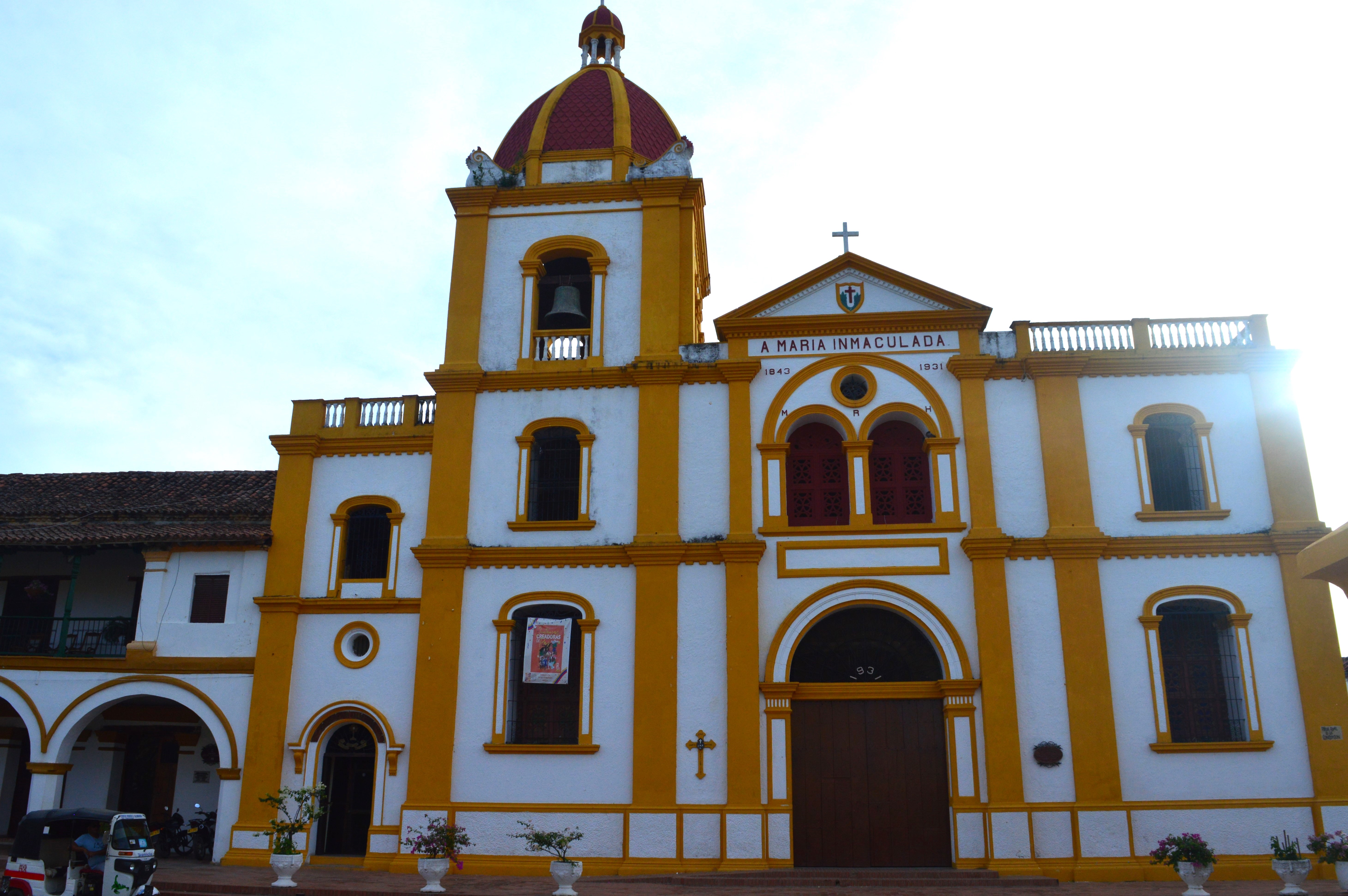
After dropping off our belongings, we went out for a walk. Turning left up Calle 18, we passed the leafy Parque de Bolívar where kids played and parents sat chatting on benches. Soon after, we came to the Oratorio Inmaculada Concepción – a Catholic church with a regal red steeple, located in the Plaza Real de la Concepción. Translating as the Royal Square of Conception, it’s in this market square that the first Spanish settlement of Mompox was developed, in the 1500s.
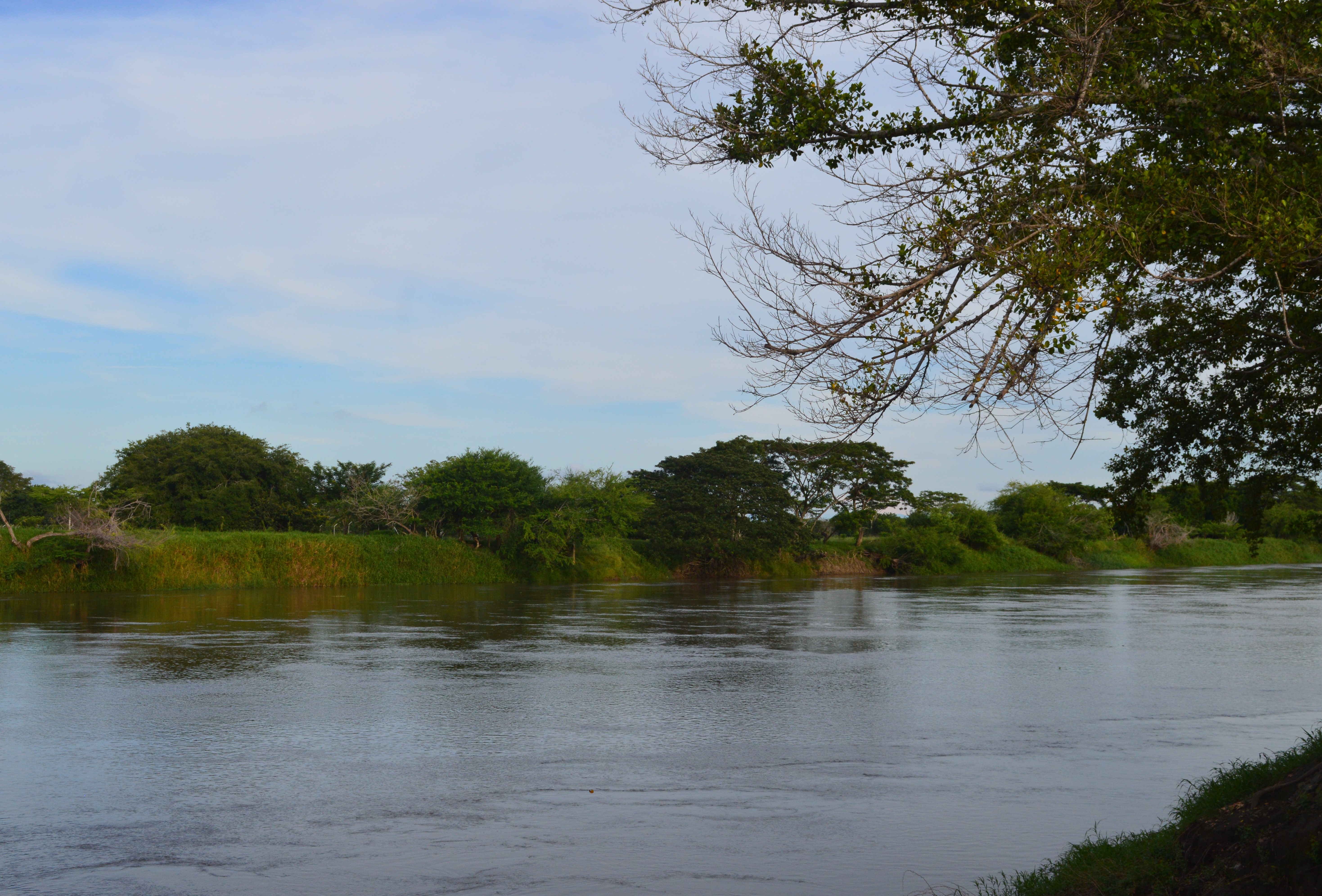
Opposite the church is the Plaza de Mercado, where shy women sat selling small trinkets, scarfs, and jewellery. The back of the market building has an exterior arcade to walk through, and through the arches you can see the Magdalena River flowing by. Boat tours are available – a good option for anyone who enjoys bird watching.
For dinner, we opted for Ambrosia Restaurante which was on the same street as our hotel. With its stone walls, open side entrance, and arched doorways, the building looked like it used to be horse stables. Fairy lights and flowers in hanging pots added to the nice ambiance. Something to note if visiting Mompox is that most menus will be in Spanish only. With no data plan for our phones and not wanting to request WiFi, we relied on my memorization of the Spanish translation for common food items. Thankfully, we got what we thought we had ordered! I could tell the waiter appreciated us trying to speak in Spanish only. Perhaps this is the reason he brought us each a bowl of delicious vanilla ice cream as a complimentary dessert…or maybe every customer is treated to this generosity. Our dinner cost 105,000 pesos with tip included – much less than the standard prices in Cartagena.

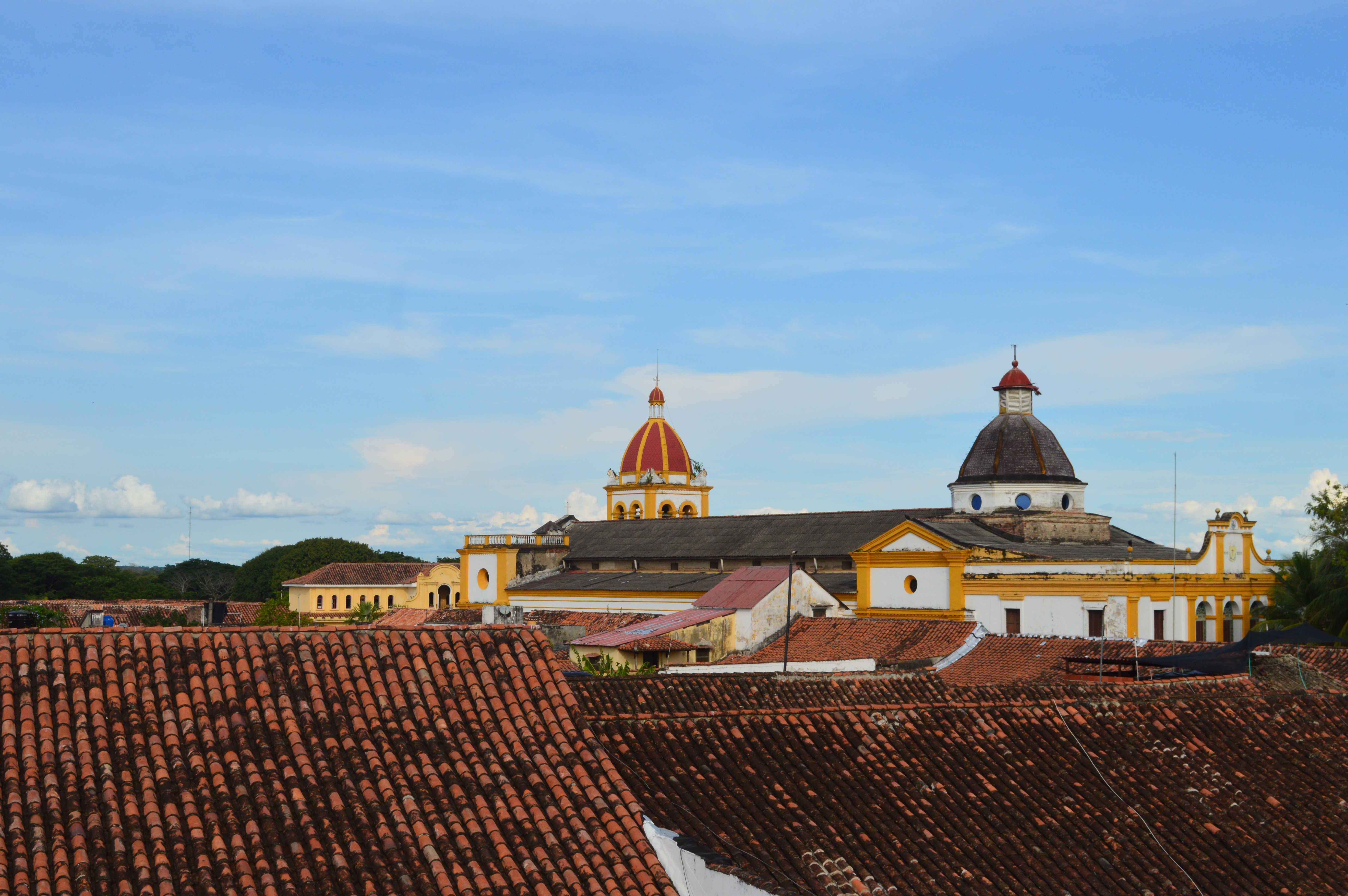
From the rooftop terrace of Bioma Boutique, we saw a sea of orange roof tiles. Colourful steeples rose up against a sky turning from blue to violet. Colombian turkey vultures landed on nearby building tops, treading awkwardly along the roof edges. The jacuzzi looked tempting, but we were already warm enough.
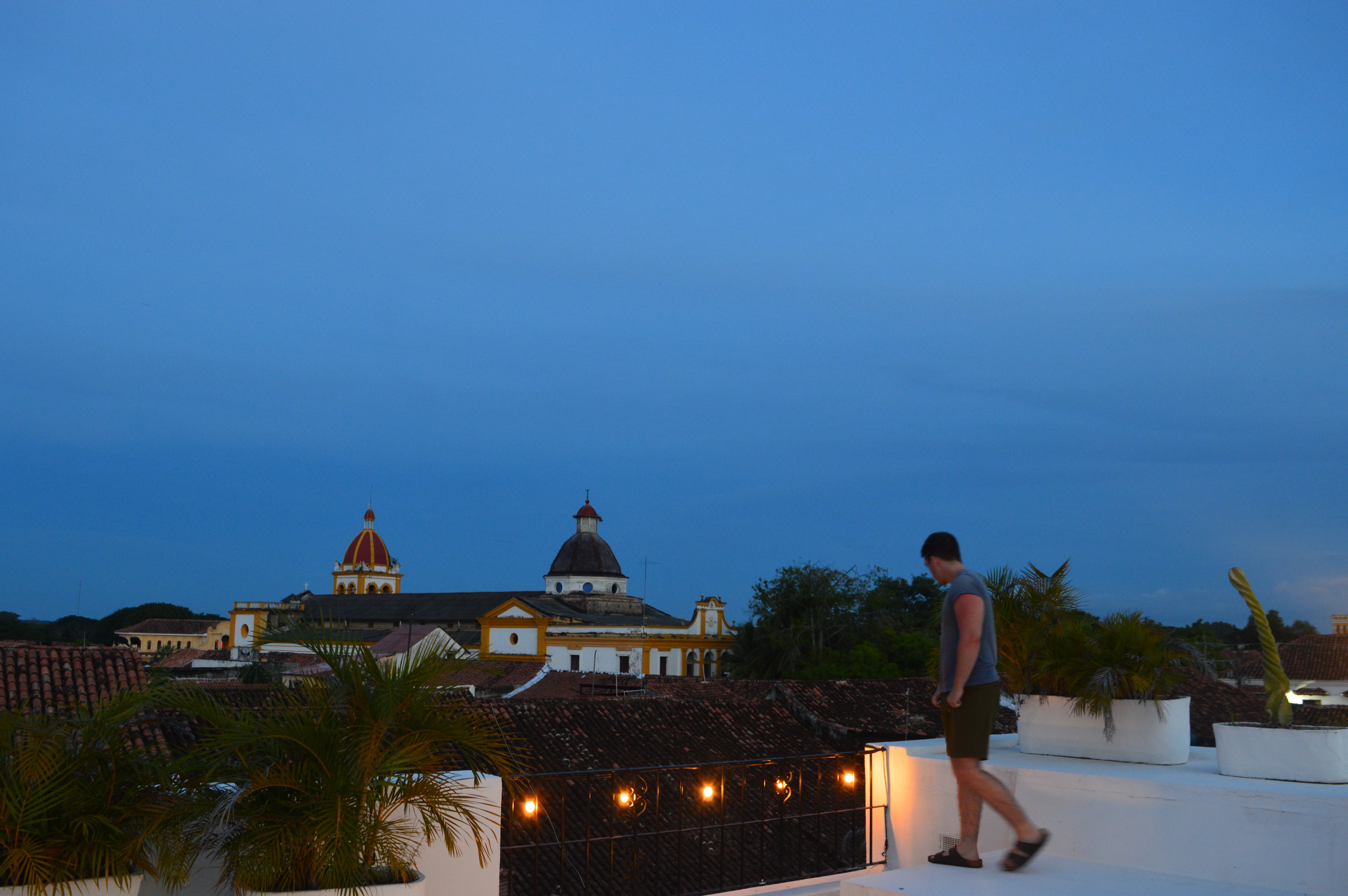
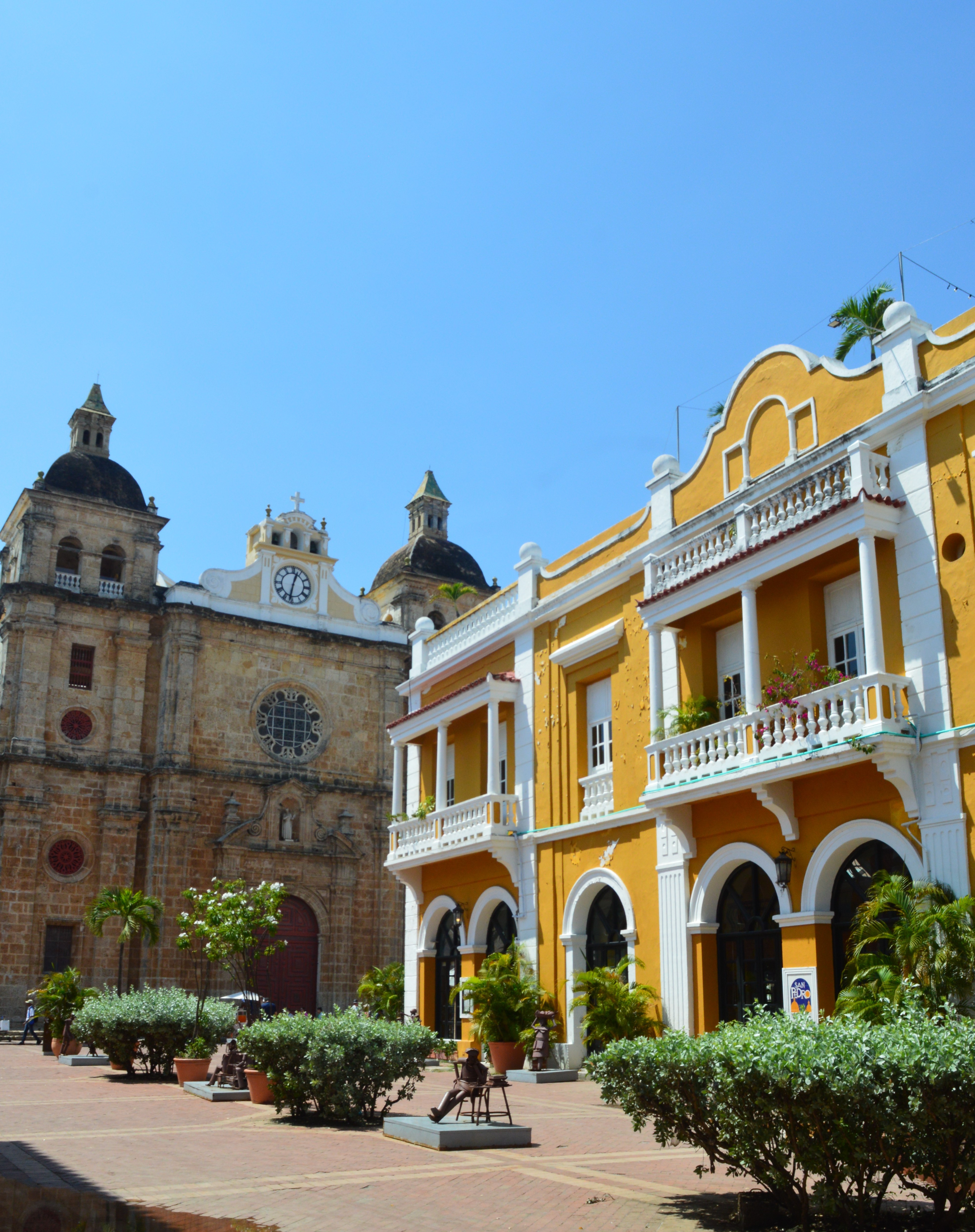
After having a traditional Colombian breakfast in the hotel the next morning, we walked down Calle 19 past the Plaza de La Libertad. A yellow building with a bell tower stood behind it – this is the municipal mayor’s office (Alcaldía Municipal) and it has a pretty courtyard with palm trees and flower beds.

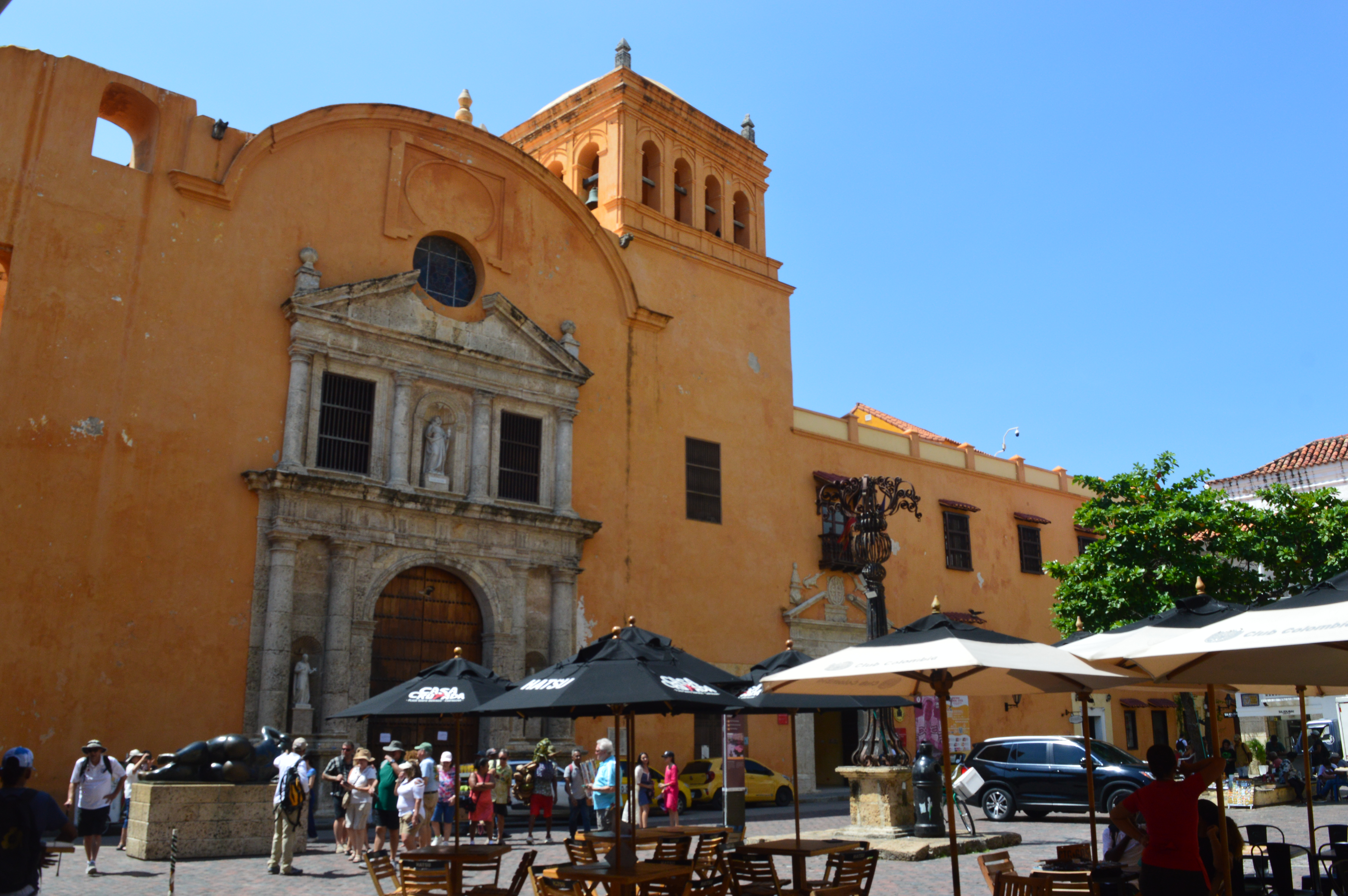
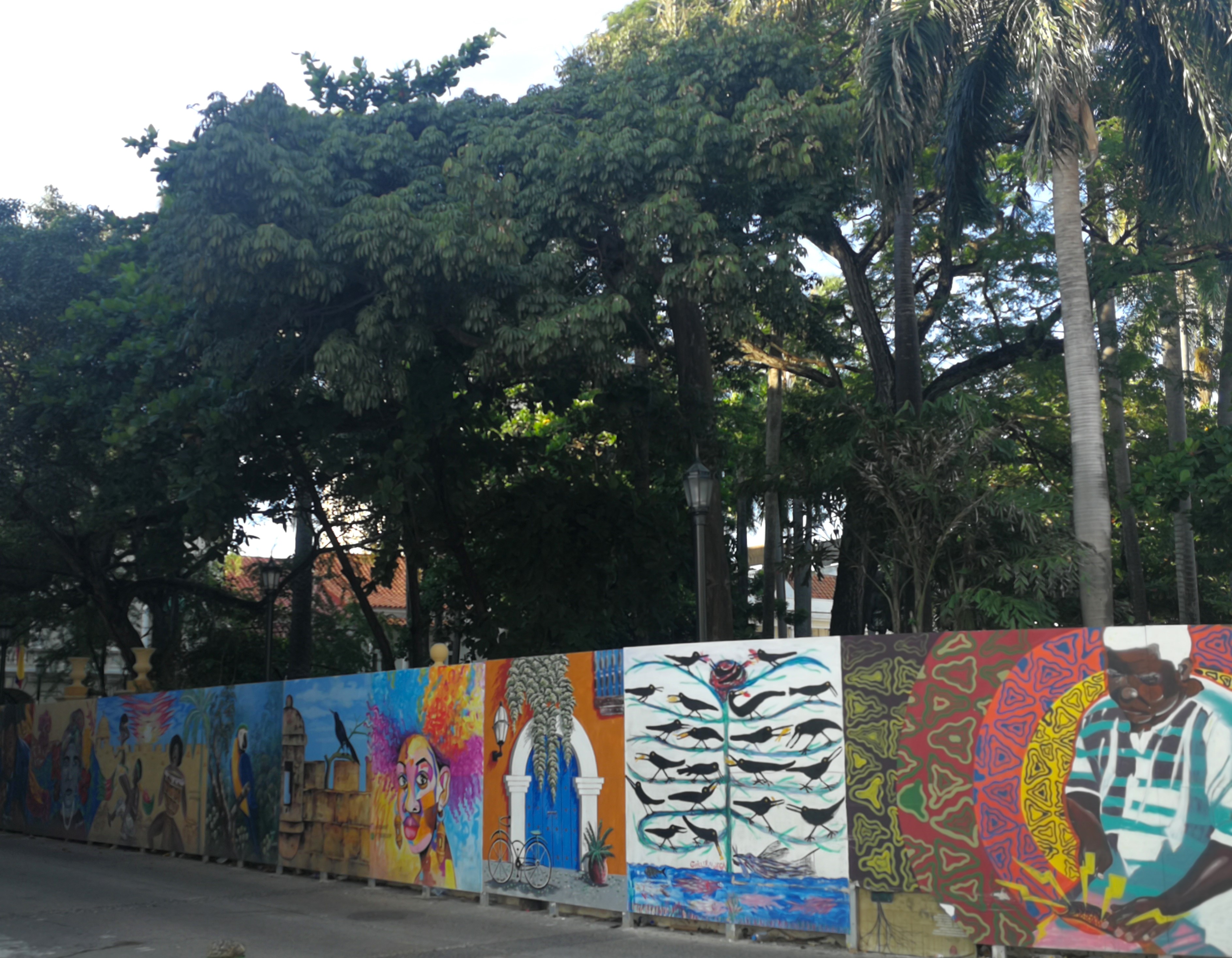
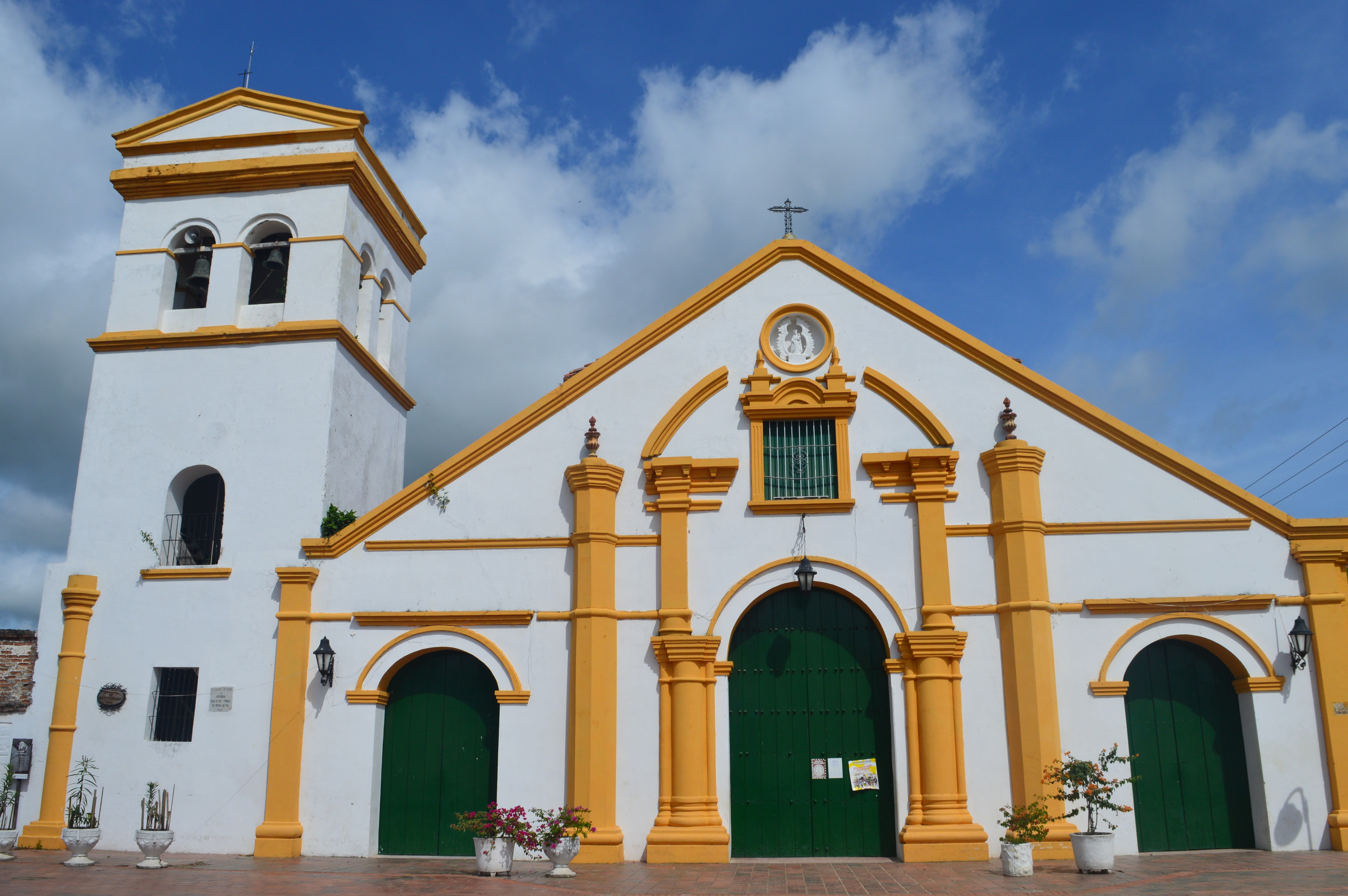
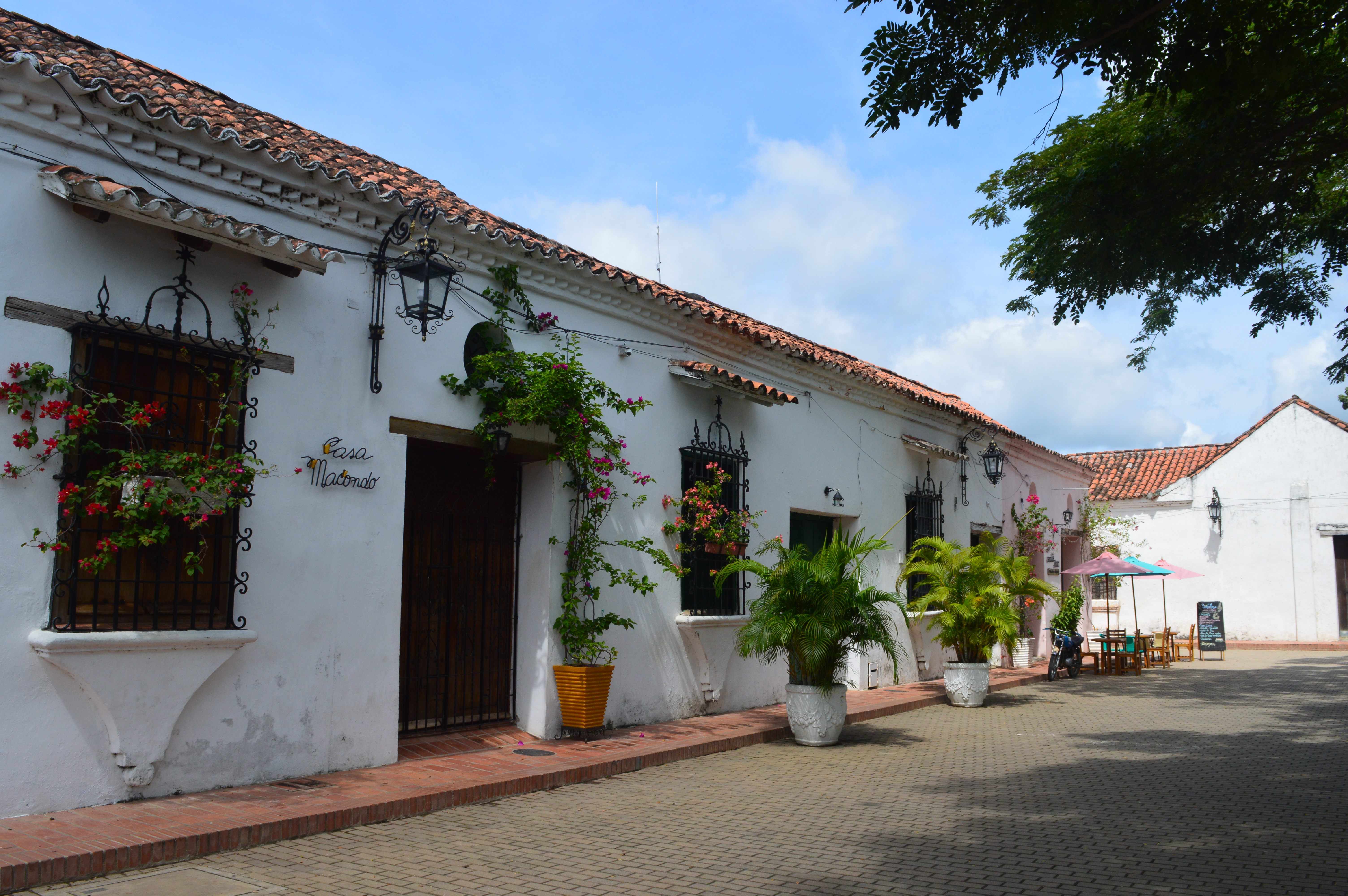
Shortly after turning left onto Carrera 3, the street walls were decorated with vibrant murals. We then came to the striking Iglesia de Santo Domingo, with its bright white walls and yellow trim.
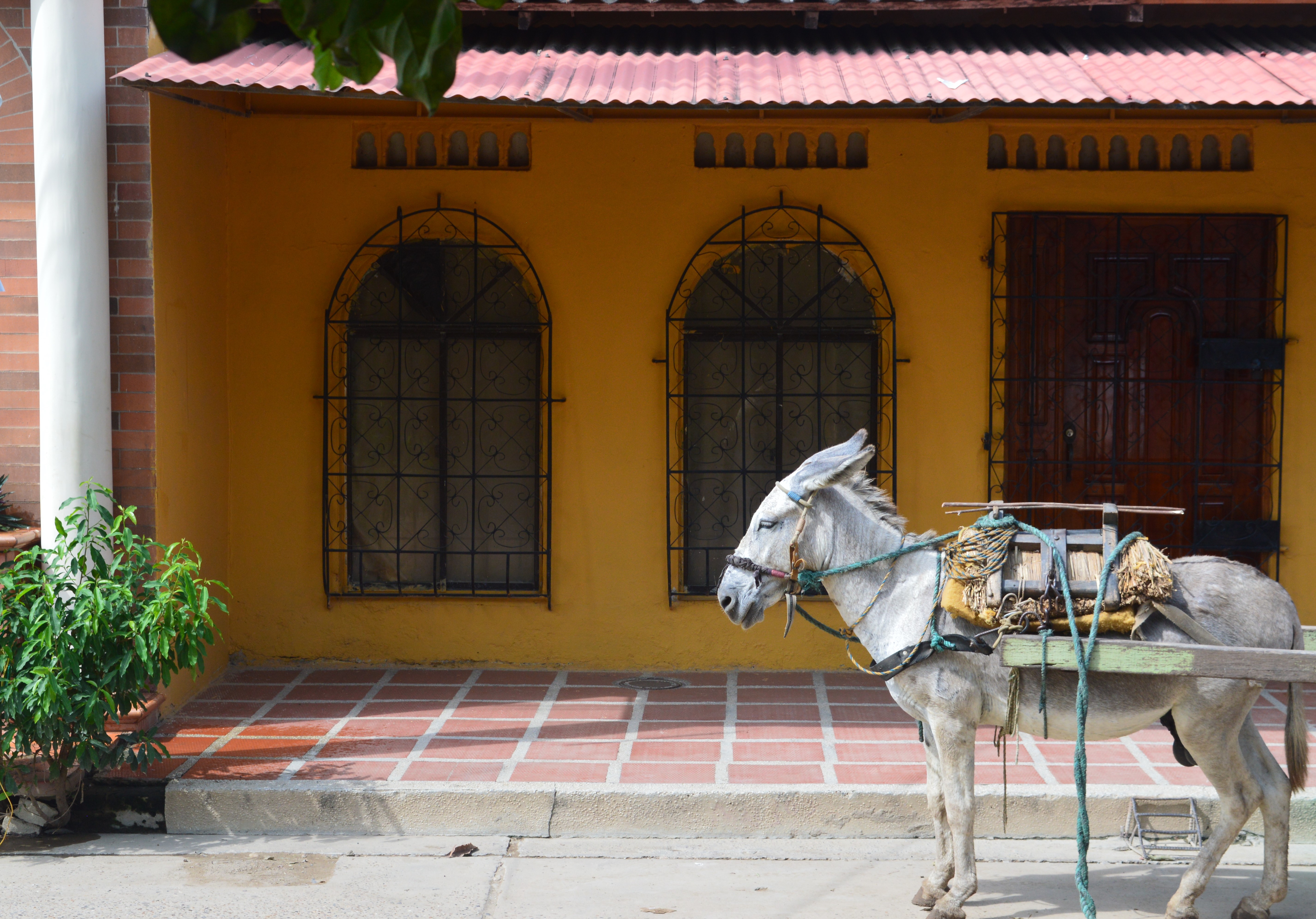
As we continued along the street, we passed a dozing donkey standing against a backdrop of yellow houses with orange-tiled roofs, waiting for its owner. Mopeds drove by casually, tooting greetings at familiar faces. Locals sat on dusty doorsteps smoking cigarettes with pensive faces.
An observation that stood out for us in Mompox was how pleasantly surprised the locals looked when we greeted them with a “Hola” or “Buenos días.” It seemed they were not used to pleasantries from foreign tourists. It was an observation that gave me a twitch of sadness, but I was happy if I added some brightness to someone’s day.

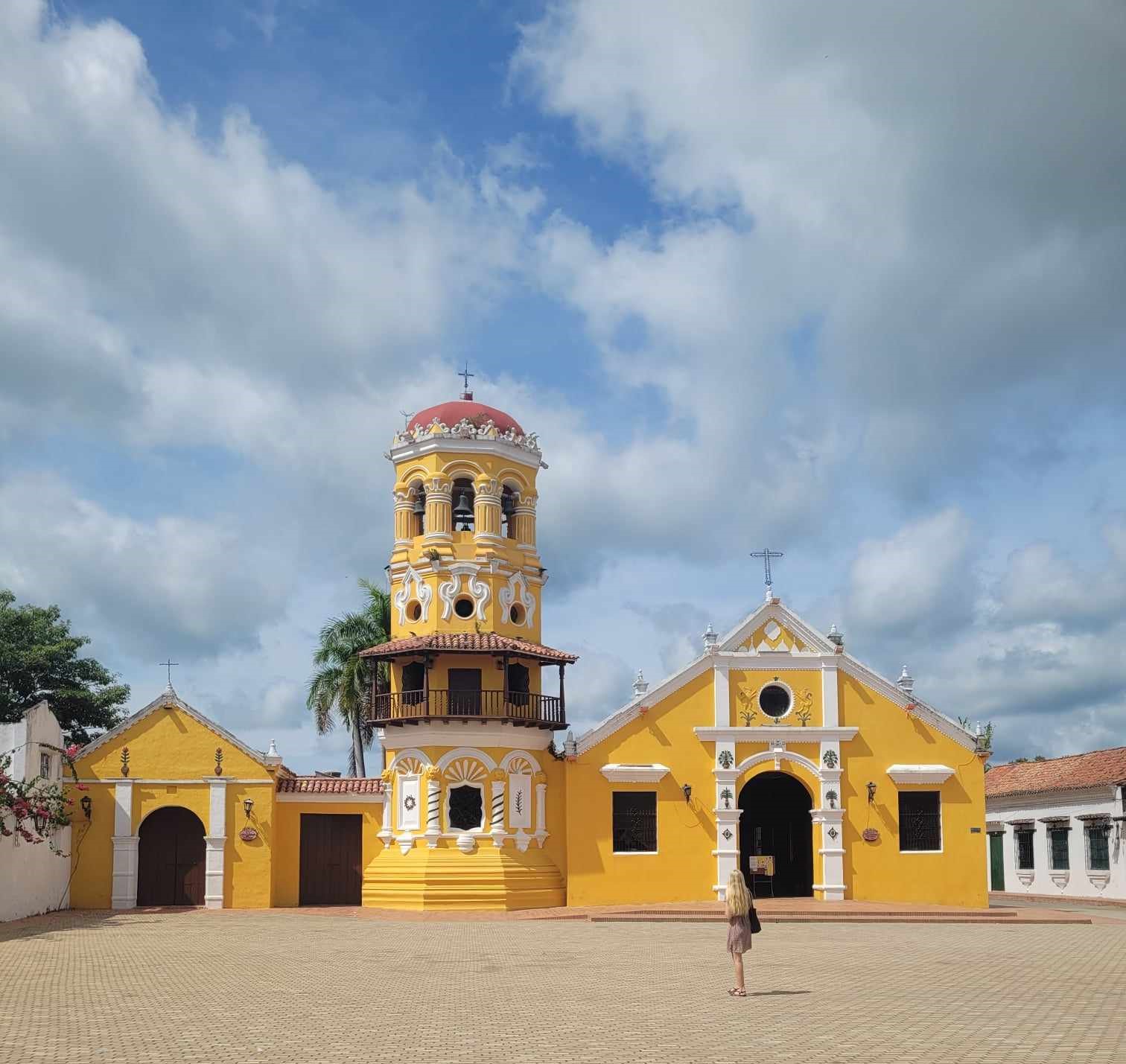
After turning left up Calle 14, we came to the Iglesia de Santa Bárbara. Initially built in 1613, it’s a beautiful, intricately detailed piece of architecture which makes it no surprise that it’s one of Mompox’s most photographed churches.
From here we walked along the promenade known as the Calle de La Albarrada, adjacent to the Magdalena River. Down the quiet Calle 16 was the Basílica de San Agustin, a yellow church with a distinctive square steeple.

As we continued along the Albarrada, I was charmed by the continuous sight of pastel-coloured houses and small boutique hotels with traditional wooden doors. Gentle music played through the open windows of restaurants.
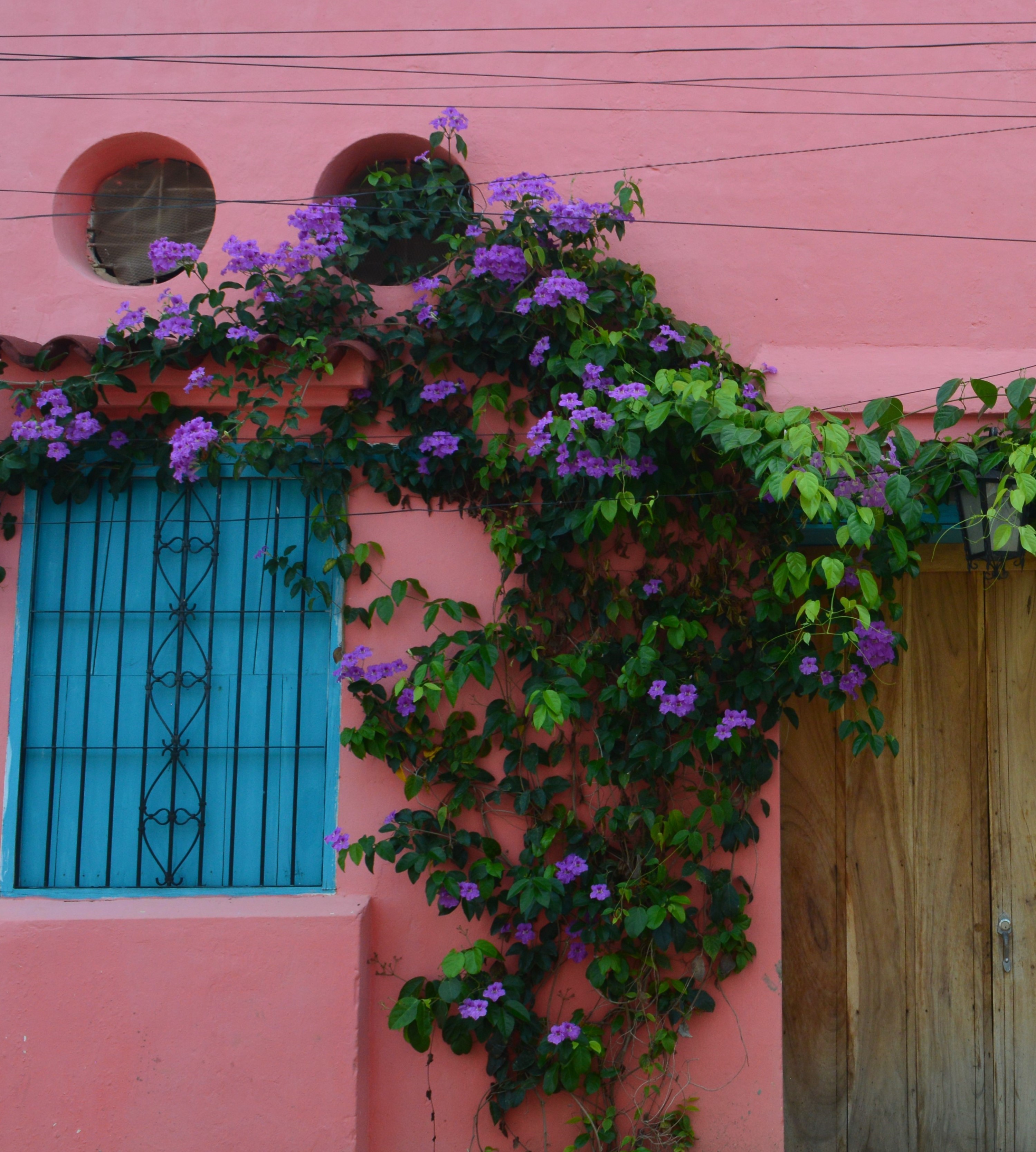
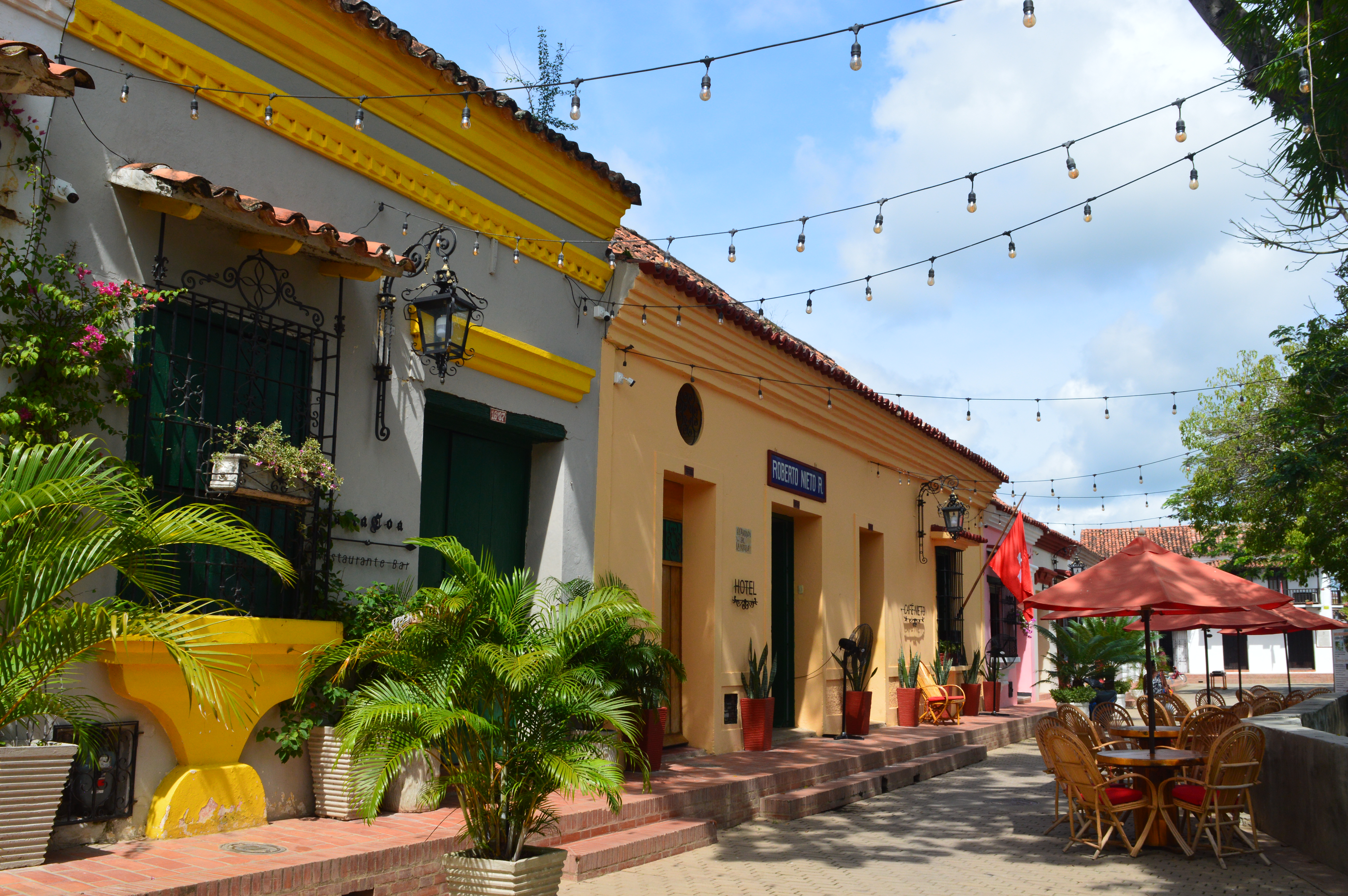
We walked under a canopy of colourful umbrellas before wandering through the market building again.
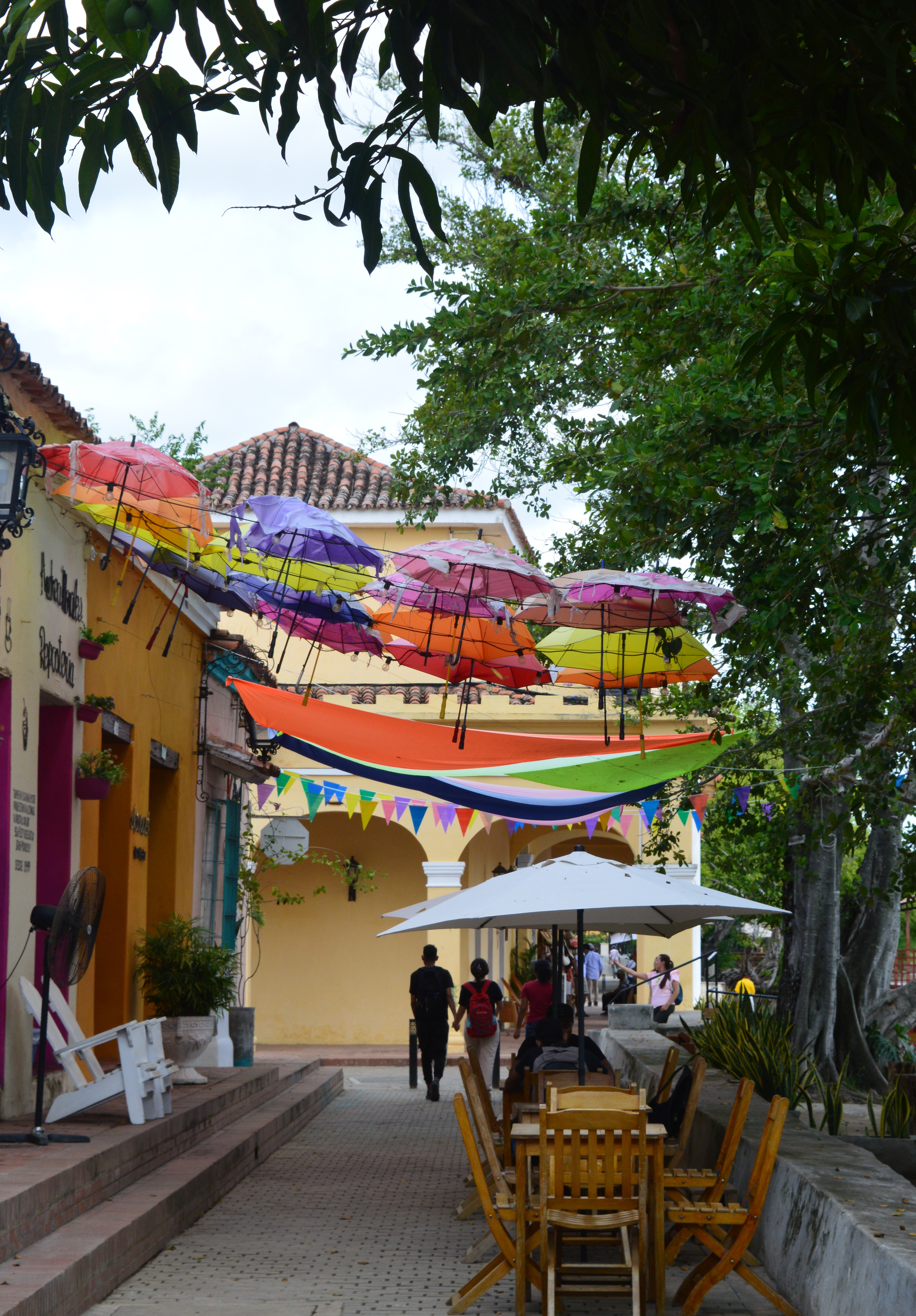
We chose to eat lunch at a casual eatery called Comedor Costeno. Without even asking, the waiter sat us directly under a large fan. I guess we looked pretty sweaty! Freshly made iced tea helped quench our thirst as we studied the menu. Without speaking any English and instead just listening carefully, we were able to work out the extras that came with our order and subsequently advise that we did not need the soup. Amazing what we can understand just by listening! I had fried red snapper with coconut rice and salad, while my hubby had barbecued pork.

Our bill came to 33,000 pesos, which didn’t seem enough. But when I checked the receipt, everything was there. I realized that the waiter had lowered the price to make up for us not having the soup with our meal. It was another unexpected act of generosity – an act that is perhaps the norm in this town, but was nonetheless unexpected by someone that lives in profit-driven, post-COVID North America.

As we ate, I noticed a movement in one of the trees outside the restaurant. An iguana was slowly crawling down a tree. I went outside to look. A French couple had also noticed the animal. As we watched with excitement, locals continued eating, indifferent to the presence of this animal they were so used to seeing. Once on the ground, the iguana looked around slowly, aware of the attention he was receiving. He then proceeded to saunter nonchalantly past the chairs and tables, slowly increasing his pace as he got further away, as if trying to leave a crime scene unnoticed.
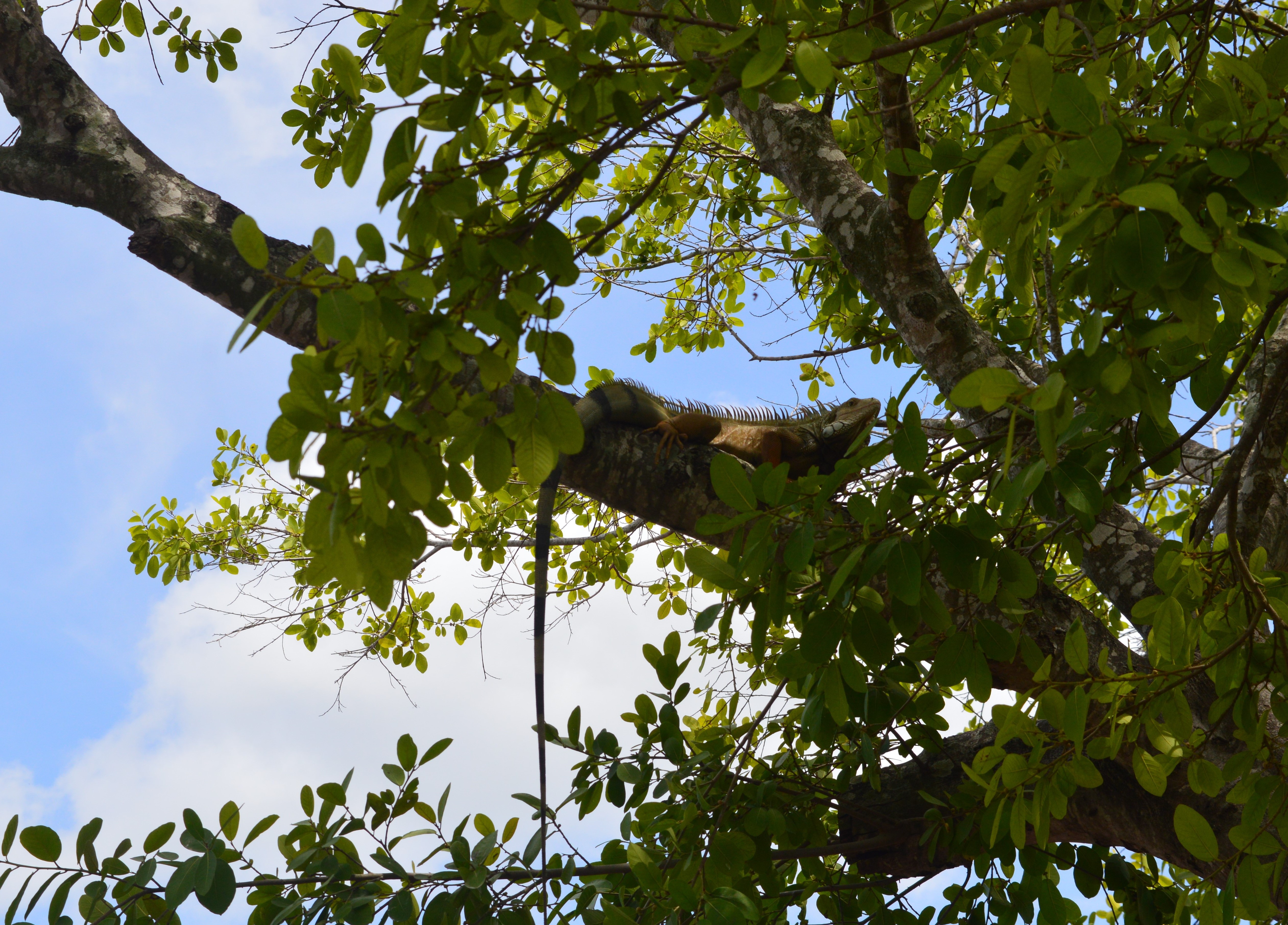
After lunch, we continued along the promenade past the Plaza del Moral. Walking through this quiet square, it was difficult to imagine that Simón Bolívar, “El Libertador”, once stood here rounding up hundreds of men to fight the Spanish a couple of years after the town had declared independence.
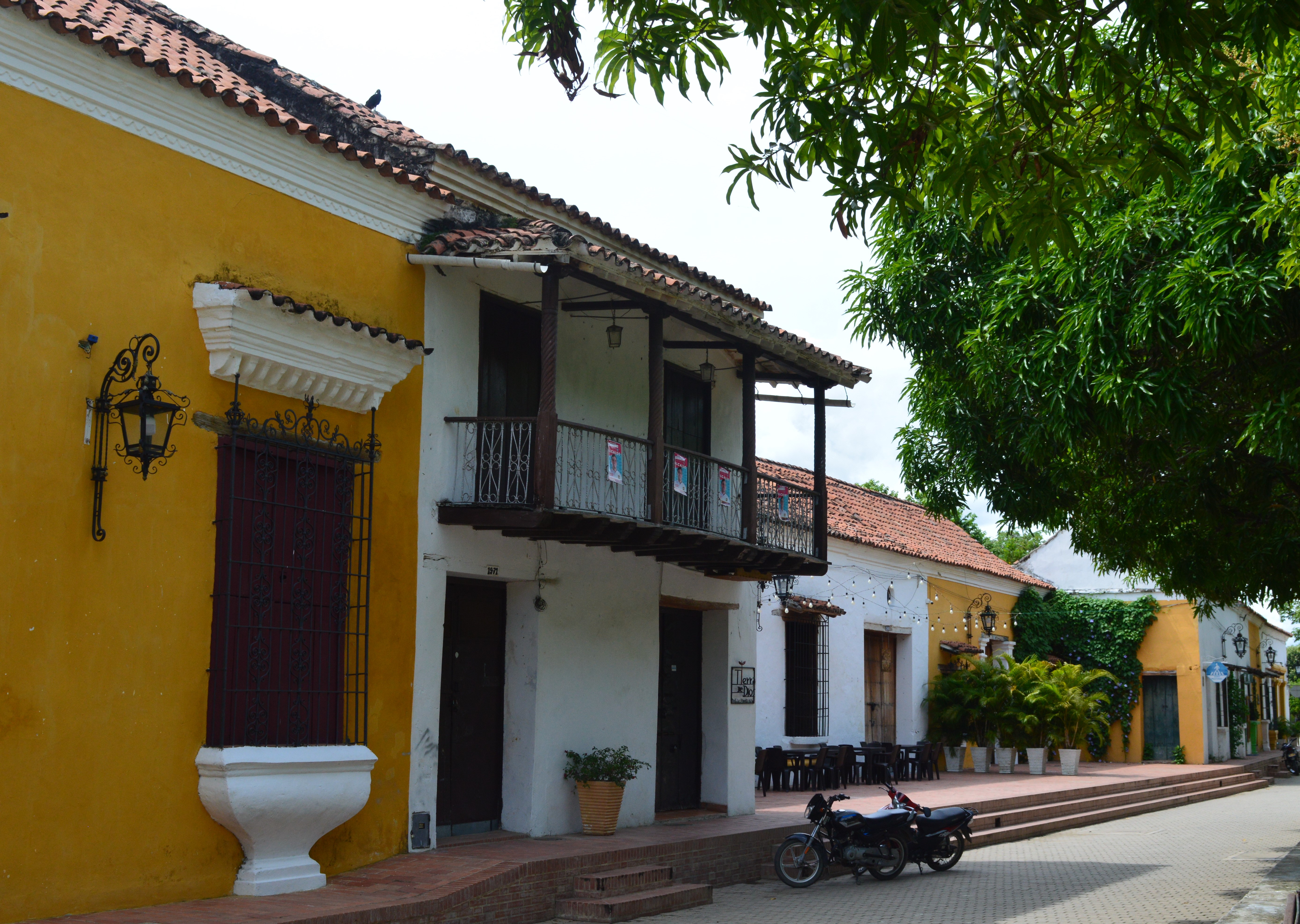
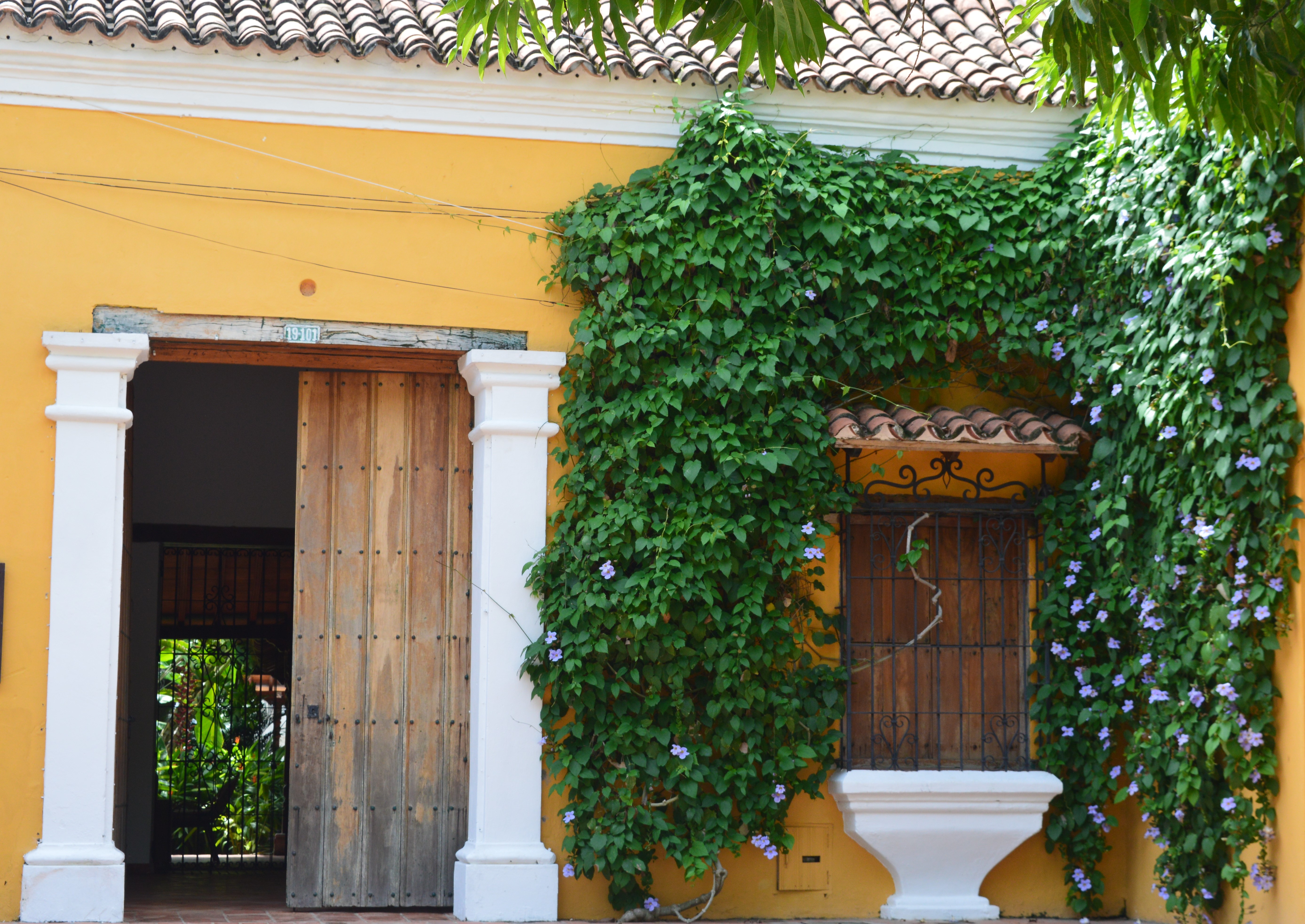
Lizards with a bright green skin scurried along the river bank as we walked along towards the handsome Iglesia de San Francisco. It was then back to our hotel for a break from the heat and an afternoon siesta.
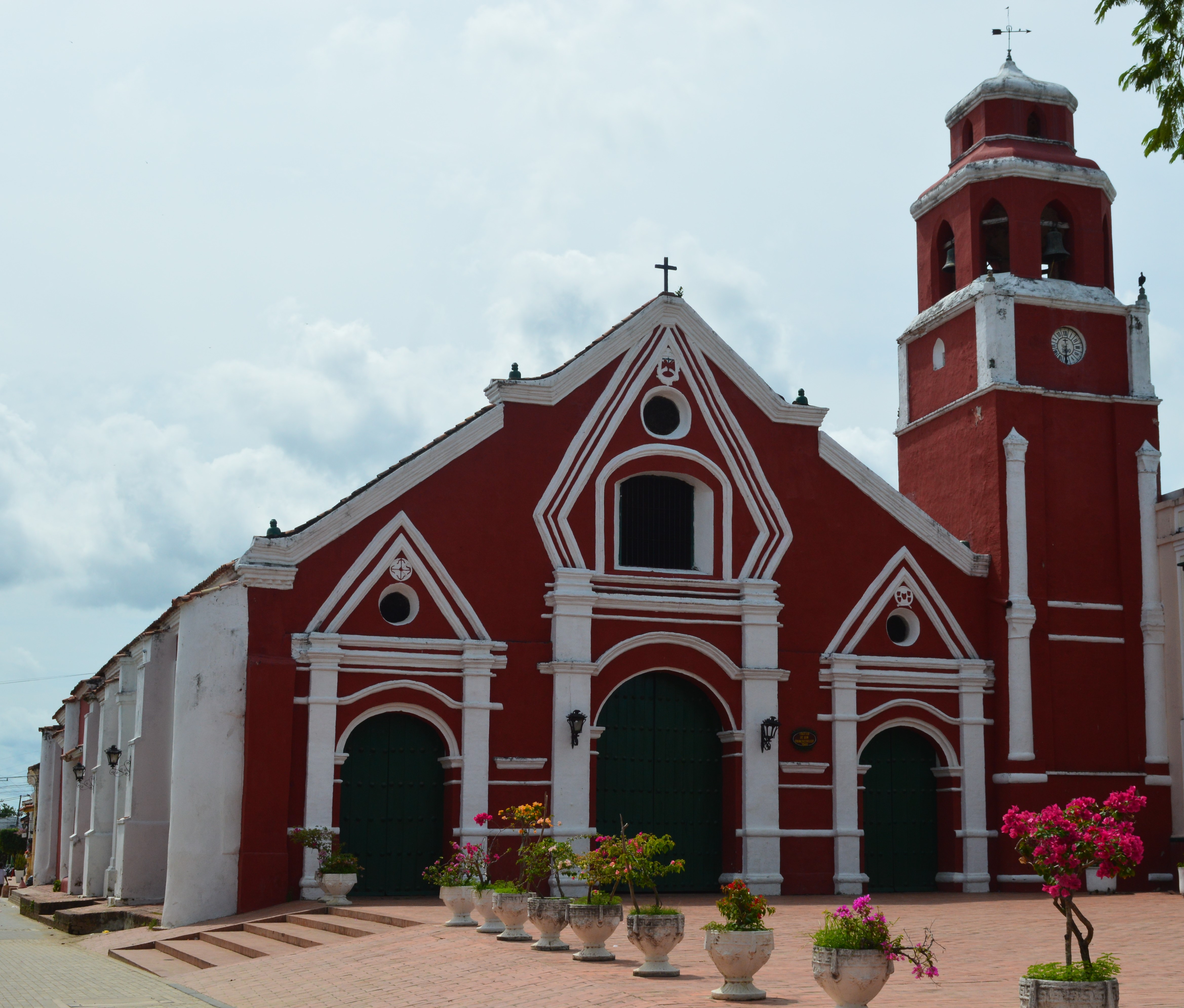
As we headed out for dinner in the evening, we noticed a few female police officers stood around the Plaza de Bolívar, assumedly preparing for an upcoming event. All of them were short in stature, with slight builds and beautiful faces. We said hello to one we passed and she smiled bashfully, curling a stray hair behind her ear.

For dinner we chose Verde Oliva in the Plaza Real de la Concepción. It was another restaurant with a structure and decor that resembled former stables. We ate delicious woodfired pizza and drank freshly made iced lemonade. At 63,000 pesos, it was yet another great meal that reminded us how overpriced many restaurants in Cartagena are.

We walked back through the Plaza Real de la Concepción, seeing young kids running around under the softening sky. The heat of the day would make us fall asleep early, content with our time exploring this little gem in northern Colombia.
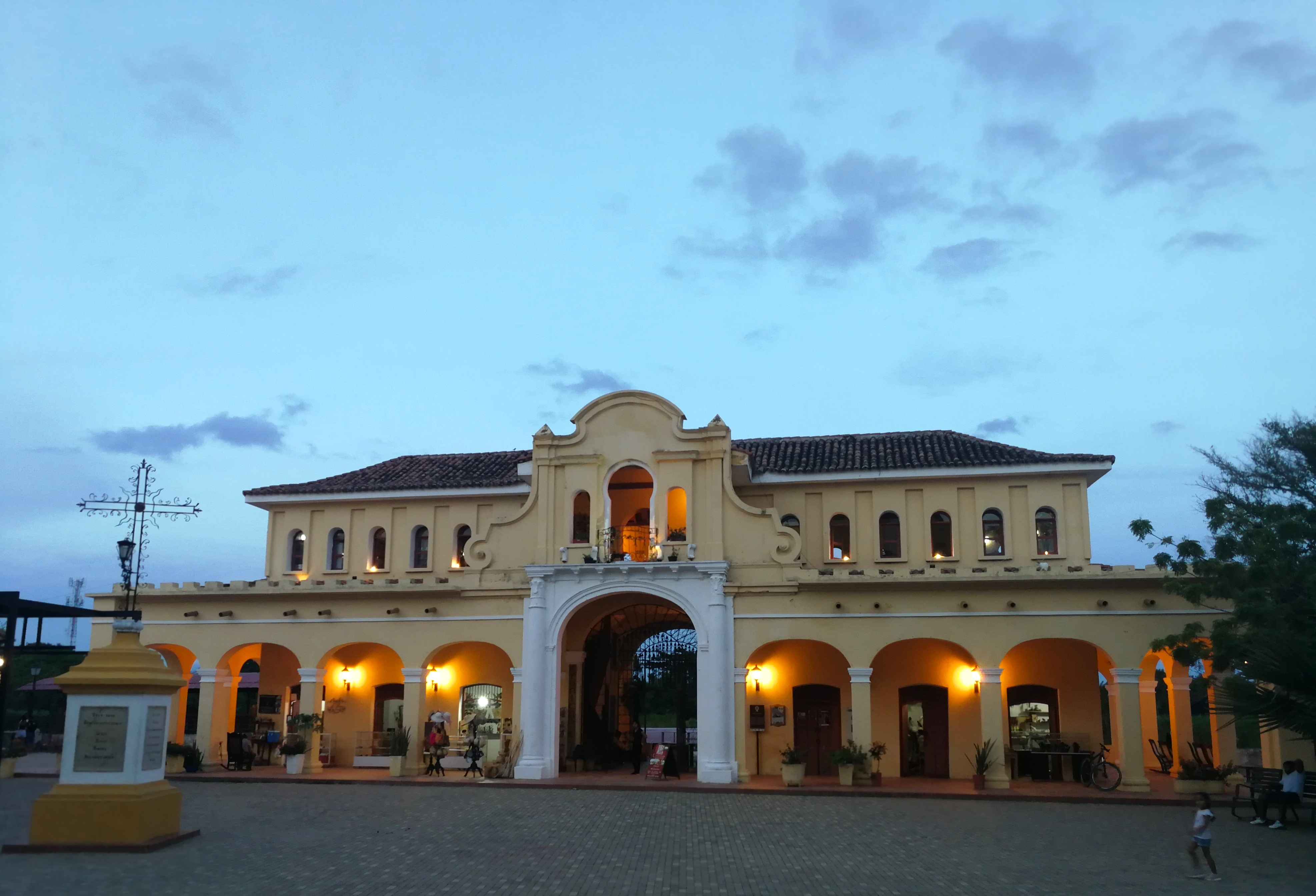
Santa Cruz de Mompox was a charming town in which we could enjoy beautiful architecture, explore areas of historical significance, and observe local culture at a relaxed pace. There is no rushing around in this town; instead, it’s a place in which you want to take your time soaking up the elements and small details. A place where you’ll want to speak as little English as possible, preferring to let your mind drift off in a daydream, escaping from your normal reality.

The journey to Mompox and our time in the town reminded us of our privilege, but also exemplified that having material things does not guarantee happiness and having wealth does not make someone a generous person. Here we encountered a collective spirit of kindness and generosity that will not be forgotten. Although we did not stay long in Mompox, our time in Colombia wouldn’t have been as special had we not visited it. The sights of Mompox are embedded in my memory, but the soul of the community is treasured in my heart.
*
Unknown's avatar

Colours of Cartagena, Colombia

The first time I saw photos of Cartagena de Indias, the port city on Colombia’s Caribbean coast, I knew I wanted to visit one day. Although Colombia wasn’t initially in our honeymoon plans, a deal on flights convinced me to visit South America for the first time, and my husband was up for the adventure.

Previously considered one of the most important ports for trade during the Spanish imperial era, Cartagena declared independence from Spain on November 11th, 1811. It is most famous for its historic walled city, the picturesque architecture of which earned it its status as a UNESCO World Heritage Site in 1984.

On every blog I had read about Cartagena, pretty much the same advice was given: October is part of the rainy season, so it’s best not to visit at that time of year. We went against this advice and arrived in mid-October. As we stepped off the plane at Rafael Núñez International Airport, bright sunshine made us cover our eyes and a blazing heat caused us to swiftly remove our sweaters. For the three nights we stayed in Cartagena, we wouldn’t see a drop of rain. Some would call this luck, others would call it climate change.

We caught a yellow taxi into the city centre. It’s about a 10-minute drive, with ocean views on the right. We watched, silenced with astonishment, as cars zoomed chaotically along the highway, narrowly avoiding mopeds that darted in between the lanes. Most of the mopeds carried female passengers on the back. They held on loosely, seemingly unworried as their driver sharply changed lanes without a glance over his shoulder. Signalling doesn’t seem to be a thing here; instead, drivers will frequently toot their horns as if to say, “Move it, I’m coming through.”

Approaching the history city walls, we passed Las Bóvedas, a former dungeon converted into a market. Entrance to the old town was through narrow archways. Traffic-wise, it was every man for himself. Cars from all directions bunched up, beeping incessantly, trying to be the first to go through. “Right of way” didn’t appear to be a concept!

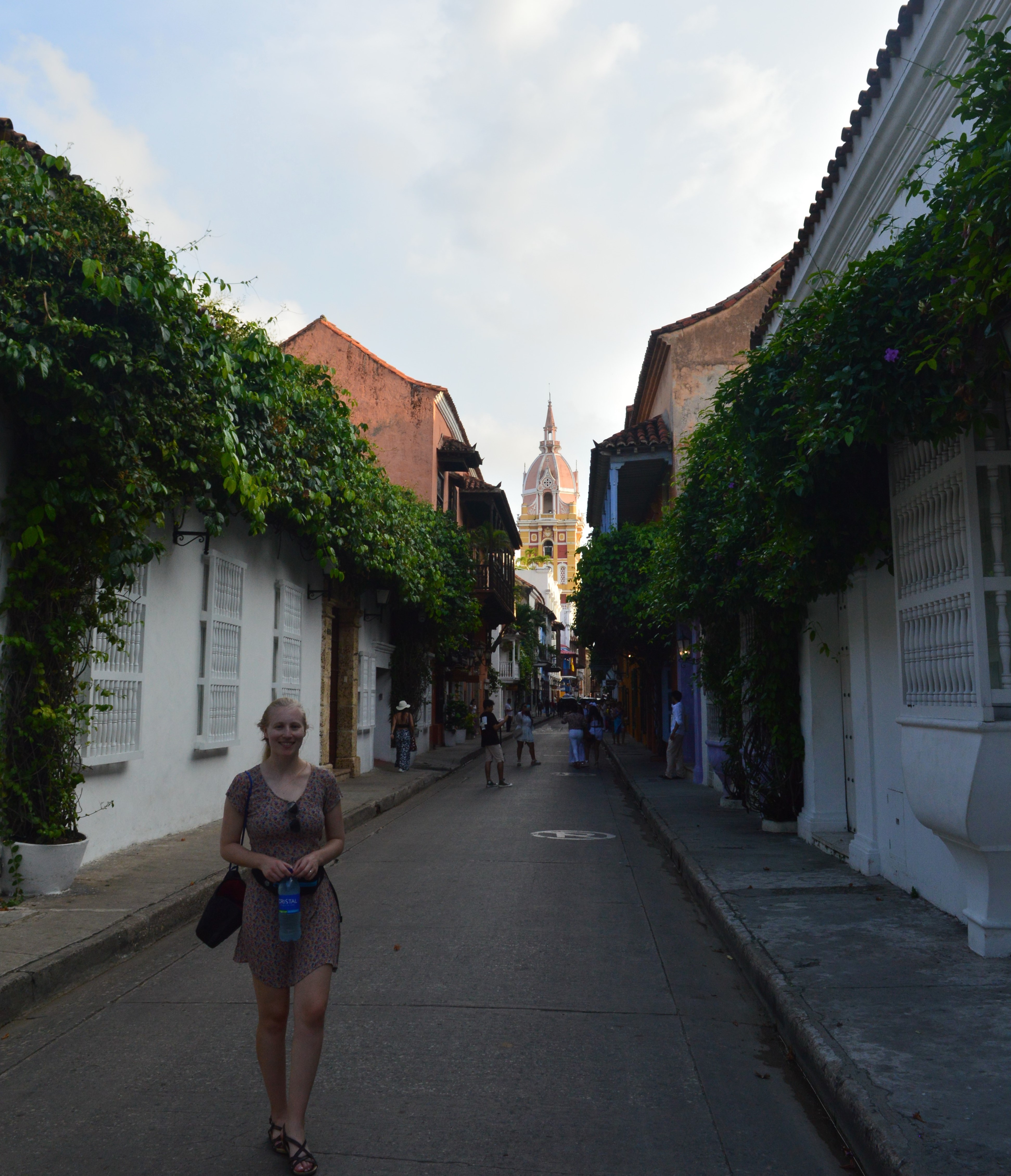
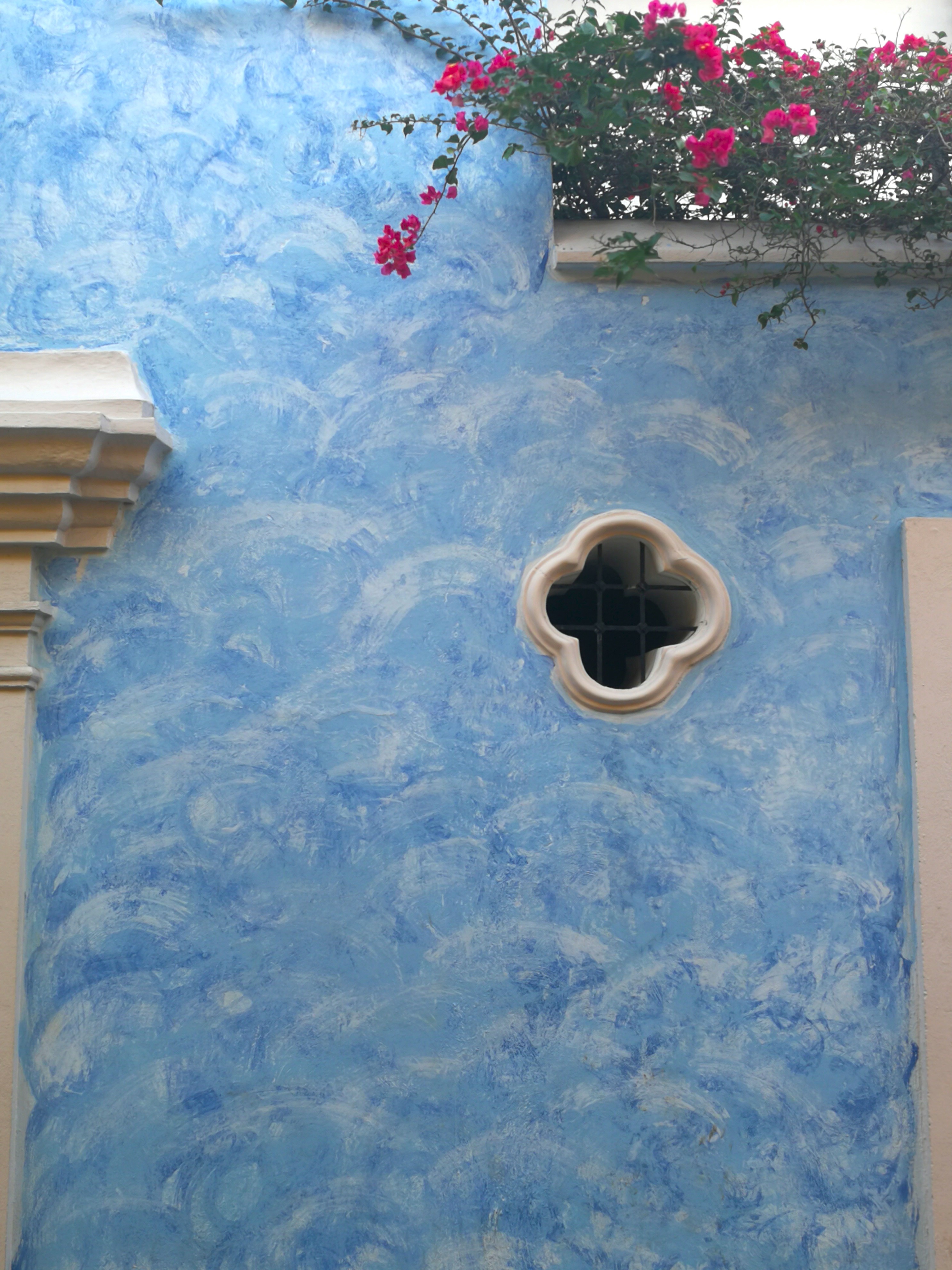
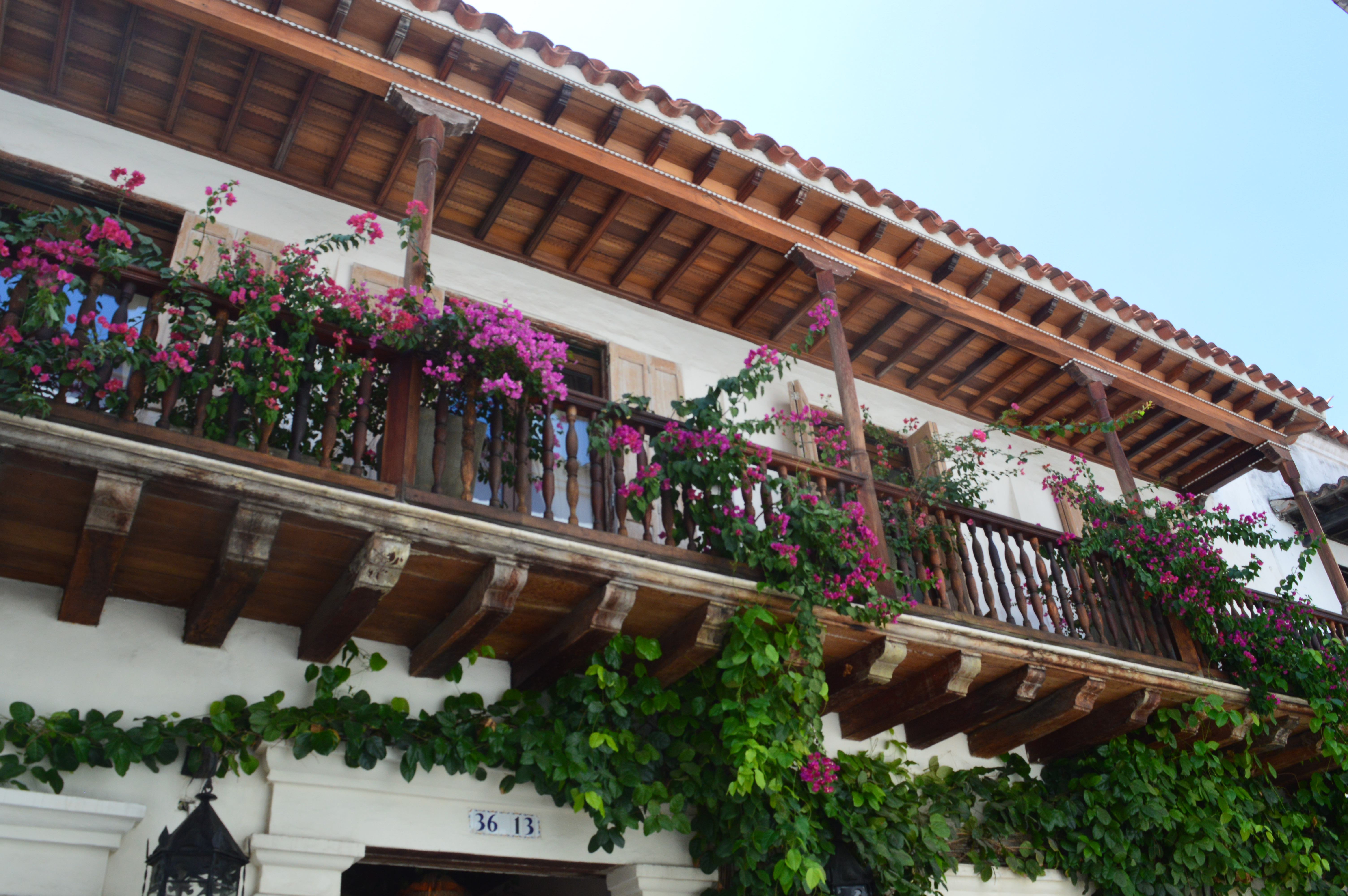
We drove up narrow, cobbled streets, passing pastel-coloured houses with flowers draping around balusters and vine plants spreading along the walls. Our driver mumbled to himself as he tried to find our hotel, and then made a satisfied sound after recognizing the Hotel Casa del Curato on Carrera 7.

Taxis in Cartagena don’t have meters. Some drivers will let you know what the cost will be at the beginning; others seem to wait to see what is offered and then let you know if it’s enough. I handed our driver 25,000 pesos and he looked very happy, which made me wonder if I gave more than necessary…

As we retrieved our bags, a man approached my husband rapping a song. I had read about these artists on a few blogs, all of which had advised to avoid engaging with them because they would ask for money. I had shared this with hubby in advance, alas, this appeared to be forgotten as he shook the man’s hand with a smile and answered when asked which country we were from. Soon after came the man’s open hand and a request. I watched, half irritated, half amused, as a look of realization swept across hubby’s face. Thankfully, a sweet doorman from our hotel came to the rescue and gestured us up the steps inside.

We walked into a cool lobby dotted with various plants. A house cat peeked out curiously from behind a pot. After checking in, we walked up the wooden stairs past a beautiful painting of a Caribbean woman. Our room was bright and airy, with white walls and a balcony that looked onto the street below.

I chose Casa del Curato because it seemed to be located in a slightly quieter part of town, and I have a fondness for independent, boutique hotels. It certainly had a lovely character, and it was cheaper than many hotels in the city, but as a 3-star hotel I also didn’t feel it was quite worth the approximately $200 CAD a night. I reminded my frugal self that we were on honeymoon and let it go.

Freshly changed, we walked down the street, passing the Iglesia de Santo Toribio at a junction on our right. We quickly learned that vehicles were not inclined to give way to pedestrians. On Calle de la Tablada, we turned left and crossed a few blocks until we came to La Mulata. This Carribbean restaurant had been recommended on a blog I read, and we were keen to try to some local food. A sweet lady brought us a complimentary bowl of soup as we glugged water, sweating heavily after only seven minutes of walking. We ate delicious fried fish and coconut rice before bracing ourselves for the humidity of outside once more.

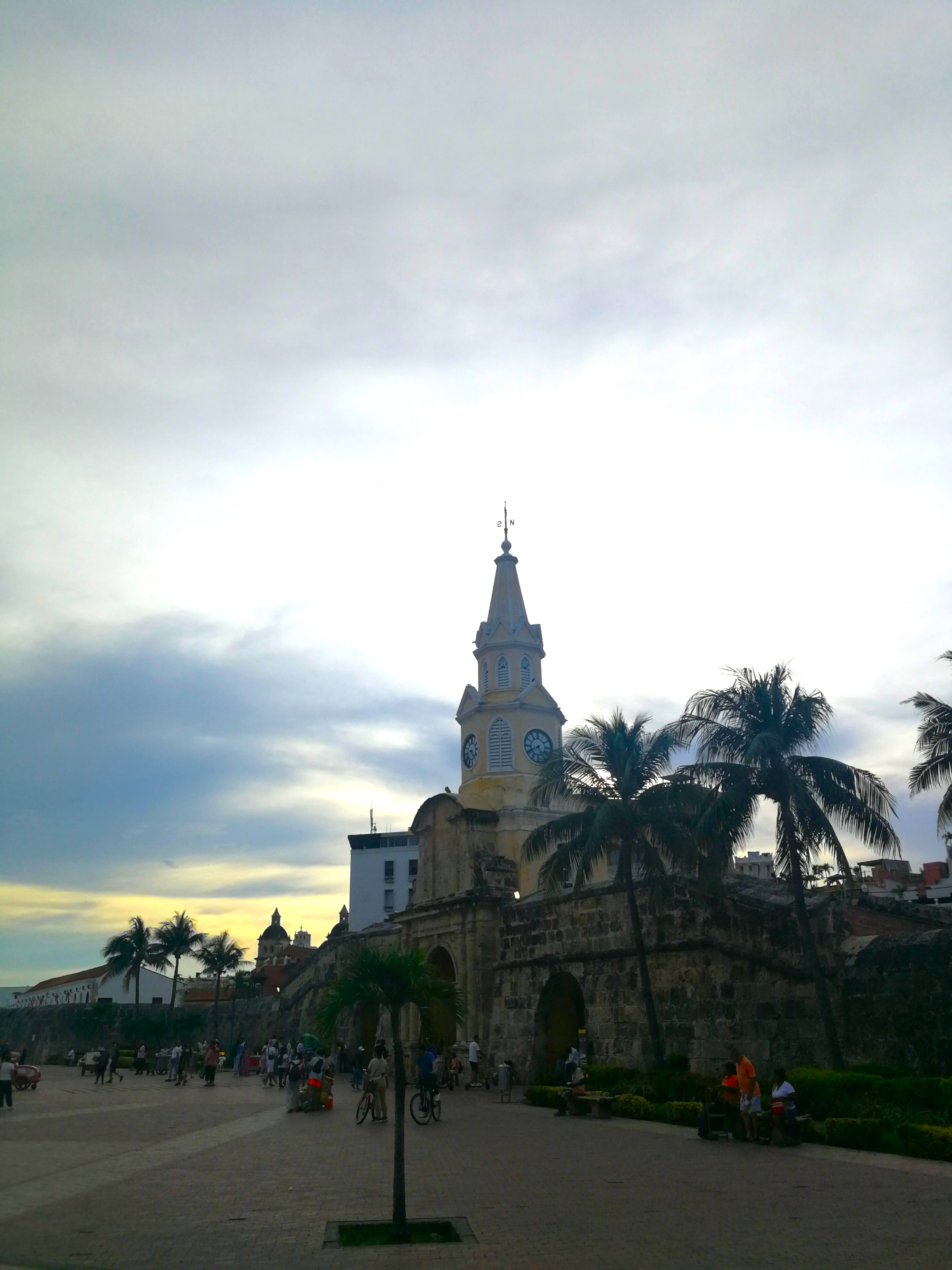
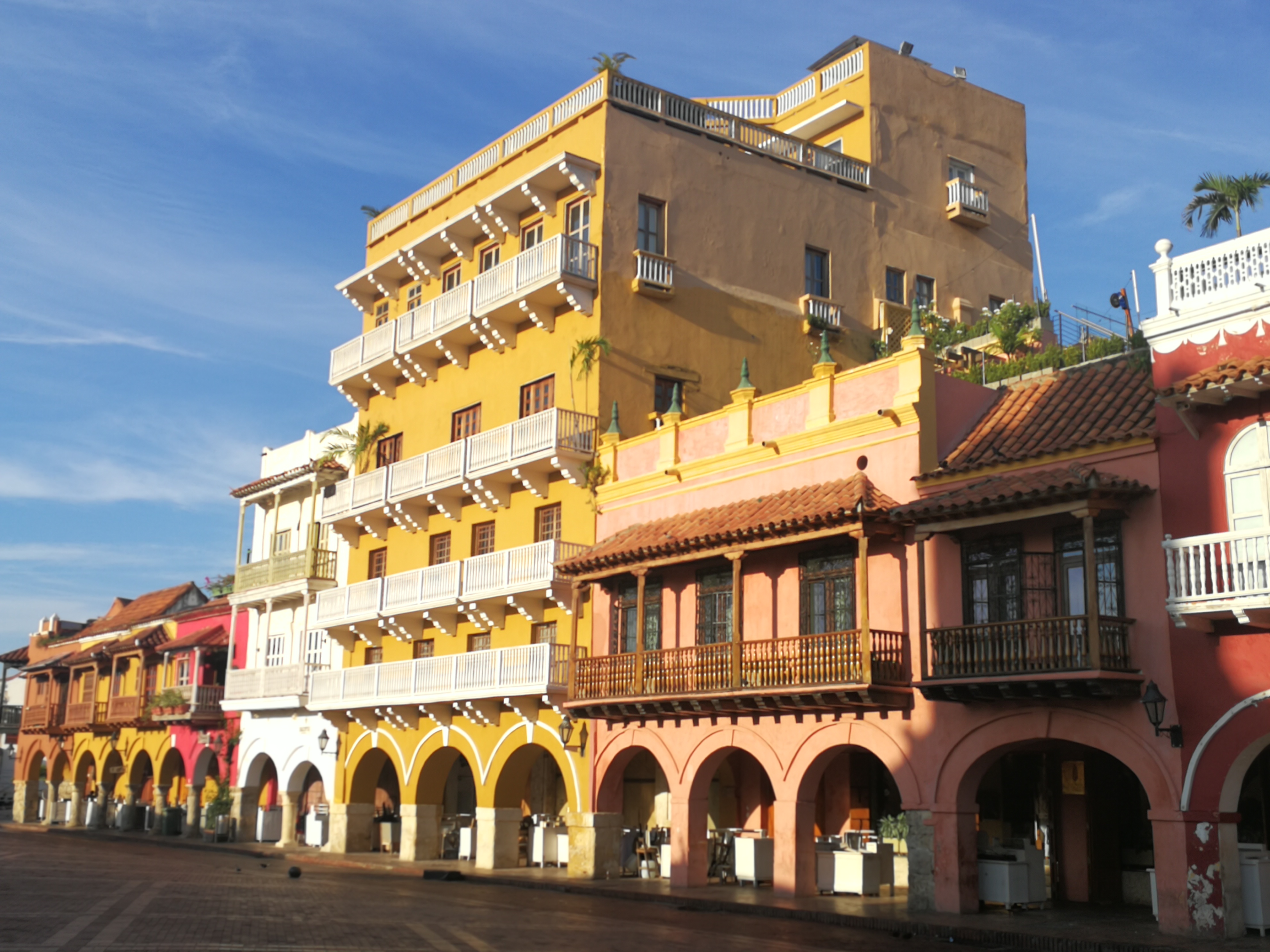
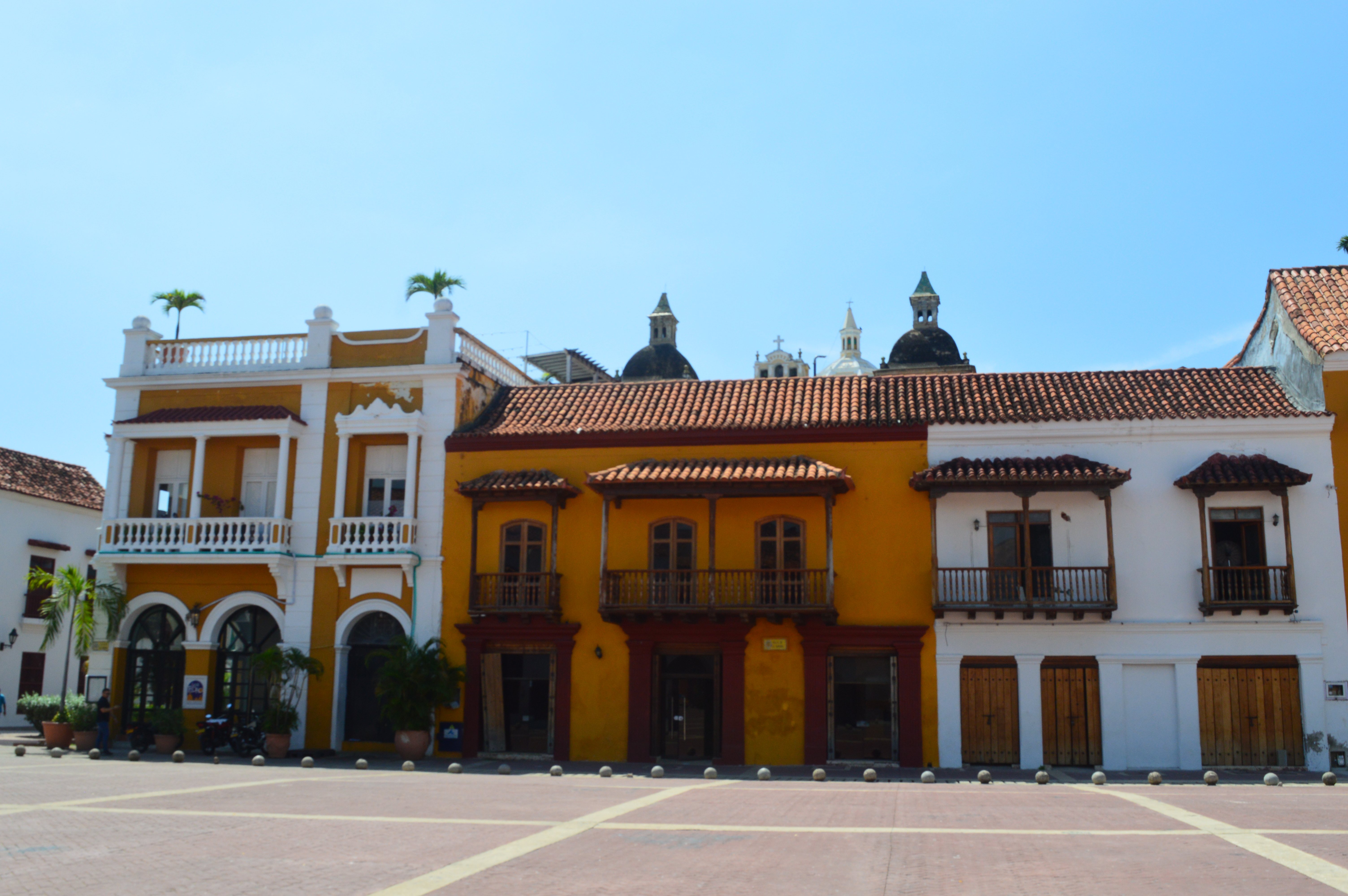
As we walked south down Carrera 7, we saw vendors frying empanadas and stalls selling mangoes, melons and bananas. This street leads to the Plaza de los Coches, in which stands the Monumento Torre del Reloj – a stone gateway with a spiral clocktower. The square was buzzing with tourists. A long arcade ran under a row of colourful buildings, with vendors hoping to tempt tourists with jewellery and crafts. We followed the street as it wound to the right and came to the quieter Plaza de la Aduana.

Continuing along Calle 32, the Santuario de San Pedro Claver caught our attention with its double steeple and old stone architecture. The church blended nicely with the bright yellow of the fancy Hotel Casa San Pedro.

We turned right up the Calle del Landrimal. The street thronged with people as we approached the Plaza de Bolívar. Buskers played in front of park walls painted with beautiful murals and street vendors walked around looking for customers. A Caribbean lady who looked to be in her late 70s smiled gently at the tourists, gesturing with weathered hands at her cart of paper fans. She was quieter than most of the vendors around her, but her presence stood out the strongest to me.

Some of the blogs I’d read about Cartagena had talked of feeling harassed by street vendors and vulnerable to mugging. We prepared for this through the standard travel practice of only carrying the money we needed and wearing money belts under our clothes, and used common sense in not having phones or cameras on show. Some might argue that having a strong man with me helped, but I can truthfully say that as a relatively good-looking woman with naturally very blonde hair, and having experienced a fair amount of street harassment (mostly while living in London), I did not feel unsafe nor harassed in Cartagena. (In fact, this was the case during my entire experience in Colombia.) Street vendors would approach with enthusiastic greetings trying to sell their items, but we found that a polite “Non, gracias” and a gently raised hand to wave them off was enough to prevent them persisting. I would describe the vendors as relentless in their attempts to earn a living, but respectful.

We turned left down the Calle de la Inquisición and then right up Carerra 3. The street led us to the Plaza de Santo Domingo in which we saw a monastery that dates back to the 17th Century.

Continuing along this street, we eventually came to the city wall. I climbed up and took in the ocean view. I knew it would be a great place to watch the sunset, but I wasn’t sure we’d be able to last that long; we had been sipping from a water bottle but the heat and humidity was giving us a light headache.

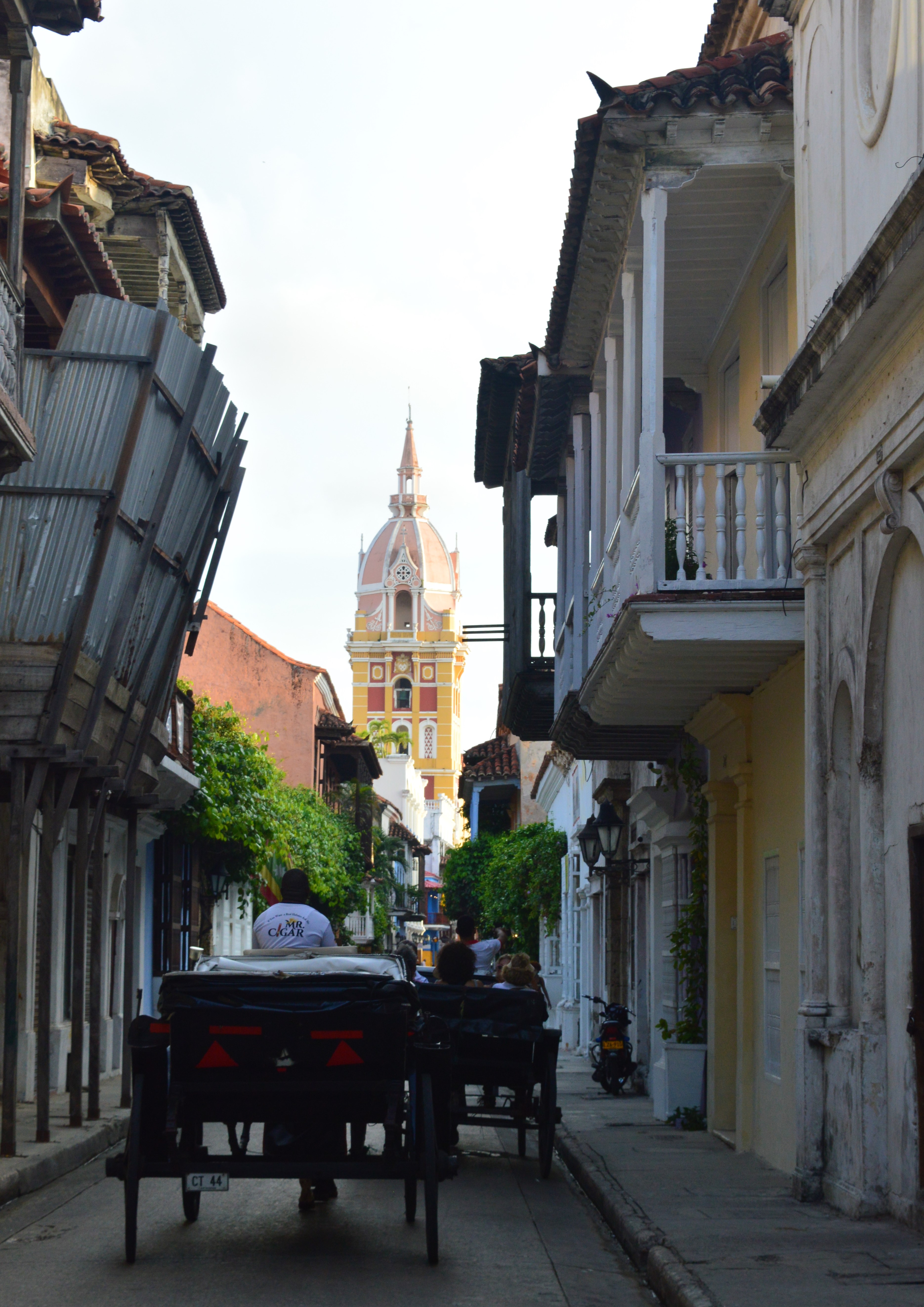
We joined the Calle de Don Sancho, grateful for the slight shade it offered. The stunning Catedral de Santa Catalina de Alejandría rose up ahead. Hearing hooves clip-clopping behind us, we stepped aside to let a carriage pass, led by a lean horse. Caribbean women wearing brightly patterned dresses sat relaxing in a patch of shade. They can be seen around the walled city selling fruit which they carry on baskets on their heads.

After passing the cathedral, we lost our sense of direction. We never bother buying data plans for our phone when overseas, and the Google Maps on my phone was not in sync. After wandering around for 10 minutes with no luck and a decreasing amount of patience, we approached a group of male police officers. I greeted one of them in Spanish. He responded with a smile and pointed us in the right direction to our hotel. We walked up the steps of Casa del Curato drenched in sweat.

After a cold shower and quick nap, we headed out for dinner. Horses trotted briskly through the streets, leading carriages. Located just up from our hotel, La Cevichería was a seafood restaurant I’d read good things about. We took a seat outside, wanting to be away from the noise of indoors. It’s generally advised not to drink tap water in Cartagena, so I prepared to order two bottles. Looking at the menu, I noticed that a bottle of mineral water cost 1000 pesos more than a pint of beer.

As we waited for our food, a street entertainer dressed as Michael Jackson arrived and set up a small stage on the sidewalk in front of us. Hubby and I glanced at each other, wondering if we should have sat inside afterall. The opening to ‘Thriller’ started loudly, startling us in our seats. As the entertainer broke into dance, we looked down at our food, not wanting to get his attention as he hip-thrusted and shamoned away. Our waiter watched from the doorway and grinned at us, evidently expecting that we would enjoy the loud music and random shrieks of “hee-hee!” I wished he had given us a warning.

After finishing his performance, the impersonator approached the diners outside the restaurant and asked for money. I grimaced as he came to our table. My husband quietly shook his head and apologized. I felt awful because this man was just trying to earn a living, but we had not wanted nor asked for what was ultimately a distraction to our dinner.

Upon viewing our bill, my eyes widened with surprise. At 160,000 pesos, it was more than I expected. A tip had automatically been added, and it didn’t seem justified for a disrupted dinner of a dish that was too salty and seafood that tasted like it had just been heated up out of the freezer. Having anticipated paying 120,000 pesos maximum, I had to dash back to our hotel to get more cash from the safe. We left the restaurant disappointed, feeling like we had been ripped off.

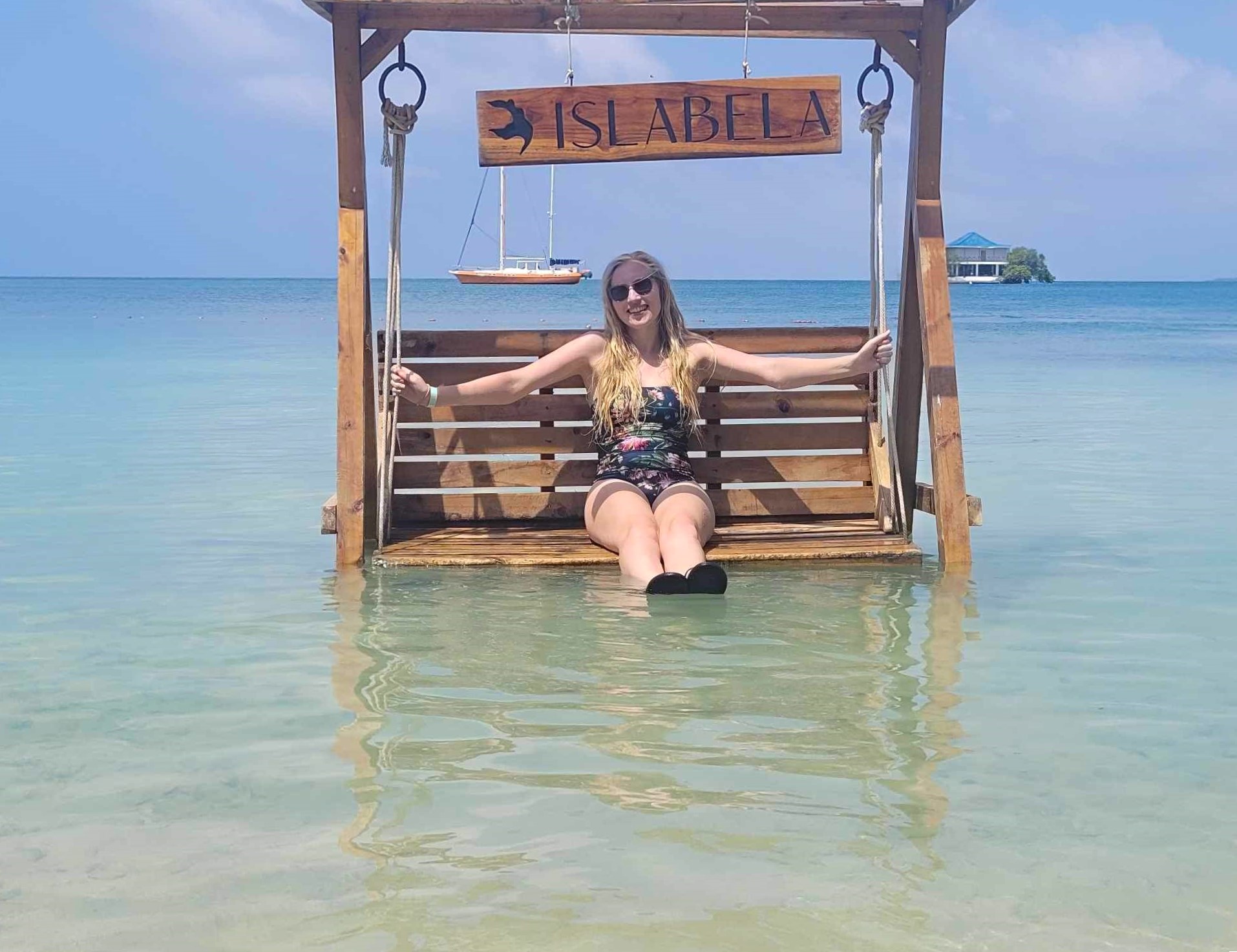
After a great sleep, we got up early. Somehow understanding my jumbled Spanish, the ladies in the hotel kitchen kindly gave us a banana and refilled our water bottle, before we strolled down Carrera 7 to Muelle de la Bodeguita. Keen for a day of swimming in the ocean, we had booked a day tour to one of the Rosario Islands. An archipelago about 36 kilometres southwest of Cartagena, the Islas del Rosario consist of 27 small islands. For a fair price of $200, our tour included the return boat transportation to Islabela Eco Hotel on Isla Marina, plus a welcome cocktail, beach bed (no worrying about others taking yours!), and lunch.

After boarding the boat, we were given lifejackets and the captain gave a briefing in Spanish. As we slowly passed through the harbour, hubby observed with interest a navy ship that carried the Finnish flag. The boat began to pick up speed as we entered wide ocean. Soaring through the sky were slender dark birds with long wings that formed an interesting shape. Looking like pterodactyls from the dinosaur age, they were quite fascinating to watch.

During the one-hour journey, I watched the water hoping to catch sight of some dolphins. Flying fish sparkled in the air as they dove up from the surface. Eventually we came to a small bay with turquoise-blue water. Friendly staff greeted us as we walked towards a collection of rustic umbrellas standing over beach beds in front of a small sandy beach. We dove in the ocean as fast as we could, and it was delightful. For lunch we had fried red snapper and coconut rice with salad, accompanied by a large jug of delicious iced tea. Tour participants had the option to pay extra to go snorkelling with a guide, but we were conscious of funds and felt content with doing our own thing.

The day was so relaxing and a welcome change of pace to balance out the hustle and bustle of Cartagena’s walled city. We spent a lot of time in the ocean, wanting to make the most of the opportunity to experience the warm Caribbean Sea. I observed an American couple avoid the water, instead taking work calls on their beach bed as a waiter from the resort brought them a burger and fries. It seemed like such a waste.

At 3 p.m., a bell signalled that it was time for us to return to the boat. The sun was starting to lower in the sky as we made our way back to Cartagena. Hearing the word “propina” in his final comments, I gave the boat captain a small tip and we headed back to our hotel.

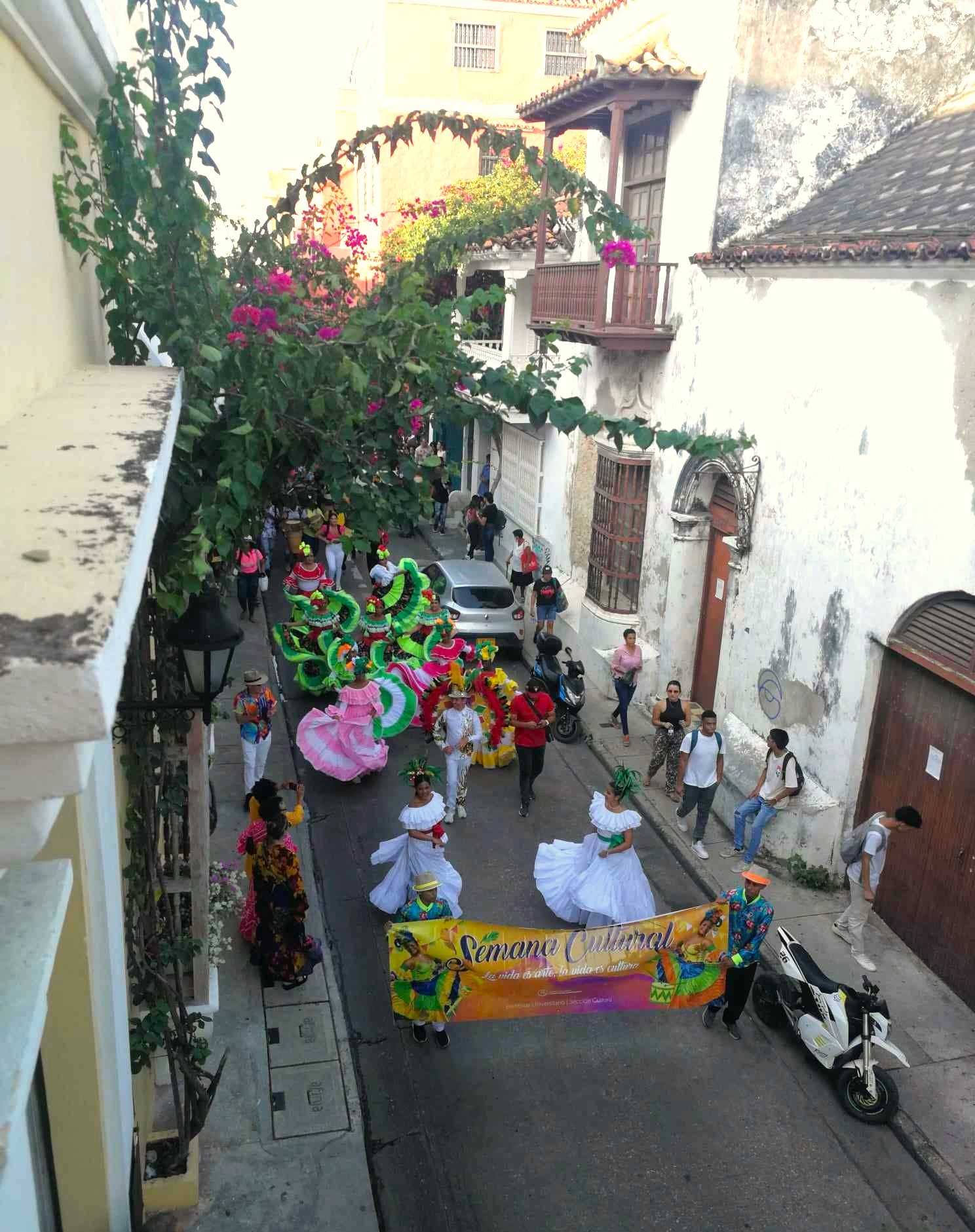
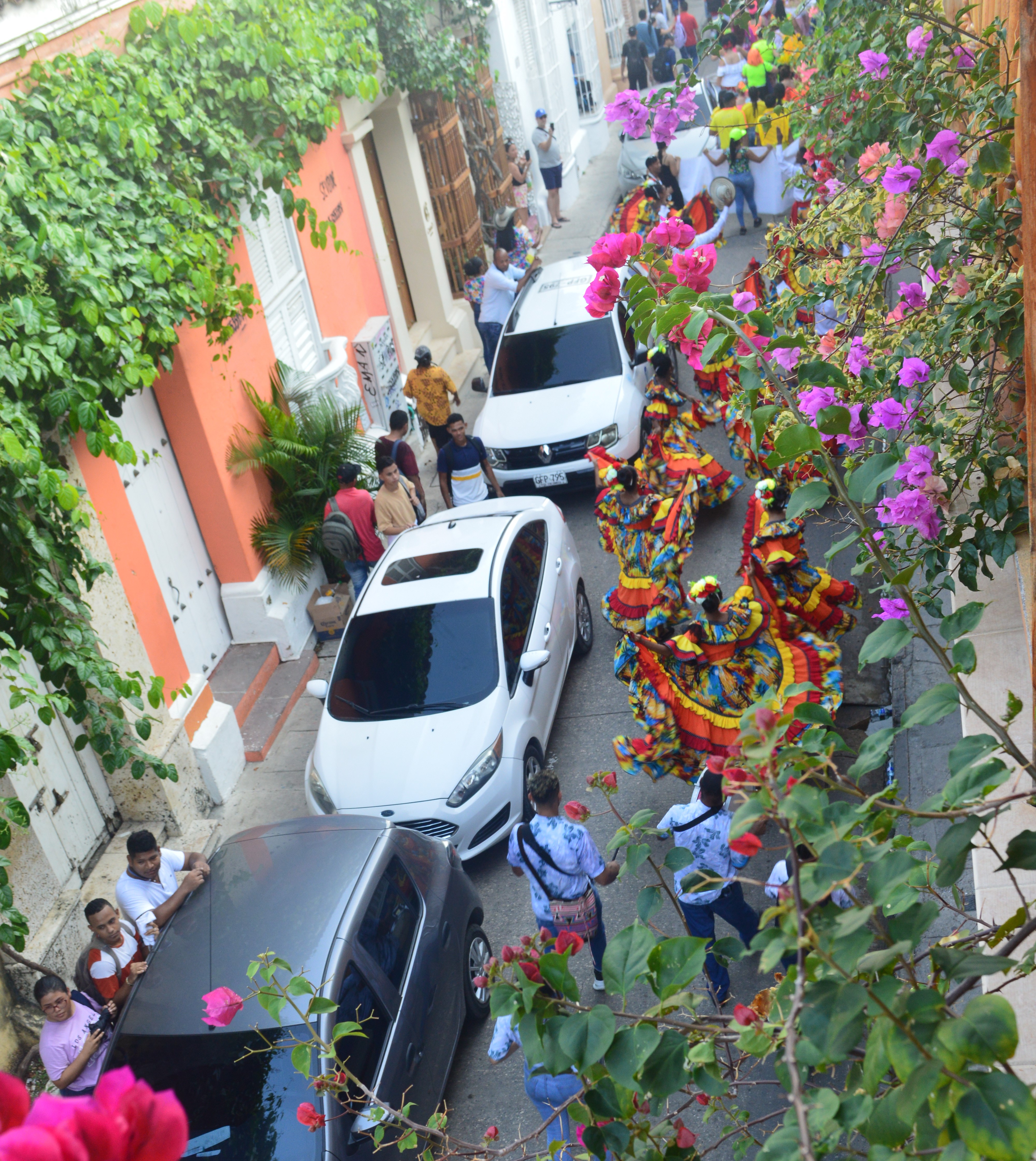
A stage had been set up in the Plaza de los Coches and a crowd was starting to form. As we walked up Carrera 7, we heard singing and drums beating. On approach to our hotel, a colourful procession came down the street, dancing and smiling as onlookers cheered and clapped. Our doorman was standing on the steps of the hotel, watching. I asked him what was happening. It was difficult to hear him above the noise, but I heard the word “carnaval.” I hurried upstairs to the balcony of our room and watched, entranced, as women wearing dresses with bold colours and vivid patterns danced in tandem, twirling in circles and swishing their skirts.

I had one of the best views in the house and I wasn’t even sure what it was for. But a quick bit of research told me that students from local colleges were participating in a cultural week – early festivities ahead of the official celebrations that take place each November to commemorate Cartagena’s declaration of independence from Spain. I felt so lucky to witness this special event, filled with vibrant colours and joyful faces. It was probably the highlight of my time in Cartagena!

The next day, we left Cartagena and travelled south-east to the small town of Santa Cruz de Mompox, before returning to Cartagena two days later. As we re-entered the city on a Sunday afternoon, I watched through my window as a lady around my age with crooked posture collected glass bottles and tin cans from a garbage bin and put them in a bag. Her son sat nearby, looking no older than five years old. He picked up an empty plastic Starbucks cup from the pavement and played with it in his hands, as if it were a toy. I looked away with a pulling in my chest, picturing children in Canada with their pretty dolls and shiny lego.

Our hotel for the third night of our stay in Cartagena was Hotel 3 Banderas, one block east from Casa del Curato. It stood on a pretty street of pastel-coloured houses and hanging blooms.

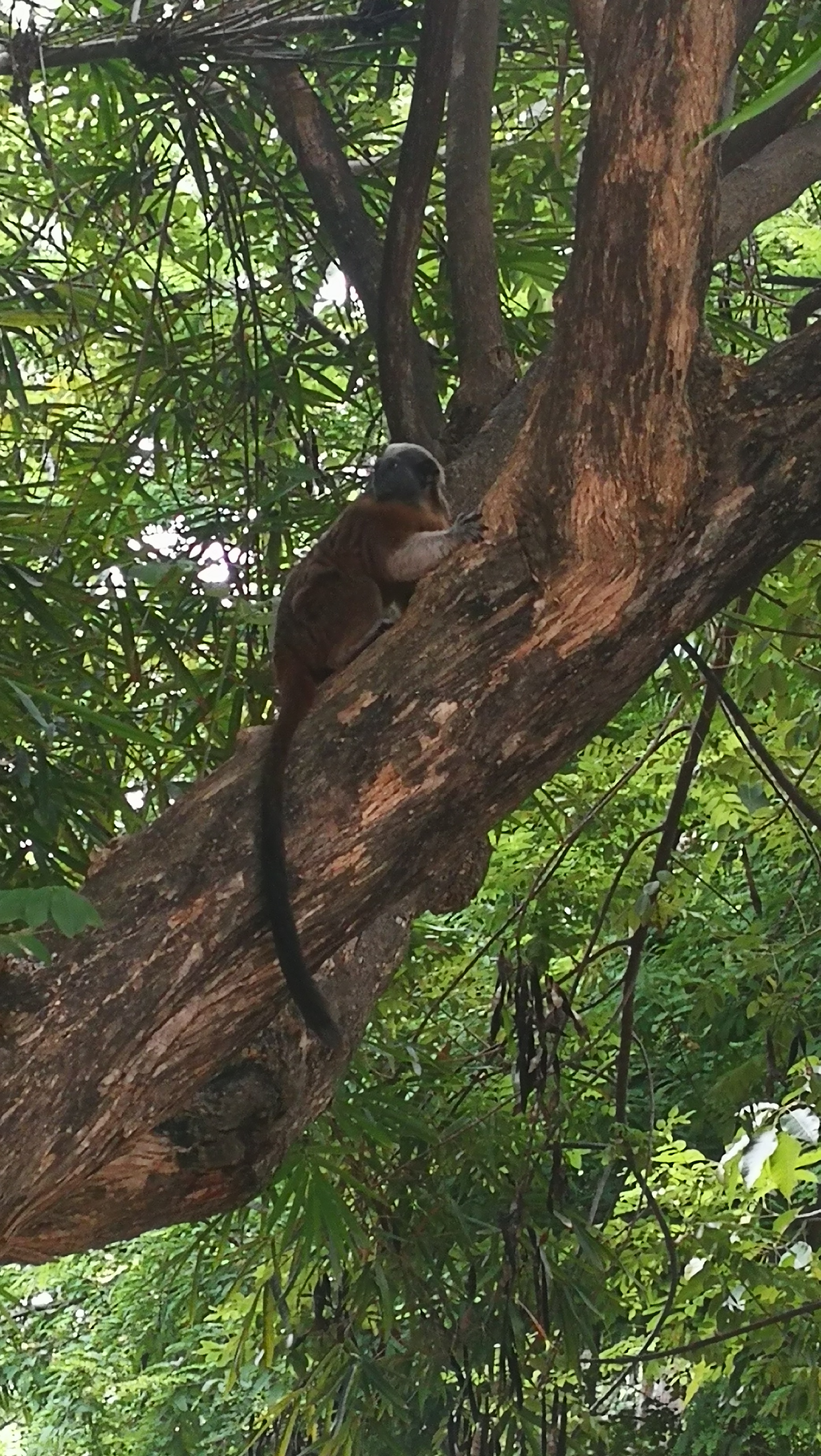
Wanting to avoid any overpriced restaurants, we went for tacos at Los Tacos del Gordo – a small, casual eatery on Carrera 7. We then wandered down to the Parque Centenario where we were fortunate to see several marmosets in the trees, scampering along branches playfully. Someone told us there were a couple of sloths in the park as well, but they are notoriously difficult to see without binoculars.

After spending several minutes admiring the monkeys, we walked out the opposite end of the park and down Calle 31. We were now in the neighbourhood of Getsemani, described on a few blogs I’d read as the somewhat grungier, more “hipster” part of the city. I went in with an open mind but did agree it had a slightly rougher feel to it, similar to looking at London, England, and comparing Peckham with Covent Garden.

A portion of Calle 31 is known as Calle de Las Sombrillas because of the canopy of umbrellas that hang above the street. There are a few of these streets in the neighbourhood, and as you can imagine, they are very popular with Instagram lovers.

Rappers made rhymes as we walked up streets showcasing colourful artwork. After taking a look at the Plaza de la Trinidad, we headed back down through the Parque Centenario (the monkeys were too cute to not see again!). The Torre del Reloj was still surrounded by tourists as we made our way back to our hotel.

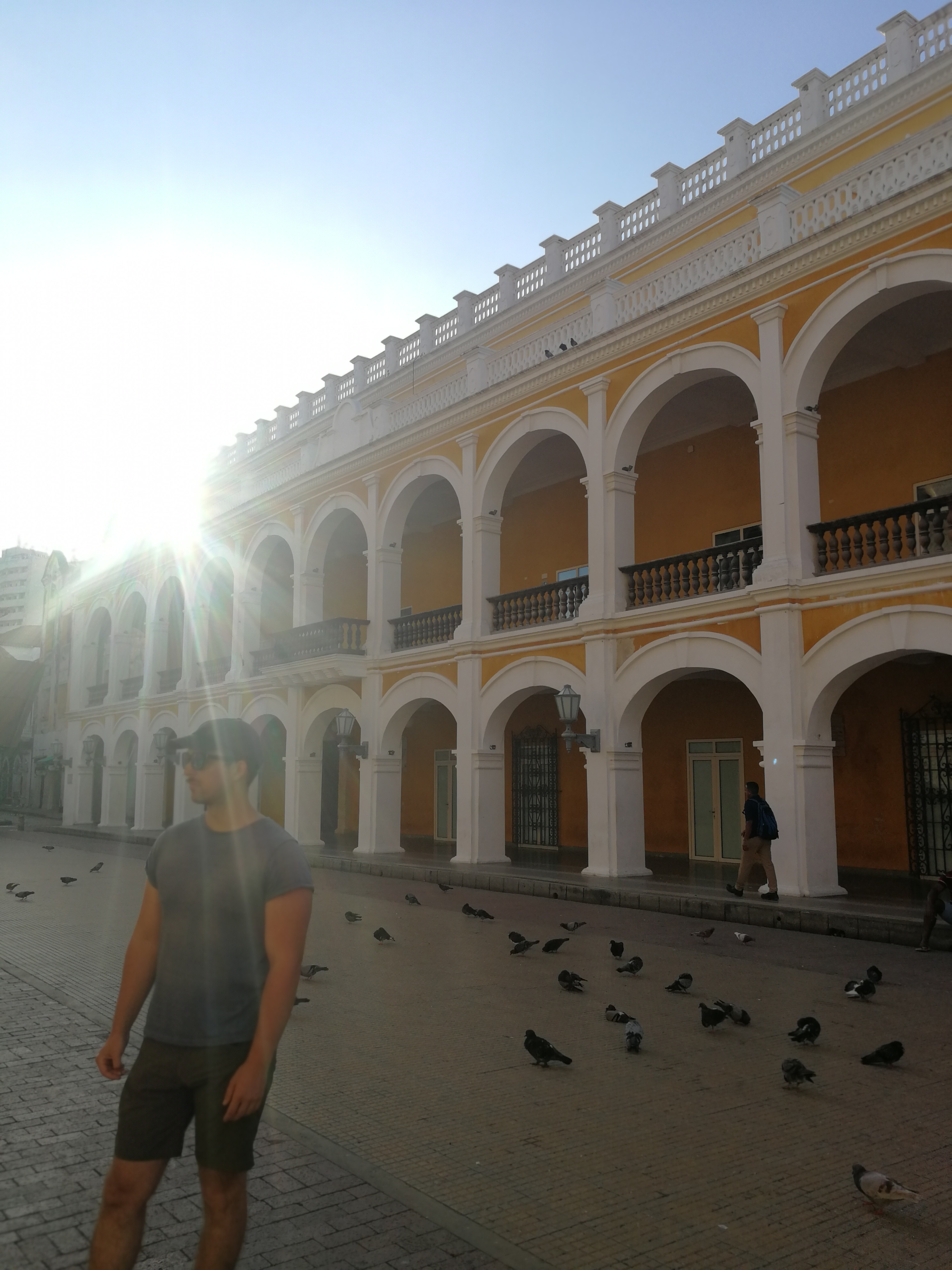
We woke early on our final morning in Cartagena, prepared for an upcoming flight to Panama City. A decision to take a final stroll of the hotspots turned out to be an excellent choice, because at 7 a.m., the city was empty. No tourists, no vendors. We revisited some of the places we had passed by previously, this time able to take a longer look. With no disruptions and a more tolerable temperature, we could greater appreciate the beauty of the architecure and art work inside this walled city.

Grateful for an unexpected 30 minutes of peaceful exploring, we returned to our hotel to pack up our things before heading to the airport. I left Cartagena glad that I got to see it for my own eyes, but reminded that there is always more to a city than what the photos show.

Cartagena was a vibrant city painted with various colours. The walled city was abundant with rich, happy tones – sights that most tourists would see and remember. But it was also speckled with muddy spots – small details that some tourists wouldn’t notice, but that caught my eye and were hard to forget. And on the outskirts of this tourist haven was a greyer canvas that illustrated scenes of struggle and misfortune.

Price-wise, Cartagena was a city that seemed to take advantage of its popularity with tourists. This left me conflicted – in some ways frustrated; in others, mindful that the residents here don’t have much. The prevalence of street vendors caused a complex array of emotions – sometimes sympathy, sometimes annoyance, sometimes sadness. But the strongest emotion was probably admiration, for their tenacity to keep doing what they could to provide for themselves and their families.

A few bloggers I’d read had said Cartagena was not their favourite place to visit in Colombia, and after my own experience, I can say I feel the same. I do not regret visiting it at all; it’s a vibrant city with a Caribbean culture that permeates through the streets, and overall I enjoyed witnessing the different customs and ways of life. The architecture within the walled city is beautiful and certainly worth seeing, and a trip (ideally an extended one) to the lovely Rosario Islands is a must if in the area. However, in any country, the most touristic cities generally do not give the most authentic representation of a country’s culture. To get a better glimpse of the “real” Colombia, it would be wise to combine a visit to Cartagena with time in smaller, quieter towns and communities.

Unknown's avatar

A Local’s Guide to Spending 3 Days Around Oak Bay, Vancouver Island

If you’re spending time in Victoria on Vancouver Island and are looking for places to visit outside of the downtown hub, this guide is for you. For those that enjoy recreation and nature and don’t have a car, there are several interesting neighbourhoods to explore on foot outide of the city centre.

Located on the traditional Indigenous lands of the Songhees Nations, the localities of Gonzales, Oak Bay, and Uplands can all be considered affluent neighbourhoods. With leafy streets, pretty parks, ocean views, and sandy beaches, they are pleasant areas in which to unwind and enjoy island living.

Read on for ideas on how to spend 3 days in these picturesque neighbourhoods.

Day 1:

After enjoying a sleep-in, head to Good Earth Coffeehouse on Oak Bay Ave for a quick breakfast. It’s here that a friend introduced me to vanilla rooibos lattes. I’m not a huge tea drinker but these are delicious if you’re looking for something without caffeine.

After breakfast, walk down Foul Bay Road, admiring the grand houses and saying hello to the deer that can often be found snacking on someone’s lawn. At Crescent Road, cross the crosswalk and turn left. Shortly on the right, there’ll be a small parking area. Some stairs lead down to Gonzales Bay, a sandy beach that makes a good spot for an ocean dip and ball games. If you were to wake up and see this beach for the first time, you’d be forgiven for thinking you were in California. The sight of snow-capped mountains in the distance across the ocean will remind you that you’re further north! I recommend visiting Gonzales Bay on a weekday as it’s a very popular beach during summer weekends.

Gonzales Bay

After you’ve had your fill of beach time, head back to Crescent Road and continue right. The road becomes King George Terrace as you walk up a hill that winds to the right. After a couple hundred metres, you’ll come to a rest area with parking spaces. If you feel like it, follow the path down to Trafalgar Park for a breezy view of the ocean.

From here, continue along King George Terrace as it winds downhill. Once the road flattens and it’s safe to do so, you’ll want to cross to the other side. Just next to the start of Sunny Lane is a narrow footpath that leads up to Walbran Park. The path involves a set of stairs and is quite a workout (not accessible for wheelchairs, sorry!) At the top, cross the road and follow a path to the viewing platform. The panoramic vista that includes views of the San Juan Islands of the US will be worth the thigh burn from the stairs!

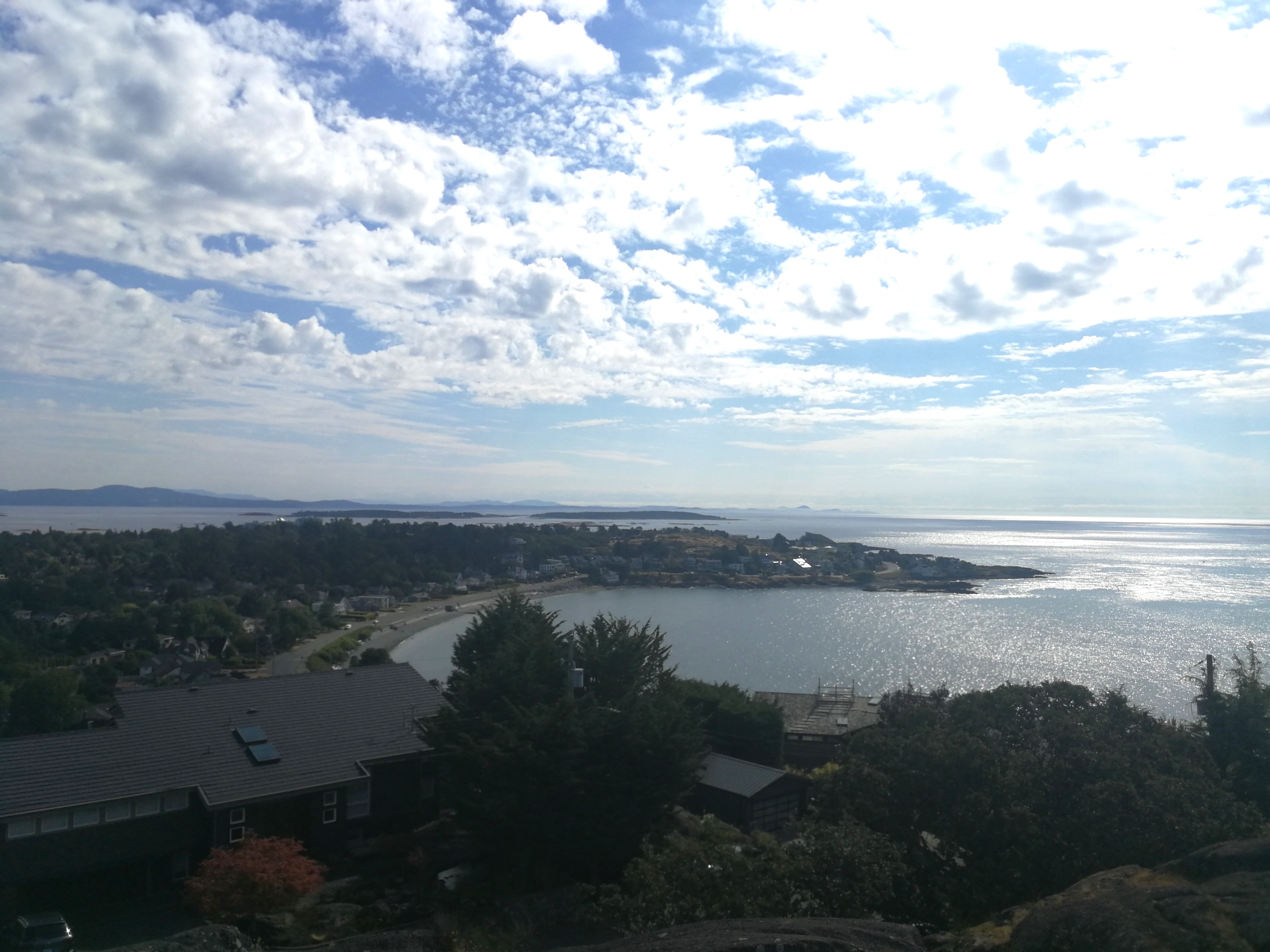
Views from Walbran Park

If you feel like returning here during your trip, Walbran Park is an excellent spot to watch a sunset!

From this park, you can continue onto another nice viewpoint by walking left along Denison Road. After a few hundred metres, you’ll come to the entrance of Gonzales Hill Regional Park. Home to a striking white observatory, there are great views of glittering ocean, the leafy neighbourhoods of Fairfield and James Bay, the Westshore communities, and distant mountains of Sooke.

Views from Gonzales Hill

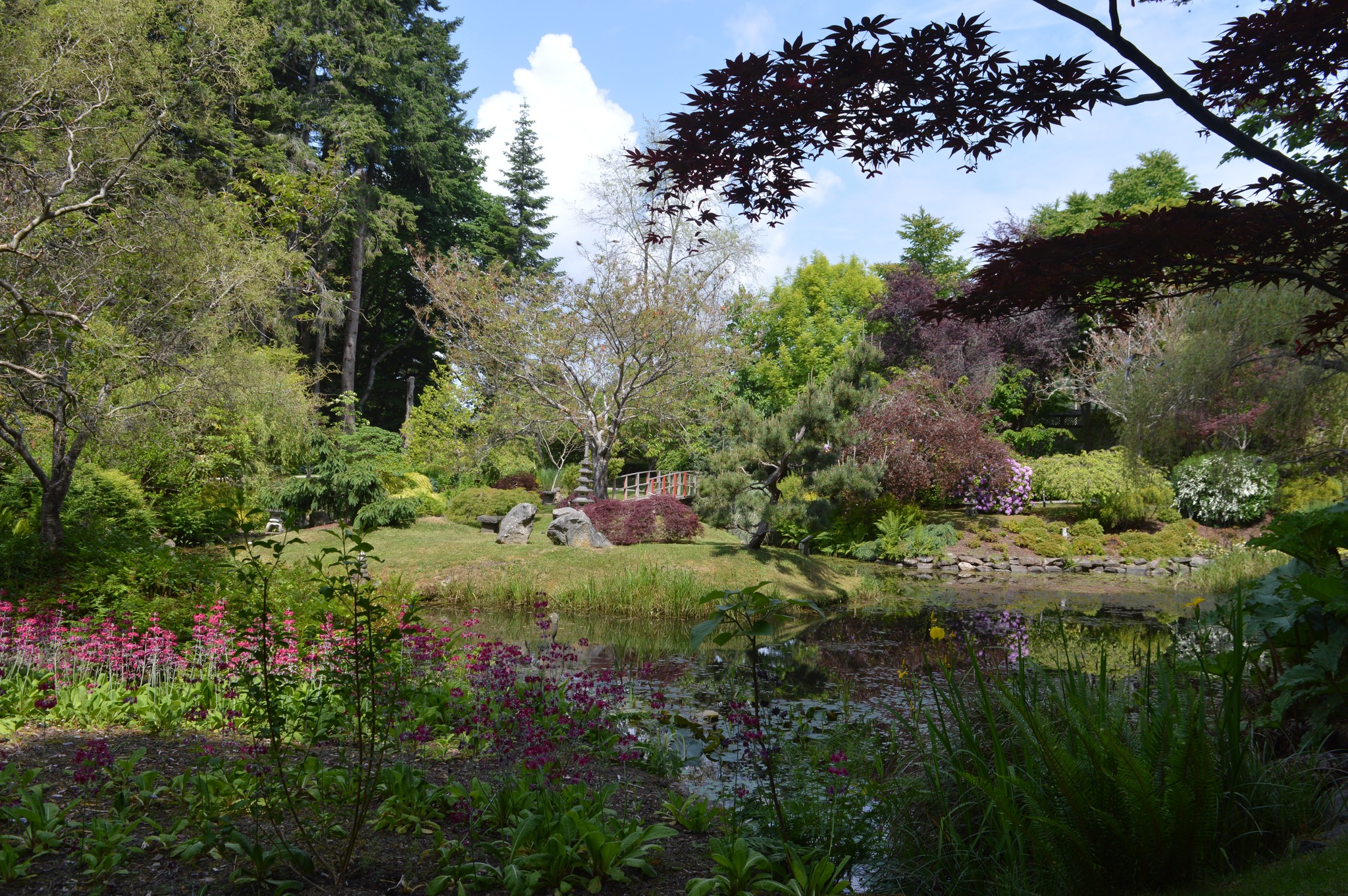
After all that walking, it’s time for a break and some cake! Exit Gonzales Hill via the path down Fairfield Place and, once on Fairfield Road, cross and walk down towards Foul Bay Road. On the right you’ll see an entrance to the Abhkazi Gardens, open everyday 11am-5pm with entry by donation. While they don’t have the same size and splendour as the world-renowned Butchart Gardens, these gardens are a lovely, tranquil place to wander through, without large crowds and the constant click of cameras. You might even see the small turtles by the pond!

The Teahouse within the gardens offers a few different menu options for high tea, provided in a cozy and non-pretentious setting. I had the afternoon tea last year and it was delicious! The final tea sitting is at 4pm. (Note that there is a dress code.)

Day 2:

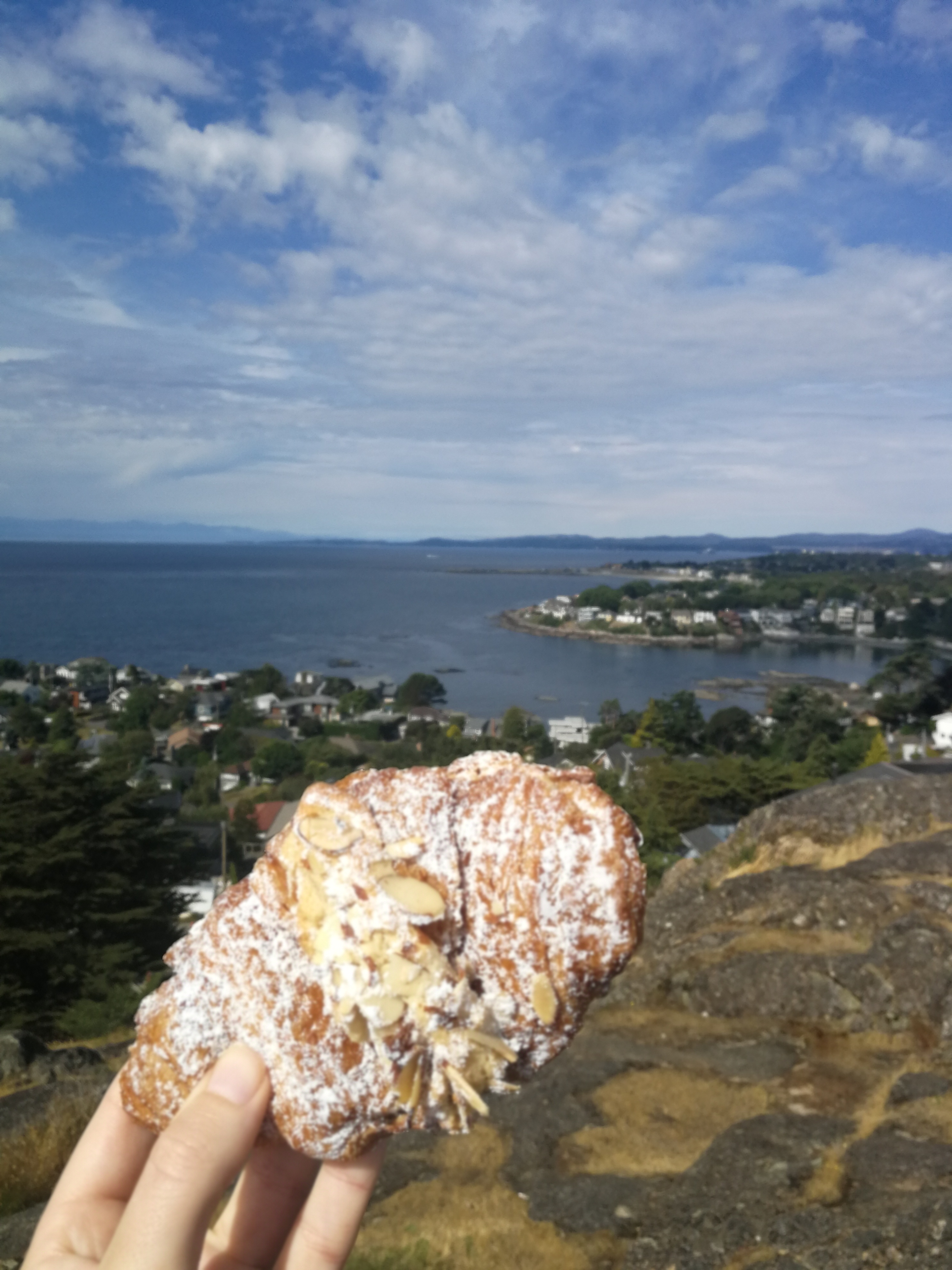
Start your day by stopping at Demitasse Cafe & Garden Centre on McNeill Ave. As well as selling plants, this sweet little cafe has yummy savoury and sweet pastries, including gluten-free options. The double-baked almond croissant is one of my favourites. Fun fact: if you read my book, this cafe is featured a few times in part 3!

From the cafe, walk south down Hampshire Road, turn left on Lafayette St, and then turn right down Monterey Ave. The road will lead you to Beach Drive with McNeill Bay in front of you. This wide pebble beach is popular with dog walkers, but not so popular for swimming due to the prevalance of seaweed and fairly choppy waves.

Walk along the esplanade before turning left up Transit Road. After a hundred metres or so, there’ll be a sign on the right indicating the Centennial Trail. Follow the narrow path that’s cloaked by trees and you’ll come to Anderson Hill Park. Looking over NcNeill Bay, it’s a good place to sit and eat your almond croissant!

Breakfast with a view!

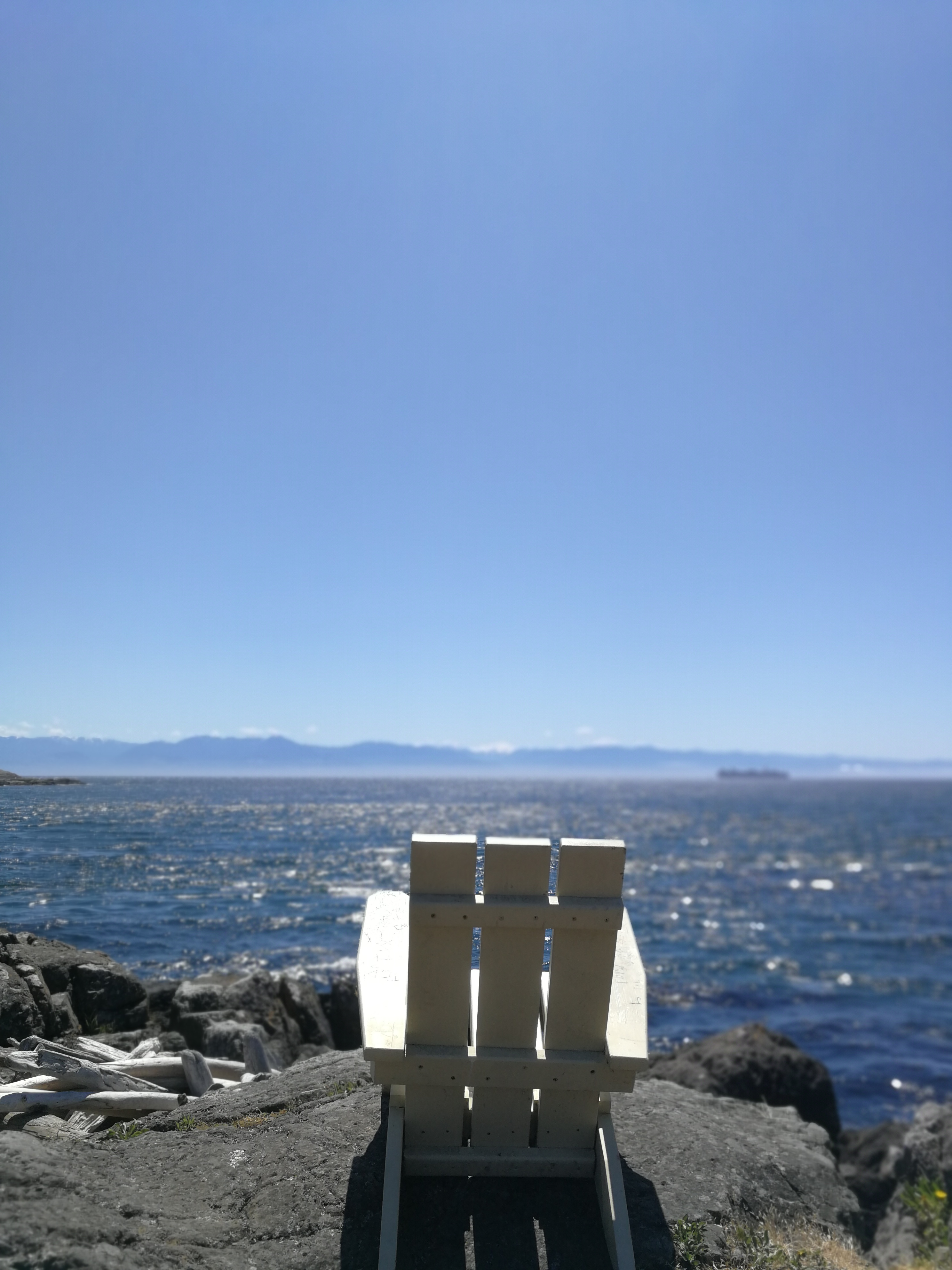
Go back the way you came down Transit Road until you return to Beach Drive. Cyclists will often pass by (some panting more than others!) as the road winds uphill to the right. At a rest area, you’ll see a small pebble beach below and some rocky bluffs with a few wooden chairs on top. This area is called Kitty Islet. Follow the path down and take a seat to enjoy a couple chapters of a book or watch the boats go by.

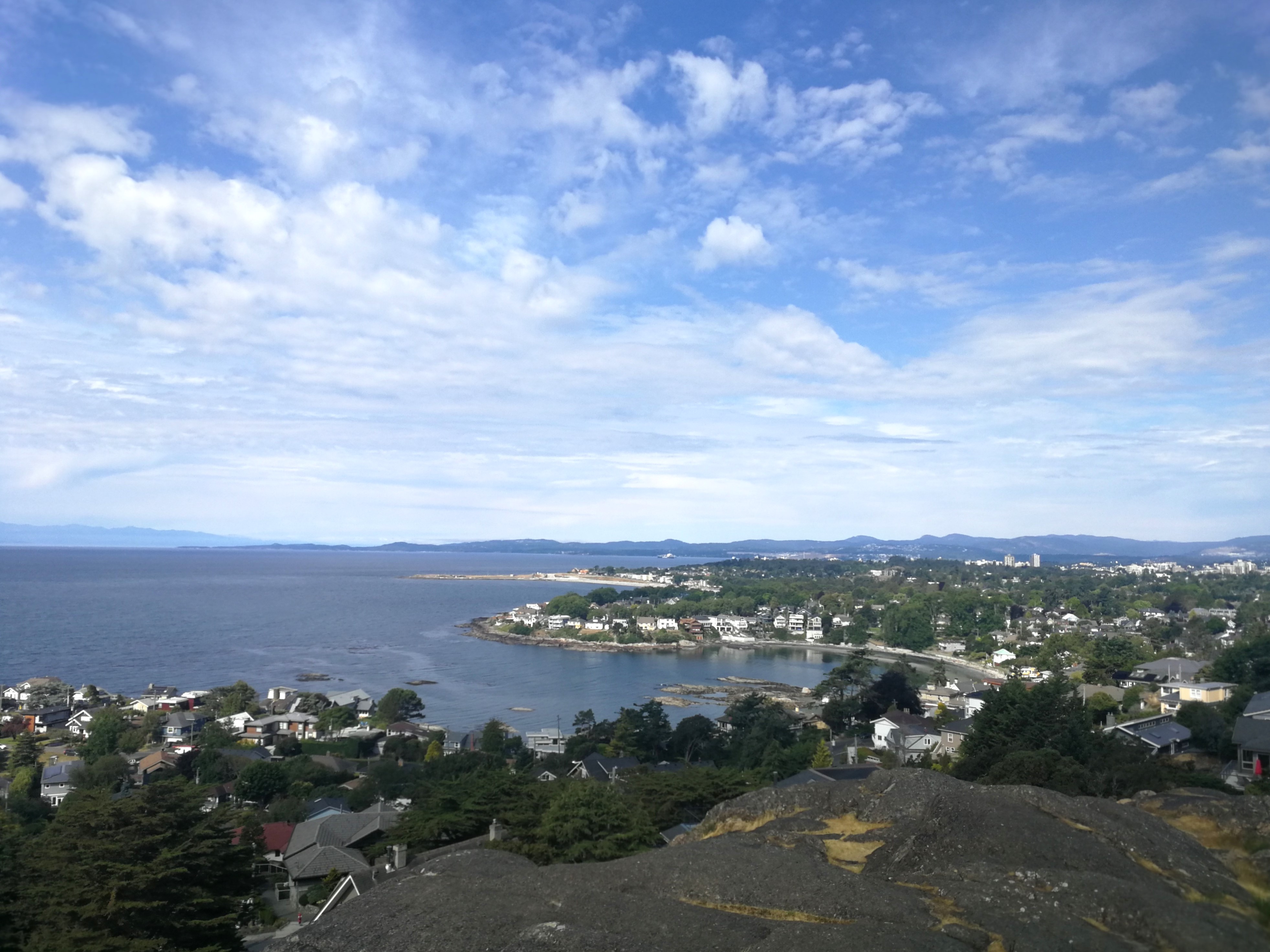
Views from Kitty Islet

Once you’re ready to move again, continue along Beach Drive. Soon you’ll be surrounded by the neatly manicured lawns of Victoria Golf Club. Enjoy the ocean and mountain views as you walk – just keep an eye out for flying golf balls!

Beyond the golf course, you’ll eventually pass Oak Bay Beach Hotel, popular for it Boathouse Spa. A few years ago, some coworkers kindly gave me a gift card which I used to book a massage. At the time, guests received complimentary access to the sauna and mineral pools after their treatment. Now you have to pay an additional $30 to access them. If you have the cash to splash, I recommend booking yourself an appointment for a true self-care treat. Alternatively, you could stop for some lunch in the Hotel’s Faro restaurant, which specializes in Neopolitan-style pizzas.

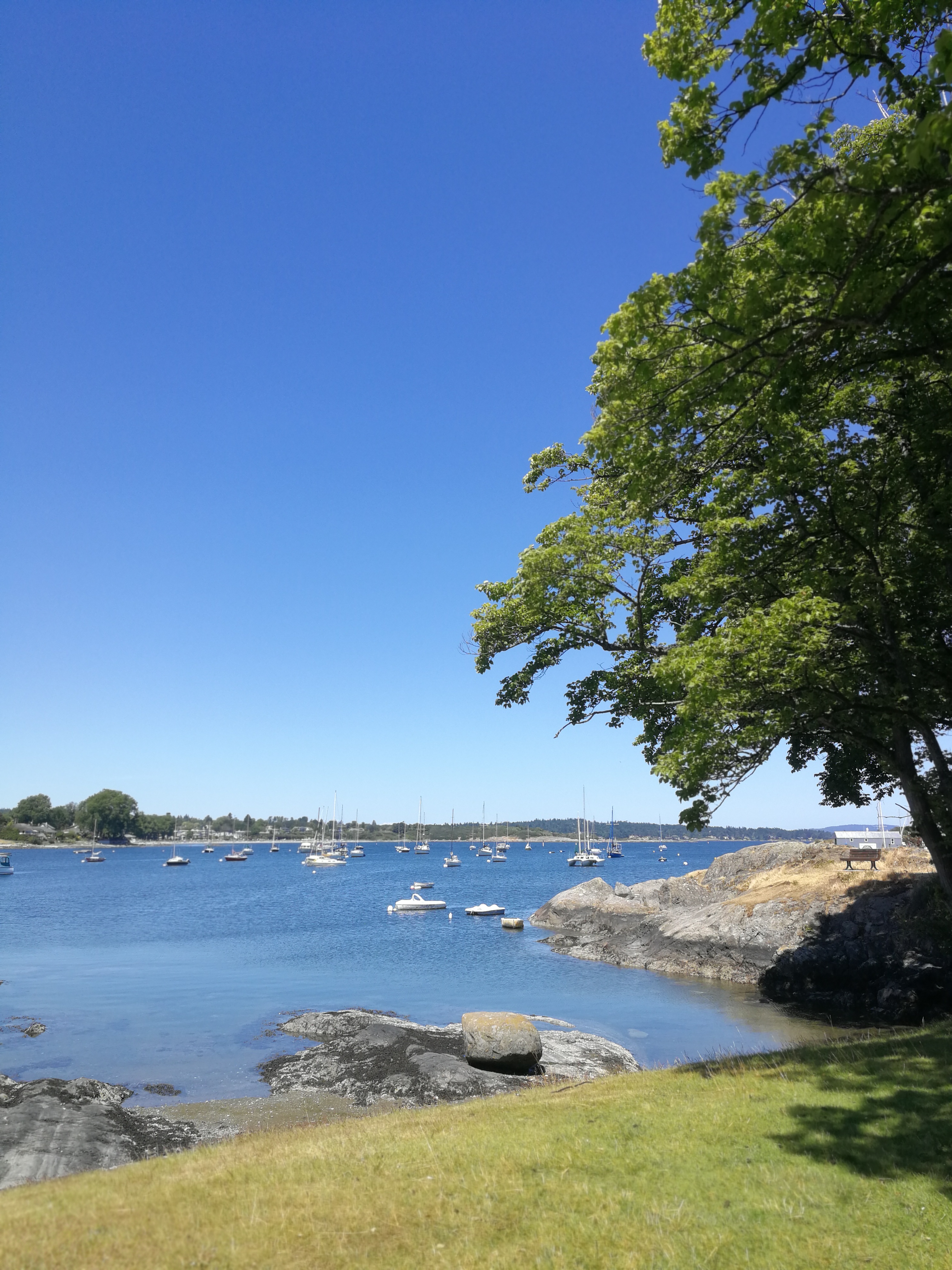
Continuing along Beach Drive, the interestingly named Turkey Head Walkway is by Oak Bay Marina. Seals can often be seen swimming by the shoreline. Around here, you can book a fishing charter or rent a kayak or canoe to explore the calm surrounding waters. A little further along is Queen’s Park – a pretty, grassy park good for picnics, reading, or just enjoying the view of boats bobbing up and down.

Queen’s Park

When you continue along Beach Drive, you’ll pass a shallow bay and then see Haynes Park on your right. Turn left up the crosswalk away from the park and follow the path that goes up some steps and joins Oak Bay Ave. This bustling main street has many businesses to keep you entertained – a chocolate shop, florist, garden centre, art shop, bike shop, and fashion boutique to name a few. You’ll often see retired locals sitting with their dogs outside a coffee shop, chatting away. Popular dinner options include the Penny Farthing Pub, Vis-a-Vis, Bon Sushi, Deadbeetz Burgers, and Tapas on Oak.

On the second Wednesday during the summer months, the Avenue comes alive with Oak Bay Night Market. Live musicians play as local vendors sell crafts, jewellery, art, jams, honey, cheese, and more. A barbecue sizzles and food trucks sells various dishes, from Greek wraps to poutine to curries.

Day 3:

Grab a beverage and breakfast item to-go from Pure Vanilla Bakery on Cadboro Bay Road, or alternatively, sit down for a meal at The Village restaurant on Estevan Ave. I haven’t eaten at The Village myself, but everyone I know that’s eaten here has said good things.

Continue down Estevan Ave and the sight of sparkling water will come into view. This is Willows Beach, one of Victoria’s most popular places for sunbathing, picnics, paddleboarding, and an ocean dip. Runners will often jog along the esplanade and on an evening, seals might pop their heads up out of the water curiously. On a clear day, Washington’s Olympic Mountains rise up formidably in the distant west. The beach area also has a playground and public washrooms. Dogs are not permitted on Willows Beach between May 1st and September 30th. If you visit outside of this season, you can enjoy the sight of dogs galloping gleefully along the sand, making furry friends.

After catching some rays and having a splash, wander east along the espalanade and walk up the stairs. Following the path to the right takes you to Cattle Point. Where does this name come from, I hear you ask. Well, during the late 19th Century and early 20th Century, this area was the destination for unloading cows from steamships, and the cows would swim a short distance to shore (a funny image to picture, I know!) No cows are unloaded today and instead there is a boat launch. The east side of Cattle Point looks out towards Cadboro Bay, the next neighbourhood along. On a clear day, you’ll get a striking view of Mt. Baker in Washington State.

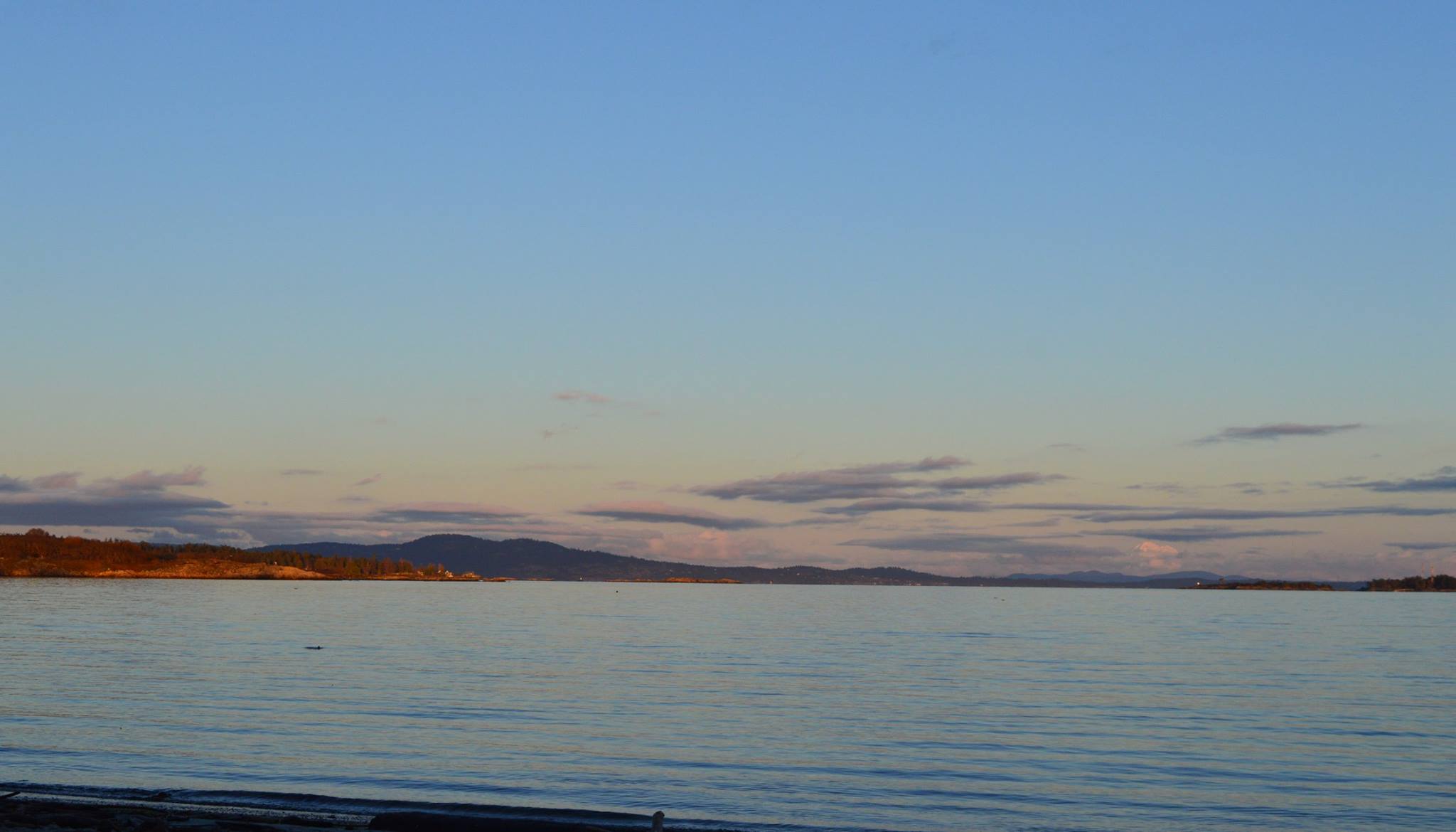
Willows Beach and Cattle Point are pretty places to visit during the evening, with the sky turning a soft lilac as the sun goes down. They are regularly featured in my book!

Evening view from Willows Beach

Cattle Point is part of Uplands Park. If you follow the loop round until you rejoin Beach Drive, across the road you’ll find an entrance to the main section of the park. It’s a peaceful oasis with various flat trails through Garry Oak meadow. Whenever I come here, I think it would be a great location for an engagement shoot or wedding photos.

For lunch, walk back along Beach Drive with its million-dollar houses and turn right back up Estevan Ave. Willows Galley is a family-run fish and chip shop open 12pm-6pm except Mondays and Tuesdays. As someone who comes from the country of fish and chips, I can confidently say I approve! The menu also includes burgers, poutine, and ice cream. Just up the road past Musgrave St is Lokier Garden, a quiet setting in which to enjoy your meal.

Within Estevan Village there is a florist, jewellers, barber shop, women’s gym, and clothing consignment store. You’re bound to see customers outside the popular Ruth and Dean bakery and cake shop, and near here is Bungalow gift shop which sells a variety of items including home decor, stuffed toys, soaps, and cards.

When it comes to dinner plans, Nohra Thai Kitchen on Estevan Ave has excellent reviews, as does the nearby Taiwanese restaurant AsUsual Cafe. Another option is the fancy farm-to-table restaurant Sedona, on Cadboro Bay Rod. Otherwise, The Old Farm Market on this road has a good selection of local products if you’d like to make your own dinner.

*
If you’re planning a trip to Victoria, I hope you’ll give yourself a few days to explore some of the neighbourhoods outside of the downtown core. I’ve lived in or around Oak Bay for most of the years I’ve lived in Canada, and the places I’ve mentioned in this post never lose their charm. If you like going for walks and finding scenic views, you’ll love exploring these areas!

Unknown's avatar

Me Time on Mayne Island

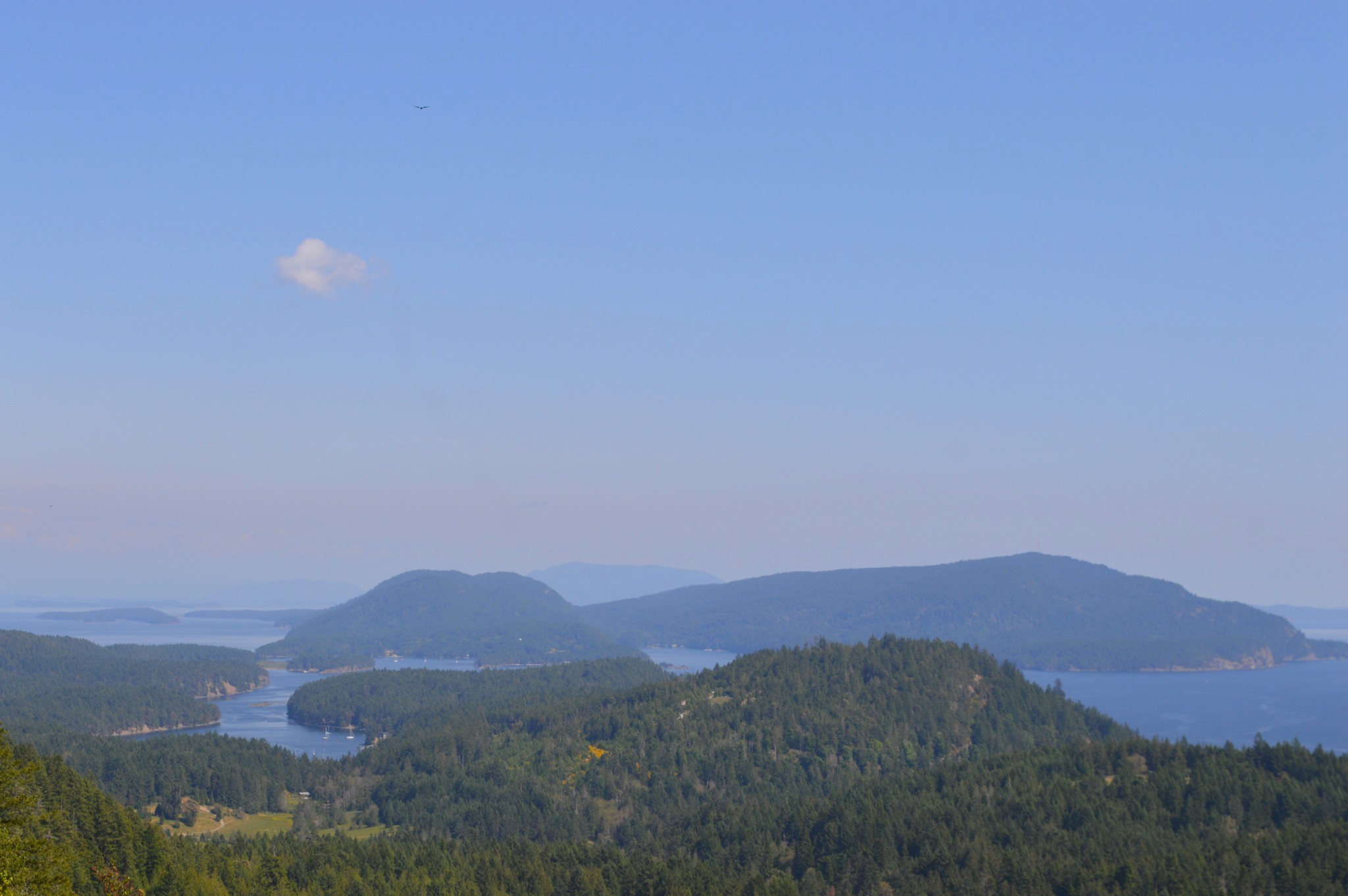
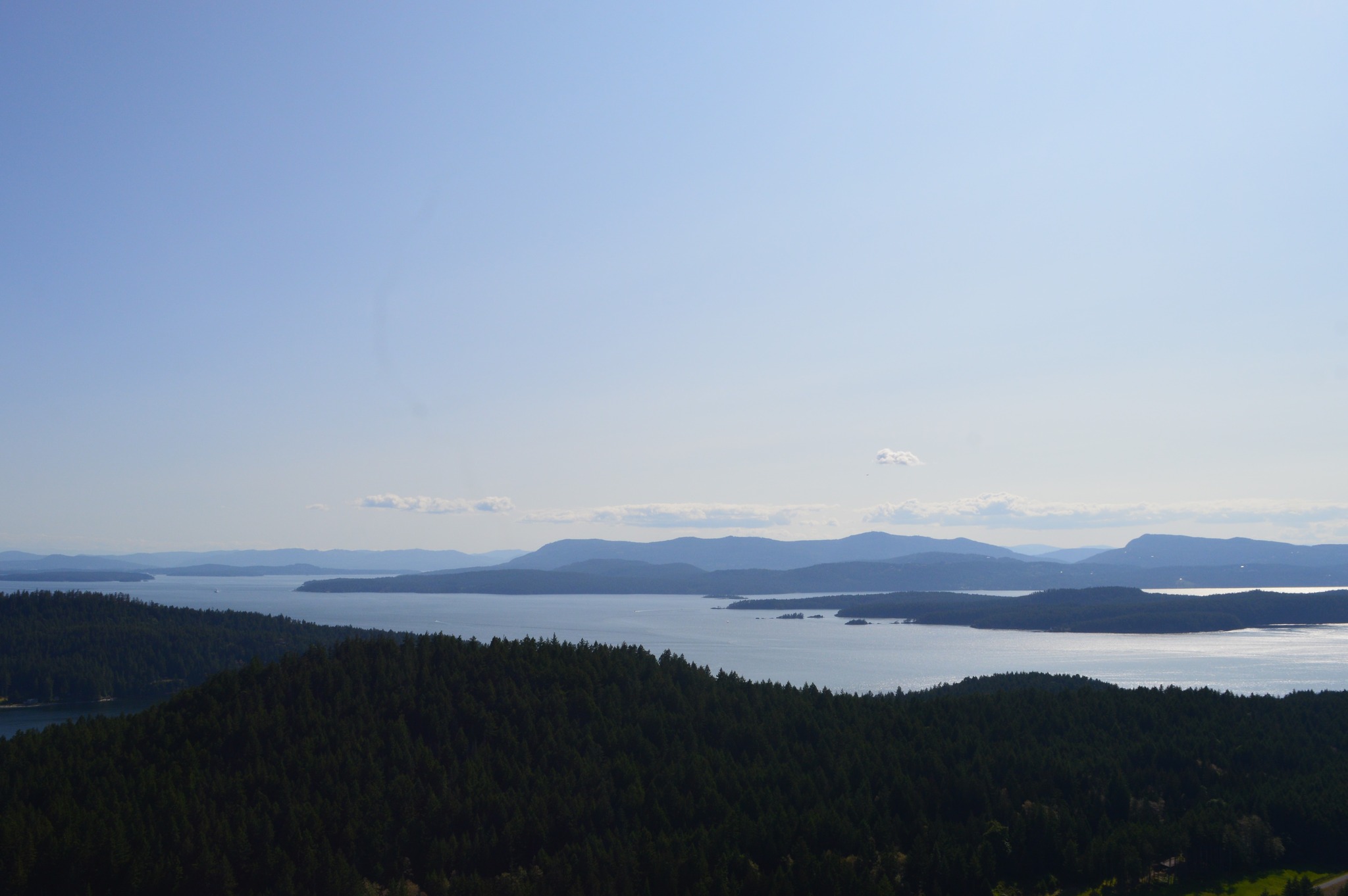
For my birthday this year, I decided to give myself the gift of alone time and plan a short trip somewhere. I opted for Mayne Island, one of the Southern Gulf Islands a 55-minute ferry ride away from Swartz Bay on Vancouver Island. One of the smaller of the Gulf Islands, Mayne’s Indigenous name is SḴŦAḴ in SENĆOŦEN, the language of the W̱SÁNEĆ people who are part of the Coast Salish Nation.

My idea of “me time” involves being outside exploring woods, strolling along beaches, and hiking up mountains before a quiet, relaxing evening of watching the sun go down. Read on for my observations of places I explored while on Mayne Island!

If you do a simple Google search for trails on Mayne Island, you won’t see many options appear. During the journey with BC Ferries, be sure to grab a map as this will highlight the various trails that are available.

After driving out of Village Bay ferry terminal, I took a right down Dalton Rd and headed towards Dinner Bay Park, which is home to the Japanese Garden. A little oasis, the garden was beautifully serene. It was created to honour the large community of Japanese people that lived on the Island between 1900 and 1942, before they were interned as a result of the Pacific War. Entrance is free but there is a donation box. I dropped in a $5 bill which was the only cash on me and a small gesture of appreciation for the volunteers who do a great job maintaining this gem.

From Dinner Bay Rd, I drove down Mariners Way, turned right onto Marine Drive, then joined the narrow Navy Channel Rd. I parked off road and walked down to the beach that is known as Conconi Reef Community Park. The ferry from Saturna Island will pass through Navy Channel en route to collect passengers from Mayne. As I walked back up from the beach, a starling on the path tottered ahead, only to stop and look back at me, hop a few more paces, then stop again. It did this for a minute or so, as if showing me the way to go.

Something I really liked about Mayne was the limited signage. I realize this might seem like an odd thing to like. Indeed, when I’d looked on Google Maps for ideas of where to go, some people had written reviews complaining about the lack of signage. To me this is a sad reflection of a modern society in which people want things instantly and with zero inconvenience. It’s as if humans have reached such a point of anxiety that they’re afraid to get lost or make mistakes, and don’t know how to be resourceful. Maybe it’s childhood memories of my parents turning the car round while road tripping through a foreign country, but I enjoy the process of trial and error. It feels more adventurous. And hey, it’s made me great at 3-point turns!

I parked my car off Simpson Rd and walked up Punch’s Alley – a pathway flanked by large meadows – into Henderson Park. The striking turqouise-blue shell of a cracked starling egg near the entrance of another pathway signalled the start of the Doreen McLeod trail, which takes you on a tranquil walk through lush vegetation down to a pebble beach overlooking Navy Channel.

By the time I returned to my car, it was two o’clock and I was feeling peckish. I drove up Gallagher Bay Rd, passing dogwalkers that would wave, and turned left onto Fernhill Rd, passing a bookstore and farmstore on the left and an elementary school on the right where children played ball games. There’s a little village in Miners Bay with a library, bakery, restaurant, grocers, and a community park. Sunny Mayne Bakery has housemade sandwiches and baked goods.

As I sat eating, a car honked loudly from outside. The group of locals that were sat on the patio enjoying afternoon coffee and cake looked over in its direction with surprise. The aggressive noise seemed so out of place in this quaint little hub. The driver of the vehicle was trying to get the attention of the passenger that had gotten out. There was no doubt they were a tourist. What was that I said about people wanting things instantly with no inconvenience..?

Not wanting to contradict myself on the topic of convenience, but the reality is that we all need to access WiFi sometimes. Cross the road to the public library and you should be able to get signal from the outside porch. (Because I hate being that person who goes inside a place and says “I’m just looking to use your WiFi.”) For groceries, Tru Value Foods has a pretty large selection of foods, including a deli section. The Trading Post on Fernhill Rd has a fairly limited selection of food but is the place to go for alcohol. I proactively handed the cashier my ID, and she said in a cheery voice that she wasn’t even going to ask me. Is this what happens when you turn 31?

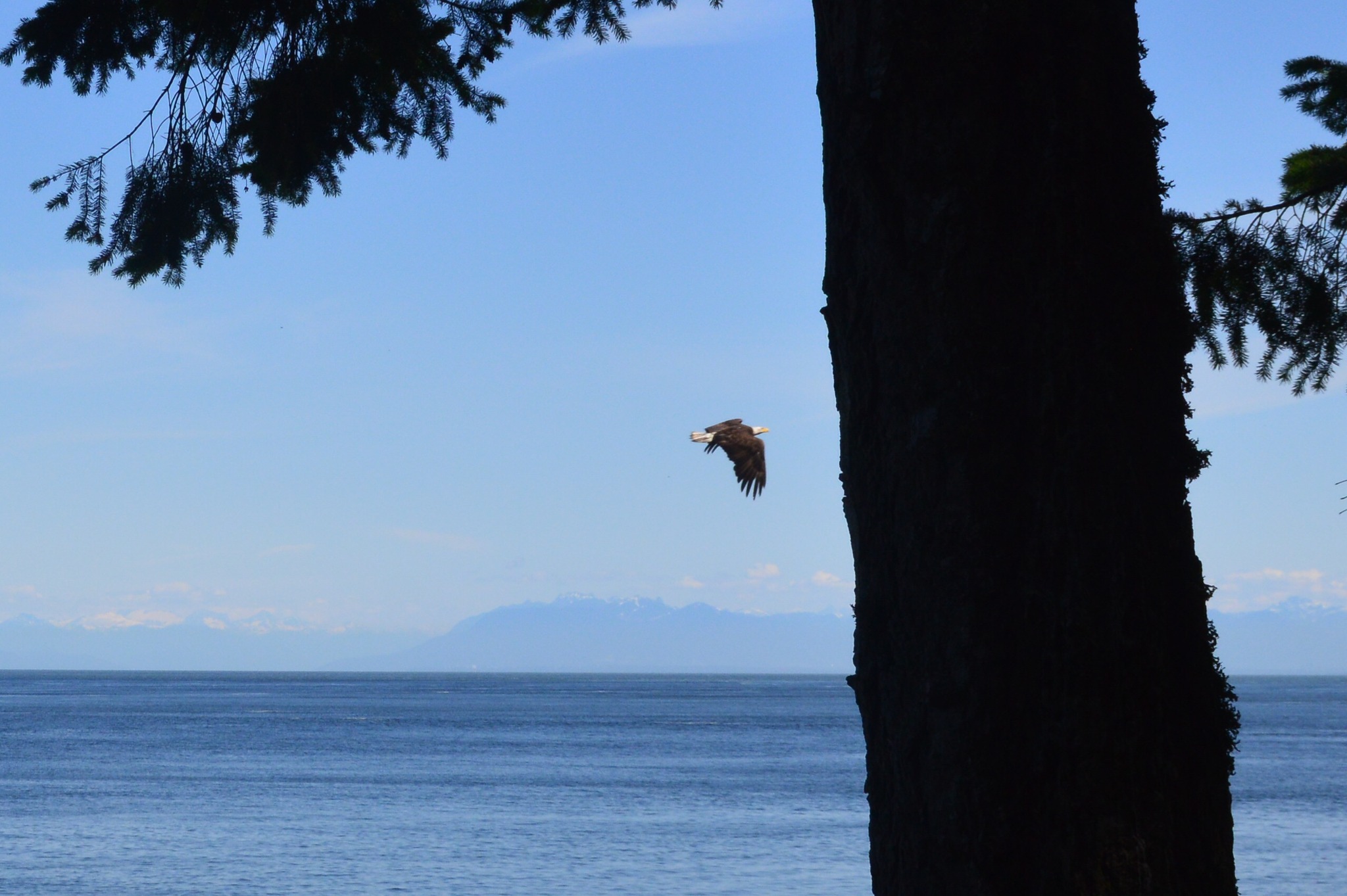
My accommodation was an airbnb right inside Mt. Parke, accessed via a private track road. The views from the balcony and living room of Raven’s Nest cottage were gorgeous – a peaceful place to sit and watch eagles and turkey vultures gliding through the sky. The hosts provided lots of amenities (including binoculars) and put a lot of thought into little details.

One of the things I wanted to see most on Mayne Island was the view from the top of Mt. Parke. I joined the track that continued from the airbnb and turned right up a narrow trail. (If you take the trail on the left, you join a network of trails within Plumper Pass Community Park.) At the ridge, the views were similar to those seen from Mt. Warburton Pike on Saturna Island, but no less impressive or exciting. A dazzling vista of lush green islands, sparkling blue ocean, and distant mountains. At the cliff edge, I looked down to see a blanket of Douglas, Fir and Red Cedar trees below. This would have been a bad time to turn around and see a cougar or bear. Thankfully, there are none of those on the Island!

*Maps indicate that the trail to the summit can be accessed from Kim Rd or Mt. Parke Rd. The latter is technically a private road that I was only allowed to take because I was an airbnb guest within the park. Expect to be asked to leave if you’re not a guest and you’ve parked before the emergency gate.

Satisfied with the day’s activities, I returned to my airbnb and spent the evening looking out at the view, watching the hourly ferry sailing through Active Pass to and from the mainland. The white-capped North Shore mountains behind Vancouver were visible in the distance as the sky softened into a palette of lilac and pink. I spent a lot of time peering through the binoculars in hopes of seeing a whale, but no luck this time.

After a peaceful sleep in a comfy bed, I woke early the next morning, ready for an active day. Hummingbirds zoomed past the kitchen window and hovered at the feeder. First, I drove to Horton Bay Rd and took a right on Beechwood Drive to access the other side of Henderson Park. There’s a small parking lot at the end of a short gravel track. The Vulture Ridge Viewpoint Trail up Henderson Hill was a fun, moderately steep hike about 1km long. Along the way, a couple of deer looked up timidly from behind the trees before trotting off gracefully.

The viewpoint looked out at the Navy Channel sea passage in front of North Pender Island. Bald eagles and turkey vultures soared overhead. An informational board explained that turkey vultures will vomit their food if a predator or human comes across them eating their prey. This is so they can fly off to safety with as little weight hindering them as possible. They also pee on their own legs to help stay cool. (I found this interesting but I apologize if you were eating while reading that..!)

Due to its location, this would probably be a great place to watch the sunset. After spending several minutes admiring the view, I came back down via the East Boundary Trail.

Next, I drove back to Horton Bay Rd and turned right to go down to St. John Point Regional Park. This was a place that had received some negative reviews on Google for being “hard to find.” Either those people are blind or things have been updated, because there was a sign referencing the park’s name. A small parking lot can be found at the end of a short gravel track.

I followed a grassy path down to Kadonaga Bay and then joined a trail into the woods. As I crouched down to retie my shoelace, a dog that looked like a mix of a Poodle and Border Collie bounded up from behind and jumped on me excitedly before running off again. Things became a little calmer in the forest, which was filled with the peaceful sound of birdsong. Decorated with Arbutus trees, the trail along coastal bluffs overlooking Plumper Sound was lovely. I imagine this would be a great place to spot whales and other sea life, but none of them fancied making an appearance today.

As I rejoined the grassy path, the dog reappeared, tail wagging madly and tongue shaking saliva. I spent a couple of minutes giving him belly and head scratches before asking “Where’s home?” Upon hearing the H word, he galloped off suddenly without a goodbye. And that was that.

Next on my itinerary was a visit to Campbell Point on the north east of the island. Off Wilkes Rd there’s a shaded parking lot in front of Bennett Bay Beach. Along the Campbell Point Trail I greeted a few friendly locals walking their dogs. Part of the Gulf Island National Park Reserve, the tip of the park looks out over Georgia Strait and towards Saturna Island. I’d recommend coming here for sunrise as I imagine the view would be wonderful.

I followed a trail back along the bay, passing a heron perched on a rock down below the cliff. The beach was sandy, but overall it wasn’t as amazing as I’d expected it to be from my reading. I don’t know if it was because the tide was out or there was a boat launch jutting out that affected the view, but this beach just didn’t do it for me for some reason. That said, I’m sure there are many that would love it.

I was curious to explore Mt. Parke from the actual public trailhead. Afterall, it’s not just about the view at the top, but the journey to get there! So I headed inland and parked at the end of Kim Rd off Felix Jack Rd. The Mary Jeffery Nature Appreciation Park Lowland Nature Trail is a loop trail. I took the southern side of the trail, from where you can turn off briefly to view the aptly named Giant Arbutus Tree. I then took a right and joined the Halliday Ridge trail which takes you on a lovely route through the forest. Along the way, I spotted a woodpecker working away on a fallen log. It’s about 2km to get up to the ridge. I was having one of those days where my energy seemed limitless (that dog’s saliva must have had something special in it) and I made it up to the top very quickly.

As the trail began to elevate, I came to a section with a map indicating where the trail entered private property. The words “Continue at your own risk” were written. (My instant reaction was that the sign was warning of violence, but when I told my manager a few days later, she said it was more likely related to law suits.)

At the viewpoint, I saw a couple sat on the bench. Not wanting to disrupt (you never know, maybe he was about to pop the question!) I continued along the trail for a few minutes. If you keep left, the trail will eventually join private property.

The viewpoint had a bench you could rest on and an informational board that displayed the names of the Gulf islands, sea passages, and mountains in view. I can definitely identify Plumper Sound, Saturna Island, and the Pender Islands, but I still get confused by the others. One day I’ll know them all!

I came back down via the Old Gulch trail. If you want to go up to the Mt. Parke summit, there’ll be a sign along this trail indicating an option to join the Plumper Pass Community Park Loop. Take this option and there’ll be a few signs along the route directing you towards the viewpoint. After a kilometre or so, you’ll cross the private track of Mt. Parke Rd and join the narrow viewpoint trail.

Once back at my car, it was onto Campbell Bay as I was curious to see the beach here. There isn’t an official sign indicating a beach, but when you pass a house on the right, there’s some space off the road that seems intended for cars. You then take a short walk down a hill…and boy, what a lovely beach awaits. I’m really glad I stopped here as it made up for the “meh” reaction I had to Bennett Bay. What a beautiful spot! I’d read that Campbell Bay is one of the best places for swimming, and I regretted not bringing my swimsuit down with me. I had a quick paddle instead, admiring the cleanliness of the water. This side of the island sees less boat traffic which probably contributes to the beach’s charm. I could have spent a while sitting on one of the many driftwood logs under the gentle breeze of the trees. I’ll definitely spend more time here if I visit in future. It would be a great place to kayak too!

From Campbell Bay, I drove along Waugh Rd and turned right down Georgina Point Rd. People that get anxious about a lack of signage, be warned: there isn’t a huge big sign inidicating it, but the small road will lead you to the famous lighthouse. A seal swam close to the shore as a ferry from the Mainland approached Active Pass. I will have passed this lighthouse many times without much thought. It’s nice to know that now whenever I’m on the ferry heading to Vancouver, I can see this beacon and say “I stood there.”

After the lighthouse, I continued in the opposite direction down Georgina Point Rd. It’s a pretty drive past the small boats in Miners Bay. After stocking up on food at Tru Value Foods on Village Bay Rd, I returned to my airbnb for another walk up to the Mt. Parke ridge before a relaxing evening of staring at the views of Active Pass and willing a whale to appear. (It did not.)

With my ferry to Vancouver Island not leaving until after noon, I checked out of my airbnb around 9 a.m. so I could get a couple more walks in. On my way out, I met one of my hosts for the first time. He seemed surprised that I was visiting by myself. I have to remind myself that some people still find it strange that someone in a relationship might want to go on a trip by themselves, or that a young-looking female would want to travel somewhere alone. For me, having alone time helps me be better in my relationship, friendships and job by giving me time to recharge. I hope it’s something we will start to normalize in society as I think being comfortable with one’s company is healthy and beneficial!

I drove through Village Bay and continued along Waugh Rd, squinting at house numbers to see if I was close to the trailhead listed on my map. Naturally, I had to turn around. A car came up behind as I midway through turning. The car stopped at a distance and didn’t move again until I was facing the right direction. The driver then waved at me as they passed. See, going wrong and turning around ain’t so scary!

I parked in a grassy space and walked about a hundred metres back up the road before turning left up a trail marked with a sign that said Chu-an Park. It was a short trail that got quite steep near the end. The view of Georgia Strait was a little underwhelming as the map had made it seem like there would be a bigger view. But a good workout, nonetheless. Another thing about this trail was that I kept seeing signs noting a park boundary, and yet in a couple of places it wasn’t very clear where the trail was and therefore whether or not I was on private property. I’d hate for someone to be yelled at or threatened with legal action (or worse) for making an innocent mistake.

This leads me onto the one thing I didn’t like about Mayne: the abundance of private property signs in certain places. I understand the desire for quiet and solitude, but the prevalance of signs seemed to demonstrate a paranoia or suspicion of strangers that seemed slightly excessive. People are entitled to do what they want with their money when it comes to buying property, but do you really need THAT many signs? It all seemed rather passive-aggressive. I think the concept of private property is simply still quite new to me, as it’s not really something I came across growing up in England. My family lived in a rented house in a national park where all were welcome and visitors were trusted to stay on the path, so I have a different outlook. (Now, if you left a gate open and sheep got out, you could then expect a yelling from the farmers..!)

From here, I drove east and parked at the end of Edith Point Rd. A short trail leads down to the shore, overlooking Georgia Strait. Many have reported seeing whales here. I can’t say I was one of them. Sigh. But it was a lovely spot. My host had recommended a trail that leads round to Campbell Bay. He said it involved crossing private property. I probably should have written down his instructions because it wasn’t clear to me where said trail began. I didn’t fancy being sued for accidentally stepping on someone’s patch of soil, so I didn’t bother looking.

I stayed a little while looking at the view before heading back to my car and driving back the way I’d come, turning right down Cotton Rd which leads to Cotton Community Park. The Orca Trail (named because it’s a common spot for people to see whales, unless you’re me ;)) takes you along the foreshore overlooking Active Pass. It’s a lovely tranquil walk. As I sat enjoying the sounds of the water lapping against the shore, a movement caught my eye. A sea otter popped up and roamed around the shoreline hunting for food. A few times he would dip back down into the water with a flick of his tail before surfacing again. He then came onto the beach to enjoy his catch. Sea otters are one of my favourite animals so to be able to watch that fella for 10 minutes or so was a real treat and a lovely send off before I headed to the ferry terminal.

How do I sum up my me time on Mayne Island? It was a lovely quiet place where I could switch off and relax, fortunate to have most of the trails completely to myself. An interesting mix of friendly and patient locals, combined with a slightly off-putting prevalence of private property signs. A great getaway for the individual, in a place that values privacy.

Having spent my birthday on the Island, I came away with a reminder of the attitude I want to take on this next journey around the sun: stay curious, don’t be afraid of going wrong, and make time for me time, but be open to the goodness of strangers.

Unknown's avatar

How to Spend a Rainy Day in Victoria, BC

You’ve arrived in Victoria for a couple of days and it’s scheduled to rain on your first full day. With its many forests, lakes, and mountain views across the Pacific Ocean, Vancouver Island looks beautiful in the rain. But if you don’t have a car with you, what can you do?

Luckily, there are many options to keep you entertained in the downtown core of British Columbia’s capital city.

The first decision of the day is breakfast. Victoria has many great breakfast and brunch options, including Jam Cafe and Blue Fox Cafe. The problem is, because these restaurants are so popular, you often have to wait in line. If the lineup continues once you have your table, you might feel somewhat rushed to eat quickly so others can get inside (or maybe this is just me?). These restaurants are also quite small and can feel a little crammed.

For a relaxing sit-down experience in a light and spacious environment, consider Fathom Restaurant inside the Hotel Grand Pacific on Belleville St. At the time of writing, the menu includes avocado toast, coconut chia pudding, tiramisu pancakes, chorizo and bacon hash, salmon and shrimp tartine, and more exciting options. If you’re less of a sit-down breakfast person, the Hotel is also home to the cozy Courtyard Cafe which sells various warm beverages, smoothies, sandwiches and baked goods (all made in house) in a friendly, quiet atmosphere.

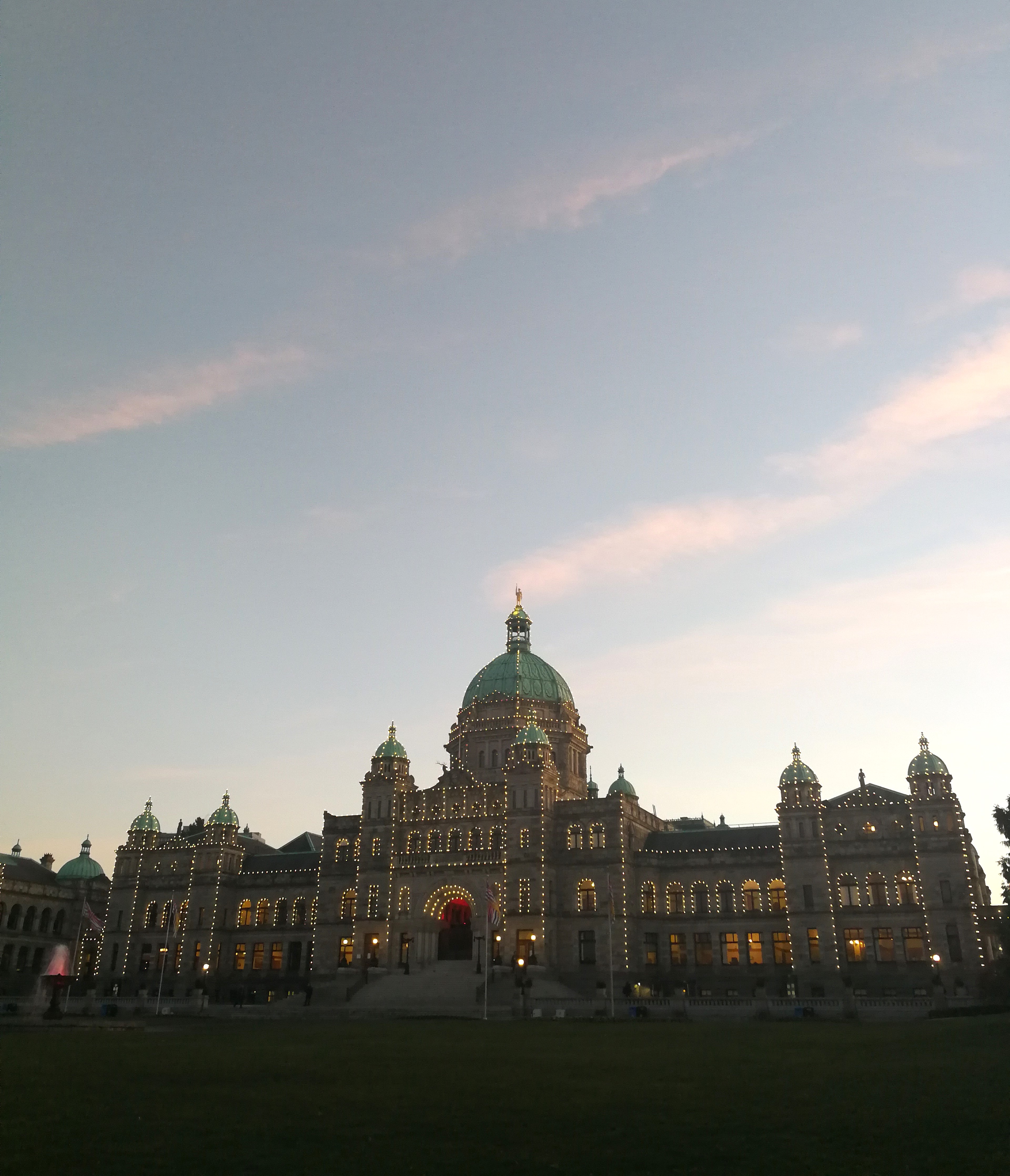
If you’re visiting Victoria during a weekday, consider taking a tour of the BC Legislature located next to Hotel Grand Pacific. You can go self-guided or join a guided tour. Times are posted on the legislature’s website. Be aware that visitors are required to go through security screening before entering the building. Unknown to many, the parliament building also has a small dining room with some tasty food for great prices.

The BC Legislature on a clear evening.

Also located on Belleville St is the Royal BC Museum. A lovely space, it hosts various exhibits and its large IMAX theatre features interesting documentaries that showcase Indigenous culture and the beautiful wildlife and landscapes of British Columbia.

From the museum, you can walk through the gardens of the famous Fairmont Empress Hotel and up Douglas St before turning right up Fort St. On this block there are a load of great local shops to peruse. You could spend hours browsing the book shelves at Russell Books, and plant lovers will like Brown’s the Florist. Just opposite, The Papery sells beautiful cards, journals, calendars, and craft decorations. If you’re looking to buy household and cosmetic goods that contain less plastic and are made more sustainably, The Good Planet Company sells various items including candles, bed linens, dish cloths, soaps, food containers, and more! Even if you’re not buying, it’s worth visiting this shop just to feel inspired by the various consumer options that are better for the planet. Just up the street, you can build your vinyl collection at Ditch Records & CDs, and across from here, Oscar & Libby’s is a great place to buy gifts for someone that likes puzzles and games.

By now, you might be ready for some lunch. In this block of Fort St, you’re in a prime area to try food from various cultures. Fans of Vietnamese cuisine can try Pho Boi, Burger Crush has a small menu that’s done well, and La Taqueria offers a more authentic Mexican menu (and strong margharitas!). A short stroll down either side of Blanshard St also opens up more options, including the Italian Deli that makes delicious paninis and sells imported goods, and a couple of ramen and Korean restaurants. For a sweet treat, the award-winning Crust Bakery on Fort St is known for its delicious pastries (blueberry custard is a must-try!) while the nearby Dutch Bakery offers special chocolates and cakes. (If you like marzipan, almonds and whipped cream, you’ll love the Dollar Roll!)

From here, you can head to Yates St by crossing through St. Andrew’s Square on View St. If you have any room left in your stomach while inside this small mall, you’ll probably be tempted by the smells from Empire Donuts, as well as the freshly made soup from Soupa Cafe.

Yates St is home to the Interactivity Board Game Cafe. Bring your friend(s), choose a game, and play away. You can also order food from the menu, which includes a long list of milkshake flavours. If boardgames aren’t your thing and you’re more of a pool person, you could spend a couple of hours at Peacock Billiards on Blanshard at View.

If you’d rather not do anything and just want to switch off for an hour or so, Sapphire Day Spa is on View St, while The Spa Magnolia on Courtney St is considered a luxury spa accomodation.

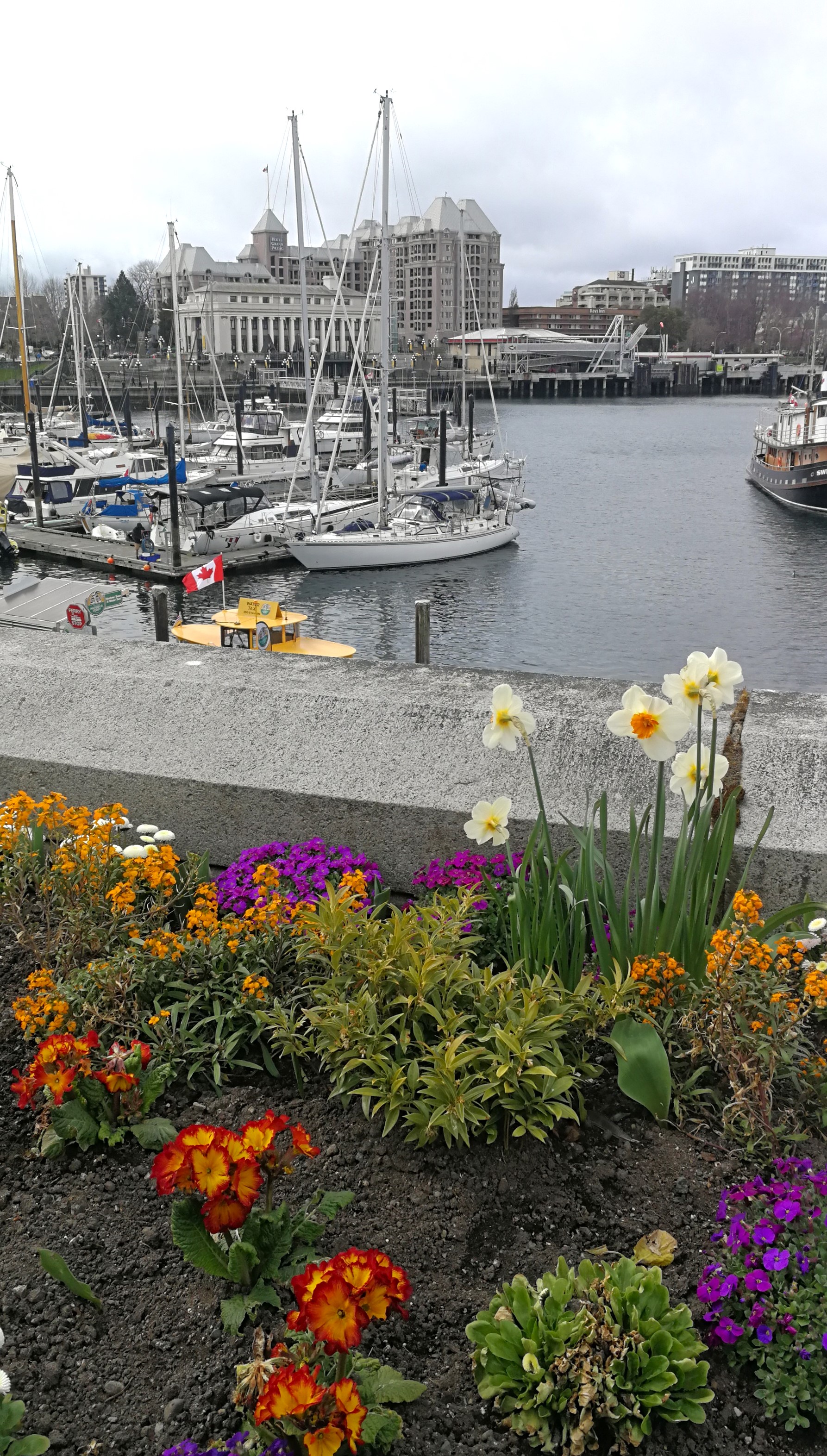
Victoria’s Inner Harbour

If you want to give your feet a rest and get out on the water, consider booking a tour with Victoria Harbour Ferry. This 45-minute tour in a sweet little water taxi shares information about the homeland of the Esquimalt and Songhees First Nations, the development of Victoria as a city, and its naval history. You might see some sea otters and seals in the harbour. Even orca whales sometimes make a brief appearance! Visit the Victoria Harbour Ferry website for more information.

Locals love Victoria for its thrift stores, and there are many to choose from. Value Village on Store St is probably the biggest, but if you’d rather have your money go towards a non-profit, choose Women In Need on Pandora Avenue or the Salvation Army on Johnson St. You can find some great bargains!

When it comes to dinner, there are so many good choices in the downtown core that aren’t part of a chain. If you’re vegetarian or vegan, there’s Rebar near Bastion Square, or Green Cuisine in the Market Square off Johnson St. Tapas lovers will love Tapa Bar in Trounce Alley or Perro Negro on Yates St. For true farm-to-table cuisine, 10 Acres Bistro is a good choice. If you like the pub scene, Bard & Banker or the Irish Times on Government St might appeal to you. Fans of Italian can try the beloved Pagliacci’s on Broad St, Fiamo on Yates St, or the fancy Il Terazzo on Johnson St. If you like seafood, consider Finn’s or Nautical Nellies on Wharf St, or Ferris’ Oyster Bar on Yates St. For something more casual, Tacofino on Pandora Avenue is one of Victoria’s most popular eateries, making big burritos with a blend of Mexican and North American style.

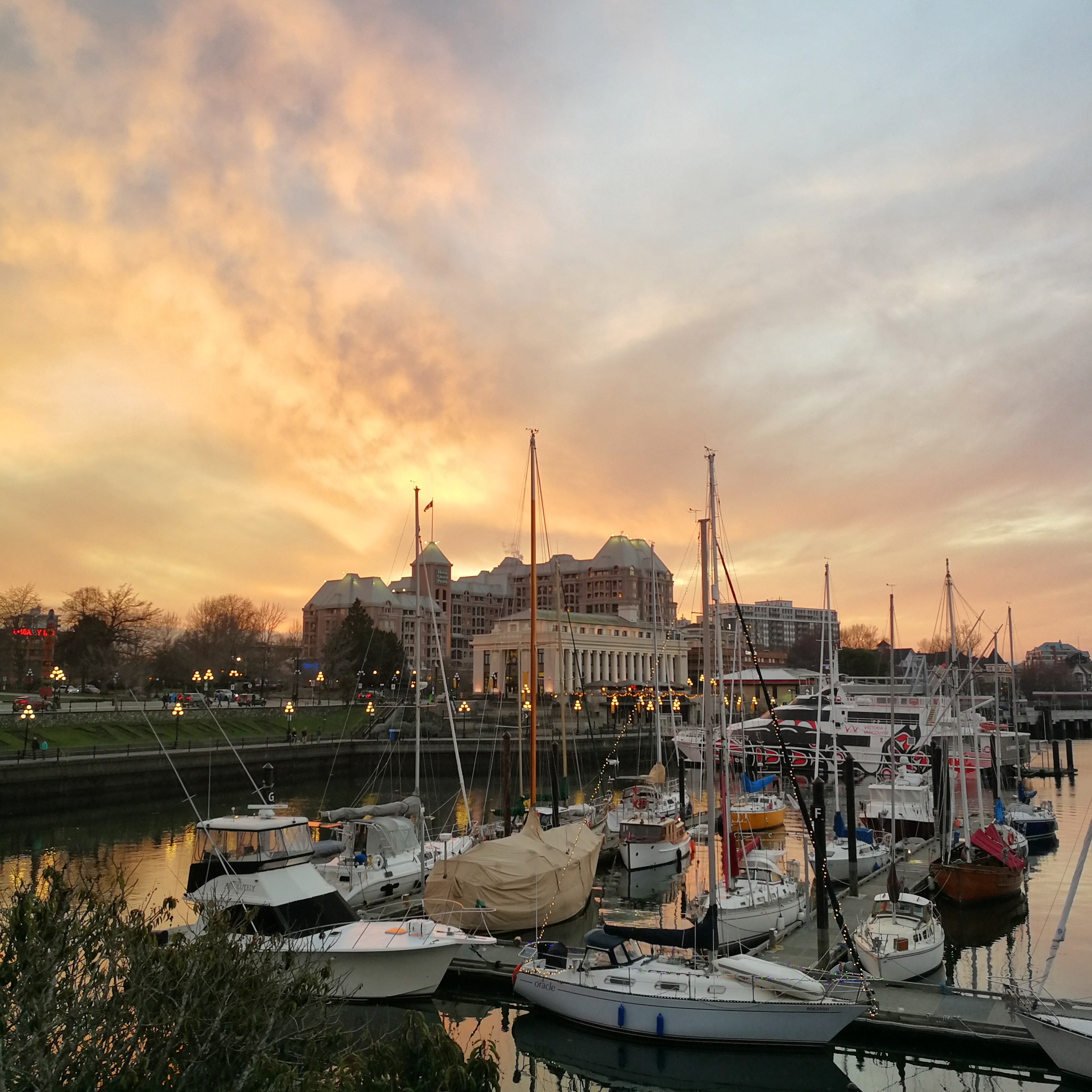
The weather in Victoria can often change throughout the day. There‘s always a possibility you could get a lovely sunset in the evening!

If rain is forecast during your visit to Victoria, don’t despair. With a vibrant community of locally owned businesses and organizations, there are many great things to see, do and eat in this west coast city! Whether you like art, history, shopping, games, or being pampered, you’re sure to find something to keep you happy on a rainy day.

*
The author wishes to acknowledge the traditional territory of the Lekwungen speaking peoples, on whose lands the establishments mentioned in this article are based.

Unknown's avatar

Santiago de Compostela – A City of Culture & Connection

September 2022 brought me and my fiancé to Lugo, Spain, for my friend’s wedding. We decided to make a trip out of this occasion by first exploring some of the other highlights of the north-western region called Galicia. I knew of the Camino de Santiago hike, a historic pilgrimage route that ends at the Cathedral of Santiago de Compostela, where Saint James the Great is said to be buried. While we wouldn’t have time to complete the trek, I jumped at the chance to visit the revered old town that is recognized as a UNESCO World Heritage site.

Our flight landed at Santiago’s small airport late on a Tuesday evening. A cab driver drove us to the heart of the city in 15 minutes, at a fixed rate of 21 Euros. I was impressed by how well he knew the location – many taxi drivers these days end up asking their customer for directions!

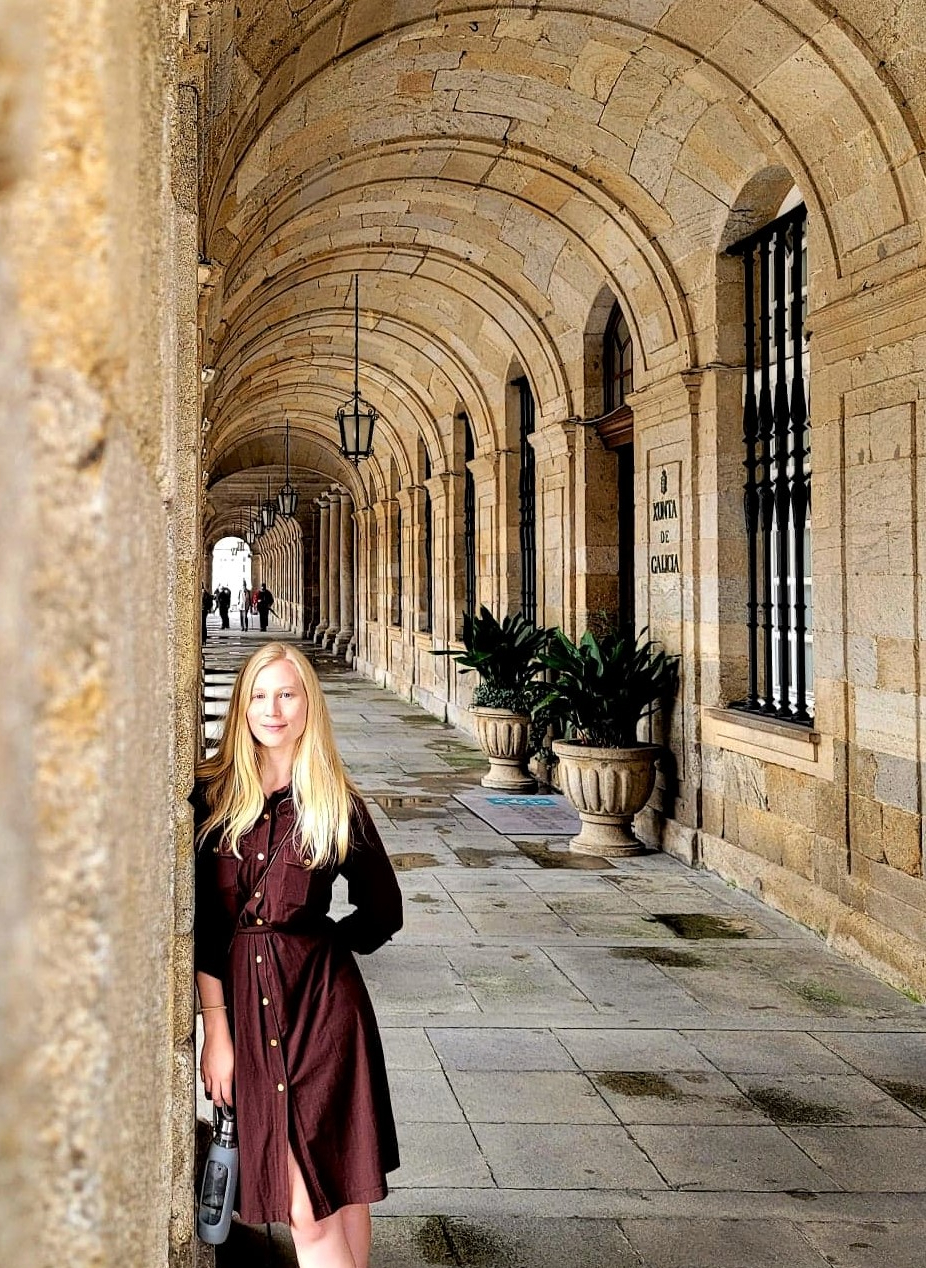
We had booked three nights at Hotel Oxford Suites on Calle de San Francisco. Its close location to the Cathedral and photos of the traditional stone walls in its rooms had caught my interest. The website had said check-in was open until 11pm. It was almost midnight when we arrived. I had emailed earlier in the day to ask if there were special instructions for arriving late, but received no response. We approached the front door only to find it was locked. A sign translated to English said to WhatsApp call the number provided to gain access. We had our Canadian phones with us and no data. Uh oh.

Fortunately, the street was still quite busy with locals returning from the bars (or more likely, making their way to them!). I spotted a man who seemed similar to our age and asked him in my best Spanish if he spoke English. Thankfully he did, and he kindly called the number for us and told us the code to the hotel, our room number, and room code. The kindness of strangers strikes again!

When I went down to reception the next morning to pay, it became clear that English is less spoken in this autonomous region of Spain, but I liked this. It made the experience feel more authentic and was an incentive to practise the language. Galician is a language of its own here, and I would later be told by a native that many people from other parts of Spain can’t understand it. Probably the easiest thing for foreigners to remember is that in this region, “thank you” is pronounced “grath-ias” and not “gras-ias.”

Hotel Oxford Suites was more like a hostel, with a café bar downstairs that sold coffee for 2 Euros. My fiancé had pledged to have less coffee during this trip but he couldn’t resist the cheap prices! The room was comfortable but it was a little loud (inside and outside the hotel) so I would probably book a different place to stay if returning again. (Hotel Costa Vella looked lovely but was fully booked on our dates!)

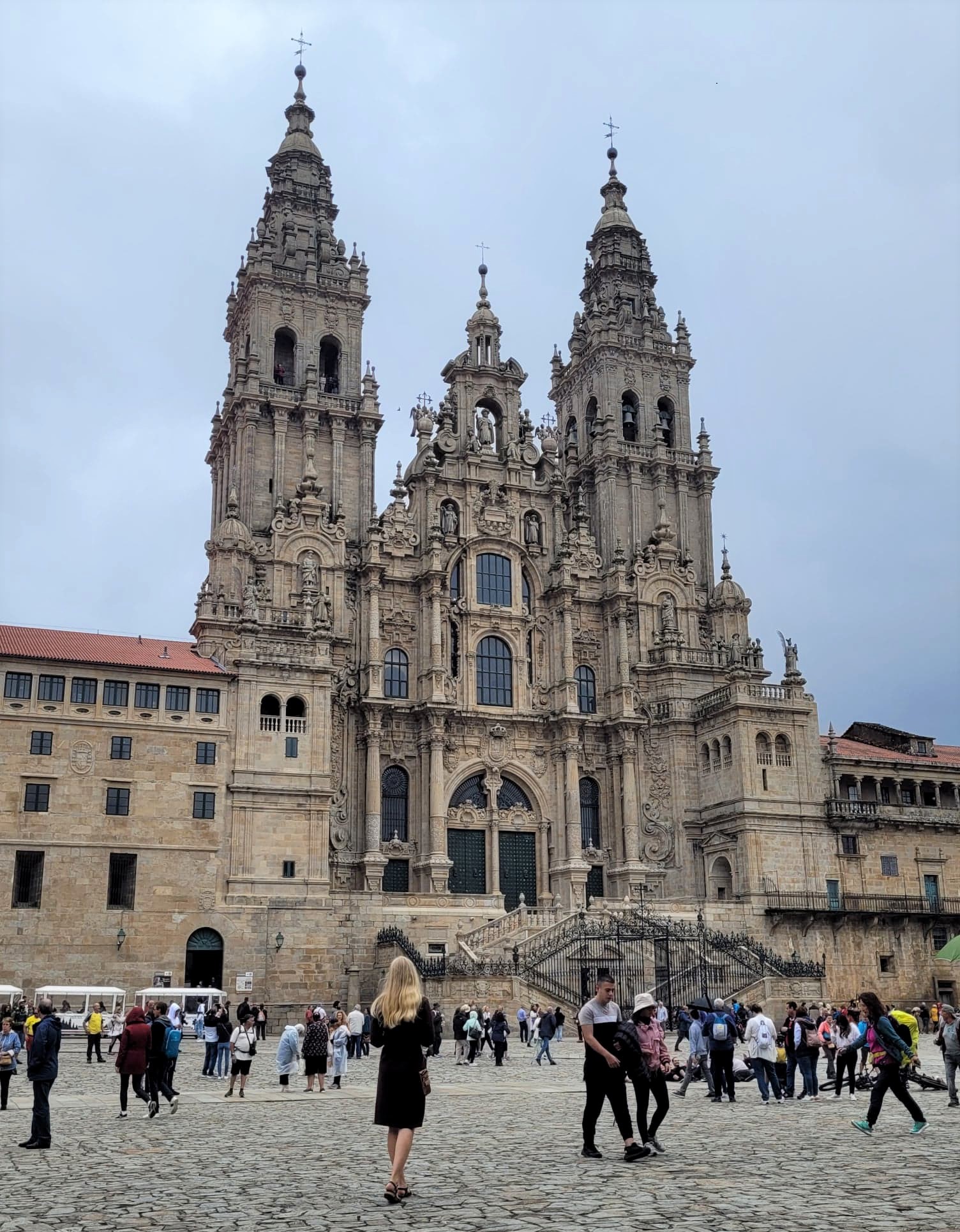
The forecast had said there would be showers for the duration of our stay. Cloudy skies looked down on us as we walked towards the Cathedral, from where an instrument that sounded like a mix of the clarinet and bagpipes played throughout the day. Throngs of people filled the main square (Praza do Obradoiro), many of them hikers that had just finished the long trek. Cheering in celebration, they lay on the ground with their legs in the air in what seemed like both a demonstration of their fatigue and a sign of their respect to the symbolic building that stood before them. I’m not religious myself, but you don’t have to be to appreciate the beauty and significance of the Cathedral of Santiago de Compostela.

We walked down the cobbled streets of Rúa do Franco, passing restaurant windows with small octopus on display (a Galician tradition I didn’t feel compelled to try!) Other windows showed lobsters in tanks, awaiting their fate. On the more commercial street of Rúa da Caldeirería, we came across a small, unpretentious bakery called Pastelaría Tentación that sold empanadas, sandwiches, and pastries. The lady listened patiently as I tried to pronounce our choices. We would end up coming here again the next day.

We next made our way to Rúa das Ameas and passed through the Mercado de Abastos where various vendor stalls sold fruit, cheese, meats, and seafood. We bought some fresh peaches for 2 Euros and wandered back to the square, where even more hikers were celebrating the completion of their hike.

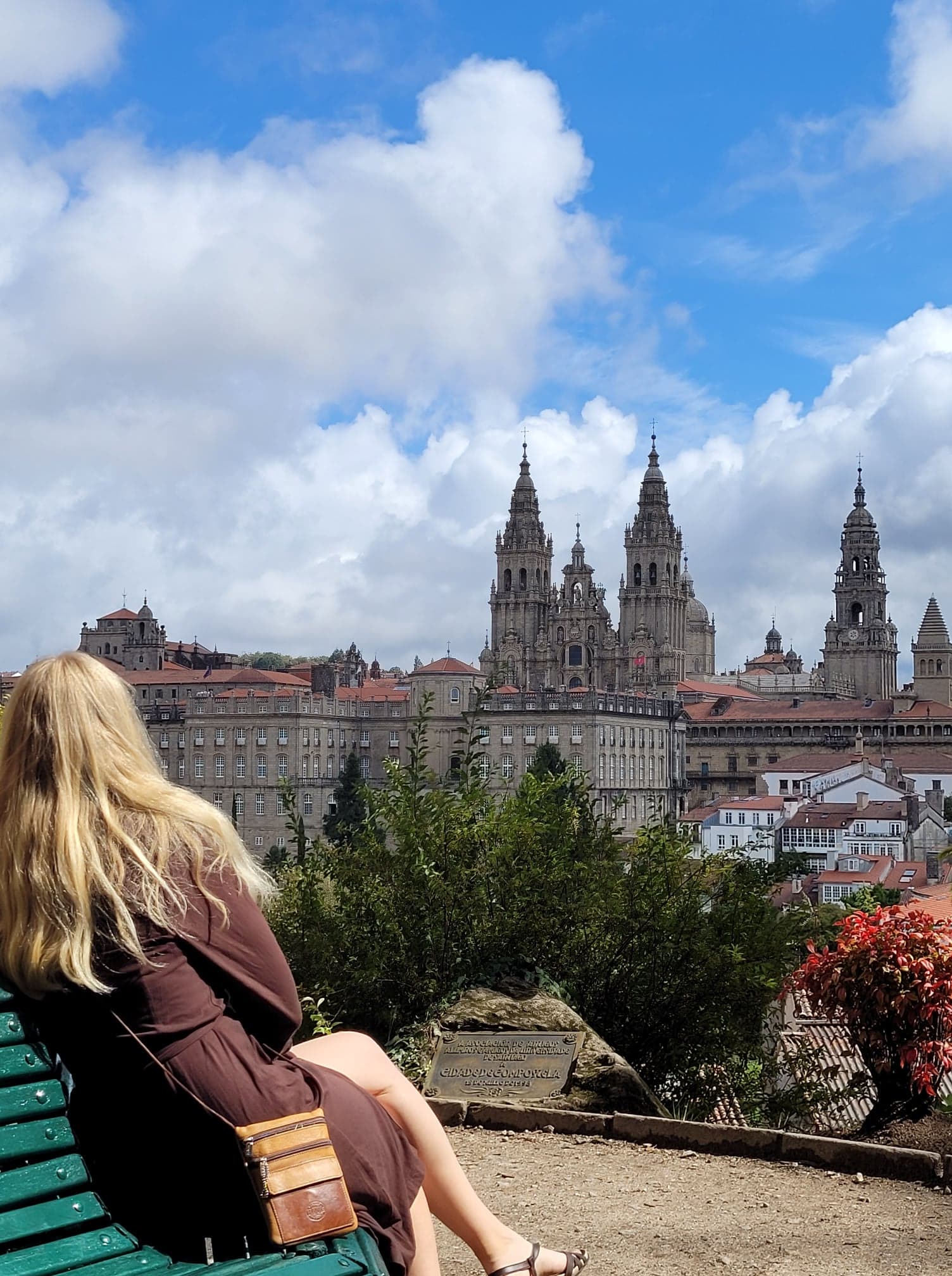
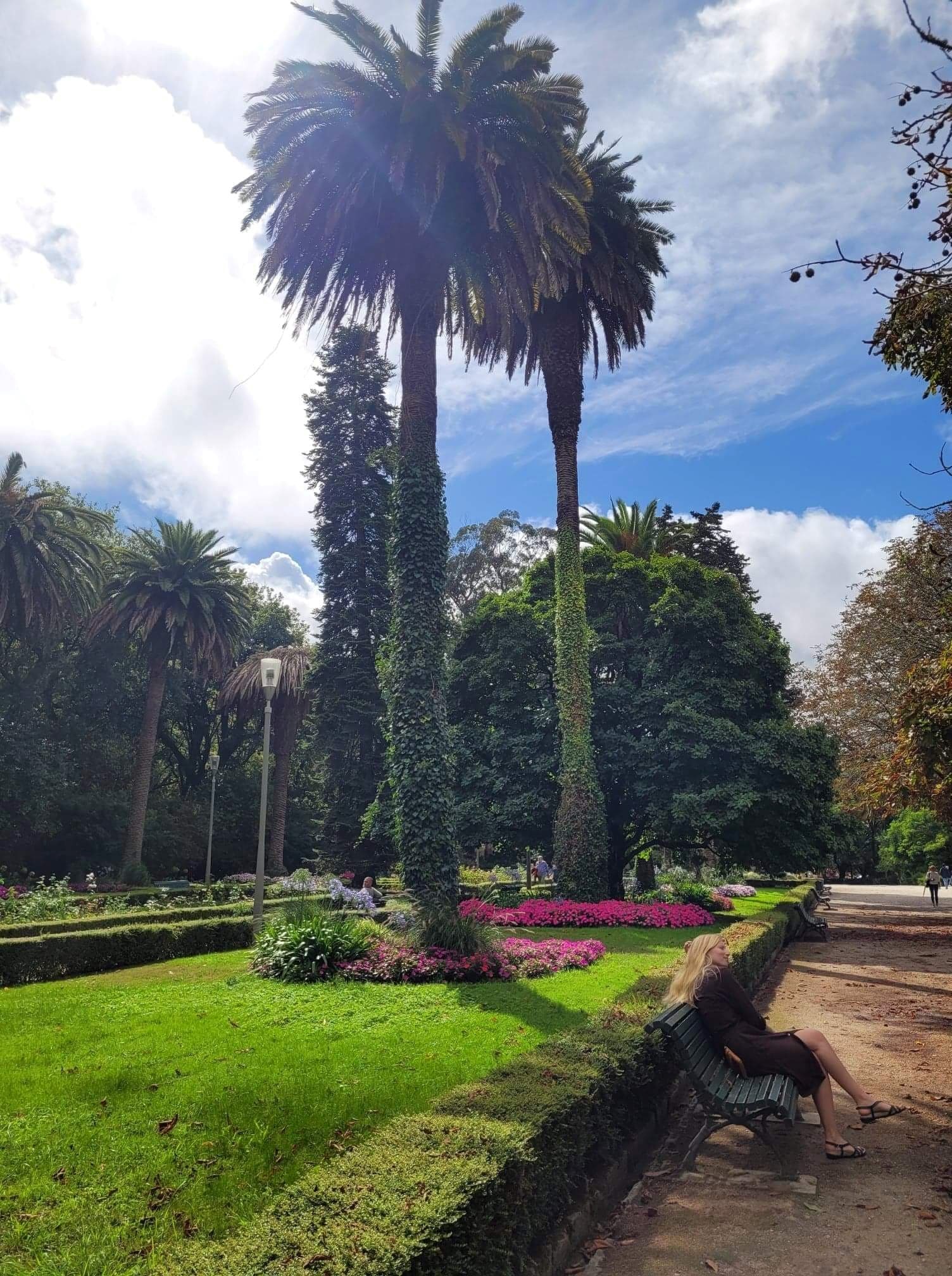
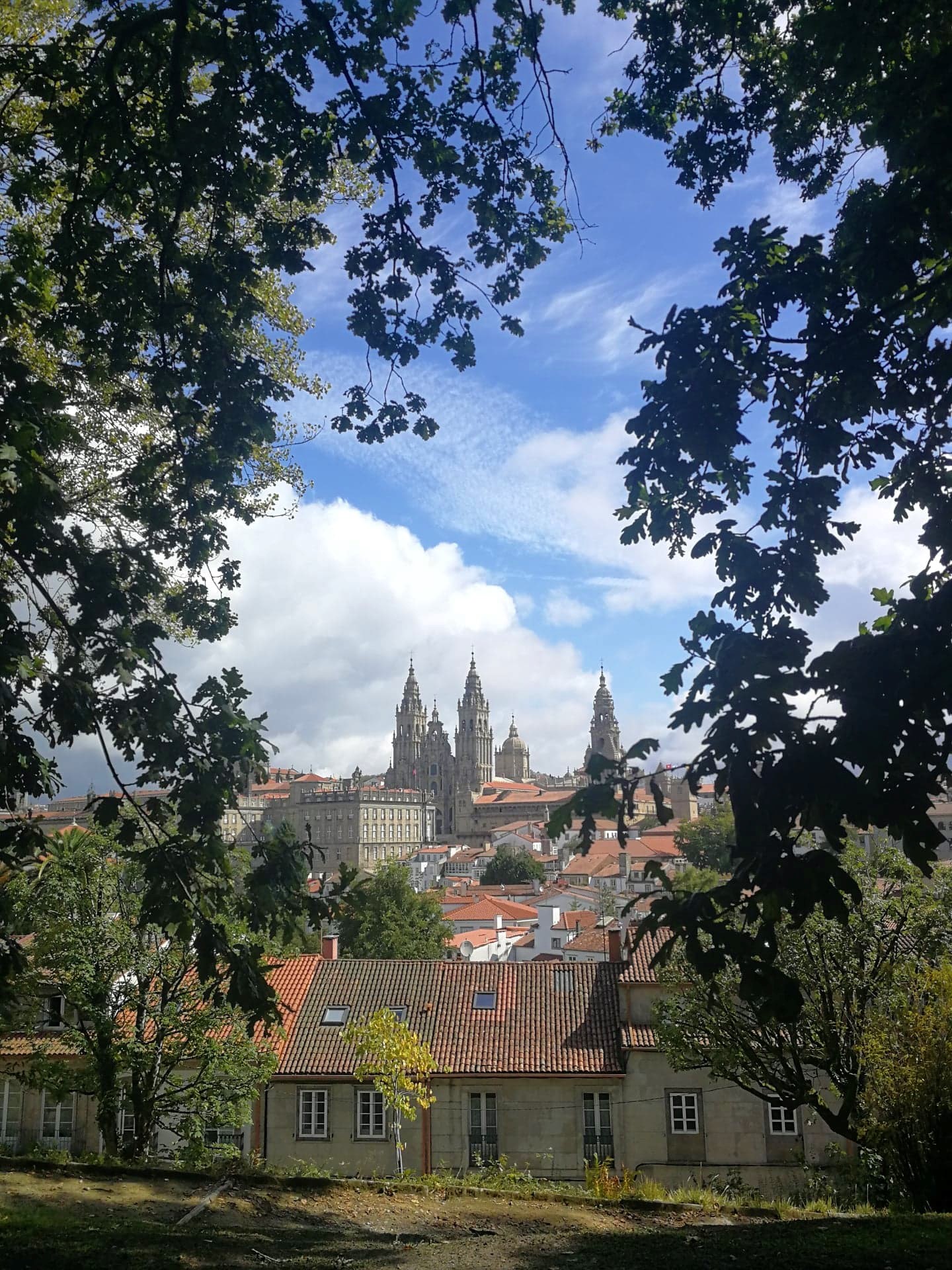
By now, the sun had broken through the clouds. We walked down Rúa das Hortas before taking a left up Rúa do Pombal and entering Parque da Alameda. And what a lovely park this was! People jogged along the tree-lined promenade while others sat reading or chatting on benches beside pretty flowerbeds. A calming sound of trickling water came from a fountain, in front of which there was a beautiful vista of orange roofs, church spires, and the Cathedral towers.

As we stood having a cuddle in front of this view, a same-sex couple came behind us and showed us a photo they’d taken of the town, with us included in the image. We offered to take their photo in return. We were amazed (but glad!) that there weren’t many other tourists in the park. It definitely provided what I would imagine are some of the best views in Santiago de Compostela. Looking outwards from the city, we saw rolling green hills in the distance.

As we made our way back to our hotel for a siesta, the sun decided to do the same. We felt even more lucky that we went to Paque da Alameda when we did!

My friend had recommended a tapas bar called El Papatorio for dinner. Evening meals are eaten later in Spain, with many restaurants not opening until 8 p.m. We sat in the Praza do Obradoiro trying to guess what all the different flags on surrounding buildings symbolized before making our way down Rúa do Franco again. A group of women who looked to be in their early twenties were walking up the street, smiling and cheering as they neared the end of the Camino hike. Upon hearing them, a group of elderly ladies that were sat on a restaurant terrace proceeded to applaud them.

There was a line-up outside El Papatorio, and of course, the view in front of me of the opposite restaurant included the window of lobsters in the tank. As we waited, one of the kitchen staff proceeded to pluck a lobster from the water. The lobster’s comrades proceeded to rush towards the other side of the tank, frantically climbing over each other in an attempt to hide themselves. It was actually quite uncomfortable to witness this behaviour and realize how aware they were of what was happening to their friend…and what would eventually happen to them!

As I pulled my eyes away with a newfound sympathy for lobsters, the couple next to us made a joke about the scene. They were an Australian couple in their 60s and had just finished the Camino hike. We ended up sitting next to them in the restaurant. They said they did the hike every year, but this was their first one since the pandemic began, now that they were finally allowed to leave Australia. This year was the busiest hike they’d ever experienced, with thousands more participants than usual. The couple’s kids were of similar age to us, and they shared empathy about the challenges our generation faces with rising inflation and house prices. The man advised us to plan financially for the future “so that in 30 years you can come back to lovely places like this.”

It was 50 Euros for two drinks and a large and delicious selection of tapas. As we paid our bill, I was reminded how nice it is not to have a tipping culture in Europe. The waiter brought back our exact change; there was no question of “Would you like change?” as I’ve noticed happen in some restaurants in Canada. His approach actually made me more inclined to leave a tip.

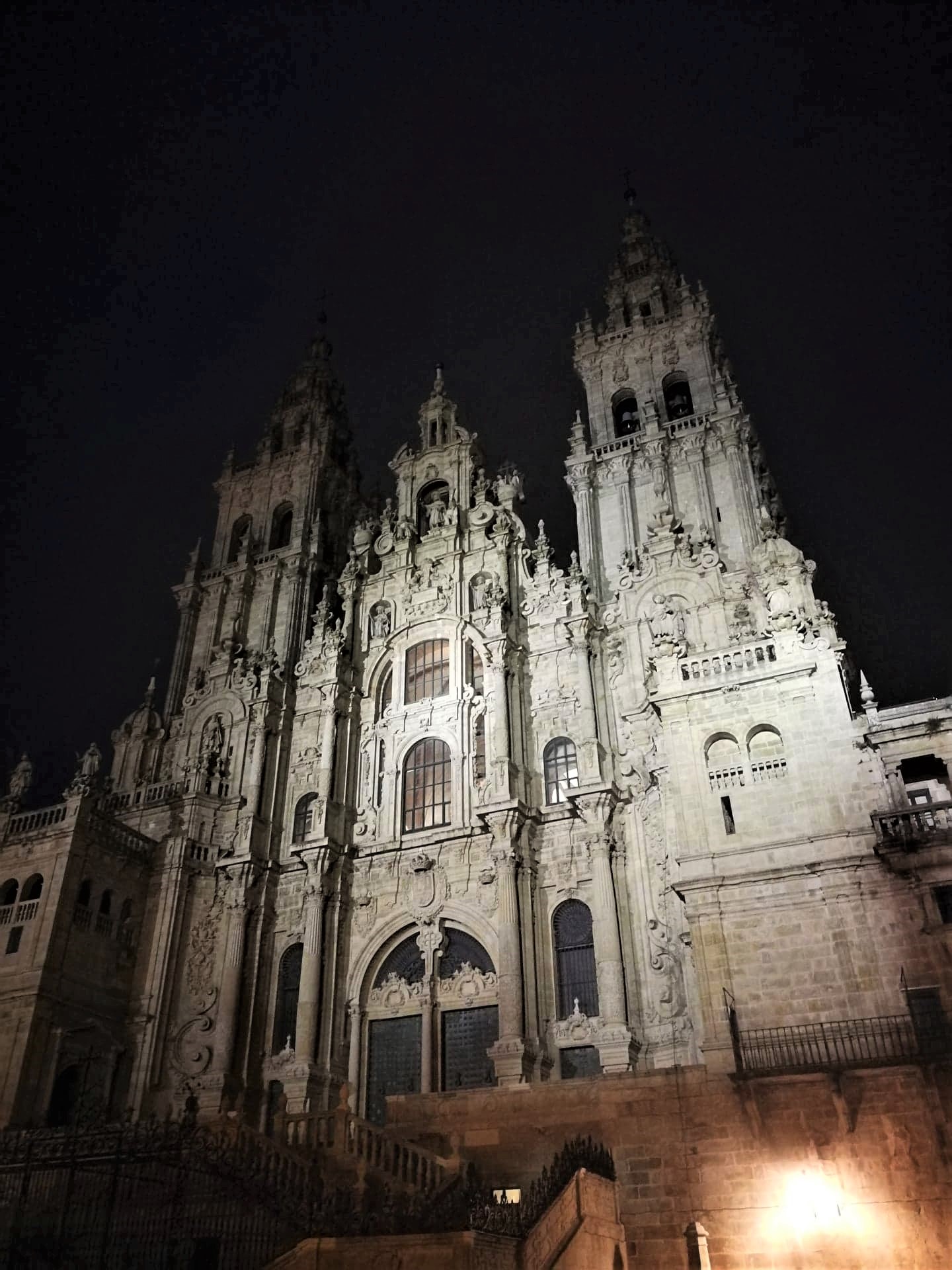
We walked back to our hotel with full bellies and warm hearts. The Cathedral stood luminous under a dark sky, like a lighthouse to the hikers seeking its welcome.

The next day, we took a day trip by train to the coastal town of Pontevedra, known for its charming medieval squares and many bridges. The journey took around 30 minutes and it was only 20 Euros for both return tickets. Views from the window showed lush green land. Galicia truly seems to be like the British Columbia of Spain!

On return to our hotel in Santiago de Compostela that evening, we would learn that the Queen had passed away. I suppose I felt a little more indifferent to this news than some Brits, but what’s for sure is that we will always think of Santiago de Compostela whenever we remember hearing this historic news!

We had dinner on the leafy terrace of a laid-back restaurant inside Casa Felisa hostel on Rúa da Porta da Pena. It was 40 Euros for two drinks and two meals that included sea bass and beef. The downside for people that aren’t used to eating dinner so late is that it’s hard to fall asleep when it feels like your stomach is still full to the brim…

On the Friday, we were leaving for Lugo in the afternoon. We spent the morning sitting in the square with our luggage, relaxing under the sun. For breakfast we chose to dine at Café Carrilana on Rúa de San Paio de Antealtares. A more modern and youthful café, it served yummy eggs bennies and fresh orange juice that was actually freshly juiced and not from a carton. A large group of people comprising of individuals from all around the world were sat at a table nearby. It seemed that they had met during the hike and, having formed strong bonds, were having a final meal together before everyone went their separate ways. After a German man said his goodbyes to everyone, an Irish woman quietly left the table to walk out of sight with him and say a more personal goodbye. Maybe they will see each other again, maybe not.

There was something truly joyful and uplifting about our time in Santiago de Compostela. We encountered so many friendly people – locals and fellow tourists. With all the hostile events going on around the world, we all need some amiable connections to remind us of the goodness in others. If you’re interested in visiting Spain and experiencing authentic culture, choose Santiago!

Unknown's avatar

12 Common Resume Mistakes by Expats

Happy 2022! It’s been a while since I’ve written anything. In thinking about how I want to use this blog going forwards, I’ve decided to incorporate more of my day job into my posts. That is: human resources with a specialization in recruitment.

Over the past seven years, I’ve reviewed thousands of resumes for various positions. Many of these resumes have been from immigrants and expats. There are common mistakes made by all applicants, and there are common mistakes made specifically by newcomers.

I’ve decided to use my recruiting knowledge to try to help anyone who is planning to move to Canada. You’ve got your work permit, landed in Canada, found accommodation, and now you need to find a job. Below is my list of 12 common resume mistakes that can reduce someone’s chances of getting a job, and why.

This content has been copied and modified from an article I created and shared on my LinkedIn page. I am not an employment lawyer or registered immigration consultant. All advice provided is based off my personal knowledge and experiences, and does not represent the views of any specific organization. This post is intended as a guide and I am not responsible for the outcome of any job applications.

1. Sharing Personal Information

There’s a tendency for some applicants to share personal details on their resume, including their date of birth and marital status. Even if this is the custom in your home country, I recommend not doing this because it can open up the possibility of unconscious bias and discriminatory hiring. Although age and marital status are protected grounds under Canadian human rights legislation, many employers are unfortunately still guilty of age bias against people from older generations. The only personal information you need to include on your resume is your name, phone number or email, and town of residence.

If you’ve arrived in Canada with permanent resident or citizenship status, it’s a good idea to mention this on your resume. If you’re on a temporary open work permit, mention in your cover letter that you are authorized to work full-time in Canada. Don’t mention your visa expiry date because it may turn some employers off. Instead, wait until this question comes up in a pre-screen call, by which time you will have hopefully made a good impression on the recruiter and they’ll be happy to move to the next stage regardless.

2. Wrong Location

Some people that are applying for jobs outside of their town/province will list their location as being in the area where the employer is based. While I can understand the motivation behind this, it can be frustrating for a recruiter to think they have a promising candidate, only to discover later in the screening process that there will be delays because the candidate would need time to find a new place to live. This is especially the case if the company isn’t able to provide a relocation package or needs someone ASAP.

Better practice is to list your actual address but make note on your cover letter that you are able and willing to relocate should an offer be received. If you already have accommodation organized, for example with a friend or relative, make this clear too.

3. Spelling Mistakes & Formatting Issues

Everyone makes typos from time to time. Some employers will excuse a spelling mistake, especially if the applicant is an ESL speaker and the position applied for does not require much writing. However, if you’re applying for a communications or secretarial position, the employer will be less forgiving. This is especially true now when there is so much competition for jobs. If you have a few typos before the hiring manager has even got halfway down your resume, it’s possible they will immediately put you in the reject pile, even if you have good experience.

Additionally, some resumes are very untidy and confusing to look at. They might have inconsistent font styles and sizes, only list employment dates for some positions and not others, or list their past jobs in random orders. To a hiring manager, a sloppily presented resume shows a lack of respect to the application process by suggesting it isn’t being taken seriously. Again, you might be rejected before the hiring manager has got to the bottom of the first page.

Make sure you list the job title, employer name, and employment dates for each position to create consistency and prevent confusion about your employment history. Generally, jobs should be listed in reverse chronological order with the most recent at the top.

4. Language & Terminology Differences

When I arrived in Canada, I was surprised by how certain terminology used in England wasn’t recognized in this English-speaking country. This includes job titles. For example, people in England say “waiter” or “waitress”, while Canadians tend to say “server”. In England, they often say “air steward” but here they say “flight attendant.” Some terms are quite obvious to translate, however, if a hiring manager is not familiar with the terminology you’re using on your resume and they have hundreds of applicants for one position, it’s very possible you’ll miss out.

When writing a resume, it makes sense to adapt your spelling to the country you’ll be working in. Canada uses a combination of British and American spellings, but generally it uses more Z’s than S’s (recognize vs recognise, analyze vs analyse, etc.).

5. Too Much Emphasis on Education

A mistake British applicants often make is listing all their education credentials on their resume. To be honest, this is often a waste of time and space because many Canadian hiring managers don’t know what an A-level, A*, or 2:1 is. Unless the job ad requests it, hiring managers don’t need to know each module you studied at university and what your grades were. In most cases, they are more interested in knowing about your practical experience.

If the job ad requests a resume and not a CV, keep it simple by just listing the highest level of education you have, your subject, and the year you graduated. If it’s required for you to list your degree grade, it’s best to convert it to the equivalent Canadian GPA.

Another issue with listing your entire education history in detail is that it can make you seem over-qualified for a position. PhD students in particular can have a difficult time finding jobs for this reason. If your resume shows you have a very specialized education but you are applying for a junior-level job that only requires a secondary school diploma, hiring managers might have concerns about your commitment.
Structure your resume based on the job specifications in the job description. If more emphasis is placed on practical experience over education, focus on highlighting the former.

6. Too Long/Wordy

Most employers in Canada will ask for a resume vs a CV. CVs are longer, with more details on education and experience. Some people think a resume should only be one page long. I disagree with this personally, but think three pages is a good maximum. Every time I’ve read a five-page resume, I’ve felt that it could have easily been condensed, with repeated or less relevant information removed. Brevity is key. Some job applicants say a lot on their resume without actually saying anything. Some repeat information through the disguise of different wording. A waffling resume might raise concerns about your ability to identify and select important information.

If you’ve had the same role for many years but performed it for a few different employers, consider using a functional resume style. In this format, you first summarize the main skills and experience you’ve demonstrated across all positions, and then list the employment organizations, titles, and dates after.

7. Unnecessary Employment Information

Following on from the above, some newcomers (commonly younger ones) feel a need to include on their resume every single job they’ve had. They perhaps think that showing they’ve been working since they were in secondary school will impress employers. Truth is, employers more often care about quality and not quantity. If you have a long resume that shows a variety of different jobs, it might be unclear to the hiring manager what your interests and best skills are.

If the job description notes they require someone with three years of experience in a specific role, the hiring manager is likely to lean towards the resume that has highlighted experience in that specific role, even if it’s the only work experience that’s listed. That’s because this resume will suggest a greater interest in and commitment to the job.

If you’re in your late twenties and have been working professionally since you were 21, there’s no need to include weekend jobs you had in your late teens. Focus on tailoring your resume to the position you’re applying for and include the jobs that show relevant skills.

8. Tailored to the Wrong Field

In addition to the above mistake of including too much generic information, there’s also a mistake of including too much specific information that’s irrelevant to the job being applied for.

If you have a retail background but are applying to be an admin assistant in the provincial government, having a skills summary that highlights your experience boosting revenue and exceeding sales targets is likely going to make the hiring manager wonder why you’re applying for the job. They might question your career goals and have concerns about commitment. Although the accomplishments you’ve listed might be impressive generally, if they’re not useful or applicable to the role, they won’t seem that valuable to the employer.

Depending on your career interests, it’s good practice to keep a template of resumes that can be modified for different positions, e.g. administration, customer service, marketing, etc. People with an engineering background might have one template for this, one for quality assurance, and another for project management.

9. Stretching

Stretching a resume involves exaggerating or embellishing certain details to sound more impressive. This could include adding a course that you haven’t yet finished in order to seem more knowledgeable, extending employment dates by a couple of months in order to suggest more commitment, adjusting a job title to suggest more seniority, or adding job responsibilities you didn’t have in order to appear more skilled and in line with the job specifications. These might seem like minor adjustments, but if reference checks reveals the discrepancies, it could raise concerns about how honest and trustworthy you are.

When preparing your resume and cover letter, remember that if offered an interview, you will need to be able to back up any statements you make with an example. There’s no point noting that you improved office processes if you can’t give an example of an occasion you did this and how.

10. Copy-and-Pasting Job Descriptions

Some applicants, including native English speakers and ESL speakers, will copy and paste a previous job description onto their resume when summarizing their employment history. Someone very experienced in reviewing resumes will be able to tell when this has happened. A potential issue with copy and pasting is that some employees don’t end up performing all duties listed in the job description. Perhaps they resigned or were let go before having a chance to take on some of the responsibilities. Inclusion of such content would therefore mean your resume is untruthful. A thorough reference check with a direct supervisor will verify job duties that were performed. Again, concerns about honesty might result.

There’s nothing wrong with referencing a previous job description to help you remember the duties you had, but the content should be rewritten in your own words.

11.  Tone

The tone of your resume is something that can inspire a hiring manager’s first impression of you as a person – in positive or negative ways. Sometimes, in an attempt to highlight their skills and experience, a candidate comes across boastful and this makes me wonder how good they would be at working in a team. On other occasions, a candidate has come across as quite casual and informal, which has raised questions about how professional they would be in the workplace and as a representative of an organization. Such impressions might be made consciously, or they might be completely unintended and the result of a language barrier. Before submitting a resume, ask a friend to read over it to assess how “likeable” you sound.

12.  Too Much Emphasis on Hobbies

Listing hobbies helps give the hiring manager an idea of the type of person you are, but should be approached carefully. Some people mention hobbies because they think doing so will make them seem like a good cultural fit. For example, they’re applying for a customer service position at a cricket ground, and they happen to love playing cricket. While this may seem like a good match, the hiring manager wants to be sure applicants will work hard and are not just applying for the job for any perks (like watching cricket for free!). If this candidate devotes their cover letter to talking about cricket and not about their relevant skills and job experience, the hiring manager will likely be suspicious about their motives and hesitant to move forward.

It’s fine to mention your interest in what the organization does, but keep this brief. I also recommend avoiding listing hobbies like “Going out with friends” or “Watching TV” because these don’t add anything of value.

*
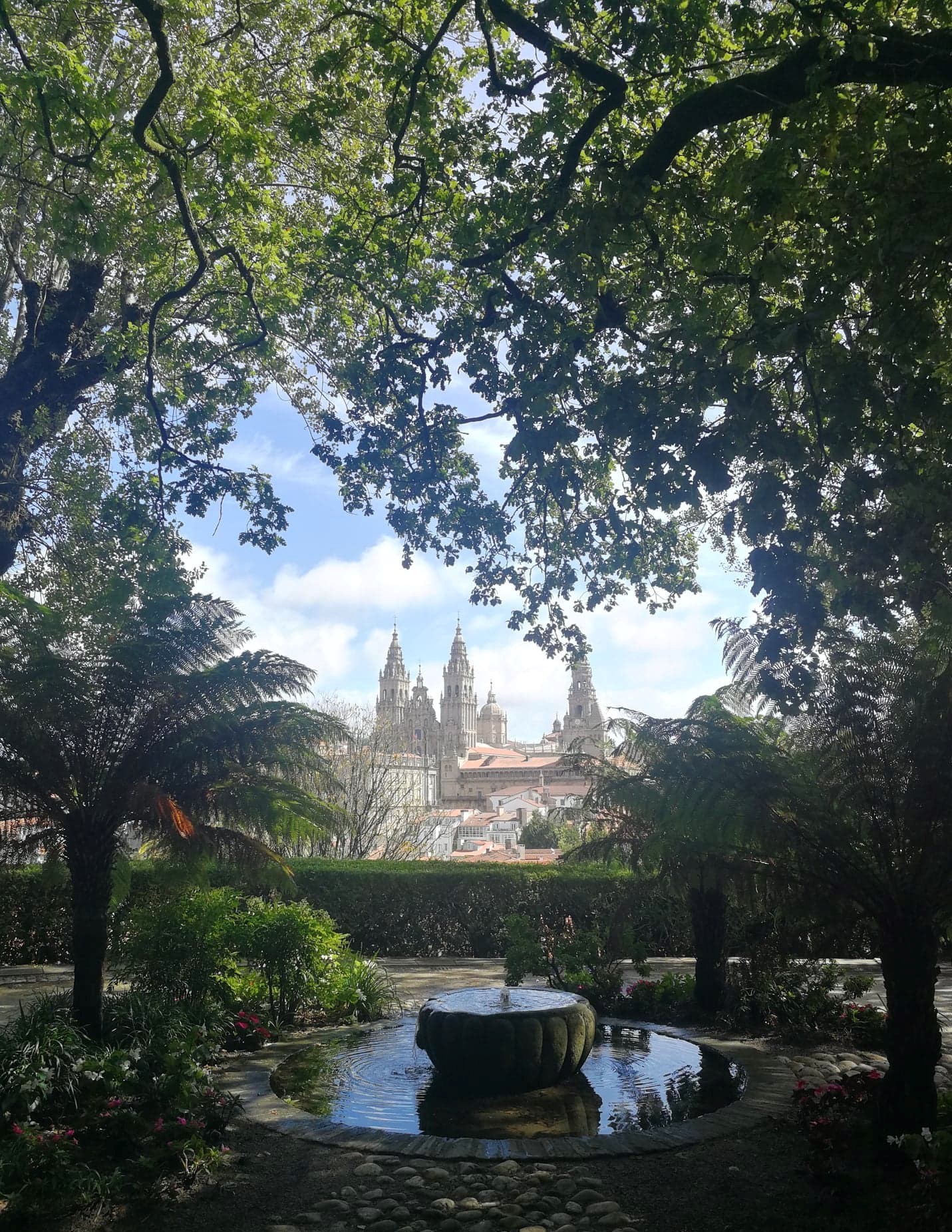
I hope you find these tips helpful. Good luck with your application! 

Unknown's avatar

Trail of Worth – FAQ

Before I head back to the UK for several weeks, I thought I’d share a Q&A about my book, Trail of Worth. Below are some typical questions I’ve been receiving!

How did you come up with the title?

The title came to me as I was halfway through writing the book. I knew I wanted something with three words that would reflect the themes of the book, namely that of self-worth, while also carrying a sense of mystery. “Trail” refers to not only the geographic location of the story’s setting and the significance of hikes and running in the book, but also to the main protagonist’s journey of finding her feet in a foreign country.

To work out a title, I wrote down two songs I not only really like but that remind me of the time being written about – River of Dreams by Billy Joel and Into the Mystic by Van Morrison. I then played around with some metaphorical phrases and Trail of Worth suddenly appeared in my mind!

How did you decide on the book’s front cover?

The cover of the book is actually a photo of me taken by a friend. The scene of the hike on which it was taken was initially featured in the book, but I decided to remove it during the editing process.

It wasn’t my initial idea to use this photo for the cover. I first provided the designer with an idea of an image and colours, but the result didn’t match my vision. It looked too much like a fantasy book. I then remembered this photo and thought it made sense to use it. It’s quite weird to think that a candid photo taken during the time written about ended up being used on the cover! As if it was all meant to be…

How did you come up with character names?

Creating new names was fun! I combined maintaining confidentiality with using names that I thought suited the personality of the characters. I used the name “Sara” for my character because I love the song by Fleetwood Mac. Its opening few lines seem to speak to me and a particular time and feeling in the story.

What were your favourite characters to write about?

I did enjoy the challenge of showing the personalities of both Harry and Will. Both are very interesting characters with unique traits. I also loved showing the friendship between Sara and Tyler. It was important to me that I highlight how possible it is for a woman to have great platonic friendships with males. Carrie is another character that was special to write about, because her introduction in the book signals a real sense of personal progress for Sara.

What was your favourite chapter to write?

Chapter 30 was my favourite chapter to write. It was admittedly bittersweet, but writing about falling in love was nice – those early stages where you get the flutters and it feels like a dream. There is also quite a bit of symbolism in that chapter when it comes to the hike and the surrounding wildlife. Interestingly, this symbolism wasn’t planned but rather was something I noticed during the editing process.

There are quite a few references to music in the book. What are some of the pertinent songs from that time?

There are a few scenes where references to music have been made to help set tone and convey emotion. For copyright reasons, musician names and song titles couldn’t be mentioned explicitly. I won’t give the exact names of the songs because it’s quite personal and I also think it’s more fun for a reader to try to guess what they are, but artists referred to in the narrative include Neil Young, Joni Mitchell, Aretha Franklin, and Bob Marley.

Trail of Worth covers a range of topics. How would you summarize it in a few words?

I’d describe it as a love story – not just love with others, but love with self. I say this because at the centre of all the varied topics and themes is a person trying to achieve a sense of personal fulfillment and self-acceptance.

What were some of the most challenging things about writing this book?

In posts before the book was published I’ve talked about the challenge of being selective with content when writing a memoir. I wouldn’t say I struggled with writer’s block per se because I had the inspiration of real-life events to write about vs making up fiction. Probably the most challenging thing was reliving some of the very emotional events – setbacks, loneliness, witnessing the mental health struggles of a partner, etc. But overall, it was a cathartic experience as revisiting those events after a while helped me see certain things in a new light. I wrote this book for others but I’ve also written it for myself too.

What are you most proud of as the writer?

I’m really pleased with the dialogue. I wanted to include authentic conversations – messy, awkward and vulnerable moments vs cliche, surface-level dialogue. This is an aspect of the book that people seem to really enjoy, which is great. I was surprised by how much I enjoyed recreating dialogue because I’ve always thought of myself as being a more descriptive travel writer. But I do find human behaviour very interesting, so maybe that’s why I enjoyed it so much.

As the author, it’s also very fulfilling to know that the themes I wanted to portray have come across and resonated with readers. I’m really happy that people have been relating to certain details. Another thing I’m proud of is that fact that males are also getting something out of this book. I never wanted to target women only with this book, but it’s very much a female perspective and about the woman’s experience. It’s great that men are getting an insight into this and perhaps learning something or becoming more empathetic.

All this said, I haven’t read the printed copy of the book yet. I’m too scared to! As the author and a perfectionist, there are bound to be little things I don’t like that might make zero sense to anyone else.

Will you write a sequel?

I’m not opposed to writing a sequel but that likely wouldn’t be for a while. There are certainly some other topics and experiences since that time which would be interesting to write about. I’d like to write other books too – perhaps a little more fictional but still using real-life experiences for inspiration. I don’t feel any rush to do this though – when the time is right I’ll know!

If you’ve read Trail of Worth and have additional questions, let me know! I’ll keep updating this post as they come in.

If you haven’t read the book but are now curious to get a copy, it’s available online from Amazon (choose your country) and Barnes & Noble. If you live in Victoria, BC and would like to buy the book, I have some hard copies available! Please send me a message on the Contact page and I’ll arrange pickup/drop off or mail delivery.

For more commentary on the book, you can follow me on Instagram @shannelizabethco

Thanks for reading!

Unknown's avatar

My 10-Year Anniversary with Canada

August 2nd, 2021 marked ten years since I first stepped foot in Canada.

I remember the teary goodbye with my mum at Gatwick Airport and sitting on the plane next to a mother and daughter from Quebec, smiling to conceal my nerves. As I walked into the the arrival lounge at Toronto Pearson International Airport, I clutched my backpack as if holding onto the only friend I had. When I stepped off the bus in downtown Toronto and gazed around at the tall buildings, I felt tiny. For a moment, the sound of traffic blurred out as I took in my new surroundings. The hustle and bustle of the city was quite overwhelming, and I quickly got lost. The sight of drivers turning right on a red light confused me, and I was thrown off in a shop when I learned tax was added to a product’s price at the till.

With some inner pep talks, I began to find my feet. I pushed through the nerves to approach a group of people sat on my hostel’s patio. The next morning, I smiled with relief when two Italian girls on the same Niagara Falls tour as me invited me to join them for the day. When we approached their stop on the way home, I held a scrap of paper in my hand with my name on it, only to smile with relief once again when they turned and asked the question that seemed so common in those days of, “Do you have Facebook?” A couple of days later, I shared a cab with a stranger after both of us missed the bus to the airport.

It was when I flew west to the Rockies and bussed through BC that I realized this country would remain special to me for all the memories made. But I definitely didn’t expect that ten years later, I’d be a permanent resident soon to be applying for dual citizenship, with a book published about my experience of moving here.

In reflecting on that first visit to Canada, I feel a corny sense of pride because I realize just how much I kept putting myself out of my comfort zone. Finding my way around unfamiliar places, introducing myself to a room full of chatting people, asking strangers on the street for directions, reacting to unexpected changes, moving forward after losing my backpack.

I always think of that time in Canada as the time when “life really became fun.” It was definitely fun before then, but that experience spawned a more confident and adventurous me – someone who saw the world as her oyster, who realized that we’re just tiny specks of dust in a huge galaxy and there are so many bigger issues than a few minutes of us feeling awkward or embarrassed. I began to approach new experiences with less worry and more faith that “things will work out.”

When I consider the increased rates of anxiety among younger generations today, I sometimes wonder if some of these cases stem fom these individuals having been too sheltered and having not put themselves out of comfort enough. I think back to the time I was fourteen years old and my mum drove me to a school friend’s party in the nearest town. We arrived late because it had been snowing, and when we pulled up outside the town hall, I heard loud music and laughing from inside. For some reason that I still don’t understand, I was suddenly overcome by nerves and asked mum to drive me home.

I could have done the very same thing at Gatwick Airport when I caught my mum crying, but instead, I swallowed the emotional feelings and turned around to walk towards departures. How different my life would be if I hadn’t turned around that day.

I truly believe that making progress towards a more fulfilling life (however you personally define that) comes from challenging yourself and putting yourself out of your comfort zone. At first it feels daunting and awkward and uncomfortable, but when you take the plunge and make those little steps, you start to realize that the world isn’t as scary as you might have once thought. Sometimes you need to push aside your ego and push through your anxiety and take the opportunities before you. Progress won’t be achieved without taking some risks and navigating some challenges. It’s these experiences that build character and make you a more confident, competent person.

It’s because of the associations with increased independence and confidence that I have such a soft spot for Canada. I grew up a lot during those five weeks in the country, and I’ve continued to grow up since moving here almost five years ago.

I write this post with an awareness of the privileges I have as a resident of Canada. I can love and appreciate this country for my own reasons while also knowing it needs to do better for others. I respectfully acknowledge the Indigenous peoples, on whose unceded territories I am fortunate to live and explore. I wish for more harmony and less hostility in the ongoing process of reconciliation.

Unknown's avatar

New Book Available for Purchase | Trail of Worth

It’s been a busy couple of months balancing my full-time job with finishing up my book, Trail of Worth. After 18+ months of effort, I’m very excited to announce that this book has now been published!

In writing Trail of Worth, I’ve tried to:

  • Give an honest portrayal of moving overseas and the various challenges it entails
  • Take a candid look at relationships and their fascinating complexities
  • Capture the way people (especially women) can perceive themselves during their twenties
  • Provide a commentary of travel experiences
  • Demonstrate the importance and influence of family and friendships

In writing this piece of creative non-fiction, the most important thing for me was to be authentic – to show the main protagonist’s flaws and strengths, the mistakes and moments of vulnerability as well as the little wins. There is genuine dialogue and I have not catered to a “mainstream” narrative. I’ve tried to create something that is both realistic and relatable.

Trail of Worth covers many themes and topics – travel, immigration, careers, running, friendship, relationships, mental health, and self-worth. Some of the content will make you smile, some will make you think, some may trigger sad or painful memories, and some I hope will inspire. If you’re a member of a book club, this story would be a great choice for initiating meaningful conversations.

Trail of Worth is written from the perspective of a female, millenial expat. It’s based on actual events recorded from the time, but identities have been changed. Interpretations of events and behaviours in the story will be influenced by the readers’ own attitudes and life experiences. I would simply encourage anyone reading the book to try to read it with an open and reflective mind.

Here’s a summary of what my editor had to say when she read the manuscript.

This image has an empty alt attribute; its file name is 193696592_10165610141950495_957009261464529924_n-1.jpg

Something my editor mentioned when reviewing Trail of Worth was how relatable the story would be for women in their 20s-30s. However, she also said that as an older woman, she really enjoyed the story – it made her reflect on her younger years and the experiences she had.

I think you would enjoy this book if you:

  • Have experienced or would like to experience moving overseas
  • Like to travel or have travelled solo as a female
  • Have experienced what has felt like a quarter-life crisis or a loss of self-worth
  • Have been in a long-distance relationship
  • Have struggled with emotionally difficult relationships, including those impacted by mental health issues
  • Are a competitive runner or simply find fulfillment in this activity
  • Have worked in recruitment and HR
  • Have struggled with age bias and Imposter Syndrome in your career
  • Can’t relate to any of the above but are curious 🙂

Links for Purchase:

Trail of Worth is available to buy online in Kindle or paperback format from Amazon, Barnes & Noble, and some other small online retailers.

If your country doesn’t have an Amazon site, you can get worldwide shipping from amazon.com

Amazon UK

Amazon Canada

Amazon US/EU/Worldwide

Amazon Australia

Barnes & Noble (US customers)

Book Depository

If you’d like to receive more commentary on the book and further insights into the topics discussed, you can follow my main Instagram page @shannelizabethco

And if you’re interested in completing and publishing a book review, please don’t hesitate to contact me!

Thank you in advance for reading Trail of Worth. I hope you enjoy this story that is very special to me 🙂